
Robots·News & analysis
A Georgia Tech student says his dorm-built jet hit 491 mph
Tomas Salvo says his $13,000 Reaper jet aircraft beat the 465 mph radio-controlled record. Nobody has verified it yet.

Tide
Ripple
Sci-fi
6/10
Reality
Demo
A fighter-jet look in a dorm-room size.How we rate
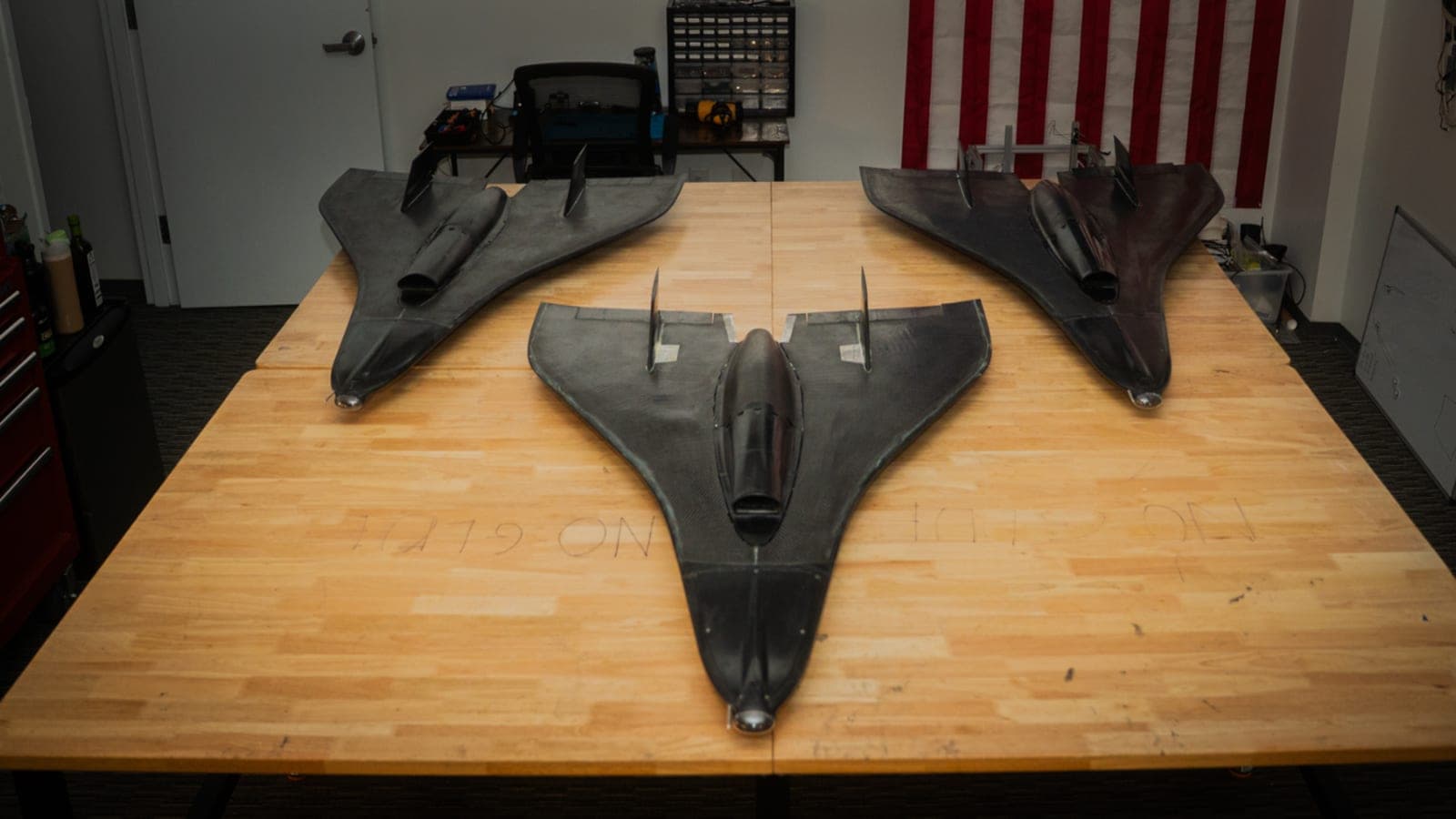
Georgia Tech aerospace student Tomas Salvo says his jet-powered Reaper reached 491 mph while carrying a 2.6-pound payload, which would beat the 465 mph radio-controlled record from 2017.
The claim comes from Salvo himself and is not verified. He says he built three working aircraft for about $13,000. He hopes to pass 500 mph next, though that is still far below the Mach 1 needed for the Boom Prize.
What to know
- Georgia Tech aerospace student Tomas Salvo says his jet-powered Reaper reached 491 mph while carrying a 2.6-pound payload.
- The claim is self-reported and not verified. It would beat the 465 mph record set in 2017 by Niels Herbrich's Inferno.
- Salvo built three working aircraft for about $13,000, and says each can hold that speed for four minutes.
- The Reaper still falls far short of Mach 1, which the $750,000 Boom Prize requires.
A Georgia Tech student says the jet aircraft he built in his dorm room flew 491 mph. If that holds up, it beats the record for radio-controlled jets. Here is what he claims, what is still unproven, and why it is a fun story either way.
What did Tomas Salvo claim?
Tomas Salvo studies aerospace engineering at Georgia Tech. He says his homemade aircraft, the Reaper, reached 491 mph (about 790 km/h). He posted the result on X on October 30, 2026.
It was not an empty run. Salvo says the Reaper carried a 2.6-pound (1.2 kg) payload. A payload is just the cargo a plane carries, here a small weight on board.
This is a claim from the builder, and no outside group has checked the number yet.
What is the record he wants to beat?
The record for a radio-controlled jet model is 465 mph. It was set in 2017 by German pilot Niels Herbrich with a small delta-wing jet called Inferno. A delta wing is the triangle shape you know from fighter jets.
Guinness World Records lists the exact figure as 749.221 km/h, or 465.544 mph, set on 23 August 2017 in Rothenburg, Germany. Salvo's number is about 26 mph higher.
By the numbers: 491 mph minus 465 mph is a gap of roughly 5.5 percent. On a plane this fast, that is a big step.
How is the Reaper built?
The Reaper is also a delta-wing aircraft, and it looks like a small stealth jet. Salvo says he built it from scratch, with a mix of old-school craft and new tools.
- Engine: a 250-newton turbojet. A newton is a unit of push, and 250 newtons is about the weight of a 25 kilogram bag of flour hanging off the engine.
- Intake and nozzle: a custom air intake, and an exhaust nozzle made of titanium and produced with 3D printing.
- Body: molded carbon-fiber shells, which are light and very stiff. Laser-cut parts form the inside.
- Weight: around 5 kg, according to an earlier account of the project.
Salvo has built three working versions. He says each can hold 491 mph for four minutes on a full tank, and that the system is "a reliable and repeatable system" that gives closely matching results every time.
In real life Think of a kitchen-table project where you print a part, cut a part and mold a part, then bolt the pieces together. Now make the project fast enough to cross a football field in less than half a second.
How did the project start?
Salvo says he began the Reaper in February, working in university housing. He showed the aircraft publicly in July, after about five months of building. At that first reveal he talked about reaching 500 mph.
Back then he described a hand-laid carbon-fiber body shaped over molds cut from MDF, a common wood-fiber board. He has been flying it ever since, and the October post is the first time he put a speed number on the result.
The whole project cost about $13,000. Salvo paid for it himself.
What can it do besides go fast?
Speed is not the only number he gave. Here is the rest of the list:
- Climb: it can leave a launch rail or a truck-mounted launcher and reach 6,600 feet (2,000 m) in under 20 seconds.
- Range at top speed: about 31 miles (50 km).
- Launch: from a rail or from the back of a truck, so it does not need a runway.
- Next goal: more testing and tuning to reach 500 mph (800 km/h).
At that speed the plane would use up its fuel quickly. Salvo's earlier account mentions about two minutes of full throttle, so those four minutes at 491 mph are a number worth checking in the real world.
Why did the Pentagon notice?
Salvo's post caught the eye of Prescott Paulin, who leads industry engagement for a team in the US Department of War's Research and Engineering office. Paulin publicly invited the student to visit the department.
That is an invitation, not a contract. It does show that a $13,000 project can get attention from people who work on military technology, because fast, small, cheap aircraft are interesting to them.
The big picture: drones used to be the territory of big companies. A student with a 3D printer, a laser cutter and a turbojet can now build something that looks like it came from a lab.
What is the Boom Prize?
Salvo says he hopes to win the Boom Prize. Boom Supersonic CEO Blake Scholl first offered $100,000 for the first amateur-built radio-controlled plane to pass Mach 1. On July 10 he turned it into $750,000 in cash plus $50,000 in Boom stock.
The rules are strict:
- Speed: faster than Mach 1 (the speed of sound, about 761 mph at sea level) for at least five seconds.
- Repeat: the feat must happen twice on the same day with the same aircraft.
- Engine: air-breathing engines only, such as turbojets, turbofans or ramjets. No rockets, no onboard oxidizers, no one-time-use aircraft.
- Who can enter: amateurs only, with no company sponsors or venture capital. Entrants must be US citizens, permanent residents or people granted asylum.
- Judges: former Boeing CEO Phil Condit, SpaceX co-founder Tom Mueller and astrophysicist Scott Manley.
- Deadline: the contest stays open until 2030.
The prize would need about 270 mph more than the Reaper's claimed speed. Mach 1 is a very different problem, because air pushes back much harder near the speed of sound.
How does it compare with the old champion?
Inferno is tiny. It is about a foot long and roughly 4.5 inches across, and it is powered by a hobby turbine engine, a Behotec 180. It was built for one thing, a straight and very fast pass.
The Reaper is a different kind of machine. It is bigger, it uses a stronger 250-newton engine, and it carries cargo. Salvo says it can also fly long runs, with some flights covering more than 30 km and the aircraft flying 4 to 5 km away from its pilot.
That makes the comparison a little tricky. A record plane is a sprinter. A plane that sprints with a payload, repeats the run, and lands safely is closer to a working machine.
Why it matters: if the claim is confirmed, the new record would come from a student project that is built to be flown again and again, not from a one-off.
Is it legal to fly one this fast?
That is a fair question, and it came up when the project was first shown in July. Flying a 500 mph aircraft beyond the pilot's sight needs special permission from the US Federal Aviation Administration, called a waiver. As of July, no such waiver had been granted for a hobby flight at that speed.
Salvo has not said where the test flights took place or what approvals he had. That is one more detail that outside reviewers will likely ask about.
What is still missing?
Three things would turn the claim into a record.
- Independent checking: an outside group would need to review the flight data and the timing.
- A repeat: the 2017 record stood because it was measured and logged under a set method.
- Public footage: people want to see the run, with clear speed data.
The catch: until then, the headline is "student says," not "student sets." The 465 mph record stands on the books.
What it means for you
- Do not expect one in a shop: the Reaper is a hand-built test aircraft, not a product.
- Skills are the story: 3D printing, laser cutting and carbon fiber are now within reach of a determined student.
- Watch for proof: a verified run would make this a real record. Until then, treat 491 mph as a claim.
- Prizes drive builders: the Boom Prize gives hobbyists a reason to build faster, and 2030 gives them time.
The bottom line
A student says he built a jet in his dorm that flew 491 mph, faster than the 465 mph record that stood since 2017. The number is his own and still needs checking. Even so, it shows how far a $13,000 project can go today, and the Mach 1 prize is a much taller mountain.
Key facts
- Claimed top speed
- 491 mph (790 km/h)
- Previous record
- 465 mph, set in 2017
- Engine
- 250-newton turbojet
- Cost
- About $13,000
- Status
- Self-reported, unverified
Got questions?
Quick answers, plain wordsWho built the Reaper?
Tomas Salvo, an aerospace engineering student at Georgia Tech. He designed and assembled the aircraft himself while living in university housing.
How fast did the Reaper go?
Salvo says 491 mph, which is about 790 km/h, while carrying a 2.6-pound (1.2 kg) payload. He posted the result on X on October 30, 2026.
Is it an official world record?
Not yet. The number comes from Salvo himself. The record would still need independent checking, such as a Guinness World Records review.
What was the old record?
Guinness lists 749.221 km/h (465.544 mph) for Niels Herbrich's delta-wing jet model, set on 23 August 2017 in Rothenburg, Germany.
What powers the Reaper?
A 250-newton turbojet. A turbojet is a jet engine that sucks in air, burns fuel with it and shoots hot gas out the back to push the plane forward.
How much did it cost?
Salvo says the whole project cost about $13,000, paid out of his own pocket as a student.
How far can it fly at full speed?
Salvo says about 31 miles (50 km) at top speed, and that it can climb to 6,600 feet (2,000 m) in under 20 seconds after launch.
Can it win the Boom Prize?
Not at 491 mph. The prize needs a radio-controlled plane to fly faster than Mach 1, roughly 761 mph at sea level, for at least five seconds, twice in one day.
Is it a drone or a model plane?
Both words get used. The Reaper is a radio-controlled, jet-powered model aircraft that a pilot flies from the ground, which is why many people call it a drone.
What does Salvo plan next?
More test flights and tuning. He hopes to push the Reaper past 500 mph (800 km/h) and has said he wants to go after the Boom Prize.
SourcesTechRadar, guinnessworldrecords.com
Topics and tagsdrones, georgia tech, reaper, speed record
Related stories
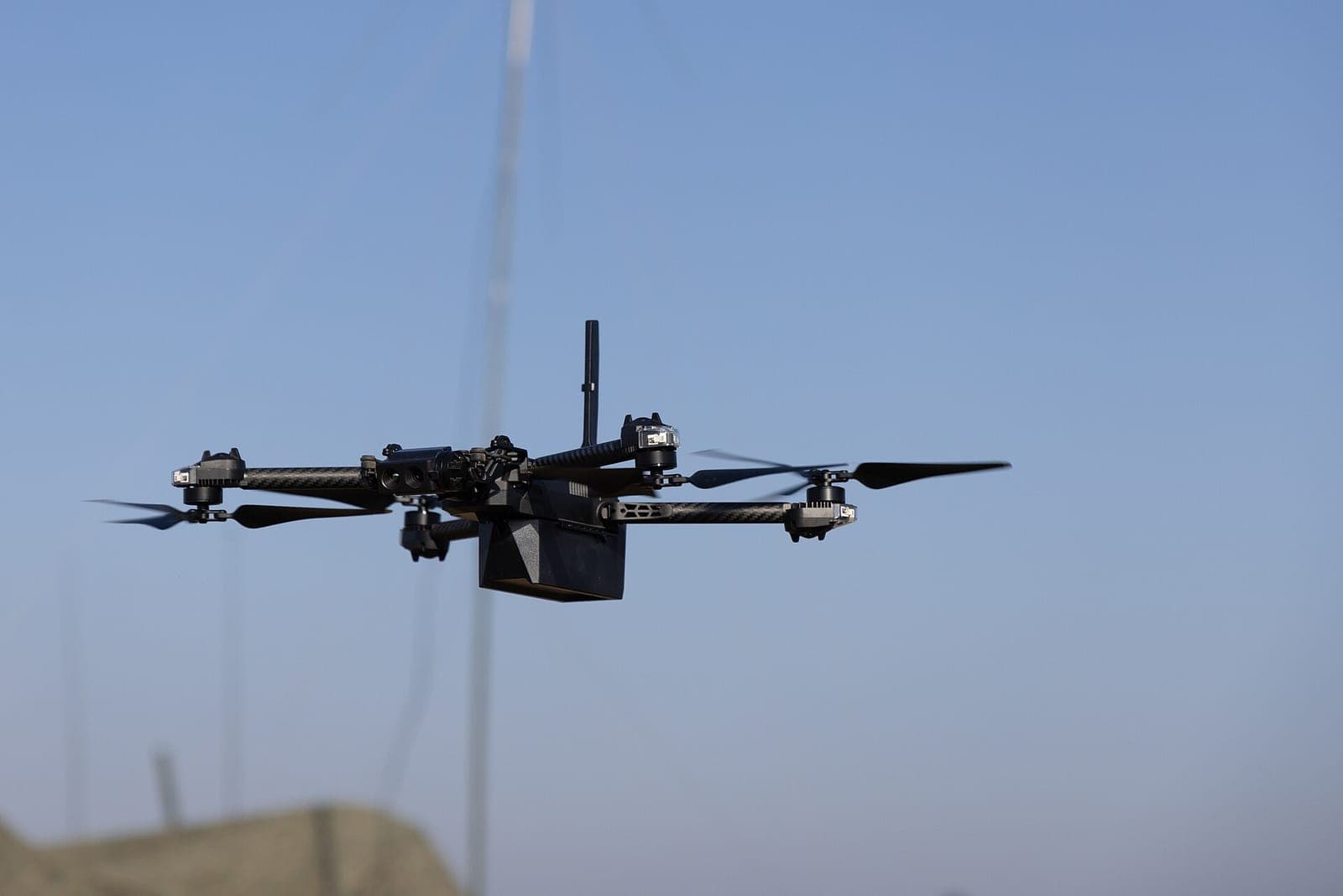
Axon invests $1.2 billion in Skydio and becomes its exclusive police drone seller
Axon's largest investment ever lifts its stake in drone maker Skydio to 37% and makes Axon the only seller of Skydio drones to police in the US and Canada.

Percepto launches Axion, AI that reads inspection data from any drone
Percepto, the drone-in-a-box maker, is selling its inspection AI as software that works with other companies' drones and sensors.
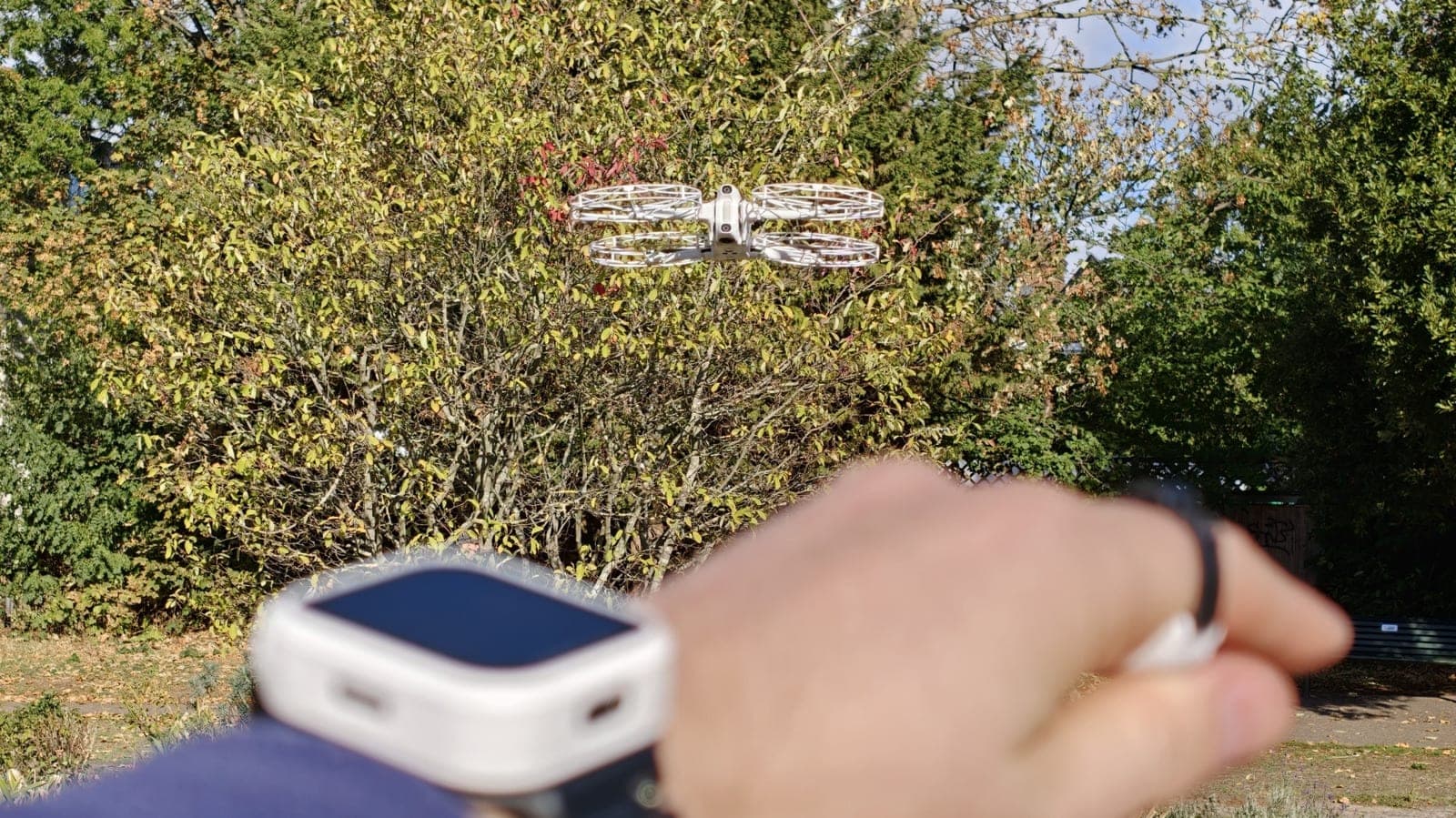
Antigravity halves the A1 drone's entry price with watch and ring controls
Antigravity's new Follow Me bundle swaps the goggles and controller for a watch and a ring, and cuts the price of a complete A1 kit from $1,599 to $799.
More in brief
- YouTube is going back on the Billboard charts in 2027Nov 9
- Apple starts selling $50 packs for extra Apple Intelligence useNov 9
- Windows 11 tests a way to switch off the Sticky Keys popup for goodNov 9
- US regulators question whether Waymo's school bus fix workedNov 9
- NVIDIA unveils GR00T 2 and Isaac Lab 3.0 to teach robots delicate workNov 9
- Tesla launches its robotaxi service in San Antonio, its eighth cityNov 9