
AI·News & analysis
Meta's new AI glasses get a bigger camera, a longer battery, and a Bollywood star as their face in India
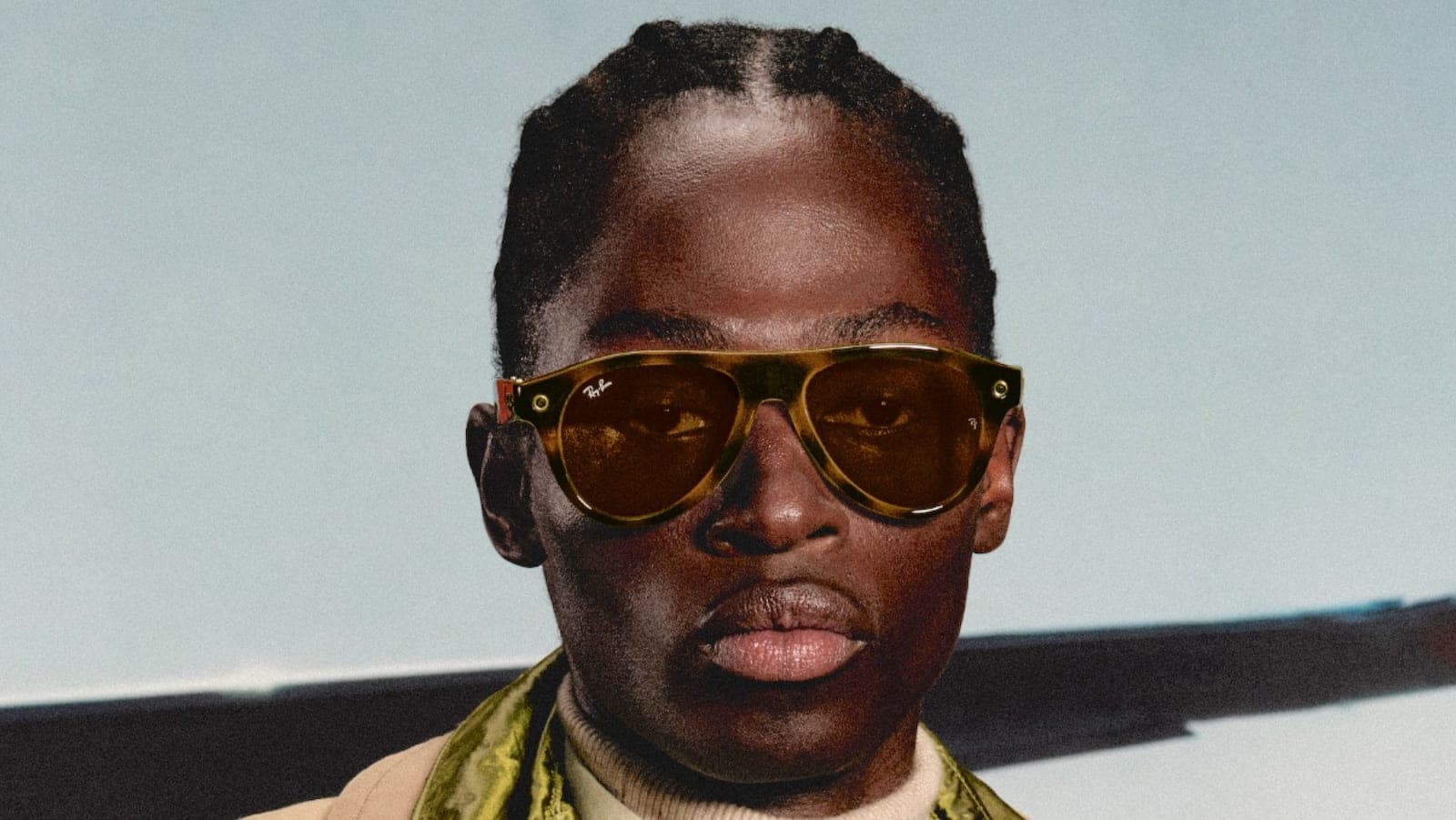
Meta named Bollywood actor Ranveer Singh as the first brand ambassador for Ray-Ban and Ray-Ban Meta in India, alongside updates to its third-generation AI glasses covering camera, battery, and audio.
Tide
Ripple
Sci-fi
4/10
Reality
In your hands
Sunglasses that listen, see, and now last nine hours doing it.How we rate
Meta named Bollywood actor Ranveer Singh as the first brand ambassador for Ray-Ban and Ray-Ban Meta in India, alongside detailed updates to its third-generation AI glasses covering camera, battery, and microphone performance.
It shows Meta treating India as a priority market for AI-enabled wearables specifically, not an afterthought. The underlying hardware updates, a 12-megapixel camera, 9-hour battery, and 90% background noise reduction, apply to the glasses everywhere they're sold. Meta also previewed a lighter audio-only model and a new proactive AI agent called Muse.
What to know
- Meta named Bollywood actor Ranveer Singh as the first Brand Ambassador for Ray-Ban and Ray-Ban Meta in India, as part of a 'Frame Your True Self' campaign.
- The third-generation Ray-Ban Meta glasses feature a slimmer design, up to 9 hours of battery life (an hour more than Gen 2), and a 12-megapixel camera with 3K Ultra HD video recording.
- A new 6-microphone array is designed to cut background noise by 90%, alongside a customizable Action Button for instant Meta AI access.
- The glasses come in 27 color and lens combinations across Aviator, Zena, and Wayfarer frames, including a limited-edition vintage Aviator marking the style's 90th anniversary, starting at INR 44,300 in India.
- Meta also previewed upcoming Ray-Ban Meta Audio glasses (43 grams, 12-hour battery) and a hands-free Muse AI Agent capable of analyzing what the wearer sees and taking contextual actions.
Meta just gave its AI glasses a longer battery, a sharper camera, and a genuine Bollywood star to make them look like a fashion choice rather than a gadget.
What exactly did Meta announce?
Meta named Bollywood actor Ranveer Singh as the first Brand Ambassador for Ray-Ban and Ray-Ban Meta in India, fronting a campaign called "Frame Your True Self," alongside a detailed rundown of updates to its third-generation Ray-Ban Meta AI glasses.
Why it matters: pairing a major celebrity partnership with a specific hardware update announcement signals Meta treating India as a priority market for its AI wearables strategy, not a secondary region getting leftover attention after other markets.
What's actually new on the hardware side?
The third-generation glasses get a slimmer, more comfortable design, up to 9 hours of battery life (an hour more than the previous generation), a 12-megapixel camera capable of 3K Ultra HD video, and adjustable temple tips for a better fit.
Why it matters: these are the kinds of incremental but genuinely useful improvements that determine whether people actually wear smart glasses daily versus leaving them in a drawer somewhere after the novelty wears off. Battery life and comfort tend to matter more for everyday adoption than flashy new features ever do.
What about the microphone and audio improvements?
In real life it's the difference between a voice command actually working at a loud concert versus the glasses just picking up a wall of noise and guessing.
A new 6-microphone array is designed to cut background noise by up to 90%, alongside a customizable Action Button that gives instant access to Meta AI.
Why it matters: voice-activated AI features are only as useful as the microphone picking up a clear spoken command in the very first place. A significant noise-reduction improvement like this one directly affects how reliably the AI assistant actually performs in real, genuinely noisy everyday environments.
How many style options do people actually get?
The glasses come in 27 color and lens combinations across three frame styles, Aviator, Zena, and Wayfarer, including a limited-edition vintage Aviator design released to mark that style's 90th anniversary.
Why it matters: that many options signals Meta and Ray-Ban are leaning hard into the glasses-as-fashion-accessory angle, not just a tech gadget with one generic look, which matters for a product people wear on their face in public all day.
What's the pricing and availability in India?
Pricing starts at INR 44,300, available through Meta.com, in.rayban.com, electronics retailers, and optical shops across the country.
Why it matters: a clear, multi-channel retail strategy, from Meta's own site to traditional optical shops, suggests Meta wants these glasses treated and sold like genuine eyewear, not just an online tech purchase.
What else did Meta preview beyond the current Gen 3 model?
Meta also previewed an upcoming Ray-Ban Meta Audio model, a lighter, 43-gram version focused on audio rather than camera features, offering 12 hours of battery life plus extended charging from a companion case rated for up to 48 hours total.
Why it matters: a lighter, audio-focused variant suggests Meta is segmenting its AI glasses lineup the way phone makers segment handsets, different models for different priorities, rather than pushing one single do-everything design on every buyer.
What is Muse, and why does it matter?
Meta described Muse as a hands-free personal AI agent coming to the glasses, capable of analyzing what the wearer is looking at and taking contextual actions based on that, without needing a manual prompt for every task.
Why it matters: that's a meaningfully different capability than current voice-command AI assistants, which only respond once you explicitly ask. An agent that can act on what it visually observes, without waiting for a spoken prompt, pushes these glasses considerably closer to a genuinely proactive AI companion than a simple accessory that just answers questions on command.
Why does Ranveer Singh specifically matter to this campaign?
Singh described his approach to style as being "about instinct, mood," rather than following a fixed formula, directly echoing the "Frame Your True Self" campaign's theme of individual expression over conformity.
Why it matters: that messaging frames the glasses explicitly as a style statement first, tech product second, a positioning choice aimed at overcoming the lingering "wearing a visible gadget on your face" hesitation that's slowed smart glasses adoption for years.
How successful have Ray-Ban Meta glasses actually been so far?
By the numbers: Meta and Ray-Ban maker EssilorLuxottica first partnered in 2019, but it took until the second generation launched in 2023, with Meta AI built in, for sales to really take off. The companies sold roughly 2 million pairs combined through 2023 and 2024, then more than tripled that pace, selling over 7 million units in 2025 alone, making them the best-selling AI glasses on the global market.
Why it matters: that sales trajectory genuinely explains why Meta is investing heavily in a celebrity-led campaign and a broader style lineup, rather than treating these glasses as a niche experiment. A consumer tech product that tripled its global sales pace in a single calendar year is one genuinely worth building an entire new regional marketing push and expanded product lineup around.
Why would Meta prioritize India specifically for this kind of campaign?
Background: India represents one of the largest smartphone and consumer electronics markets in the world, with a young population increasingly engaged with both fashion and technology trends simultaneously. A Bollywood star carries outsized cultural influence there compared to a typical celebrity endorsement in many Western markets.
Why it matters: positioning the glasses through a major film star rather than a tech reviewer or a social media influencer reflects a deliberate strategy to sell the product as lifestyle fashion first and technology second, specifically tailored to exactly how style and celebrity culture intersect in the Indian consumer market today.
What it means for you
- If you're considering Ray-Ban Meta glasses, the Gen 3 improvements, battery life, camera quality, and noise reduction, are genuinely meaningful upgrades, not just marketing language.
- The expanding style and frame options make these glasses a more realistic everyday accessory, not just a tech demo you'd only wear occasionally.
- Muse signals where Meta's AI glasses strategy is heading next: toward agents that act on what you see, not just assistants that respond to what you ask.
- If you're in India, expect to see this campaign everywhere soon. A major Bollywood ambassador deal means significant marketing push across the country in the coming months.
The bottom line
Meta is betting that smart glasses finally become a mainstream purchase when they stop looking and feeling like a tech gadget and start looking like something a celebrity would actually choose to wear.
The hardware updates, longer battery, sharper camera, better microphones, do the practical work of making the glasses more usable day to day, while Ranveer Singh and 27 style combinations do the work of making them something people actually want to be seen wearing.
Given that global sales already tripled once the AI features genuinely clicked with everyday buyers, Meta clearly isn't treating this latest India push as some kind of speculative gamble, so much as deliberately doubling down on a strategy it already has strong real-world evidence is working.
Key facts
- Battery life (Gen 3)
- Up to 9 hours
- Camera
- 12MP, 3K video
- Noise reduction
- Up to 90%
- Style combinations
- 27
- India starting price
- INR 44,300
Got questions?
Quick answers, plain wordsWho is Ranveer Singh, and what's his role in this announcement?
Ranveer Singh is a Bollywood actor named as the first Brand Ambassador for Ray-Ban and Ray-Ban Meta in India, fronting a campaign called 'Frame Your True Self' meant to promote the glasses as a form of individual style expression.
What's new about the third-generation Ray-Ban Meta glasses?
Gen 3 features a slimmer, more comfortable design, up to 9 hours of battery life (one hour more than Gen 2), a 12-megapixel camera capable of 3K Ultra HD video, a new 6-microphone array that cuts background noise by 90%, adjustable temple tips, and a customizable Action Button for instant Meta AI access.
How many style options are available?
The glasses come in 27 color and lens combinations across three frame styles: Aviator, Zena, and Wayfarer, including a limited-edition vintage Aviator design released to mark the Aviator style's 90th anniversary.
How much do the glasses cost in India?
Pricing starts at INR 44,300, available through Meta.com, in.rayban.com, electronics retailers, and optical shops across India.
What is Ray-Ban Meta Audio?
It's an upcoming, lighter-weight version of the glasses at 43 grams, focused on audio rather than camera features, offering 12 hours of battery life plus additional charging from a companion case rated for up to 48 hours total.
What is the Muse AI Agent Meta mentioned?
Muse is described as a hands-free personal AI agent coming to the glasses, capable of analyzing what the wearer is looking at and taking contextual actions based on that visual information, without requiring manual prompts for every task.
Is this announcement specific to India, or does it affect the glasses globally?
The Ranveer Singh brand ambassador deal and the 'Frame Your True Self' campaign are specific to the Indian market, but the Gen 3 hardware updates, including the camera, battery, and microphone improvements, apply to the glasses as sold globally.
What's the noise reduction technology meant to improve?
The new 6-microphone array is designed to reduce background noise by up to 90%, which should improve both voice command recognition and the audio quality of videos recorded while out in noisy environments.
SourcesMeta
Topics and tagsMeta, meta, ray ban, ai glasses
Related stories
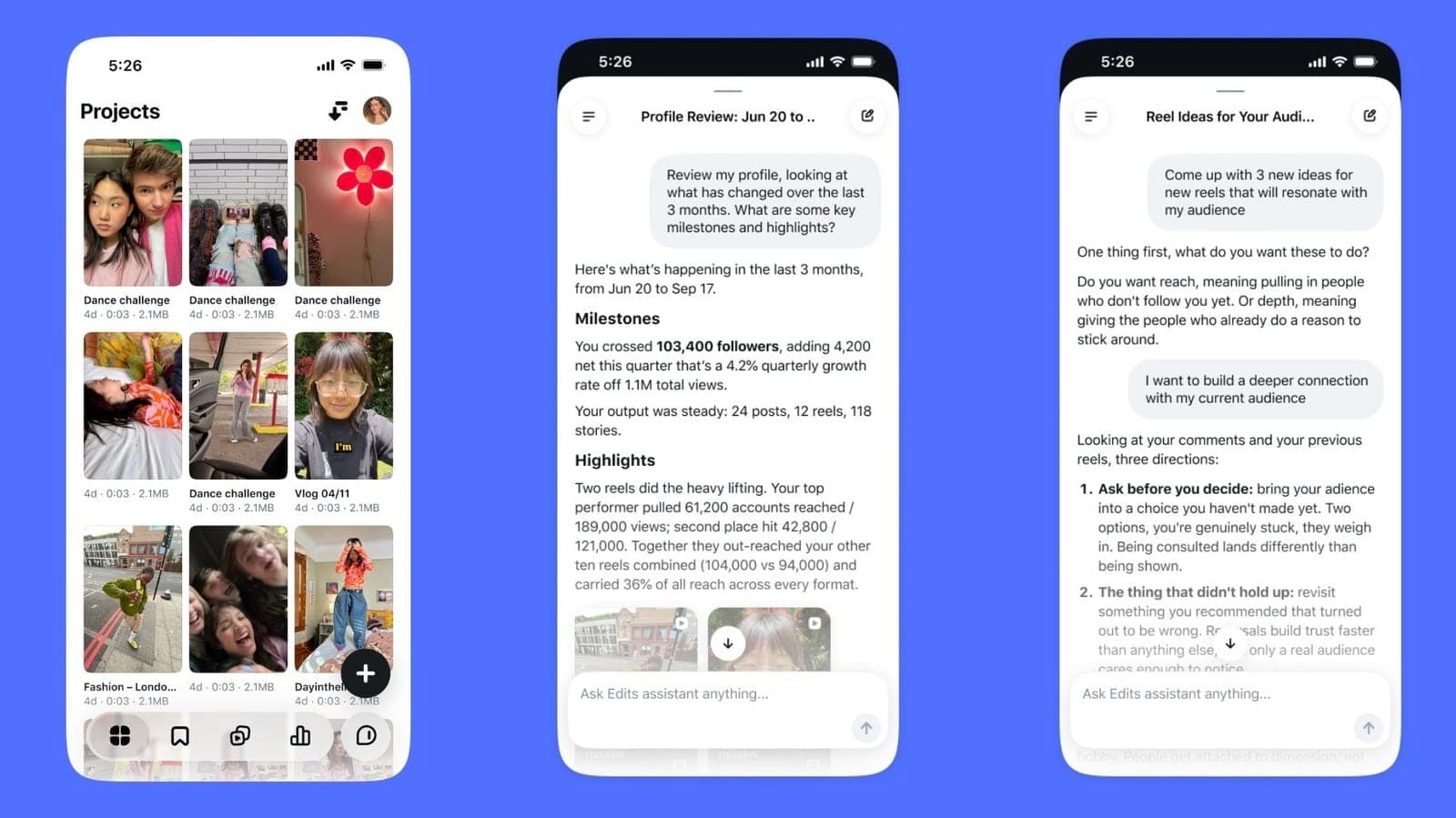
Instagram's new AI tool won't edit your videos, it'll just tell you why they flopped
Instagram rolled out a conversational AI assistant inside Edits, its CapCut competitor, that analyzes your account's performance instead of doing the actual editing for you.
Meta wants its AI agent to run your small business, not just chat with you
Meta launched Muse for Small Business, connecting its AI agent to 20+ tools like Canva, Shopify, and QuickBooks, aiming at the 200 million small businesses already on Facebook.
OpenAI just launched Dots, its answer to Meta's AI agent that's had investors buzzing all month
OpenAI unveiled Dots at DevDay, always-on AI agents with their own cloud computer, three weeks after Meta's Muse agent helped send Meta stock up 29% this month.
More in brief
- arXiv limits researchers to two papers a month as AI drives submissions to a recordOct 2
- California will fine robotaxi companies that block first responders for over 30 minutesOct 2
- Microsoft launches real-time transcription and new voice models for AI voice agentsOct 1
- Apple's smart home hub reportedly launches October 13, with a camera that never records videoOct 1
- Cloudflare releases Clef, open-weight AI models that make yes-or-no decisions fastOct 1
- GrayKey maker reportedly found a way around the iPhone's Inactivity RebootOct 1