
Technology·News & analysis
Supermarket freezer hacks spread to Belgium, Sweden and beyond
Three weeks after hackers heated fridges in hundreds of French stores, grocers in Belgium, Luxembourg and Sweden report the same kind of overnight temperature spikes.
Tide
Wave
Sci-fi
4/10
Reality
Shipping
Everyday appliances, quietly online.How we rate
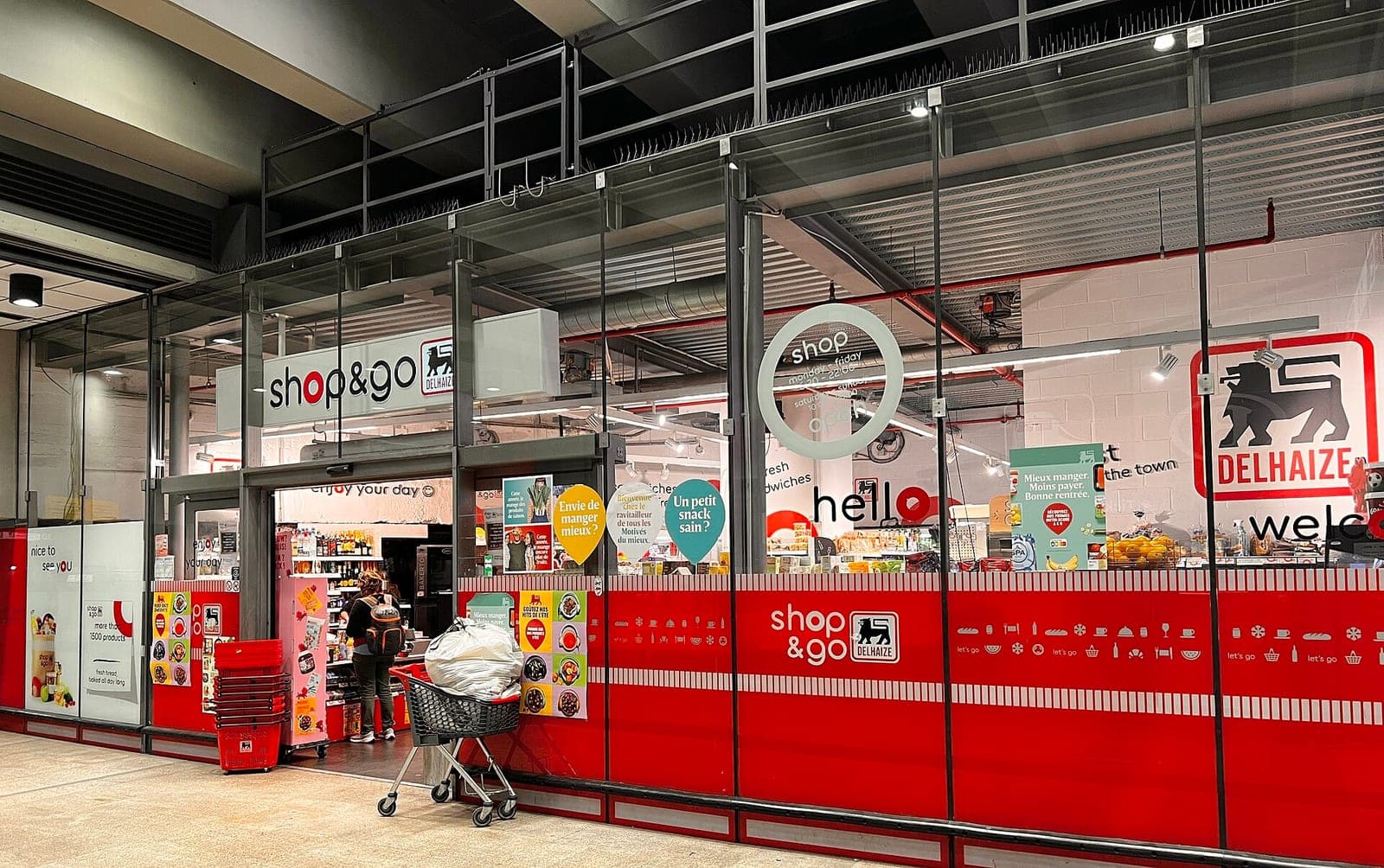
Supermarkets in Belgium, Luxembourg and Sweden reported fridges and freezers warming overnight on November 2, about three weeks after a similar attack in France.
Delhaize said about 40 Belgian stores had an IT incident, and a refrigeration installer said the units were switched to defrost mode. One Swedish ICA store said its freezers were set to 50 degrees Celsius. Nobody has claimed responsibility, and investigations are still running.
What to know
- Fridges and freezers warmed overnight on November 1 to 2 at dozens of Delhaize, Carrefour and Spar stores in Belgium, and at ICA and Coop stores in Sweden.
- A Belgian refrigeration installer told the news agency Belga that the cooling units were switched to defrost mode, the same method seen in France in October.
- France's October attack hit about 700 of 10,000 supermarkets, according to the finance minister, and involved controllers from Danfoss and Copeland.
- Nobody has claimed responsibility, and no source reviewed confirms that the same attackers are behind both waves.
On Monday, Reuters reported that an IT incident overnight hit fridges and freezers in dozens of stores in Belgium and Luxembourg. Swedish grocers ICA and Coop saw the same kind of temperature jump. It comes three weeks after hackers did something very similar in France.
So what do we actually know, and what is still a guess?
What happened overnight?
Between Sunday night and early Monday, November 1 to 2, cooling systems in several European countries started to warm up when they should have stayed cold.
The reports come from several outlets and agencies. Reuters, Bloomberg, the Belgian news agency Belga and the Swedish paper Aftonbladet all carried pieces, and Tom's Hardware pulled them together.
- Belgium: Delhaize says about 40 of its stores were hit, in both Flanders and Wallonia. Carrefour Belgium counted 15 stores, and the Colruyt Group said five independent Spar shops were affected.
- Luxembourg: Reuters reports that Delhaize and Colruyt stores there were also hit.
- Sweden: ICA says a "limited number" of stores had trouble with their refrigeration and freezer systems. Coop told Aftonbladet that six of its stores were affected.
- Estonia: a technology supplier, Kitman Coldtech, told the public broadcaster ERR that a large chain was hit too, with a freezer set to 50 degrees Celsius.
Nobody has claimed responsibility, and the companies have been careful about the word "attack." Delhaize calls it an "IT incident." ICA did not confirm a cyberattack in its statement to Bloomberg.
How did the freezers get hot?
First, a quick explainer. A supermarket freezer has an evaporator, the part that chills the air inside. Every so often it heats up on purpose to melt the frost that builds up. That is called a defrost cycle.
Stephan Moelans, the head of the Belgian refrigeration company Sabcobel, which looks after Delhaize's systems, told Belga the incident was a cyberattack. He said the units' evaporators were switched to defrost mode. Sabcobel puts the start at around midnight.
The result is simple. A freezer that should sit at about minus 18 degrees Celsius starts to warm like a car parked in the sun.
In real life Imagine someone pressing the "defrost" button on every freezer in a shop at midnight, from the other side of the internet, while the staff are asleep. By morning, the ice cream is soup.
How hot did it get?
The numbers differ, and that is worth saying plainly.
- Belgium: RTL Info cites about 15 degrees Celsius, mostly in freezers. The daily HLN wrote of 70 degrees, a figure a Delhaize spokesperson could not confirm.
- Sweden: one ICA store in Sjöbo said on Facebook that its freezers were set to 50 degrees Celsius and that it suspected a hack.
Why it matters: even 15 degrees is far too warm for frozen food. Stores have to throw the stock away rather than guess.
How did stores find out?
At the butcher chain De Laet & Van Haver, alarms on the chiller units began to sound around 3 a.m., according to operations manager Werner Muylle. Staff paused the system before the fridges got too hot, the Brussels Times reports.
Delhaize texted its store managers around 4 a.m. Some managers called in refrigerated trucks to save their stock. Delhaize says it disconnected the cooling systems from the internet, and that its shops can keep trading.
In Stockholm, a notice at an ICA Baronen store said all its freezers were broken because of a cyberattack. The sales manager told Reuters the attack happened at 2 a.m. and was noticed at 5:30 a.m.
What happened in France first?
The French attack hit the night of October 11 to 12. Hackers gained access to internet-linked refrigeration controllers and raised temperatures to as high as 50 degrees Celsius while shops were closed.
AP reports that French Finance Minister Roland Lescure told parliament about 700 of the country's 10,000 supermarkets were affected. He said there was no risk to food supplies, but that the attack "touches the heart of our food security."
- Intermarché and Netto: about 300 stores, according to their owner Groupement Mousquetaires.
- Coopérative U: 80 of its 2,000 stores, according to its CEO Dominique Schelcher.
- Also hit: Carrefour, Monoprix and E.Leclerc.
The Paris prosecutor's office opened an investigation, and the retailers reported fires in some stores and large food losses.
What equipment was attacked?
France's cybersecurity agency said the systems were remote control modules made by the Danish company Danfoss and by Copeland, a US-based company. Al Jazeera reports the Danfoss models included the AK-SM800 and the AK-SC355.
These are small computers that sit inside a store and manage all of its fridges and freezers. They are connected to the internet so that maintenance companies can adjust them from anywhere. That is handy, and it is also the problem.
Danfoss said most of the affected systems were older products that no longer receive software updates. Software updates, often called firmware updates when they go inside a device like this, are how makers patch security holes. Copeland said the weakness was in a discontinued, end-of-life generation of controllers.
Were the weak spots already known?
Partly. In August, the US security firm Claroty reported flaws in the Danfoss AK-SM 800A and the Copeland XWeb Pro. It said "numerous controllers" could be reached directly from the public internet. Danfoss and Copeland have since released fixes.
Help Net Security notes that it is unknown whether those exact flaws were used in the French attacks. Nobody has said yet what was used in Belgium or Sweden.
Christopher Whyte, a homeland security professor at Virginia Commonwealth University, told AP such an attack is "not too difficult," because the controls were likely left open to the wider network a supermarket uses.
Sweden's national cybersecurity centre said something similar. Its head, John Billow, told Reuters the centre has "identified that we have quite a lot of exposed operational technology devices in Sweden." Operational technology means the machines that run physical things, like freezers, pumps and doors. He said they need to be updated or patched.
Is it the same group?
No source reviewed says so. The method sounds the same, which is why the story spread fast. But a similar trick can be copied by anyone once it is known.
Reuters adds that Ahold Delhaize, Delhaize's parent company, reported a separate cybersecurity incident to Dutch police last month. Help Net Security wrote in October that there was no sign the two cases were linked.
There are also other reports that Irish stores were hit. Clash Report, citing The Irish Times, says Musgrave pulled chilled and frozen food from 13 SuperValu stores after a "cyber incident" limited to a specific model of equipment.
What it means for you
- Your groceries are not in danger today. Stores are throwing away suspect stock, and the French minister said supplies were safe.
- Expect some bare freezer shelves in the stores that were hit, for a short while.
- Your own fridge is a different story. These attacks hit shop controllers, not home appliances. Still, any device you connect to the internet needs updates and a strong password.
- For store owners: French authorities advise taking the controllers off the open internet, updating firmware, changing default passwords and allowing access only through a protected network.
If you have ever wondered what happens when a fridge gets too smart, we wrote about one that stopped working after an update.
The bottom line
Fridges that were once simple machines are now small computers on the internet, and someone has learned to use that. The facts will keep changing as investigators work, so treat every number here as an early one.
What looks clear is the lesson: if a device can be reached from anywhere, it needs the same care as a laptop.
Key facts
- When
- Overnight, November 1 to 2, 2026
- Belgium
- About 40 Delhaize, 15 Carrefour, 5 Spar stores
- Sweden
- Several ICA stores, 6 Coop stores
- Method
- Cooling units forced into defrost mode
- Claimed by
- Nobody so far
Got questions?
Quick answers, plain wordsWhat happened to the supermarket freezers?
Overnight on November 1 to 2, 2026, fridges and freezers warmed up at dozens of supermarkets in Belgium, Luxembourg and Sweden. Reuters reports the stores' operators are investigating, and some blame a cyberattack.
Which supermarkets were affected?
In Belgium, Delhaize says about 40 stores were hit, Carrefour Belgium reports 15, and the Colruyt Group says five independent Spar shops were affected. In Sweden, ICA and Coop both report affected stores.
How did the hackers heat the freezers?
The head of the Belgian installer Sabcobel told Belga the cooling units' evaporators were switched to defrost mode. An evaporator is the part that chills the air, and defrost mode makes it heat up on purpose.
Is this connected to the French attack in October?
The method looks similar, but no source reviewed says the same attackers are behind both. No group has claimed either one, and authorities have not named anyone.
Is the food in supermarkets safe?
Stores say they removed products whose safe storage could not be guaranteed. Frozen food needs about minus 18 degrees Celsius to stay safe, so spoiled stock is thrown away.
Which equipment was targeted in France?
France's cybersecurity agency named remote control modules from Danfoss and Copeland. Al Jazeera reports the Danfoss models AK-SM800 and AK-SC355 were among the systems attacked.
Are the weak spots known?
Partly. In August, the security firm Claroty reported flaws in Danfoss AK-SM 800A and Copeland XWeb Pro controllers, and both makers released fixes. Danfoss says most hit systems were older products without updates.
What should stores do to protect their freezers?
France's CERT-FR advised removing direct internet exposure, updating firmware, changing default passwords and allowing access only through a protected network.
Did any store lose a lot of food?
Some did. In France, Intermarché said its fridges ran at 50 degrees Celsius for six hours. The Belgian and Swedish losses are still being counted.
SourcesReuters
Topics and tagsCybersecurity, cybersecurity, supermarkets, danfoss
Related stories
 Techlantis
Binance loses about $6.3 billion in the biggest crypto theft on record
The world's largest crypto exchange says an engineer's compromised laptop let attackers submit unauthorized withdrawals. Researchers blame North Korea's TraderTraitor group.

PHP patches two critical flaws that could let attackers take over servers
The PHP project released emergency updates for two flaws rated 9.2 out of 10. Cloudflare says attacks are already emerging, so admins are being told to update now.
Hackers turned old D-Link and Ubiquiti devices into paid internet proxies
GreyNoise found an attacker who broke into at least 143 storage boxes, video recorders and servers in 34 countries and quietly signed them up to a pay-for-bandwidth app.
More in brief
- Linux 7.4 has the biggest merge window ever, and AI is behind much of itNov 2
- UK landlines switch off on January 31, and Openreach says no extensionNov 1
- Bolt Graphics powers on its first Zeus GPU test chipOct 31
- Darkbloom warns Mac owners their AI earnings are falling as token prices dropOct 31
- Percepto launches Axion, AI that reads inspection data from any droneOct 31
- Apple Intelligence is coming to China in December with iOS 27.3Oct 30