
Technology·News & analysis
Amazon redesigned the entire Kindle lineup and built a $35 remote so you never have to touch the screen
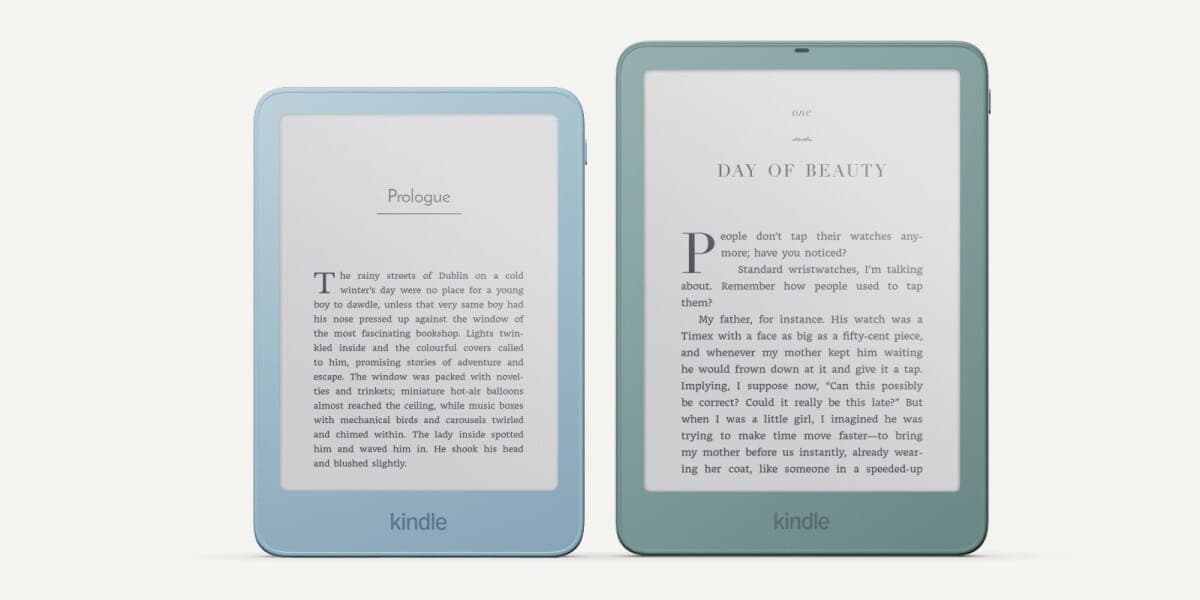
Amazon introduced a completely redesigned Kindle family with flush-front displays across every model, plus Kindle Click, a $35 Bluetooth remote for turning pages without touching the screen.
Tide
Wave
Sci-fi
1/10
Reality
In your hands
A remote control whose only job is turning one page.How we rate
Amazon redesigned its entire Kindle lineup with a new flush-front display across every model, from the $149.99 base Kindle up to the $289.99 Colorsoft.
It also introduced a $35 Bluetooth remote called Kindle Click for turning pages hands-free. Kindle remains one of the most widely used e-reader platforms, with Amazon citing more than 720 billion pages read in 2025 alone. A full lineup redesign at that scale touches a genuinely large base of everyday readers, not a niche audience.
What to know
- Amazon redesigned its entire Kindle lineup with a new edge-to-edge, flush-front display construction across every model, from the base Kindle to the Colorsoft.
- The base Kindle now starts at $149.99, with an aluminum version at $189.99; the Paperwhite starts at $199.99; and the Colorsoft starts at $289.99.
- Kindle Click, a $34.99 Bluetooth remote for turning pages without touching the device, works with all new Kindles as well as 2024-and-later models.
- Amazon says Kindle has seen double-digit growth globally for three consecutive years, with more than 720 billion pages read in 2025 alone.
- The base Kindle is available immediately in 19 countries and regions, while the Paperwhite and Colorsoft are open for preorder.
Amazon just gave every Kindle a new screen design and, for anyone who's ever wanted to read without lifting a finger, a $35 remote whose only job is turning the page.
What exactly changed across the whole Kindle lineup?
Every model in the redesigned lineup, from the base Kindle to the Colorsoft, now uses a new reverse-stack display construction with an edge-to-edge, flush-front screen. That replaces the recessed bezel design that's defined Kindle's look for years, alongside new color options including Ube, Alpine Sky, Seaglass Green, and Fig.
Why it matters: a shared display redesign across the entire lineup, rather than just the flagship model, suggests Amazon treated this as a foundational update to the whole product line, not a single headline feature reserved for the most expensive device.
What does the base Kindle actually cost now?
The base Kindle starts at $149.99 with 16GB of storage, with an aluminum version offering 32GB for $189.99. Amazon says it opens books 30% faster than before and gets up to six weeks of battery life, built using recycled materials.
Why it matters: the base model is the entry point for most new Kindle buyers, so meaningful speed and build-material improvements there affect far more people than upgrades reserved for pricier models.
What's new about the Paperwhite?
The redesigned Paperwhite starts at $199.99, with a 32GB Signature Edition at $249.99. It's thinner and lighter than before, remains waterproof, includes adjustable warm lighting, and reaches up to 12 weeks of battery life. It also uses an oxide thin-film-transistor backplane that Amazon says delivers the highest contrast ratio in the lineup.
In real life twelve weeks of battery life means a Paperwhite could realistically survive an entire vacation, including the layovers, without ever seeing a charger.
Why it matters: the Paperwhite has long been Amazon's best-selling middle-tier Kindle, so a thinner design paired with genuinely longer battery life is the kind of upgrade likely to matter to the largest share of Kindle's existing customer base.
What about the color Kindle, the Colorsoft?
The Colorsoft starts at $289.99, with a 32GB Signature Edition at $319.99. It uses a paper-like color display built with nitride LEDs, light-guide micro-deflectors, and an ultra-thin optical coating, engineering specifically aimed at keeping colors accurate without losing the paper-like readability Kindles are known for.
Why it matters: color e-ink displays have historically struggled to match the readability of standard black-and-white e-ink. The specific technical approach described here suggests Amazon is treating that readability tradeoff as the central engineering problem to solve, not just adding color as a checkbox feature.
What exactly is Kindle Click?
Kindle Click is a $34.99 Bluetooth remote that lets you turn pages without touching the device's screen at all. Amazon designed it for situations like reading under the covers, exercising, or traveling, and it works with all the new Kindle models as well as Kindle devices from 2024 onward.
Why it matters: backward compatibility with 2024-and-later Kindles means this isn't a feature locked exclusively to buyers of the brand-new lineup. Existing recent Kindle owners can adopt it too, broadening who the accessory is actually useful for.
Is there a version built for kids?
Yes. Kids versions of the new Kindle start at $179.99 and include a 12-month subscription to Amazon Kids+, Amazon's content subscription service aimed at children.
Why it matters: bundling a year of content access directly into the kids' hardware price lowers the barrier for parents trying the platform, rather than requiring a separate subscription decision after the hardware purchase.
How widely used is Kindle right now, according to Amazon?
By the numbers: Amazon says Kindle has achieved double-digit growth globally for three consecutive years, with readers reading more than 720 billion pages on Kindle devices in 2025 alone.
Why it matters: that scale is worth keeping in mind when judging how much a redesign like this actually matters. A lineup-wide update touching a platform read hundreds of billions of times a year reaches a genuinely massive, habitual reading audience, not a niche gadget crowd.
When can people actually get these?
The base Kindle is available immediately in 19 countries and regions, including the US, Canada, UK, Germany, Japan, and Australia. The Paperwhite and Colorsoft models are currently open for preorder rather than shipping right away.
Why it matters: staggering availability, with the cheaper model shipping first and pricier models still in preorder, is a fairly standard rollout strategy, but it does mean buyers eyeing the higher-end models will need to wait before owning one.
How did Kindle become this dominant in the first place?
Background: Amazon launched the first Kindle in November 2007, priced at $399 with 90,000 titles available at launch. It sold out within five hours. That first-mover success prompted rivals including Kobo and Barnes & Noble to build their own competing e-readers over the following years.
Why it matters: nearly two decades later, Amazon still commands roughly 72% of the US e-reader market, with Kobo a distant second at around 15%. A redesign touching every tier of a product line with that much market dominance carries real weight for the e-reading habits of a huge share of readers, not just Amazon's own most loyal customers.
Has competition pushed Amazon to keep innovating here?
Background: Kobo's strategy of partnering directly with independent bookstores, building a hybrid retail and online presence, has been credited as part of why it remains Kindle's most persistent rival, even without coming close to Amazon's overall market share.
Why it matters: even a dominant leader tends to keep innovating faster when a credible rival exists, pricing competition, retail partnerships, and format support all improve when a company isn't the only serious option. A lineup-wide hardware redesign this extensive suggests Amazon isn't treating its market lead as a reason to coast.
What it means for you
- If you're due for a Kindle upgrade, every tier of the lineup changed this time, not just one flagship model, so there's a meaningful new option regardless of which price point you're shopping at.
- Kindle Click is a genuinely optional accessory, not a requirement. All the new Kindles work exactly as before without it, so it's worth buying only if hands-free page turning solves a real problem for how you read.
- If you already own a 2024 or newer Kindle, you can buy Kindle Click separately without needing to upgrade your actual e-reader.
- Preorder timing matters here: the base Kindle ships now, but Paperwhite and Colorsoft buyers will need to wait for their preorders to arrive.
The bottom line
Amazon treated this as a full lineup redesign rather than a single flagship refresh, giving every Kindle model the same flush-front display overhaul while still differentiating battery life, color, and material choices by price tier.
The $35 Kindle Click remote is the smaller, odder story here, a device whose entire purpose is a single button press, but it's also a sign Amazon thinks hands-free reading is a real enough habit to build dedicated hardware around.
Nearly two decades after that very first Kindle sold out in just five hours back in 2007, Amazon is still treating the humble e-reader as worth a genuine ground-up redesign rather than a product left to quietly coast on its market lead.
Key facts
- Base Kindle
- $149.99
- Paperwhite
- $199.99
- Colorsoft
- $289.99
- Kindle Click remote
- $34.99
- 2025 pages read
- 720 billion+
Got questions?
Quick answers, plain wordsWhat's actually new about the redesigned Kindle lineup?
Every model now uses a newly redesigned reverse-stack display construction with an edge-to-edge, flush-front screen, replacing the recessed bezel design of previous generations. New color options include Ube, Alpine Sky, Seaglass Green, and Fig.
How much do the new Kindle models cost?
The base Kindle starts at $149.99 (16GB) with an aluminum version at $189.99 (32GB). The Paperwhite starts at $199.99, with a 32GB Signature Edition at $249.99. The Colorsoft starts at $289.99, with a 32GB Signature Edition at $319.99.
What is Kindle Click?
Kindle Click is a $34.99 Bluetooth remote that lets you turn pages without touching the Kindle's screen. It's designed for reading in situations like under the covers, while exercising, or traveling, and works with all the new Kindle models as well as Kindle devices from 2024 onward.
What's different about the Paperwhite specifically?
The new Paperwhite is thinner and lighter than before, remains waterproof, includes adjustable warm lighting, and gets up to 12 weeks of battery life. It also uses an oxide thin-film-transistor backplane that Amazon says gives it the highest contrast ratio in the lineup.
What makes the Colorsoft different from the other models?
The Colorsoft is Amazon's color e-reader, using a paper-like color display built with nitride LEDs, light-guide micro-deflectors, and an ultra-thin optical coating designed to keep colors accurate without sacrificing the paper-like readability Kindles are known for.
Is there a kids' version of the new Kindle?
Yes. Kids versions start at $179.99 and include a 12-month subscription to Amazon Kids+, Amazon's content subscription service for children.
When can I actually buy these?
The base Kindle is available immediately in 19 countries and regions, including the US, Canada, UK, and Japan. The Paperwhite and Colorsoft models are currently open for preorder rather than shipping immediately.
How popular is Kindle reading right now, according to Amazon?
Amazon says Kindle has achieved double-digit growth globally for three consecutive years, with readers reading more than 720 billion pages on Kindle devices in 2025 alone.
SourcesAmazon
Topics and tagsAmazon, amazon, kindle, e readers
Related stories
Amazon's new $60 Fire TV Stick 4K skips the power adapter entirely
Amazon unveiled a slimmer, faster Fire TV Stick 4K that draws power straight from your TV, simplified its whole streaming stick lineup, and plans an Alexa+ upgrade for Fire TV in November.
AMD's 192GB 'Gorgon Halo' chip powers a $7,099 mini-PC for local AI
The Ryzen AI Max+ Pro 495 packs 192GB of unified memory into a mini-PC, enough in theory to run models with hundreds of billions of parameters, at a price that has doubled from a year ago.
Apple's smart home hub reportedly launches October 13, with a camera that never records video
Bloomberg's Mark Gurman says Apple will announce its long-rumored smart home display on October 13. He also describes a companion home camera that sends text descriptions instead of video.
More in brief
- arXiv limits researchers to two papers a month as AI drives submissions to a recordOct 2
- California will fine robotaxi companies that block first responders for over 30 minutesOct 2
- Microsoft launches real-time transcription and new voice models for AI voice agentsOct 1
- Cloudflare releases Clef, open-weight AI models that make yes-or-no decisions fastOct 1
- GrayKey maker reportedly found a way around the iPhone's Inactivity RebootOct 1
- Fervo's Cape Station becomes the first enhanced geothermal plant to sell power commerciallyOct 1