
Technology·News & analysis
Maritime sensor startup Quartermaster raises $140M just months after its last round
Quartermaster, which builds ship-mounted sensor masts to track maritime activity, closed a $140 million Series B just four months after its $43 million Series A, driven partly by shipping chaos from the war in Iran.
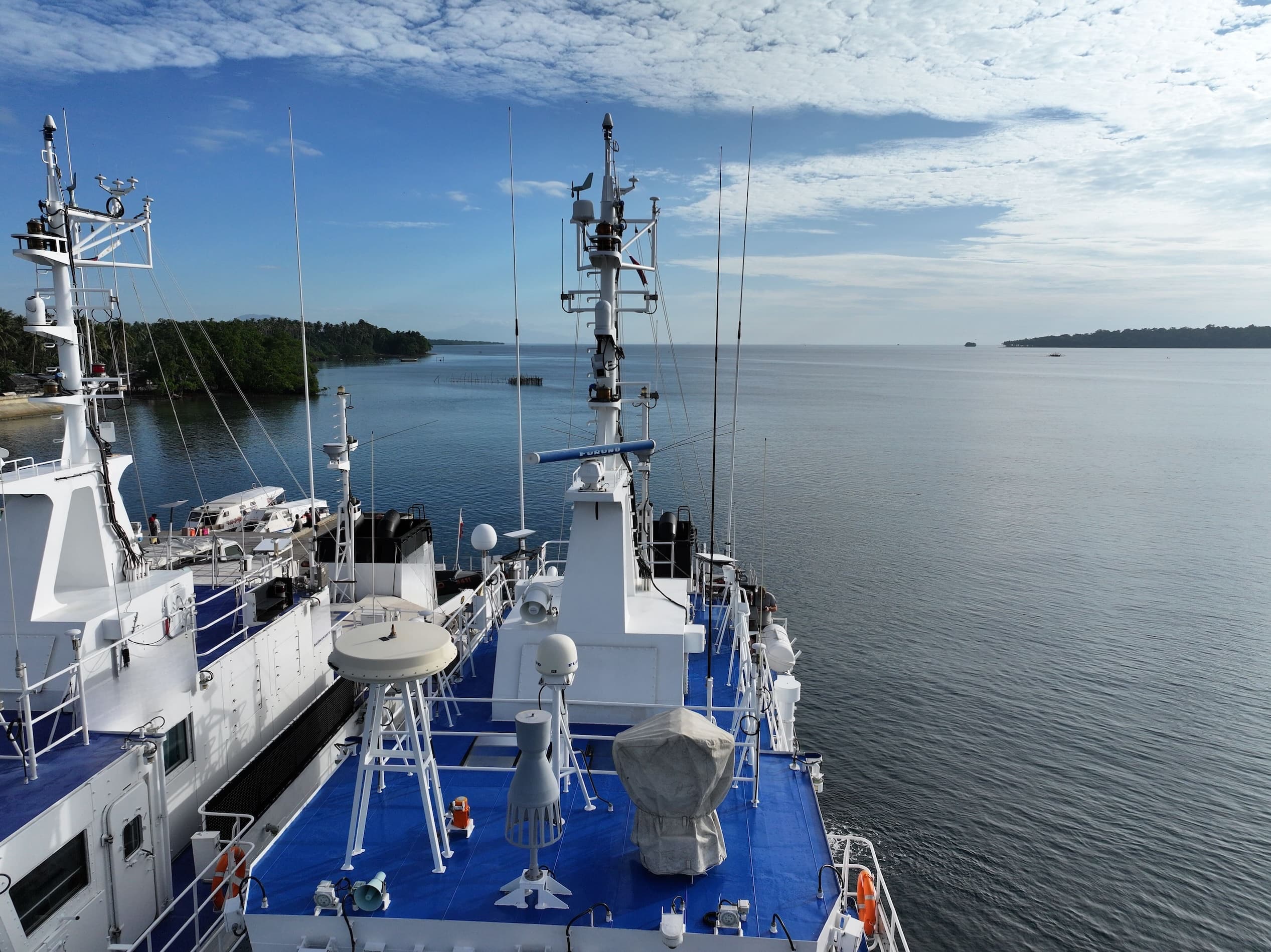
Quartermaster raised a $140 million Series B for its ship-mounted SmartMast sensors, just four months after a $43 million Series A.
The round was preempted by Insight Partners, with defense-focused Overmatch Ventures joining as a new investor. More than 650 vessels in 25 countries now use SmartMast, with over 800 units shipped. Founder Neil Sobin says demand accelerated after the war in Iran exposed how little real-time data exists about what's happening at sea.
What to know
- Quartermaster raised a $140 million Series B, just four months after a $43 million Series A in May 2026.
- The startup's SmartMast hardware mounts cameras and radios on ship masts to capture real-time maritime data, replacing the outdated AIS location-ping system.
- More than 650 vessels in 25 countries now use SmartMast, with over 800 units shipped to customers.
- Founder Neil Sobin said interest was helped by the war in Iran and the shipping chaos it caused.
The ocean covers most of the planet and, until recently, nobody tracking it could really trust the data. Quartermaster is trying to fix that, and investors just handed it $140 million to do it faster.
What just happened
Quartermaster closed a $140 million Series B, a massive jump from the $43 million Series A it raised only four months earlier in May 2026. The round was preempted by Insight Partners, a software-focused venture firm.
- Equity: About $100 million from Insight Partners, new investor Overmatch Ventures, and existing backer First Round Capital.
- Debt: The remaining $40 million came as a debt facility from investment bank Stifel.
- Speed: Four months between a $43 million round and a $140 million one is an unusually fast escalation, even by startup standards.
Why it matters: founder and CEO Neil Sobin said the round was helped by real-world events. "A big part of the story for us this year was, events in the world drive that clarity and drive that conviction and urgency," he told TechCrunch, pointing to the war in Iran and the shipping chaos it caused.
"I think we've gained huge amounts of conviction in the core thesis," Sobin said, describing how disruptions like that tend to sharpen investor interest rather than scare it off, since they make the cost of poor maritime visibility concrete rather than theoretical.
What SmartMast actually does
Quartermaster's hardware, called SmartMast, is a package of weather-hardened cameras and radios that mounts directly on a ship's mast. It captures and relays real-time data about what's happening around the vessel.
In real life Today, most ships broadcast their location through AIS, a system ships can simply turn off or fake. SmartMast instead captures real sensor data directly, the same way a dashcam works regardless of what the driver tells you happened.
Sobin has described AIS as "a completely broken system" that's opt-in and easy to spoof, which is exactly the gap SmartMast is built to close.
By the numbers: more than 650 vessels across 25 countries are now equipped with SmartMast, and Quartermaster has shipped over 800 units to customers in total. Each unit records tens of gigabytes of data per day.
Why the ocean is such a blind spot
Quartermaster calls the ocean "the largest blind spot on Earth," and the trade numbers back up why that gap matters. Global shipping carries more than 80% of world trade by volume, moving nearly 13 billion tons of cargo a year, up from about 4 billion tons in 1990.
That's an enormous, growing flow of goods that most tracking infrastructure still can't see reliably in real time. Existing satellite-based trackers like Spire and Windward help fill some of that gap from orbit, but they still lean on AIS data that ships can simply switch off.
Quartermaster's bet is that as sanctions evasion, smuggling, and other AIS spoofing get more sophisticated, especially in contested waters like the Black Sea since Russia's 2022 invasion of Ukraine, demand for a harder-to-fake, on-vessel data source will keep growing alongside it.
Who's actually using it
Quartermaster pitches its data to governments, shipping companies, and insurance providers, who all currently work with limited visibility into what's happening on the open ocean. Applications include helping vessels avoid collisions, tracking congestion in shipping lanes, and supporting maritime rescues.
Insight Partners managing director Nick Sinai said in a statement that Quartermaster is "building a distributed network for the ocean, where reliable, real-time data has been difficult to come by," calling the team's execution and customer demand strong enough to justify leading the round.
Sobin said the company spends significant time talking directly with people across the maritime industry, not just ship owners and operators, to find new uses for the data. "This is an ignored field," he said. "Mariners around the world have been ignored by technology for a really long time, and so when they meet us, they're so excited."
How it's different from satellite tracking
Quartermaster isn't the only company trying to fix maritime blind spots. Firms like Spire and Windward already sell ship-tracking data built mostly from satellites, combining AIS signals with imagery to spot vessels that go dark.
The catch with satellite-only approaches: they still depend heavily on the same AIS signals Quartermaster's Sobin calls broken, filling gaps with expensive satellite passes rather than a constant, on-vessel data stream. AIS spoofing has become a bigger problem industry-wide since 2022, particularly in the Black Sea, where vessels have faked their locations to evade sanctions tied to Russia's invasion of Ukraine.
SmartMast takes a different approach by putting the sensor directly on the ship rather than watching it from orbit. That means continuous data collection regardless of whether a vessel's AIS is on, off, or spoofed, though it only works on ships that have actually installed the hardware, unlike satellite coverage that can observe any vessel in view.
From Series A to Series B in four months
Quartermaster's first funding round, a $43 million Series A, closed in May 2026 and was co-led by First Round Capital and Quiet Capital. At that point, the company had roughly 600 ships using SmartMast, covering about 10 million square miles of ocean.
That Series A pitch already included a notable claim: SmartMast-equipped ships had assisted in more than 20 rescues of mariners at sea, a use case Sobin didn't originally plan for but has leaned into as evidence of the system's value beyond commercial tracking.
The jump from 600 to over 800 shipped units, and from $43 million to $140 million, happened in under half a year, a pace Sobin attributed directly to world events sharpening investor conviction rather than a slow, steady sales cycle.
Sobin's team also spends time finding uses for SmartMast data that weren't part of the original commercial pitch. The rescue assistance cases are one example: nobody set out to build a search-and-rescue tool, but continuous sensor coverage of previously unmonitored waters turned out to be directly useful for finding people in trouble.
What's next
Quartermaster hasn't detailed exactly how it will spend the new capital, but the round's structure, mixing venture equity with a Stifel debt facility, suggests the company is preparing to manufacture and deploy hardware at a larger scale rather than just fund software development.
With defense-focused Overmatch Ventures joining as a new investor alongside software-focused Insight Partners, Quartermaster's next chapter looks likely to involve both commercial shipping customers and government or defense-adjacent buyers interested in ocean awareness.
That dual investor base mirrors the company's dual use case: the same real-time vessel data that helps an insurer price risk or a shipping line avoid congestion can just as easily help a government agency track sanctioned tankers or monitor contested waters.
The bottom line
Quartermaster is betting that the ocean's biggest problem isn't a lack of ships, it's a lack of trustworthy data about what those ships are doing. Shipping already moves more than 80% of world trade with a fraction of the tracking rigor applied to trucks, trains, or planes on land.
A $140 million round four months after a $43 million one suggests investors think that gap is closing faster than anyone expected, even if the company still has to prove it can scale hardware production to match the demand.
Key facts
- Series B
- $140 million
- Prior round
- $43M Series A (May 2026)
- Vessels equipped
- 650+ in 25 countries
- Units shipped
- 800+
- Lead investors
- Insight Partners, Overmatch Ventures
Got questions?
Quick answers, plain wordsWhat does Quartermaster make?
SmartMast, a package of weather-hardened cameras and radios that mounts on a ship's mast to capture and relay real-time maritime data, replacing the older AIS location-ping system.
How much did Quartermaster just raise?
A $140 million Series B, with about $100 million in equity and $40 million as a debt facility from investment bank Stifel.
Who led Quartermaster's Series B?
Software-focused venture firm Insight Partners preempted the round, with new investor Overmatch Ventures, a defense-focused firm, and existing backer First Round Capital also participating.
How is this different from Quartermaster's last funding round?
Quartermaster raised a $43 million Series A in May 2026, co-led by First Round Capital and Quiet Capital. The $140 million Series B came just four months later, a much faster and larger round.
How many ships use SmartMast?
More than 650 vessels in 25 countries are currently equipped with SmartMast, and the company has shipped more than 800 units to customers total.
Why is Quartermaster's technology needed?
The maritime industry's current tracking standard, AIS, is opt-in and easy to spoof or disable, according to founder Neil Sobin. SmartMast captures real-time sensor data directly instead of relying on ships to self-report their location.
What is SmartMast used for?
Applications include helping ships avoid collisions, understanding shipping lane congestion, assisting maritime rescues, and providing data to governments, shipping companies, and insurance providers.
Why did investor interest in Quartermaster accelerate?
Founder Neil Sobin said the war in Iran and the shipping chaos it caused helped demonstrate the value of real-time maritime awareness, adding urgency to the startup's pitch.
Where is Quartermaster based?
Arlington, Virginia.
How much data does each SmartMast collect?
Each unit records tens of gigabytes of data per day, according to founder Neil Sobin.
SourcesTechCrunch
Topics and tagsFunding & deals, quartermaster, maritime, startups
Related stories

Apple's smart home hub reportedly launches October 13, with a camera that never records video
Bloomberg's Mark Gurman says Apple will announce its long-rumored smart home display on October 13. He also describes a companion home camera that sends text descriptions instead of video.
GrayKey maker reportedly found a way around the iPhone's Inactivity Reboot
A leaked training video seen by 404 Media says Magnet Forensics' new tools keep a seized iPhone in an easier-to-search state, even after the reboot Apple added in iOS 18.1.

Fervo's Cape Station becomes the first enhanced geothermal plant to sell power commercially
Fervo Energy's first 33-megawatt block at Cape Station in Utah reached commercial operation a day ahead of schedule, after 23 months of construction. Two more blocks follow by January 2027.
More in brief
- arXiv limits researchers to two papers a month as AI drives submissions to a recordOct 2
- California will fine robotaxi companies that block first responders for over 30 minutesOct 2
- Microsoft launches real-time transcription and new voice models for AI voice agentsOct 1
- Cloudflare releases Clef, open-weight AI models that make yes-or-no decisions fastOct 1
- Cloudflare renames its data platform Basin and makes it generally availableOct 1
- ChatGPT can now show you wearing clothes before you buy themOct 1