
Technology·News & analysis
Fusion startup Type One Energy raises $200M to build a power plant by 2034
The Tennessee startup says the Series B gets it about halfway to paying for a 400 MW fusion power plant, thanks to a plan to let partners build most of the parts.

Tide
Ripple
Sci-fi
4/10
Reality
Lab
A bottled star, built from other people's parts.How we rate
Type One Energy, a fusion startup in Tennessee, raised $200 million toward a 400 MW fusion power plant it wants running by 2034.
Its bet is that letting partners build most of the parts will make fusion far cheaper to commercialize. If that model works, the first fusion power plants could arrive with much less money than rivals need, which matters as demand for clean, always-on power keeps rising.
What to know
- Type One Energy, a Knoxville, Tennessee fusion startup, raised a $200 million Series B co-led by Breakthrough Energy Ventures and Clutterbuck Capital.
- CEO Christofer Mowry says the money gets the company about halfway to paying for a 400 MW commercial fusion plant it hopes to bring online by 2034.
- Type One designs the plant and its parts, then relies on a network of suppliers to build them, which Mowry says keeps costs far lower than doing it all in-house.
- It's building a stellarator, a twisted-shape fusion reactor, at the Tennessee Valley Authority's Bull Run site, using magnet technology licensed from Commonwealth Fusion Systems.
A fusion startup in Tennessee says it can build a power plant for less money than its rivals, and it just raised $200 million to try.
Type One Energy, based in Knoxville and founded in 2019, announced a $200 million Series B on Tuesday, TechCrunch reports. The company wants to bring a 400-megawatt commercial fusion power plant online by 2034.
Who invested?
The round was co-led by Breakthrough Energy Ventures, the Bill Gates-backed fund and a repeat investor, and Clutterbuck Capital.
New investors include Lowercarbon Capital, co-founded by early Uber backer Chris Sacca, Siemens Energy Ventures and SiteGround Capital, according to Reuters.
The total: Reuters reports the round takes Type One's total funding past $400 million. Citing PitchBook data, it said this is the third-biggest Series B in the fusion sector over the last five years. TechCrunch says the company had previously raised at least $82.5 million. Type One didn't disclose its valuation.
"The breadth and quality of investors in this funding round demonstrates growing support for our strategy to industrialize the commercial deployment of fusion energy," CEO Christofer Mowry said in a statement, according to Heatmap.
What will $200 million buy?
About half a power plant, according to the company.
Mowry told TechCrunch the Series B should get Type One halfway to paying for its 400 MW commercial plant. If the company can bring it online by 2034, he said, it could finish its first plant with less capital than many competitors, even with one or more later funding rounds.
The money will also help develop the technology, including an engineering prototype machine called Infinity One, Mowry told Reuters.
"It's not an experimental science project... the only thing that we want to learn is that our design for the fusion machine in the power plant works as advertised," he said.
The commercial plant is called Infinity Two. Both sit under Type One's Project Infinity at Bull Run in Tennessee.
The big idea: let partners build it
Type One's pitch is its business model, not just its reactor.
Design, don't manufacture: the company designs the power plant and many of its components, then turns to a "bespoke" network of suppliers chosen for the project to build them, Mowry told TechCrunch. Most fusion startups rely on suppliers for some parts, but Type One plans to go further.
"The amount of capital that we need to raise to commercialize fusion at Type One is just a different order of magnitude than if you were going to be vertically integrated," Mowry said.
"Why would I want to spend on bricks and mortar?" he added. "I used to run a big nuclear manufacturing company. That's expensive."
Bigger partners: the approach gives Type One access to companies with more expertise in some areas. Infrastructure consultant AECOM is working on engineering for Infinity Two. "They have 10,000 people, most of them are engineers of one kind. We're never going to have 10,000 people," Mowry said.
Who's on the team?
Type One has already lined up partners, according to TechCrunch:
- Tennessee Valley Authority: Type One will build its first two fusion devices on TVA's Bull Run site.
- AECOM: engineering for the Infinity Two power plant.
- Commonwealth Fusion Systems: the competitor has licensed its high-temperature superconducting magnet technology to Type One, which will form the backbone of the reactor design.
- Siemens: Type One aims to work toward a manufacturing partnership, Reuters reports.
"The Series B financing enables us to remain focused on advancing our stellarator technology and Project Infinity design activities," Mowry said, according to Heatmap.
What's a stellarator?
Type One is building a stellarator, a type of fusion reactor that uses complex magnetic fields to contain superheated plasma, Reuters explains.
Most fusion designs are tokamaks, shaped like a doughnut. TechCrunch has described a stellarator as more like a cronut: still a ring, but warped and bulging. The shape of the magnets creates the specially shaped field that holds the plasma, where hydrogen atoms collide and fuse, releasing huge amounts of energy.
The concept isn't new, but it takes a lot of computing power to get the design right. Type One was spun out of the University of Wisconsin-Madison, which operates a stellarator, TechCrunch reported in 2024. The world's largest stellarator, Wendelstein 7-X, is in Germany.
How Type One got here
The company has grown fast from a small seed round.
Early money: Type One raised $29 million in 2023, then a $53.5 million extension in 2024 led by Breakthrough Energy Ventures, with Australia's Foxglove Ventures and New Zealand's GD1 participating, TechCrunch reported at the time. That brought its total to about $82.5 million.
The CEO: Mowry joined early in 2023. "Given the rate at which we want to accelerate, we needed a larger quantum of capital," he told TechCrunch then. "We weren't going to get there with your prototypical $20 million, $30 million, $40 million seed round."
Computing and magnets: in 2024, Type One had a partnership with Oak Ridge National Laboratory for supercomputer access to refine its design, and was working with MIT on stellarator magnet research, separate from MIT's work with Commonwealth Fusion Systems, TechCrunch reported.
Supply chain: this March, Heatmap reported a deal for Type One to start securing the material needed for its reactors.
Siemens' view: the deal strengthens Siemens Energy's position in fusion "as we continue to explore the technologies and collaborations that can help advance commercialization," Enrique Gonzalez Zanetich, a partner at Siemens Energy Ventures, said in a statement, according to Reuters.
The risk of being an integrator
Leaning on suppliers makes Type One what's called an integrator, a company that assembles a product from parts made by others.
That limits its risk from activities like manufacturing, but it adds another kind: less control over suppliers than an in-house team would have, TechCrunch notes.
The best-known recent example is Boeing, which relied on Spirit AeroSystems for fuselage sections of the 737 and 787. After a series of quality-control failures, including a door plug blowing out on an Alaska Airlines flight in 2024, Boeing bought Spirit to bring it in-house.
Mowry argues the trade-off is worth it. "These business models are successful because they let companies focus on managing risk and developing a high level of competency in their slice of the value chain," he said.
Why fusion is drawing money
Fusion has been researched for decades. A wave of companies has launched in recent years as advances in magnets, computing and materials raised hopes that fusion could one day provide abundant clean power, Reuters notes.
But it's expensive. Fusion sits at the cutting edge of plasma physics, materials science and advanced computing, and even $200 million doesn't always go far, TechCrunch says.
What it means for you
- If you follow clean energy: another well-funded fusion company now has a 2034 target for a commercial plant in the US Southeast.
- If you live in Tennessee: the Bull Run site is becoming a fusion hub, with Type One's first two devices planned there.
- If you're skeptical of fusion timelines: fair. No company has yet delivered fusion power to the grid, and 2034 is a goal, not a guarantee.
The bottom line
Type One Energy raised $200 million to build a stellarator fusion power plant in Tennessee by 2034, betting that partners like AECOM, Siemens and Commonwealth Fusion Systems can help it get there for far less money than rivals. The physics still has to work, and so does managing all those suppliers.
Key facts
- Round
- $200 million Series B
- Lead investors
- Breakthrough Energy Ventures, Clutterbuck Capital
- Target
- 400 MW commercial plant, Infinity Two, by 2034
- Site
- TVA's Bull Run site, Tennessee
- Reactor type
- Stellarator
Got questions?
Quick answers, plain wordsWhat did Type One Energy announce?
A $200 million Series B funding round. It was co-led by Breakthrough Energy Ventures and Clutterbuck Capital, with Lowercarbon Capital, Siemens Energy Ventures and SiteGround Capital also investing.
What will the money pay for?
CEO Christofer Mowry told TechCrunch it should get the company about halfway to paying for a 400 MW commercial power plant. He told Reuters it will also help develop the technology, including an engineering prototype called Infinity One.
When will the power plant be ready?
Type One hopes to bring its first commercial plant, Infinity Two, online by 2034, according to TechCrunch. Reuters reports the company hopes to launch it within a decade.
What is a stellarator?
A type of fusion reactor that uses complex magnetic fields to contain superheated plasma. Compared with the more common doughnut-shaped tokamak, a stellarator is twisted and bulging, with magnets shaped to create the right field.
How is Type One different from other fusion startups?
It acts as an integrator. It designs the plant and many components, then has a hand-picked network of suppliers build them, instead of manufacturing most parts itself. Mowry says that means it needs a different order of magnitude less capital.
Who are its partners?
Its first two fusion devices will be built at the Tennessee Valley Authority's Bull Run site. AECOM is working on engineering for Infinity Two, and Commonwealth Fusion Systems has licensed its high-temperature superconducting magnet technology to Type One.
What's the risk of relying on suppliers?
Integrators have less control over suppliers than in-house teams. TechCrunch points to Boeing, which bought supplier Spirit AeroSystems after quality-control failures. Mowry says Type One's risk is lower than doing everything in-house.
How much has Type One raised in total?
Reuters reports the Series B takes total funding past $400 million and is the third-biggest fusion Series B in five years, according to PitchBook. TechCrunch says the company had previously raised at least $82.5 million.
Why is Siemens Energy involved?
Siemens Energy's venture arm invested, and Type One aims to work toward a manufacturing partnership with Siemens, Reuters reports.
SourcesTechCrunch
Topics and tagsFunding & deals, fusion, type one energy, startups
Related stories
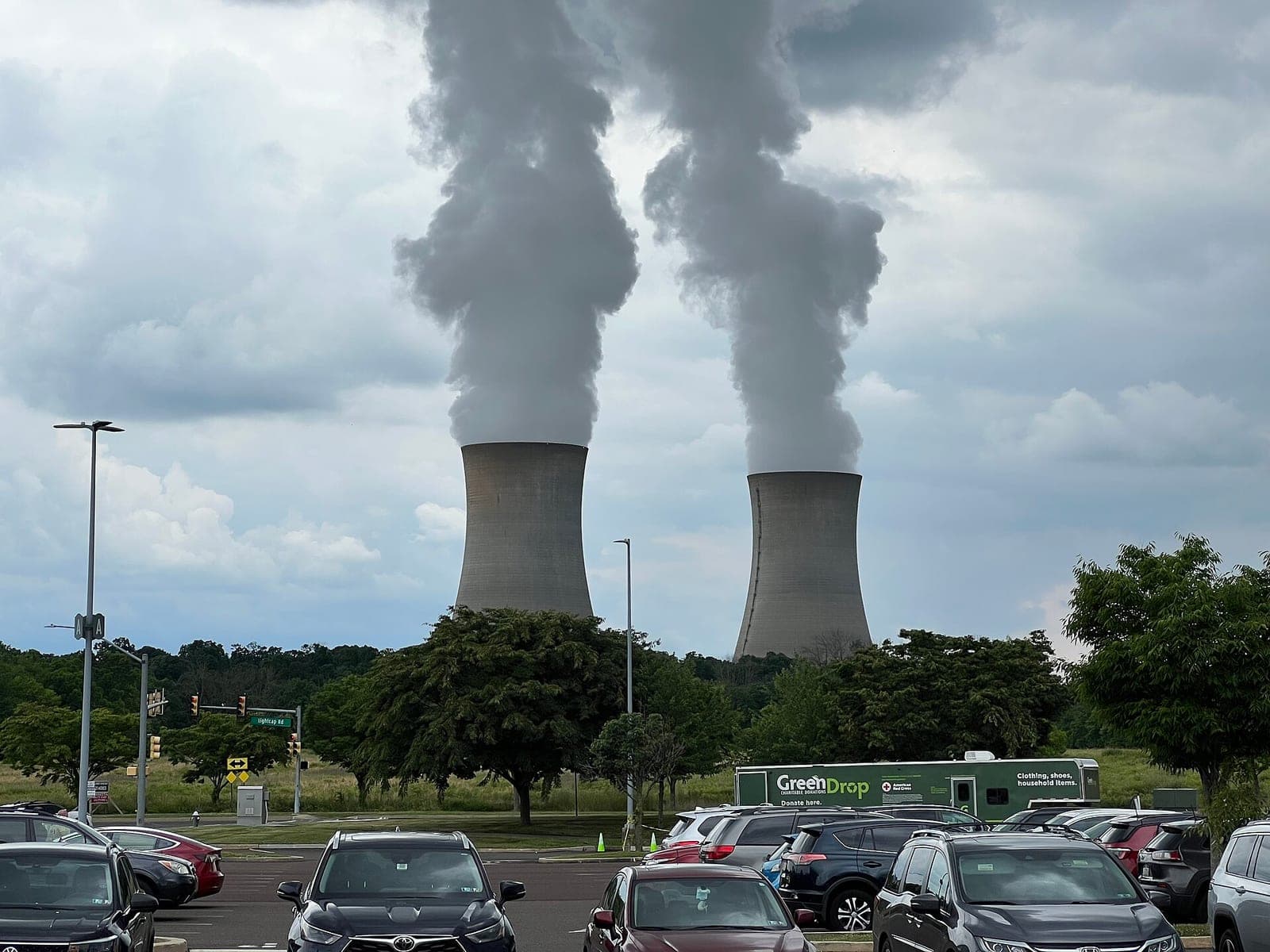
Google signs a deal to squeeze 890 MW more out of Constellation's nuclear plants
Google will be the anchor customer for upgrades at six existing nuclear plants in Illinois, Pennsylvania and New Jersey, adding power to the grid by 2032. Constellation will also use Google's Gemini Enterprise to run the work.

California legalizes plug-in balcony solar, but compliant kits aren't here yet
A new state law lets renters and homeowners plug small solar panels into a wall outlet starting in 2027, making California the 10th state to allow so-called balcony solar.
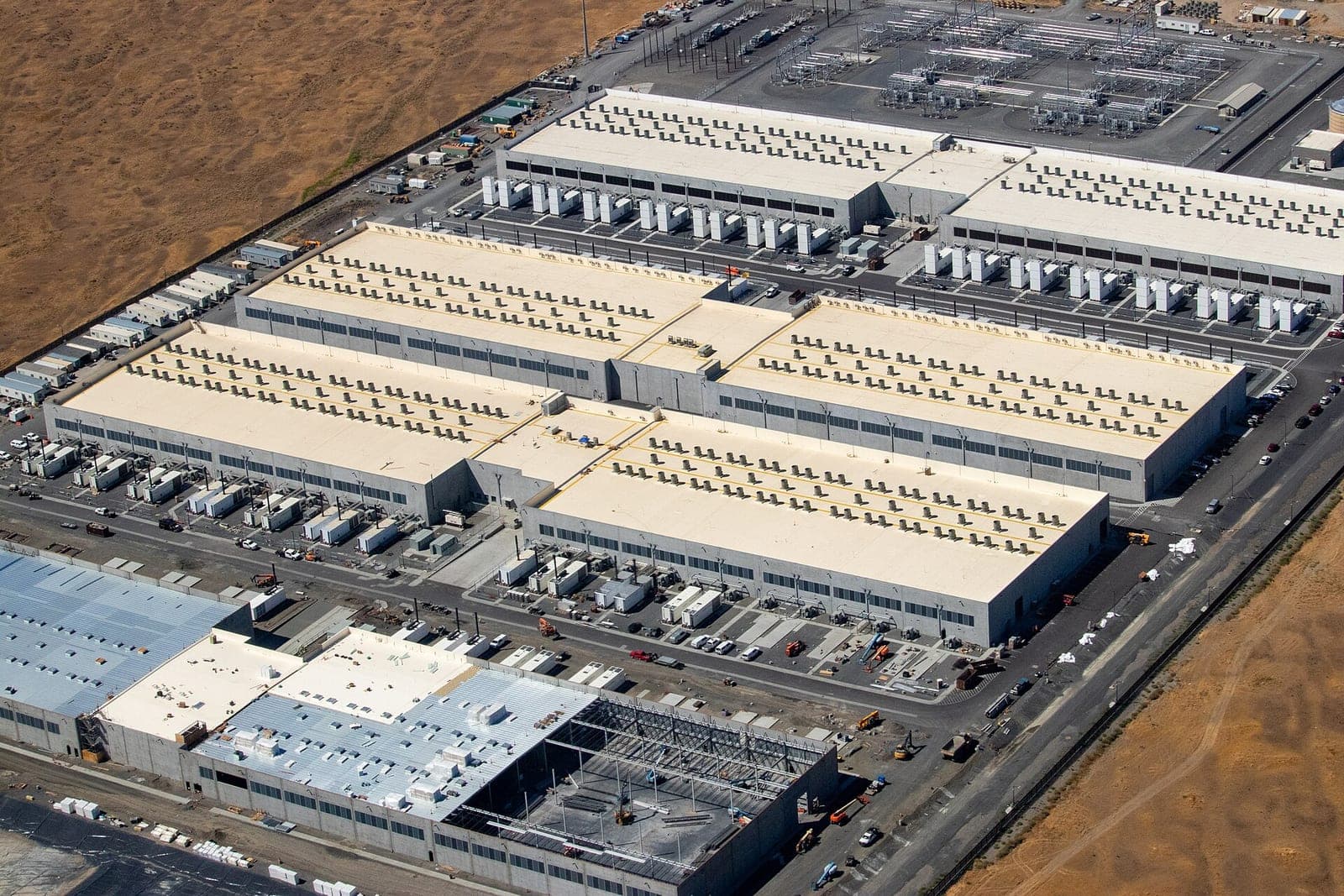
Amazon pledges $1B+ to the towns that host its data centers
AWS's new Built Together program promises free community college, home energy upgrades and local grants over five years, as more than 100 data center moratoriums are being weighed across the US.
More in brief
- Mistral Large 4 'Le Chonk' is a 1-trillion-parameter open model built for cyber defenseOct 6
- ASOS app users get an 'ASOS HACKED' alert as attackers claim a Snowflake breachOct 6
- Qualcomm will license Huawei's patents, a reversal 25 years in the makingOct 6
- FBI drops an Accenture contractor after a missed patch exposed staff dataOct 6
- OpenAI apologizes to Australian lawmakers for its AI agent's Medicare website hackOct 6
- UK regulator Ofcom investigates Meta over Instagram's disappearing-photo feature InstantsOct 6