
Technology·News & analysis
Nintendo takes down 144 GitHub projects behind Switch modchips
A Nintendo copyright notice took 144 GitHub repositories of Switch modchip firmware offline. Here is what it means for modders and owners.

Tide
Ripple
Sci-fi
3/10
Reality
In your hands
A tiny chip on a motherboard, and a very big legal letter.How we rate
Nintendo of America sent GitHub a copyright takedown notice dated November 6, and GitHub removed a network of 144 repositories holding firmware for Switch modchips such as Picofly, HWFLY and SX Core.
Nintendo argues the firmware breaks the copy protection on the console and cites the US criminal case against Team Xecuter. Chips already installed keep working, but they can no longer be updated or reflashed from those repositories. Copies may still exist elsewhere on GitHub.
What to know
- Nintendo of America told GitHub that firmware for Switch modchips breaks the console's copy protection, and GitHub took down 144 repositories in one network.
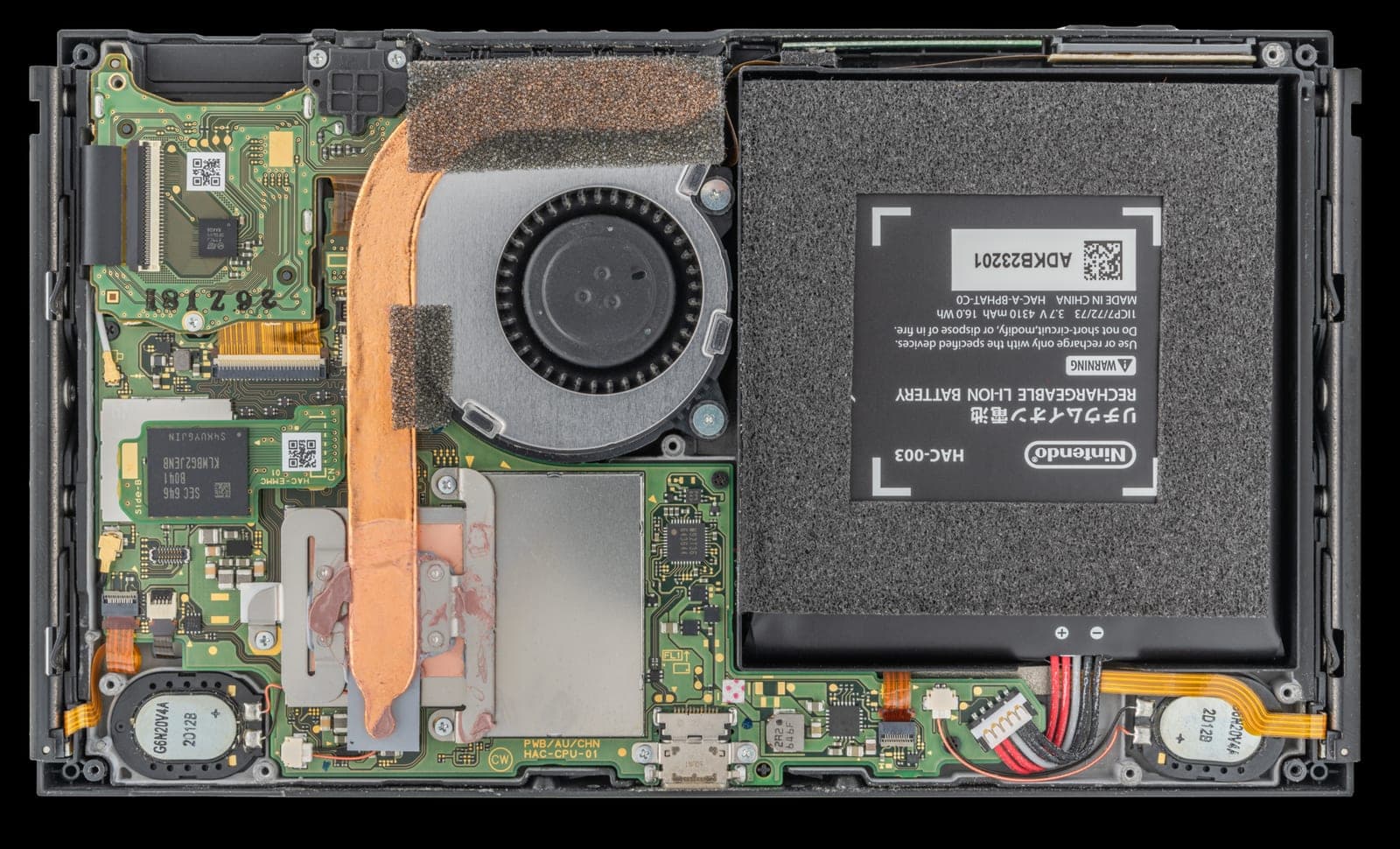
- The firmware is the code that lets a soldered chip, such as Picofly, HWFLY or SX Core, hack a Switch during start-up.
- Nintendo points to the US criminal case against Team Xecuter, the group behind the SX devices, as support for its claim.
- Chips already inside consoles keep working, but updating or reflashing them gets harder, and the hack does not work on the Switch 2.
Nintendo of America has told GitHub to remove the code behind Switch modchips, and GitHub did. A takedown notice dated November 6 wiped out a network of 144 repositories, including the parent project.
That's the news. Now the fun part: how can a chip the size of a fingernail make a console ignore its own rules?
What exactly was taken down?
A repository is a folder of code stored on GitHub, where developers share and update projects. Nintendo went after the repositories that hold firmware for Switch modchips.
Firmware is the small program that runs inside a chip and tells it what to do. Without it, a modchip is just a piece of silicon.
The notice names firmware for four products:
- SX Core
- SX Lite
- Picofly
- HWFLY
By the numbers: all 144 repositories were in one network, so removing the parent took the rest with it.
How does a modchip work?
Early original Switch consoles shipped with a flaw in recovery mode. It sits in the hardware, so no software update can fix it.
Later models closed the gap, including the Switch Lite and the Switch OLED. On those, the only way in is hardware: you solder a small chip, such as a Picofly, HWFLY or SX Core, onto the motherboard.
The chip needs firmware to do its job. That code performs voltage glitching during start-up. In plain words, it briefly disturbs the power to the processor at exactly the right moment, so the console skips a security check.
In real life Think of a guard who checks tickets at a door. A modchip does not argue with the guard. It makes the guard blink at the exact second you walk past.
The hack does not work on the Switch 2.
What does Nintendo say?
Nintendo's notice says the repositories "offer, link to, or otherwise provide access to mod chip firmware." It says the firmware lets modchips "illegally circumvent Nintendo's TPMs in order to run illegal copies of Nintendo Switch games."
TPM here means technological protection measure. It is the lock that makes a console play only legitimate game files.
Nintendo also argues the firmware bypasses the boot sequence, the steps a console follows when it turns on. It says distributing code made "primarily" for that purpose is unlawful trafficking in circumvention technology.
Nintendo's argument rests on a US law that treats tools built to get around copy protection as illegal to distribute, even before anyone uses them to copy a game.
Why does it mention Team Xecuter?
To support its claim, Nintendo cited the US Department of Justice case against Team Xecuter. The group made and sold the SX Pro, SX Core and SX Lite.
The Justice Department said the group sold its devices from about June 2013 to August 2020. Gary Bowser, the group's public voice and a main salesperson, was sentenced to 40 months in prison and agreed to pay about $4.5 million to Nintendo.
Prosecutors said the group earned at least tens of millions of dollars from selling its devices.
The big picture: Nintendo is using a criminal conviction as a building block in a copyright takedown. The two cases were separate, but the notice treats the first as proof for the second.
What else do modchips do?
Nintendo focuses on pirated games. Modchips can be and are used for that, but they also unlock other things.
- Homebrew: custom apps and tools that Nintendo never approved.
- Emulation: running old games from other consoles on the Switch.
- Other operating systems: loading a different system on the hardware.
- Themes and mods: custom looks for the menu and changes inside games.
- Overclocking: pushing the processor to run faster than Nintendo set it.
Nintendo's notice does not discuss these uses. It talks only about running copies of Switch games.
What happened in the Team Xecuter case?
The Justice Department's case ran for about two years. Bowser and another member were taken into custody in 2020. Bowser pleaded guilty in November 2021, and prosecutors asked for 60 months in prison while his lawyers asked for 19.
The judge chose 40 months in 2022. That is why Nintendo now treats the group's devices as settled law, and why the SX name shows up in this notice.
Who can still use a modchip?
Here is the practical side, and it is less dramatic than the headline.
- Chips already installed: they keep working. Nothing in the notice reaches into a console you own.
- Updates and reflashing: this gets harder, because the firmware is no longer in those repositories.
- New modders: anyone planning to hack a Switch the same way loses a main source of the code.
Copies of the firmware may still sit elsewhere on GitHub, so the takedown may not be the end of the story. A developer can also file a counter-notice, which is a formal reply saying the material does not break the law.
Is this a pattern?
Yes. Nintendo has used the same tool, the DMCA notice, many times.
- February 2024: Nintendo sued the makers of the Yuzu emulator. A week later, on March 4, they settled. The company behind Yuzu, Tropic Haze, agreed to pay $2.4 million and stop distributing it.
- Later in 2024: a takedown aimed at 12 mirrors of Yuzu removed about 8,500 copies.
- February 26, 2025: two notices removed 4,238 and then 113 repositories linked to the Ryujinx emulator and related projects.
- August 2026: a sweep removed 401 Switch emulation repositories.
An emulator is a program that lets one device pretend to be another, so a PC can run Switch games.
This week's wave also included notices aimed at two emulators, Yuzu and Citron Neo, which makes four notices in total.
What does it have to do with AI?
Game makers have a new worry. AI tools now help people recreate and port games faster than before.
Some projects this year show the trend. A remake of The Legend of Zelda: Ocarina of Time recently began running in emulators on PC. Last month, Rockstar had a browser version of GTA 5 taken down, and Bethesda removed an AI-generated Fallout New York game.
Other examples came up in recent months. Nintendo's Zelda remake was dumped online on the same day it launched on Switch 2. In July, Mario Kart Wii was recompiled for PC in 4K with more than 200 tracks. A developer also used AI to bring the Nintendo 64 version of a Zelda game to iOS.
Nintendo has not said that AI is behind this notice, and the notice itself is about modchips. Still, it arrives at a time when copying and porting games has become easier.
What's next: if developers do not push back, more repositories may come down. If someone files a counter-notice, GitHub may restore content after a waiting period.
What it means for you
- If you own a Switch: nothing changes. Your console, your games and your online play are untouched.
- If you have a modchip: it keeps working, but plan for fewer updates and harder reflashing.
- If you like open-source projects: a single notice can remove a whole network of repositories at once.
- If you plan to mod a console: the legal risk is real, because Nintendo treats the code as illegal to share.
The bottom line
Nintendo has taken the code behind Switch modchips off GitHub, using a copyright law that targets tools for getting around copy protection. Chips already installed are not switched off, but the supply of firmware has been cut. The fight between Nintendo and the modding scene is now years old, and this is its latest round.
Key facts
- Who filed it
- Nintendo of America, DMCA notice dated November 6, 2026
- What was removed
- 144 repositories, including the parent project
- Firmware affected
- SX Core, SX Lite, Picofly and HWFLY
- Switch 2
- Not affected, the modchip hack does not work on it
- Installed chips
- Keep working, but lose updates and reflashing
Got questions?
Quick answers, plain wordsWhat did Nintendo do to the modchip firmware?
Nintendo of America sent GitHub a DMCA takedown notice dated November 6, 2026. GitHub then removed a network of 144 repositories, including the parent project, that offered firmware for Switch modchips.
Which modchips are affected?
The notice names firmware for SX Core, SX Lite, Picofly and HWFLY. These are small chips that people solder onto the motherboard of a Switch.
What is a DMCA takedown notice?
The DMCA is a US copyright law. A takedown notice is a formal letter that asks a website to remove material the sender says breaks that law. The site usually removes it first, and the owner can answer with a counter-notice.
Will my modded Switch stop working?
No. A chip that is already installed keeps running. The change is that the firmware can no longer be downloaded from those repositories, so updates, flashing and reflashing get harder.
Does this affect the Switch 2?
No. The modchip hack described here does not work on the Switch 2, so there is no firmware for it to remove.
Why is this about the Switch's boot process?
Nintendo says the firmware bypasses the console's start-up sequence, which is where the copy protection is checked. A chip with the right code can glitch the processor's power at that moment and slip past the check.
Which Switch consoles can be hacked this way?
Early original Switch consoles shipped with a hardware flaw in recovery mode that cannot be patched by software. Later models such as the Switch Lite and Switch OLED closed it, so those need a soldered chip instead.
What is Team Xecuter?
It was a group that made and sold devices for hacking game consoles, including the SX OS, SX Pro, SX Lite and SX Core. The US Justice Department charged members of the group, and one of them, Gary Bowser, was sentenced to 40 months in prison.
Is this the first time Nintendo has done this?
No. Nintendo has used takedown notices against Switch emulators on GitHub before, including a notice in February 2025 that removed 4,238 repositories and a sweep in August 2026 that removed 401.
Can the firmware come back?
Nintendo's notice covers the repositories it listed. Copies may still be hosted in other places on GitHub, and a developer could file a counter-notice, so the situation may keep changing.
SourcesGitHub DMCA notices, justice.gov
Topics and tagsnintendo, nintendo switch, github, dmca
Related guide
Guide, 45 minHow to build a daily AI agent with Claude Managed AgentsAnthropic's open example is an agent that reads Slack and GitHub each weekday and posts one short brief. Here is how it works and how to...Related stories

FAA lifts a nationwide ground stop after a communications outage
A failure in the network linking air traffic controllers and pilots stopped takeoffs across the US for hours on Friday. Officials blame old equipment and a patch.
Apple Sports adds UFC with live stats for every fight on the card
Apple's free Sports app now covers UFC, starting with UFC 334 this Saturday. You get fight-by-fight numbers, a strike map and lock screen updates.

SignDrop, a new Windows zero-day, gives attackers full System rights
A researcher with a long feud against Microsoft published SignDrop, an unpatched Windows flaw that turns a normal account into the most powerful one on the PC.
More in brief
- Tesla opens Cybercab orders at $29,990, plus $299 a month to drive itNov 14
- LangChain raises $300 million at a $3 billion valuation for AI agentsNov 13
- Microsoft's AI Frontiers research group is over, says co-founder John LangfordNov 13
- BYD apologizes after wrong wheels ship on its Great Tang SUVNov 13
- Microsoft 365 outage cuts off Outlook, Teams and Copilot for hoursNov 13
- Humble Bundle's new site drops two-factor login for accountsNov 13