
Technology·News & analysis
Motorola's Signature 27 hits the US at $1,599 with GrapheneOS support
Motorola's first all-out flagship slab phone has a 200-megapixel zoom camera, a 7,000mAh battery and seven years of Android upgrades. It is also the first big-brand phone to officially support GrapheneOS.

Tide
Wave
Sci-fi
4/10
Reality
Demo
A phone with a camera that notices motion one pixel at a time.How we rate
Motorola announced the Signature 27, its first all-out flagship slab phone for the US, at $1,599 for 12GB of RAM and 512GB of storage.
It is also the first Motorola phone with official GrapheneOS support, a privacy-focused version of Android. The price matches Samsung's Galaxy S26 Ultra at the same storage. Pre-sales start November 19 in the US, and the phone goes on sale November 26.
What to know
- The Signature 27 costs $1,599 in the US and comes with 12GB of RAM and 512GB of storage.
- It uses Qualcomm's Snapdragon 8 Elite Extreme Gen 6 chip, a 6.8-inch screen that reaches 12,000 nits and a 7,000mAh battery.
- It is the first Motorola phone, and the first mainstream US phone, to support the privacy-focused GrapheneOS.
- US pre-sales start November 19 and the phone goes on sale November 26.
Motorola just announced the Signature 27 for the US, and it costs $1,599. For that money you get the biggest swing the company has taken at the top of the phone market. So the question is simple: is Motorola, the brand known for the Razr flip phone, ready to play with Samsung's best?
What is the Signature 27?
It is a regular slab phone, not a flip phone, built to be a true flagship. A flagship is a company's best phone, the one with the newest parts.
Motorola has made high-end Edge phones before. They never quite had the features to sit in the top tier. Motorola has had its biggest hits with the Razr foldables, which lean on style and nostalgia.
The Signature line is different. A Signature phone did exist last year, but it never came to the US. This one does, and it goes straight after phones like Samsung's Galaxy S26 Ultra.
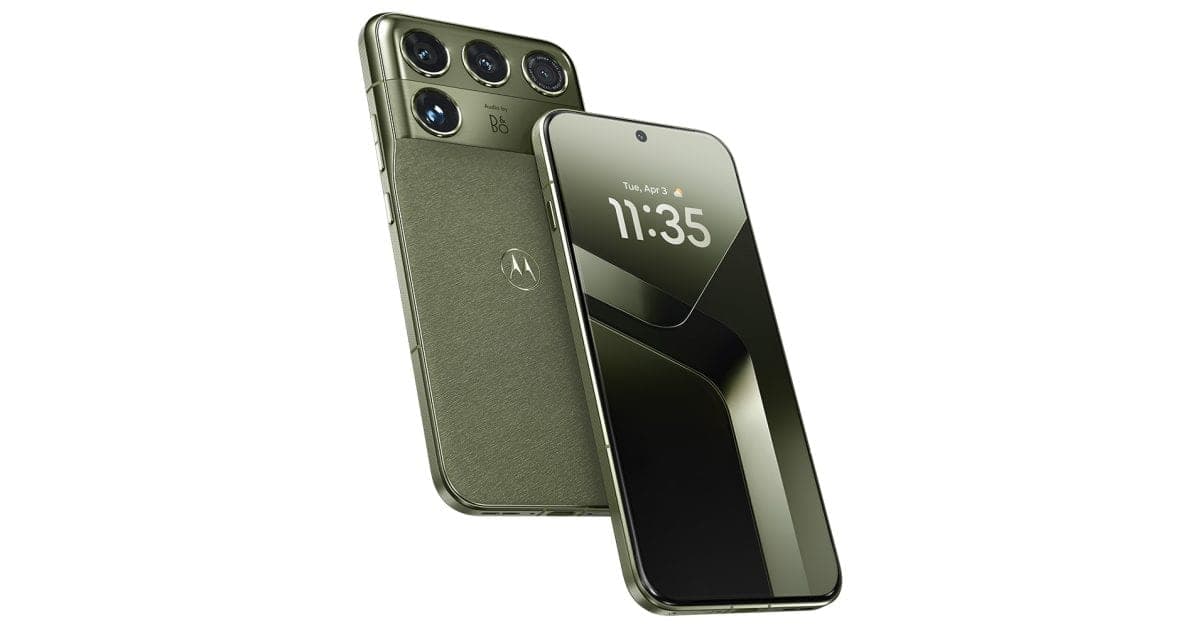
Motorola is leaning into a luxury look. The phone comes in two Pantone colors:
- Coal Smoke: a dark finish with a woven, textile-like back panel.
- Capulet Olive: a green finish with a brushed, textile-inspired back.
What does $1,599 get you?
The price buys one version: 12GB of RAM and 512GB of storage. RAM is the short-term memory your phone uses to keep apps ready, and storage is where your photos and files live.
Samsung's Galaxy S26 Ultra costs the same $1,599 for the same 12GB and 512GB. Samsung also sells a cheaper 256GB version for $1,399. Motorola has no cheaper option yet.
The timing is awkward. Memory chips have become more expensive because AI data centers are buying so many of them. We covered that in Samsung's S26 price rise and in Micron's warning about memory prices. A $1,599 phone is a steep hill to climb, and the spec sheet alone will not carry it.
What is inside?
The phone runs on Qualcomm's Snapdragon 8 Elite Extreme Gen 6 chip. It is built on a 2-nanometer process, which means its parts are packed extremely small. It can reach clock speeds of up to 5GHz. Clock speed is how many steps per second a chip can take.
Fast chips get hot. Motorola added its ArcticMesh cooling system, which now uses a diamond-infused gel. Motorola says the cooling area is 40% bigger than last generation. Whether it helps in real use is something testers will check.
Here is the rest of the spec sheet:
- Screen: 6.8 inches, a tandem OLED with a 1.5K "Super HD" resolution. Tandem means two light-emitting layers stacked together.
- Brightness: up to 12,000 nits at peak. A nit is a unit of brightness, and 12,000 is very bright.
- Battery: 7,000mAh, using silicon-carbon, a newer battery material that stores more energy in the same space.
- Charging: up to 90W wired and up to 50W wireless. The wireless speed needs Motorola's own charger.
- Protection: IP68 and IP69 ratings for dust and water.
- Audio: a Bang & Olufsen sound system with a redesigned speaker layout. Motorola says the sound is "meant to be felt, not just heard."
There is one small miss. The phone has no built-in Qi2 magnets, the ring that snaps wireless chargers and accessories to the back.
What about the cameras?
The back of the phone has four lenses on a raised plateau. Some people say the camera bump looks like a spider's face, and the olive model is hard to look away from.
Here is what the lenses do:
- Main: a 50-megapixel Sony Lytia L910 sensor. It uses LOFIC technology, which helps it keep detail in both bright and dark parts of a scene.
- Telephoto: a 200-megapixel camera with 3x zoom. It sits behind a periscope lens, which bends light sideways inside the phone to make room for zoom.
- Ultrawide: a 50-megapixel camera for wide scenes.
- Event Vision Sensor: a special sensor that notices movement at the pixel level. Motorola says it helps "capture fast-moving subjects with greater clarity and precision."
In real life Think of a kid running across a soccer field at dusk. Most phones blur the legs. Motorola says the event sensor is built for exactly that kind of shot, though we will need real photos to know.
Why does GrapheneOS matter?
This is the twist that got privacy fans talking. The Signature 27 is the first Motorola phone to support GrapheneOS. It is also a first for a mainstream phone sold in the US.
GrapheneOS is a version of Android that puts privacy and security first. It is built on the Android Open Source Project, the free base of Android that anyone can use. Google's apps and services are not built deep into it. You can still add Google Play services, but they run in a sandbox, like any normal app, so they get less access to your phone.
For years, GrapheneOS only officially worked on Google's Pixel phones. The project has strict hardware and security needs, and Pixels met them. The project confirmed on X that the Signature 27 is the next phone it will support.
The plan is for phones to be sold with GrapheneOS already installed. Motorola has also said future Razr flip and Razr Fold phones will support it.
Why it matters: if you wanted the most locked-down Android, you had to buy a Pixel. Now there is a Snapdragon flagship with a 200-megapixel zoom camera on the list too.
How long will it get updates?
Motorola promises seven years of OS upgrades. That puts it with the best update promises from Samsung and Google. It means the phone should keep getting new versions of Android long after you stop thinking of it as new.
One caution: the promise appeared in the small print of Motorola's materials with a note that it "may vary by market." Motorola's update timing has been patchy in the past, so the real test is what happens in years three and four.
What else did Motorola announce?
Motorola also showed a few add-ons for the same ecosystem:
- Moto Watch Fit 27: claims up to 12 days of battery life. It starts at £99.99 in the UK, about $134.
- Moto Buds 27: earbuds with Bose noise cancelling and IP57 ratings for both the buds and the case. They cost £179.99 in the UK, about $242.
Both arrive in Europe and the UK in the coming weeks. In the US, Motorola has not given a price or exact date, only "the coming months."
When can you buy it?
Pre-sales start on November 19 in the US, and the phone goes on sale on November 26. Motorola has said it will reach North America before the end of the year, and this confirms the dates.
No independent reviews are out yet, so the battery life, the camera and the cooling are still claims. Treat the spec sheet as a promise, not a result.
What it means for you
- Price: $1,599 is the same as Samsung's Galaxy S26 Ultra at 512GB. Compare both before you decide.
- Privacy: if you want GrapheneOS but not a Pixel, this is your first official choice.
- Updates: seven years of upgrades is a long promise. Check that it applies in your market.
- Wait for reviews: battery life, heat and camera quality are not proven until independent testers have the phone.
The bottom line
Motorola has built its most serious flagship for the US, and it is priced like one. The phone matches Samsung on price and raises the stakes with GrapheneOS and a long update promise. Whether $1,599 is too much will be decided by the first reviews.
Key facts
- US price
- $1,599 (12GB RAM, 512GB storage)
- Pre-sales
- November 19, 2026
- On sale
- November 26, 2026
- Software promise
- Seven years of OS upgrades
- Chip
- Snapdragon 8 Elite Extreme Gen 6
Got questions?
Quick answers, plain wordsHow much does the Motorola Signature 27 cost?
In the US it starts at $1,599. That price includes 12GB of RAM and 512GB of storage.
When can I buy the Signature 27 in the US?
Pre-sales start on November 19, and the phone goes on sale on November 26, 2026.
What chip does the Signature 27 use?
It uses Qualcomm's Snapdragon 8 Elite Extreme Gen 6, which is built on a 2-nanometer process and can reach clock speeds of up to 5GHz.
Does the Signature 27 support GrapheneOS?
Yes. The GrapheneOS project confirmed on X that it will support the phone, and the plan is for phones to be sold with GrapheneOS pre-installed. It is the first Motorola device with this support.
What is GrapheneOS?
It is a privacy-focused version of Android. It is built on the open-source base of Android, and Google's apps and services can run in a sandbox, like regular apps, instead of having deep access to the system.
How long will the Signature 27 get updates?
Motorola promises seven years of operating system upgrades, which matches the best update policies from Samsung and Google.
Does the Signature 27 have a good camera?
On paper, yes. It has a 50-megapixel main camera with a Sony Lytia L910 sensor, a 200-megapixel 3x telephoto camera and a 50-megapixel ultrawide camera. Independent reviews are still to come.
Is the Signature 27 waterproof?
It has IP68 and IP69 ratings, which means it is sealed against dust and can handle water, including high-pressure and hot water jets.
How does it compare with the Galaxy S26 Ultra?
Both cost $1,599 for the 512GB model with 12GB of RAM. Samsung also sells a cheaper 256GB version of the S26 Ultra for $1,399, and Motorola has no cheaper option yet.
Does it work with Qi2 magnetic accessories?
Not on its own, because it has no built-in Qi2 magnets. Fast 50W wireless charging also needs Motorola's own wireless charger.
SourcesMotorola
Topics and tagsSmartphones, motorola, smartphones, grapheneos
Go deeper
Related stories
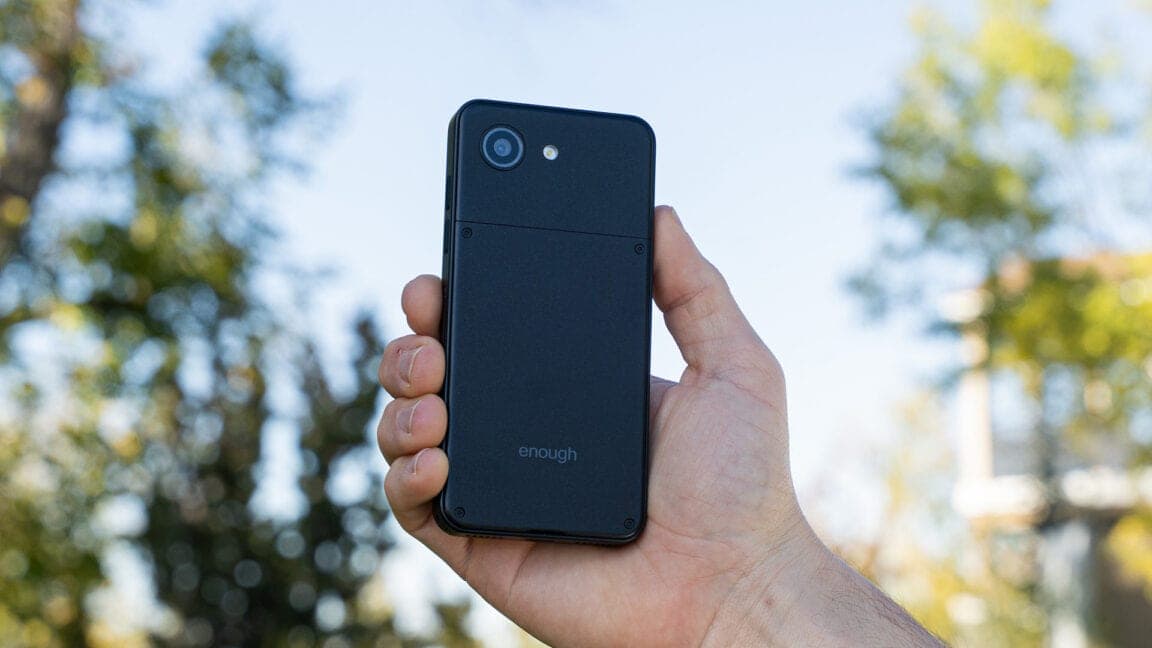
Enough Phone brings a 5.3-inch Android phone to Kickstarter
A new company says people still want small phones. Its Enough Phone has a 5.3-inch screen, a battery you can swap, and a choice between regular Android and a stripped-down mode.

Suspected Russian hackers used old iPhone and Android bugs on fake sites
Security firm Sekoia says a group linked to Russia's foreign intelligence service used already-patched flaws to hit phones that visited booby-trapped sites.

iPhone Duo pre-orders open Friday at 5 a.m. PT, starting at $1,999
Apple's first foldable iPhone goes up for pre-order on October 16, with new cases, trade-in credits and a $57.99 monthly lease to soften the price.
More in brief
- Security researchers find proxy traffic exiting the White House networkNov 6
- Bluetooth 7 will be almost four times faster, and lossless audio is nextNov 6
- The FAA is finally retiring floppy disks from air traffic controlNov 5
- Claude can now read your bank accounts with Personal FinanceNov 5
- Xbox's new PC app launches up to 60% faster, and Insiders can try it todayNov 5
- Aina's $399 AI ring has a screen and a joystick for your agentsNov 5