
Technology·News & analysis
Bluetooth 7 will be almost four times faster, and lossless audio is next
The Bluetooth SIG has unveiled High Data Throughput, a new speed mode in Bluetooth Core 7.0 that lifts Bluetooth LE from 2 Mbps to 7.5 Mbps. First products are due in 2027.

Tide
Wave
Sci-fi
3/10
Reality
Demo
Your earbuds finally get a wider hallway.How we rate
The Bluetooth Special Interest Group, the trade group that runs the Bluetooth standard, unveiled High Data Throughput, a feature of Core 7.0 that lifts Bluetooth LE from 2 Mbps to 7.5 Mbps.
Lossless and high-resolution wireless audio is the flagship use. The upgrade is optional and needs new chips, so existing earbuds and phones will not speed up. First products are expected in 2027, starting with audio.
What to know
- The Bluetooth Special Interest Group unveiled High Data Throughput (HDT), part of Bluetooth Core 7.0, which raises Bluetooth LE's top speed from 2 Mbps to 7.5 Mbps.
- Premium wireless audio, including lossless and high-resolution sound, is the flagship use. Watches, smart glasses and smart home gear follow.
- HDT is an optional part of the standard and needs new radio chips, so current earbuds, phones and watches will not get faster.
- The first devices are expected in 2027, with audio products first and no exact date yet.
The Bluetooth Special Interest Group, the trade group that runs the Bluetooth standard, has unveiled High Data Throughput, or HDT. It is the flagship feature of Bluetooth Core 7.0, and it makes the low-power kind of Bluetooth nearly four times faster. The fun question: what do you do with a faster hallway between your phone and your earbuds?
What is Bluetooth HDT?
Bluetooth comes in more than one flavor. Bluetooth Low Energy, or LE, is the sipping-power version used in earbuds, watches, fitness bands and smart bulbs. Its top speed today is 2 Mbps. That means 2 megabits, or 2 million tiny pieces of data, every second.
HDT lifts that ceiling to 7.5 Mbps. The group describes it as a leap that comes without giving up what made LE popular, which is sipping a tiny amount of battery. It is part of Bluetooth Core 7.0, the next version of the rulebook that every Bluetooth maker follows.
HDT is an optional piece of that rulebook. No company has to use it, and each maker decides for itself.
How does it get so fast?
Speed comes from a new "physical layer," which is the part of the standard that decides how signals travel through the air. Think of it as a new way of packing a suitcase: the same suitcase, more clothes.
The new layer uses fancier ways of shaping the radio signal, called modulation. Instead of sending one simple bit at a time, it packs several into every signal pulse. All five HDT speeds, which are 2, 3, 4, 6 and 7.5 Mbps, use the same pulse rate. They just carry more in each pulse.
More speed usually means more mistakes, so HDT adds safety nets:
- Error correction: Extra backup bits let a receiver repair small errors without asking for a resend.
- Small blocks: Data is split into blocks, each with its own check. If one block breaks, only that block is sent again, not the whole packet.
- Speed switching: Devices can drop to a slower HDT rate from one packet to the next when the signal gets noisy.
- Big packets: A single packet can carry up to roughly 8,000 bytes in the largest mode.
In real life Say you send a photo from your watch to your phone. With old Bluetooth LE the photo crawls over. With HDT, the same job finishes in about a quarter of the time, as long as both devices have the new chip.
Why does it matter for audio?
The group calls premium wireless audio the flagship use. Today's LE Audio uses a codec called LC3, which squeezes sound so it fits through the narrow pipe. It sounds good, but lossless audio, meaning sound with nothing thrown away, does not fit.
HDT widens the pipe. The SIG says it supports lossless and high-resolution audio, plus surround sound and spatial audio, which makes sound seem to come from around you. The group also expects earbuds, headphones and speakers to stream hi-res music in the coming years.
There is a side benefit. Because data moves faster, a device spends less time with its radio on. That can lower latency, the small delay between pressing play and hearing sound. It also means the radio can nap more often.
Will it save battery?
The SIG says yes. Sending the same data faster means the radio can return to a low-power rest sooner. Better error handling also means fewer resends, and every resend costs energy.
The group frames this as getting higher speed without paying extra in battery life. A Nordic Semiconductor executive, Øyvind Strøm, said a faster link could help a smart lock last longer between battery swaps and let earbuds stay out of their case for longer.
What else could use it?
Audio is only the first stop. The SIG and its members point to several other uses:
- Smartwatches: Strøm described a watch that syncs hours of sensor-rich training data to your phone in seconds.
- Smart glasses: Glasses could hand more data to a phone for processing, which makes richer AI features possible.
- Smart home: A device could finish a firmware update with almost no downtime for you. That means the built-in software that runs the gadget gets refreshed in seconds.
- Health and industry: Medical and factory devices that send big bursts of data get more room to work.
- Spatial computing: Headsets and other devices that need steady, rich data streams.
The SIG also says the member community is working on other upgrades. These include high-resolution and lossless audio features, new radio bands around 5 GHz and 6 GHz, and carrying IPv6 internet traffic over LE. HDT gives those ideas the bandwidth they need.
Is it more secure?
HDT comes with security changes too. Message integrity checks, which prove a message was not changed on the way, grow from 32 bits to 64 or 128 bits. Devices can also switch to new encryption keys when they move between the old and new radio modes.
The standard supports separate keys for different kinds of links, such as data and audio. It also adds an option called opportunistic encryption, which lets two devices turn on encryption on the fly even if they never paired before. The SIG says these changes keep security up to date as speed climbs.
When can you buy it?
The Bluetooth SIG says compatible devices should reach stores starting in 2027. Premium audio comes first. There is no exact date, and no one has named the first products.
The chips are already being tested. Realtek, a chipmaker, worked with test-equipment maker Rohde & Schwarz on what they called the first HDT test setup. Realtek's Yee-Wei Huang said the feature is "a key enabler for the next wave of immersive audio and seamless connectivity experiences."
The catch: HDT is a hardware change. Your current earbuds, watch and phone will not speed up with an update. You need a new radio chip on both ends of the link. A pair of HDT earbuds paired with an older phone will still work, but at the older speeds.
What about Apple and the big phone makers?
New chips cost makers extra, so some may wait and watch. Apple has not said anything publicly about HDT. The SIG's chief marketing officer, Ken Kolderup, told Japanese reporters that the choice belongs to each company. He added that the group feels Apple's interest is very high, because Apple executives take part in the talks about the standard.
That is a hint, not a promise. Earbuds only get the full benefit when the phone supports it too, so the phone makers matter a lot here.
What it means for you
- Do not rush to buy: Nothing you own gets faster, and the first products are a year away.
- Look for HDT on the box in 2027: Earbuds and headphones with lossless sound are likely to lead.
- Check your phone, too: For the best speed, both the phone and the earbuds need the new chip.
- Expect small wins first: Faster firmware updates and quicker syncing will show up in watches and smart home gear.
The bottom line
Bluetooth LE is getting nearly four times faster, and lossless wireless audio is the headline. The catch is that it is optional and needs new chips, so the payoff arrives with new gadgets, starting in 2027. If you love your current earbuds, you can keep loving them.
Key facts
- New speed
- Up to 7.5 Mbps (was 2 Mbps)
- Standard
- Bluetooth Core 7.0 (optional feature)
- Data rates
- 2, 3, 4, 6 and 7.5 Mbps
- Flagship use
- Lossless and high-res audio
- First devices
- 2027, audio first
Got questions?
Quick answers, plain wordsWhat is Bluetooth HDT?
Bluetooth High Data Throughput is a new speed mode for Bluetooth Low Energy (LE). It raises the top data rate from 2 Mbps to 7.5 Mbps while keeping the low power use that makes LE good for small battery devices.
How much faster is it?
The top speed is 7.5 Mbps, nearly four times the 2 Mbps of today's LE. The Bluetooth SIG says a file that takes about 16 seconds now could take about 4 seconds, based on early member demonstrations.
Will my current earbuds or phone get faster?
No. HDT needs a new radio, so it is a hardware change. A software update will not unlock it on existing earbuds, watches or phones.
When will Bluetooth HDT devices arrive?
The Bluetooth SIG says the first compatible devices should reach stores in 2027. Audio products are expected first, but there is no exact date.
Does HDT mean lossless audio on Bluetooth?
It gives lossless and high-resolution audio the room it needs. The SIG calls premium wireless audio the flagship use, and it says surround sound and spatial audio are supported too. Products still have to be built for it.
Is HDT required in Bluetooth 7.0?
No. It is an optional part of Core 7.0, so each maker decides whether to use it. Because it needs new chips, it costs makers extra, and some may wait.
Will Apple support Bluetooth HDT?
Apple has not said anything publicly. The SIG's marketing chief said Apple's interest looks very high, because Apple executives take part in discussions about the standard.
Will it drain my battery faster?
The SIG says the opposite. Data finishes sending sooner, so the radio can rest longer, and better error handling cuts the number of resends.
Is Bluetooth 7 a new kind of Bluetooth?
Not quite. Bluetooth Core 7.0 is the next version of the standard, and HDT is its headline feature. Bluetooth still works with the same kinds of devices, and the fast mode only works when both sides support it.
SourcesBluetooth SIG
Topics and tagsbluetooth, wireless audio, earbuds, standards
Go deeper
Related stories
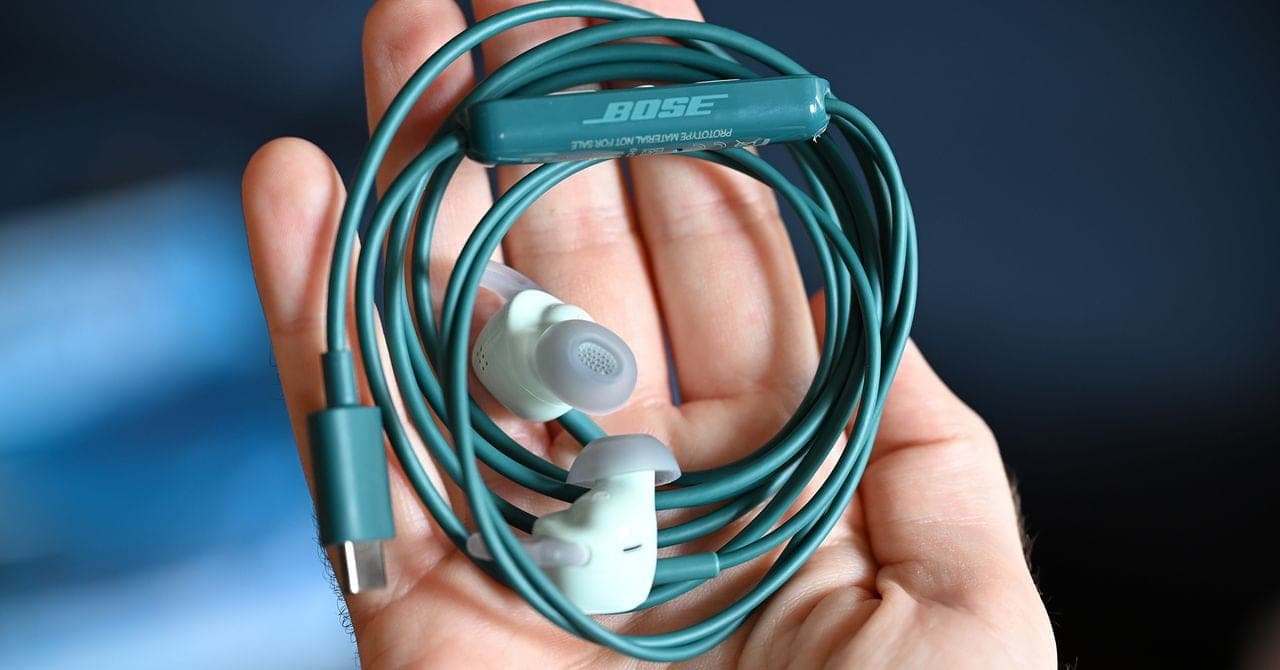
Bose brings back wired earbuds after 11 years, banking on a Gen Z trend
The $99 Bose Noise Cancelling Wired Earbuds ditch Bluetooth and batteries for a USB-C cable, betting that a real wired-headphone sales rebound driven by Gen Z will stick.

Security researchers find proxy traffic exiting the White House network
Security firm Layer3 Intel says devices on the White House network acted as exit points for 28 residential proxy services 236 times in 30 days. The White House has not commented.

The FAA is finally retiring floppy disks from air traffic control
The Transportation Department says a new digital display system will replace floppy-based tools at more than 400 air traffic facilities by the end of 2028.
More in brief
- Claude can now read your bank accounts with Personal FinanceNov 5
- Xbox's new PC app launches up to 60% faster, and Insiders can try it todayNov 5
- Aina's $399 AI ring has a screen and a joystick for your agentsNov 5
- China blocks SoftBank's $5.4 billion deal for ABB RoboticsNov 5
- Motorola's Signature 27 hits the US at $1,599 with GrapheneOS supportNov 5
- Discord drops Electron for a Rust app that uses far less memoryNov 5