
Robots·News & analysis
A data company just built a lab whose only job is teaching robots to move like us
Innodata opened a motion-capture lab in New Jersey, built with Vicon, that captures sub-millimeter 3D movement data to train humanoid and industrial robots how to move more naturally.
Tide
Ripple
Sci-fi
6/10
Reality
Shipping
A room full of cameras whose only job is to watch you move.How we rate
Innodata opened a motion-capture lab in New Jersey, built with Vicon, that records sub-millimeter 3D movement data to train humanoid and industrial robots how to move more naturally.
It addresses one of the biggest bottlenecks in humanoid robotics: unlike language models trained on vast existing internet text, robots need real physical interaction data that's expensive and slow to collect. As humanoid robots move from demos toward real deployment, specialized data infrastructure like this becomes as important as the robots themselves.
What to know
- Data engineering company Innodata opened a motion-capture lab in Ridgefield Park, New Jersey, built with motion-capture technology provider Vicon, to generate training data for humanoid robots.
- The lab captures 3D motion data directly from human and robot bodies with sub-millimeter accuracy, which Innodata says is more precise than inferring movement from 2D video or wearable sensors.
- Services include generating training datasets, independently validating robot performance, and retargeting motion data across different robot platforms.
- Innodata CEO Rahul Singhal said robotics teams consistently hit the same wall: not enough real-world interaction data, and what exists is expensive and slow to produce.
- The lab can handle robots weighing nearly 200 pounds, and Vicon's managing director said flatly that if the training data is approximate, the robot will be too.
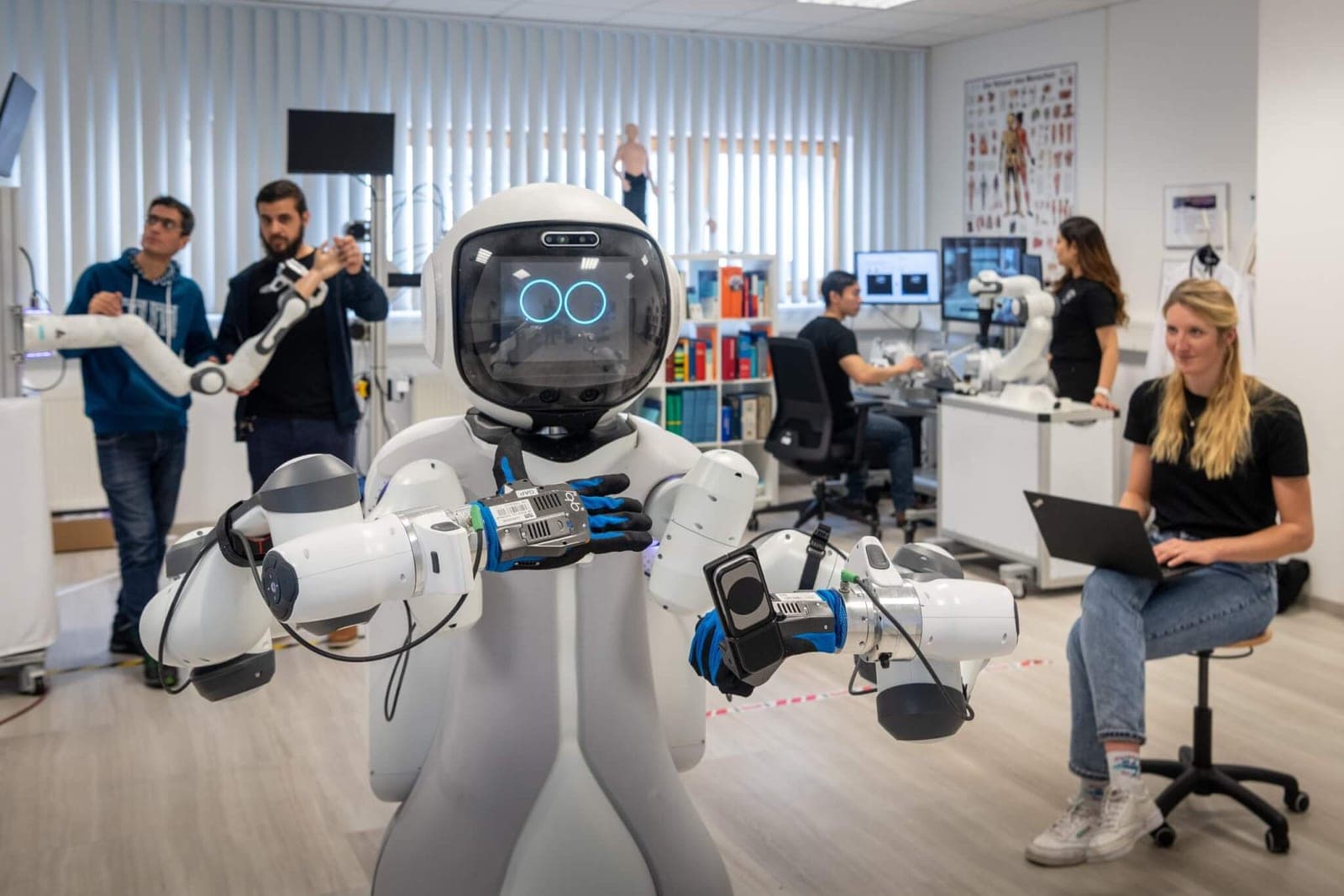
Humanoid robots keep getting flashier demos, but the boring secret behind making them move convincingly is a room full of infrared cameras quietly recording exactly how a human body actually moves.
What does this lab actually do?
Innodata, a data engineering company founded in 1988, opened a motion-capture lab in Ridgefield Park, New Jersey, built in partnership with Vicon, a company known for high-precision motion-capture camera systems. The lab captures 3D motion data directly from human and robot bodies, rather than trying to reconstruct movement from flat video footage.
- Accuracy: sub-millimeter precision, with millisecond latency.
- Capture methods: teleoperated hardware, wearable systems, and specialized grippers.
- Robot capacity: has handled robots weighing nearly 200 pounds.
- Services: training data generation, independent performance validation, safety assurance, and cross-platform motion retargeting.
Why does 3D motion capture beat video for training robots?
The catch: video looks like an easy, cheap way to gather training data, since cameras are everywhere already. But Franklin Tanner, Innodata's VP of Robotics and Physical AI, explained why that approach falls short: "When a computer vision model tries to make sense of a 2D grid of pixels, mistakes inevitably creep in."
A flat video frame doesn't actually contain real depth information, a model has to guess at it. Direct 3D motion capture, by contrast, records precise spatial position and movement in real time, without that layer of inference and its accompanying errors.
In real life it's the difference between describing how someone walked based on a single photo versus actually watching them walk with a tape measure running the whole time.
What problem is this actually solving for robotics companies?
Why it matters: Innodata CEO Rahul Singhal put the core issue plainly: "Physical AI is growing faster than any other segment in AI, but every robotics team hits the same wall: there isn't enough real-world interaction data, and what exists is expensive and slow to produce."
That's a fundamentally different problem than the one facing large language models. Background: an LLM can train on enormous amounts of text that already exists across the internet. A humanoid robot learning to grip a cup or walk across an uneven floor has no equivalent pre-existing dataset; that data has to be physically generated, one recorded motion at a time, which is exactly the bottleneck this lab is built to chip away at.
How precise does the data actually need to be?
Vicon's managing director, Andrew Knox, summed up why the accuracy bar matters so much: "If the training data is approximate, the robot will be too." A robot that learns from slightly-off training data doesn't fail gracefully, it moves slightly wrong in ways that compound as tasks get more complex.
Who's affected: that's part of why the lab also offers independent robot performance validation as a separate service. A company can send a finished robot to have its real-world movement measured externally, rather than relying only on its own internal testing, giving outside verification that a robot actually performs the way its maker claims.
That kind of third-party check matters more as humanoid robots move from investor demo days toward actual paid deployments. A robotics company claiming its machine can safely work alongside people carries a lot more weight when an outside lab, not the company itself, is the one measuring how it actually moves.
Who is this lab actually for?
Innodata hasn't publicly named which robotics companies are using the facility. The lab is positioned broadly for physical AI companies building humanoid robots, industrial robots, and other robots meant to operate in real-world physical environments, rather than serving one exclusive customer.
Background: that positioning fits Innodata's existing business model. The company has spent decades providing data and AI training services across industries, and this lab extends that same specialized data-services approach into robotics specifically, rather than Innodata building or selling robots of its own.
Why would a decades-old data company build a robotics lab?
Background: Innodata isn't a robotics startup chasing a trend, it's a data engineering company that's been in business since 1988, historically providing data labeling, annotation, and AI training services across industries. The company has grown sharply as AI demand surged more broadly: it reported $251.7 million in 2025 revenue, up 48% year over year, and management has guided for at least 40% growth in 2026.
That growth has come with real customer concentration risk. In 2025, a single customer accounted for roughly 58% of Innodata's total revenue, and by the second quarter of 2026, its two largest customers combined still made up about 71% of quarterly revenue. Diversifying into new specialized services, like a dedicated motion-capture facility for physical AI, is a plausible way to reduce that dependence on just one or two massive clients over time.
Why it matters: framed that way, the motion-capture lab isn't just a robotics curiosity. It's a bet by an established AI-data business that physical AI and humanoid robotics will need the same kind of specialized data infrastructure that generative AI models already rely on, and that being an early, credible provider of that infrastructure is worth the investment now.
How big is the market for humanoid robot training data actually getting?
By the numbers: physical AI, the broader category covering humanoid robots, industrial robots, and other embodied AI systems, has been described by Innodata's own CEO as growing faster than any other segment of AI. That claim lines up with a wave of humanoid robot companies raising large funding rounds and racing to get working robots into warehouses, factories, and eventually homes over the next few years.
Each of those robots needs training data specific to physical movement, grasping, balance, and human interaction, data that can't simply be scraped from the internet the way text or images can. A specialized lab that multiple robotics companies can use, rather than each one building its own in-house motion-capture facility from scratch, is a practical way to meet that demand without every robotics startup duplicating the same expensive infrastructure.
What it means for you
- You won't interact with this lab directly, but it's the kind of infrastructure that shapes how capable and natural-looking the humanoid robots you do eventually see in stores, warehouses, or homes actually become.
- It's a sign the humanoid robotics industry is maturing past flashy demos. Specialized data and validation infrastructure like this tends to show up once an industry is serious about real deployment, not just prototypes.
- Independent robot performance validation matters if you're evaluating robotics companies' claims. A third party actually measuring whether a robot performs as advertised is a meaningfully different kind of evidence than a company's own marketing demo.
- Expect more infrastructure like this to emerge, as robotics companies increasingly need specialized data and testing services rather than building everything in-house themselves.
The bottom line
Humanoid robots get the headlines, but the data used to train them is quietly becoming its own specialized industry, with companies like Innodata treating precise, physically captured motion data as a business in itself rather than a side project.
Whether robots trained on data from labs like this actually move more convincingly in the real world, in homes, warehouses, and hospitals rather than in a controlled demo, is the real test this investment is ultimately betting on.
Key facts
- Company
- Innodata (data engineering, founded 1988)
- Location
- Ridgefield Park, New Jersey
- Technical partner
- Vicon (motion-capture systems)
- Accuracy
- Sub-millimeter, millisecond latency
- Max robot weight handled
- ~200 lbs (90.7 kg)
Got questions?
Quick answers, plain wordsWhat does Innodata's new motion-capture lab actually do?
It captures precise 3D motion data directly from human and robot bodies, using infrared optical tracking cameras, to generate training data that helps humanoid and industrial robots learn to move and interact more naturally.
Why is 3D motion capture better than just using video?
According to Innodata's VP of Robotics, a computer vision model trying to interpret 2D video has to infer 3D movement from a flat image, which introduces errors. Direct 3D motion capture records real, precise spatial movement without that guesswork.
How accurate is the lab's data?
Innodata says the lab achieves sub-millimeter accuracy with millisecond latency, a level of precision the company says exceeds what's possible with standard video analysis or wearable motion sensors.
Who built the lab with Innodata?
Vicon, a motion-capture technology company known for high-precision infrared optical tracking cameras, provided design consultation and continues offering technical support for the facility.
What services does the lab offer robotics companies?
Generating training datasets for humanoid and industrial robots, independently validating a robot's real-world performance, providing safety assurance services, and retargeting captured motion data so it works across different robot hardware platforms.
What's the actual bottleneck in humanoid robot development this lab is trying to fix?
Unlike language models that can train on vast amounts of existing internet text, robots need real-world physical interaction data that doesn't already exist at scale. That data is expensive and slow to collect, which Innodata's CEO described as the wall every robotics team eventually hits.
How big of a robot can the lab actually work with?
The lab has handled robots weighing nearly 200 pounds (about 90.7 kilograms), and it supports multiple capture methods, including teleoperated hardware, wearable systems, and specialized grippers.
Does Innodata name which robot companies are using the lab?
No, Innodata hasn't publicly disclosed specific customer names. The lab is positioned as a service for physical AI companies broadly, covering humanoid robots, industrial robots, and other embodied AI systems.
Is Innodata a robotics company itself?
No. Innodata is a data engineering company founded in 1988 that has historically provided data and AI training services across industries; this lab extends that same data-focused business model into the physical AI and robotics space specifically.
Where is the lab located?
Ridgefield Park, New Jersey.
SourcesThe Robot Report
Topics and tagsHumanoid robots, Industrial robots, robotics, humanoid robots
Related stories
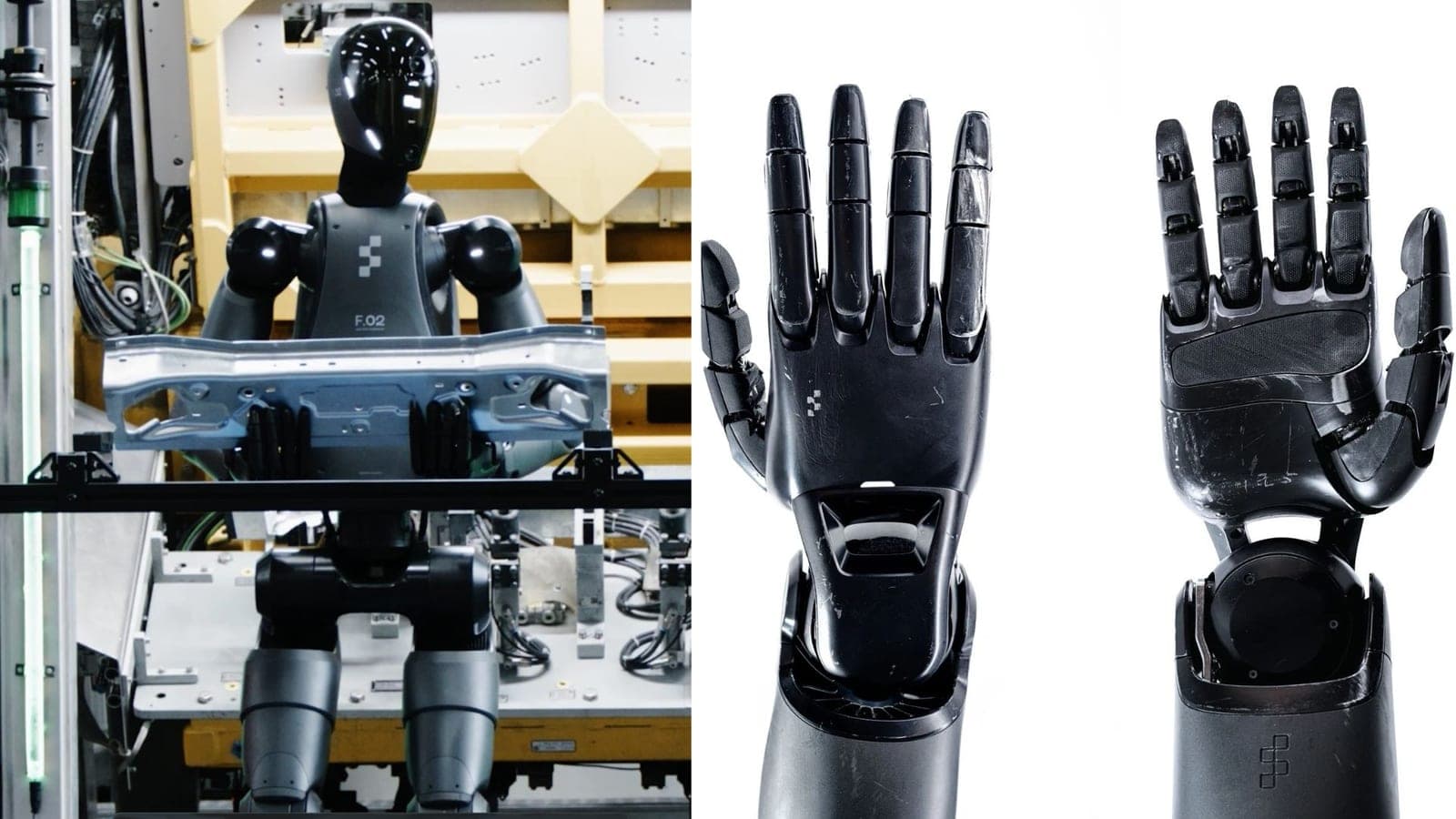
Figure retired its BMW factory robots by having them jump into molten steel
Figure decommissioned its F.02 humanoid robots after 11 months building BMW X3s, sending them off with a Terminator 2-style melt into a foundry furnace, an idea Arnold Schwarzenegger suggested.

SoftBank is betting $225 million that self-driving bulldozers can fix a labor shortage
SoftBank invested $225 million in Utah robotics company ASI and formed a joint venture to deploy autonomous haul trucks, dozers, loaders and compactors on big construction projects.
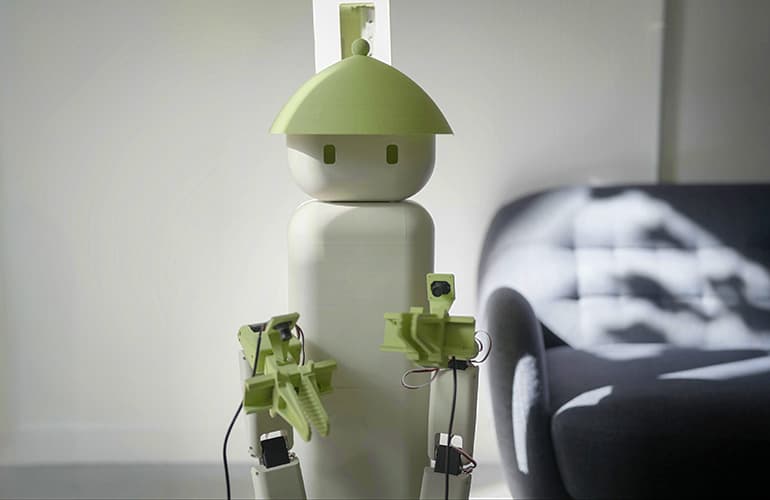
Flourish One is a $3,555 home robot you teach chores with your phone
Startup Flourish is selling its first 50 Flourish One robots for $3,555 each, a Raspberry Pi-powered home helper you train by moving your phone to demonstrate a task.
More in brief
- arXiv limits researchers to two papers a month as AI drives submissions to a recordOct 2
- California will fine robotaxi companies that block first responders for over 30 minutesOct 2
- Microsoft launches real-time transcription and new voice models for AI voice agentsOct 1
- Apple's smart home hub reportedly launches October 13, with a camera that never records videoOct 1
- Cloudflare releases Clef, open-weight AI models that make yes-or-no decisions fastOct 1
- GrayKey maker reportedly found a way around the iPhone's Inactivity RebootOct 1