
Robots·News & analysis
NEURA, E.ON and enviaM will train humanoid robots for power grid work
NEURA Robotics, E.ON and enviaM want humanoid robots to inspect substations and take on risky grid jobs. The robots train in Munich first, with real grid trials planned for 2027.


Tide
Ripple
Sci-fi
6/10
Reality
Lab
A robot in a hard hat, checking the fuse box for everyone.How we rate
NEURA Robotics, E.ON and the enviaM Group announced a partnership to develop robots for electricity grid work, including inspections, monitoring of substations and support for hazardous tasks.
The robots will be trained at the TUM RoboGym in Munich, using human demonstrations, robot data and simulation. The partners did not name a fleet size or a rollout target. Grid operator MITNETZ STROM plans to test selected skills in real operations, with first experience expected in 2027.
What to know
- NEURA Robotics, E.ON and the enviaM Group announced on November 5, 2026 a partnership to develop robots for electricity grid operations.
- The robots will learn inspections, monitoring of critical sites such as substations, and support for hazardous or physically demanding tasks.
- Training starts at the TUM RoboGym in Munich, then enviaM's grid subsidiary MITNETZ STROM tests selected skills in real operations, with first experience expected in 2027.
- E.ON and enviaM keep control of their data and of the skills trained on it, including whether to share them.
E.ON announced a partnership with NEURA Robotics and the enviaM Group to develop robots for power grid work. The idea: humanoid robots help look after the wires that keep your lights on. So what does that mean in practice?
What was announced?
On November 5, 2026, three companies said they will build and test robots for electricity grid operations. NEURA Robotics, the robot maker from southern Germany, supplies the robots and the training setup. E.ON and enviaM bring the know-how about how grids really run.
The first jobs on the list are plain:
- Inspections: looking over equipment on site.
- Monitoring: keeping watch on critical sites such as substations, the fenced yards where high-voltage power is stepped down for homes and businesses.
- Site security: checks that help secure installations.
- Hard jobs: physically demanding, repetitive or potentially dangerous tasks will be assessed as well.
The partners expect first practical experience in real grid operations during 2027.
The catch: this is a plan, not a working system. The announcement does not give a fleet size, a cost or a commercial rollout target.
Why would a grid want a humanoid?
Electricity networks are built around people. They have stairs, doors, control cabinets and tools sized for human hands. A wheeled robot can struggle with a staircase or a stiff cabinet door.
NEURA's argument is that a robot with a human-like body, such as its 4NE1, could move through these places without anyone rebuilding them. Many grid sites are old, so redoing them for machines would be costly.
In real life Think of a small substation with a narrow door, three steps up and a metal cabinet on the far wall. A person walks in and opens it. The partners want a robot to be able to do the same, no ramp required.
The companies say the robots could do this. They have not shown it yet, and the trials are there to find out whether a robot can do it reliably, day after day.
How will the robots learn the job?
Training does not start at a live substation. It starts at the TUM RoboGym, a training center at the LabCampus by Munich Airport. NEURA and the Technical University of Munich opened it in October 2026, and it covers more than 2,300 square meters. E.ON is joining it as part of this deal.
The training mixes three kinds of data:
- Human demonstrations: grid specialists show their workflows while sensor-equipped suits, motion capture and remote operation record what they do.
- Real robot data: robots try the tasks while sensors record movement, touch and results.
- Simulation: virtual worlds add situations that would be slow or risky to stage for real.
After that, the trained skills are checked on real robots. Only then does MITNETZ STROM, the grid subsidiary of enviaM, plan to test selected applications in real network operations.
Why it matters: the knowledge of an experienced grid worker is rarely written down. This setup tries to capture it by watching people work.
What is Neuron AI, and why do sounds matter?
The software brain is Neuron AI, NEURA's own model for robots. NEURA says it combines 3D vision, touch, audio, language, memory and the robot's own sense of its body position and force.
For inspection, that could matter. A photo may not show a part that hums oddly or feels wrong when touched. A robot that can use sound and touch as well as images could, in principle, notice more.
Then comes Neuraverse, NEURA's platform that connects training with the field. It manages learned skills and is meant to turn a routine built for one site into a skill that compatible robots at other sites can reuse.
Who keeps the data?
Grid sites are sensitive. Information about facilities and their weak points is the kind of thing operators do not hand out.
The partners say E.ON and enviaM keep control of their operational data and of the skills trained on it. That includes deciding whether to share those skills with anyone else. For operators of critical infrastructure, that is likely a basic condition of taking part.
What did the companies say?
NEURA founder and CEO David Reger said the partnership brings together technology and people's experience. "The key is to combine technological progress with the practical expertise of the people who operate our energy infrastructure every day," he said.
enviaM CEO Stephan Lowis said humanoid robots can give targeted support. "They can take on routine tasks and work in potentially hazardous areas, allowing skilled workers to focus on the tasks that require their expertise," he said.
Lowis also described the pressure on grids. They face greater demands than ever, he said, because electrification and the change in energy supply mean power lines and assets must be expanded, modernised and monitored all the time.
Stefan Padberg, senior vice president for innovation at E.ON, said strong grids need innovation, and that digital technologies can make processes safer and more efficient.
In a video that came with the announcement, E.ON Innovation managing director Lioudmila Simon said humanoid robotics could become part of an automated and digital operating platform, connected with grid assets, AI and predictive maintenance. That is a long-term ambition, not a product.
Who are the partners?
NEURA Robotics is based in Metzingen, in southern Germany. It makes industrial robot arms, mobile assistants and the 4NE1 humanoid. At the October opening of the RoboGym, it also showed a lighter fourth generation of the 4NE1.
E.ON is one of Europe's large energy companies and runs electricity networks. enviaM is a regional energy supplier in eastern Germany, and its grid subsidiary MITNETZ STROM is the one that will host the pilot.
Teams from NEURA, E.ON and MITNETZ STROM will work with experienced grid employees to identify which tasks suit robotic automation first. That matching step comes before any robot touches live equipment.
How does this fit NEURA's bigger plan?
The grid deal is the next customer for a site that is only a few weeks old. NEURA says companies from more than ten industries already train robots at the RoboGym, from automotive and pharmaceuticals to logistics, agriculture and care. The tasks there sound ordinary, such as handling cardboard boxes or filling bottles.
The partners behind the RoboGym are investing about EUR 17 million over an initial three years, and NEURA pays about EUR 11 million of that. NEURA also says more NEURA Gyms are planned in Europe, the United States and China, with a second German one being built with RWTH Aachen. Energy is a new kind of customer for that network, because grid work is about safety and care, not speed on a production line.
How big is the grid in question?
MITNETZ STROM runs roughly 71,000 kilometers of electricity distribution lines across parts of eastern Germany. Its parent, enviaM, supplies electricity, gas, heat and energy services to about 1.1 million customers. That is a lot of cable, cabinets and substations for a limited team to keep checking.
Skilled workers are scarce, which is the pressure the partners point to. A robot that handles the routine rounds would leave the specialists free for repairs and planning. Whether it can do that safely is the open question for the 2027 trials.
What it means for you
- Today: nothing changes at your wall socket. The partners say first practical experience comes in 2027.
- Later: if the trials work, routine checks at remote or hazardous sites could shift from people to robots.
- For grid workers: the stated aim is support, not replacement. Their know-how is the training material.
- Worth watching: whether the partners publish trial results, a fleet size or costs.
The bottom line
Three companies plan to teach humanoid robots to inspect and watch over parts of the power grid. The robots learn in a Munich training center first, and real trials are only expected in 2027.
It is a careful, early step. The useful part will be seeing whether a robot can handle stairs, doors and cabinets at a real substation, not just in a gym.
Key facts
- Announced
- November 5, 2026
- Partners
- NEURA Robotics, E.ON, enviaM Group
- Pilot partner
- MITNETZ STROM (enviaM grid subsidiary)
- Training site
- TUM RoboGym, Munich (2,300+ m²)
- First field experience
- Expected during 2027
Got questions?
Quick answers, plain wordsWhat did NEURA, E.ON and enviaM announce?
They announced a partnership to develop and test robots for electricity grid operations. The focus is on inspections, monitoring of critical equipment such as substations, and support for workers doing physically demanding, repetitive or potentially dangerous tasks.
Which robot will do the work?
NEURA's humanoid 4NE1 is named as one example of a robot that could move through facilities built for people. The partners have not said which robot, or how many, will run in the trials.
When will the robots work on a real grid?
The partners expect first practical experience in grid operations during 2027. Before that, the skills are trained at the TUM RoboGym in Munich under controlled conditions.
Where will the robots be trained?
At the TUM RoboGym, a training center of more than 2,300 square meters at the LabCampus by Munich Airport. NEURA and the Technical University of Munich opened it in October 2026, and E.ON is joining it as part of this deal.
Who will test the robots in real operations?
MITNETZ STROM, the grid subsidiary of enviaM, is the pilot partner. It plans to test selected applications in real network operations once they have proven themselves in training.
What is Neuron AI?
It is NEURA's AI model for robots. The company says it combines 3D vision, touch, audio, language, memory and the robot's own state, so a robot can use sounds and physical feedback as well as images.
What is Neuraverse?
It is NEURA's platform that connects training with deployment. It manages learned skills and is meant to let a skill built for one site be reused by compatible robots at other sites.
Who owns the data the robots learn from?
According to the partners, E.ON and enviaM keep control of their operational data and of the skills trained on it, including decisions about whether to share them with others.
Will the robots replace grid workers?
The companies describe the robots as support for skilled staff. The stated aim is to let workers focus on tasks that need their expertise, while robots take routine or hazardous jobs.
How much will this cost?
The partners have not published costs, fleet size or commercial rollout targets. For now this is a development and testing plan, not a finished product.
SourcesE.ON
Topics and tagsData centers, Humanoid robots, neura robotics, humanoid robots
Go deeper
Related stories
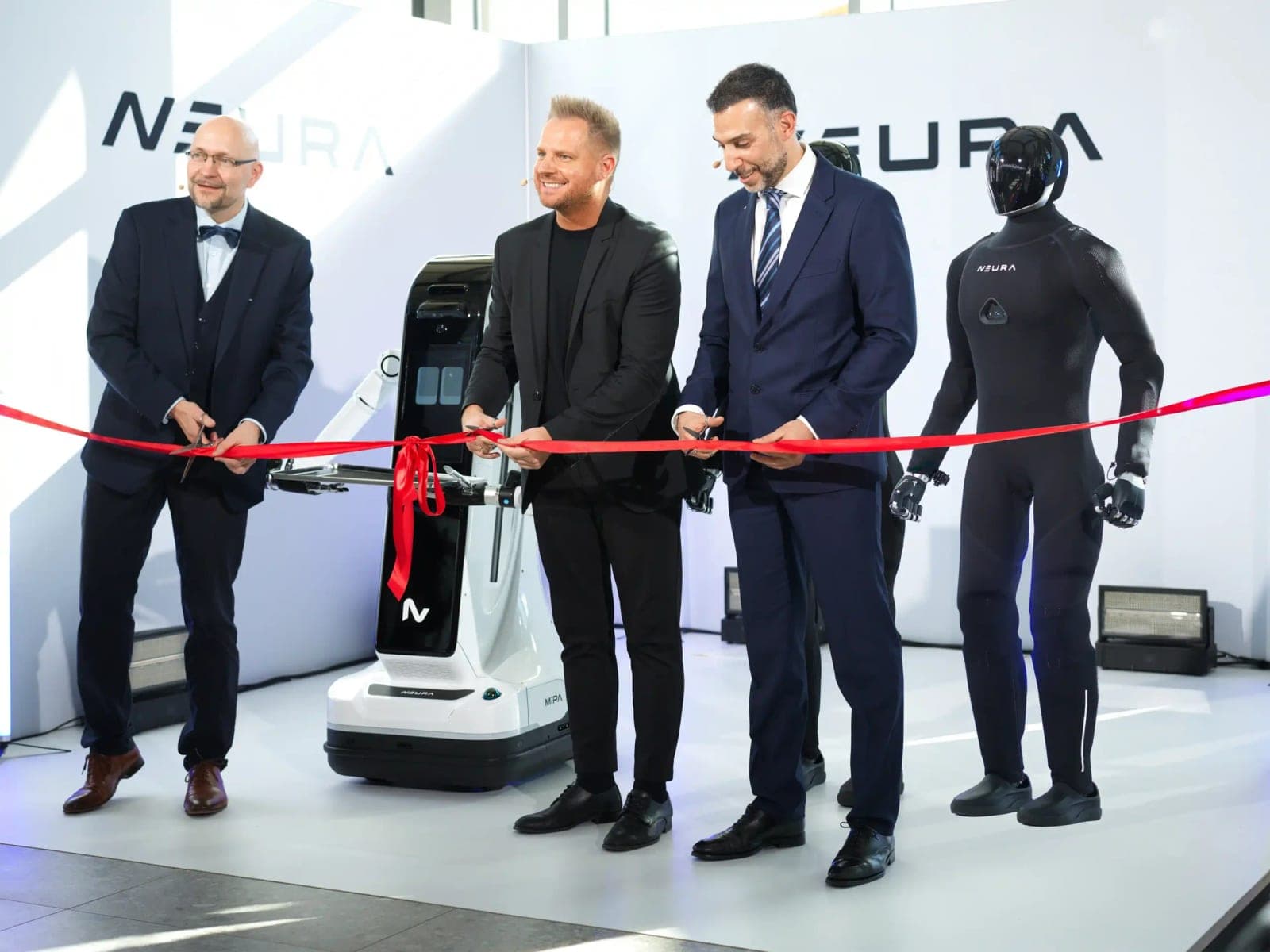
NEURA and TUM open RoboGym in Munich and show the 4NE1 Gen 4 humanoid
NEURA Robotics and the Technical University of Munich opened a 2,300 square meter robot training center near Munich Airport. NEURA also unveiled 4NE1 Gen 4, a humanoid that is 20 percent lighter than the last one.
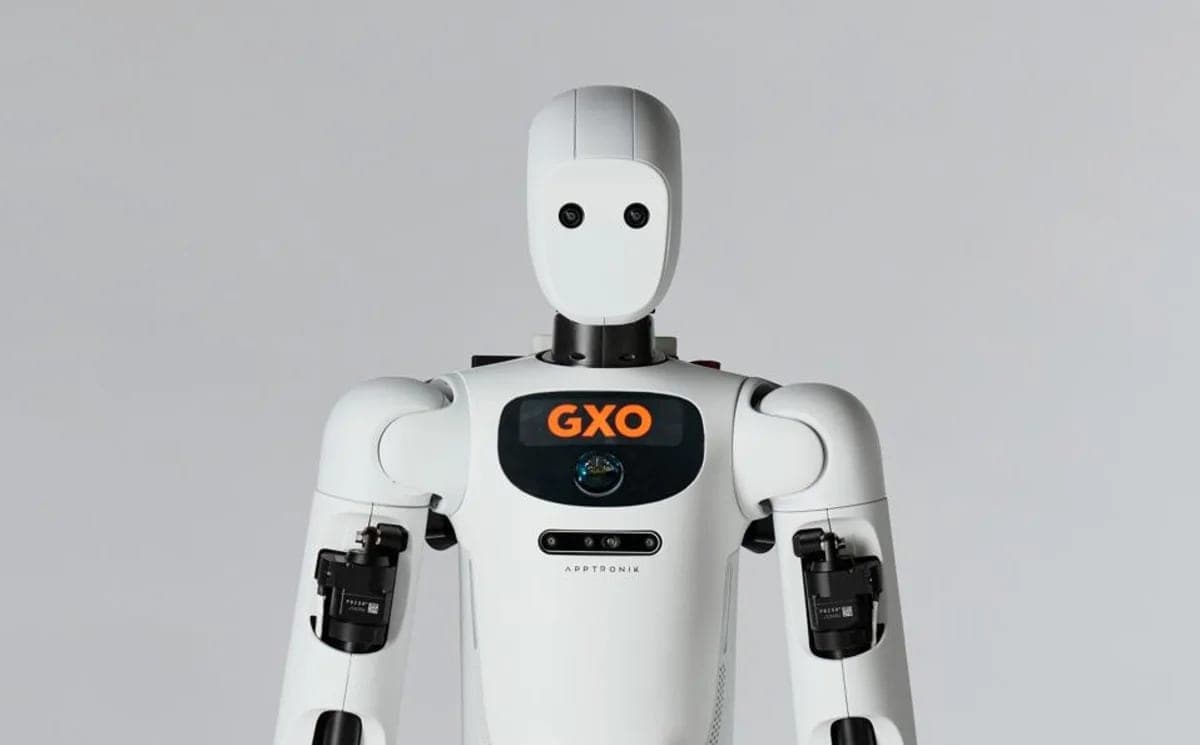
GXO plans up to 1,000 Apptronik Apollo humanoids, if trials pass
GXO signed a letter of intent with Apptronik to expand warehouse trials of the Apollo humanoid in 2027. Up to 1,000 robots could follow over four years.
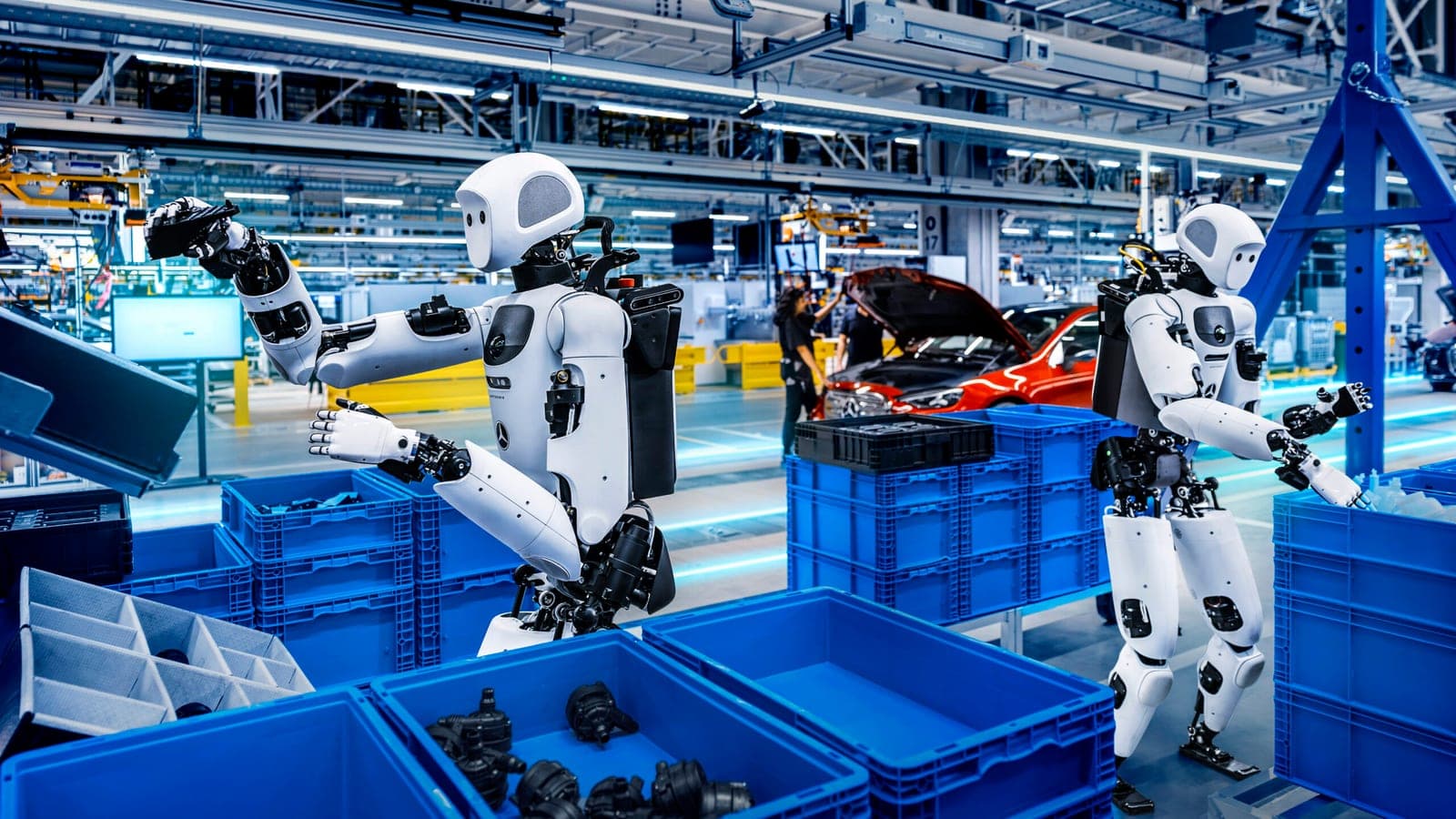
Google DeepMind's Gemini Robotics 2.5 gets humanoids working in Mercedes factories
Google DeepMind says Gemini Robotics 2.5 is up to twice as successful at some tasks, and Apptronik's Apollo 2 robots reached 96 percent on a Mercedes-Benz parts line.
More in brief
- Blue J raises $176 million to put AI agents to work on tax returns and IRS lettersNov 16
- FBI warns hackers are using the ARTEX AI tool to attack organizations worldwideNov 16
- Apple opens a 200,000-person study on how people use AI for healthNov 16
- Anthropic's IPO is reportedly oversubscribed as it aims to raise up to $90.4 billionNov 16
- Pentagon tests robot vehicles that hunt targets as a pack, with a human to approve fireNov 15
- Judge lets DRAM price-fixing lawsuit against Micron, Samsung and SK hynix go onNov 15