
Technology·News & analysis
IBM says 2026 was the year quantum computers beat regular ones
At its 2026 developer conference, IBM showed its fastest quantum chip yet, Nighthawk r2, and new tools for the 2029 Starling machine it hopes will fix quantum errors.

Tide
Ripple
Sci-fi
8/10
Reality
Shipping
A fridge colder than space, running a million rounds of self-checks.How we rate
IBM says quantum computers reached verified advantage in 2026, beating classical methods on checkable tasks.
At its developer conference it showed Nighthawk r2, a 120-qubit chip that is up to 25 times faster than Heron and runs circuits with more than 7,500 operations. IBM also reported progress on chip links, cooling and decoders for Starling, a fault-tolerant machine targeted for 2029. Regular users will not touch any of this soon, but developers can run it today.
What to know
- IBM says researchers reached verified quantum advantage in 2026, meaning quantum computers beat classical methods on certain tasks, with checkable results.
- Its Nighthawk r2 chip has 120 programmable qubits, runs circuits with more than 7,500 operations and is up to 25 times faster than IBM's Heron chip.
- IBM Quantum Starling, a fault-tolerant machine, is still targeted for 2029, and IBM reports progress on every major part, from chip links to cooling.
- New Qiskit tools, including profiling, error-correction kits and AI coding skills, aim to make quantum programming feel like normal software work.
IBM said at its 2026 Quantum Developer Conference that this was "the year of advantage." Researchers ran computations that beat regular methods, and the results can be checked. So what does that mean, and what comes next?
What is quantum advantage?
A quantum computer uses qubits, the quantum version of the bits in your phone. Qubits can hold a blend of 0 and 1 at the same time. That lets a quantum computer tackle some problems in a very different way.
Quantum advantage is the moment one of these machines does a task that classical computers, meaning the regular kind, cannot match. IBM predicted two years ago that this would happen by the end of 2026. It now says it did.
- The catch: advantage is a milestone, not a finish line.
- IBM's own words: the race is now to make quantum computers useful.
Why it matters: a one-off win is a science result. Useful work in chemistry, materials and finance needs far more than a single benchmark.
What is the Nighthawk r2 chip?
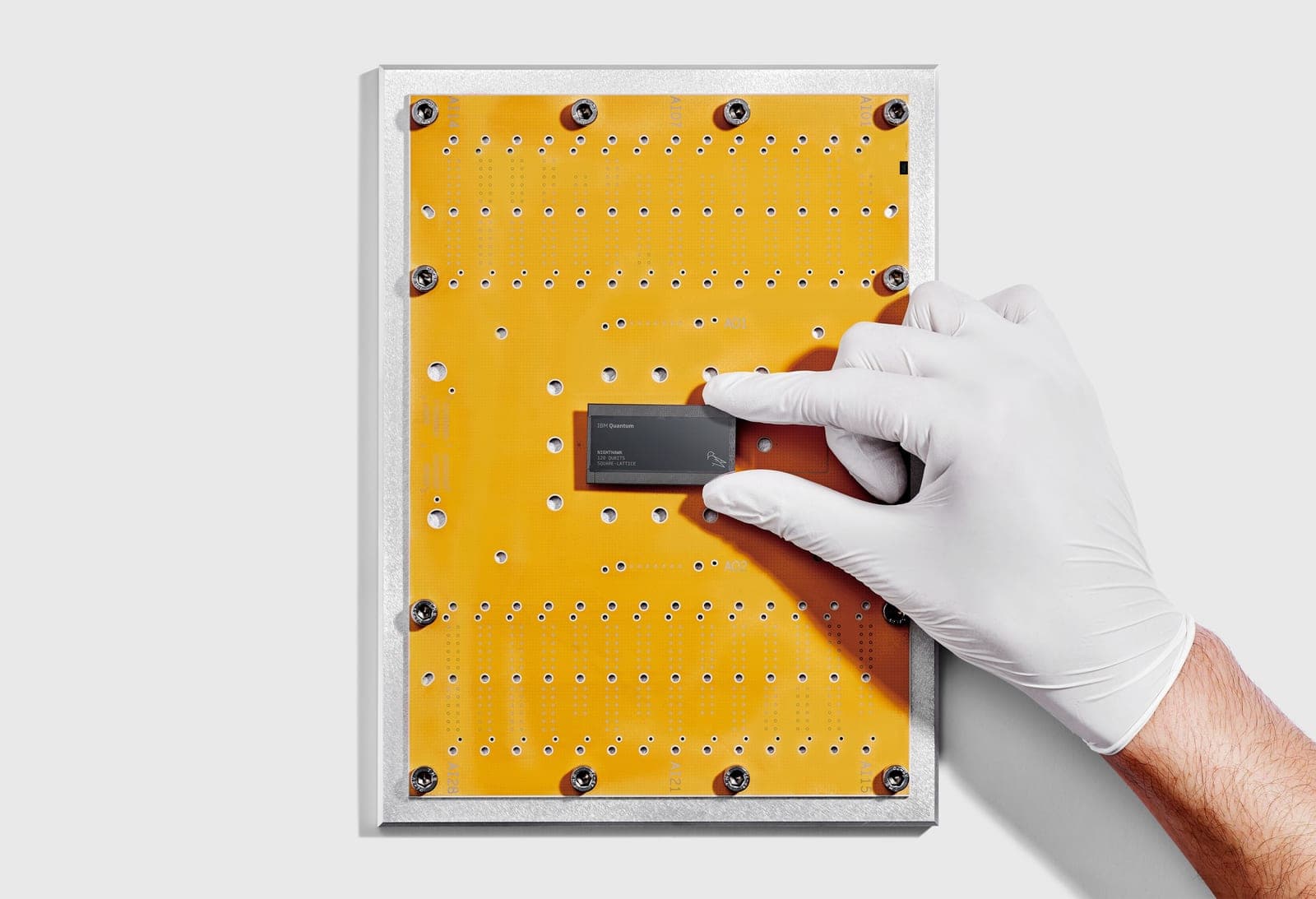
Nighthawk r2 is IBM's newest processor. A processor is the chip that does the thinking. This one has 120 programmable qubits, which sit on a chip with 458 physical qubits in total. They are laid out in a square grid, so most qubits link directly to four neighbors.
IBM says it is the fastest quantum chip it has built. It runs accurate circuits with more than 7,500 quantum operations. A circuit is just a quantum program, written as a list of steps.
- Speed: up to 100,000 samples per second.
- Gain: 25 times more than IBM's Heron chip.
- Source of the speed: a fast reset that clears the qubits between runs.
In real life Think of a sprinter who can get back to the starting line almost instantly. The race is the same length, but you fit in far more races per hour.
Who is already using it?
IBM says partners including E.ON, Algorithmiq and Q-CTRL have run more than 34 billion circuits on Nighthawk r2. They report gains of up to 19 times over earlier IBM chips. The 34 billion count comes from IBM's own team calculations.
IBM also described a run with Oak Ridge National Laboratory. It simulated real magnetic materials and got a 12 times speedup. The output matched experiments that fire neutrons at materials to see how they behave.
Another case came from Algorithmiq, which simulated how a mixed material changes over time. On the new chip, the quantum part ran 8 times faster. Classical methods would need an estimated 240 times more memory to keep up at the same accuracy.
What is Starling, and where is it?
Everyday quantum chips make mistakes. A fault-tolerant computer fixes its own mistakes as it goes, so it can finish very long programs. IBM Quantum Starling is the one it plans to deliver in 2029. It aims for circuits with 100 million operations.
IBM works on the parts in parallel, because a lesson on one piece changes the design of the others. Here is where it says each stands:
- Loon chip: it puts the ingredients of an error-correcting design on one chip. IBM cut its hardest-to-build parts, called Josephson junctions, from about 5,000 to 2,000.
- Chip-to-chip links: two Nighthawk chips were joined with four links, called l-couplers. They passed quantum states at 99% average accuracy, with a best result of 99.3%.
- Decoders: these are programs that spot errors in real time. IBM says they now meet what Starling needs, and it is building a dedicated decoder chip.
- Control electronics: IBM says its newest cold-running control chips match the gate performance of room-temperature electronics.
- Cooling: IBM joined two cooling modules into one system for the first time. It reached operating temperature in under five days and cooled below 15 millikelvin, a tiny fraction of a degree above absolute zero.
Starling needs more than 100 of those chip-to-chip links, so the 99% result is an early proof point rather than a finish.
How will developers use all this?
IBM says the future is not one circuit at a time. Real jobs need hundreds of millions, even billions, of samples spread across quantum and classical computers. Its answer is a "directed execution model." Instead of a black box that runs one circuit and returns an answer, researchers get more control and a clearer view of the whole run.
IBM also named new tools:
- Profiling tools: estimate a job's cost and timing before you run it, and check noise on your own computer.
- Backend v3: coming in 2027, it treats the classical steps before and after the quantum run as one program.
- Qiskit Fermions and Qiskit Bosons: new application tools, plus optimization mappers.
- Agent skills: an open-source set of packaged instructions that help an AI coding assistant follow current Qiskit best practices.
Qiskit is IBM's open-source toolkit for quantum programming. Open-source means anyone can read, use and change its code.
Why does error correction get so much attention?
Qubits are delicate. A little heat or noise ruins a calculation, so every serious plan leans on error correction: ways to detect and repair mistakes while a program runs. IBM's developer guide calls it one of the biggest themes of the event.
IBM says users can now run a repetition code, a basic error-correcting test, for 1,000,000 rounds in a single circuit. Each round measures qubits in the middle of the program and resets them. A new loop instruction repeats those steps without writing out a gigantic circuit.
IBM labels some of these features experimental, and they may change. IBM is also putting Nighthawk r2 next to Oak Ridge's Umbra supercomputer, which runs on AMD chips. The goal is to design error-correction methods across quantum and classical machines together. This work fits the US Department of Energy's Genesis Mission, which aims for 100 logical qubits running 100,000 hard operations by late 2028.
Where is the real hardware?
It is not only a lab story. IBM announced on November 6 that a Quantum System Two with Nighthawk is running at Hyde Park Labs in Chicago, its first quantum computer in Illinois. Under a plan announced in December 2024, that machine was to use the Heron chip instead.
Nighthawk has fewer qubits than the 156 in Heron r2 and r3, but more couplers, the parts that link qubits. The count rose from up to 176 to 218. The speed numbers are IBM's own specifications, not measured on the Chicago unit.
What it means for you
- If you code: you can run circuits on IBM Quantum Platform today, and IBM has published hands-on tutorials and expanded free access.
- If you follow tech: treat "advantage" as a first step. The big promise needs Starling, which is still targeted for 2029.
- If you work in chemistry, materials or finance: IBM lists these fields as targets, with 39 client projects already testing the new application tools.
- If you are just curious: nothing in your phone or laptop changes this year.
The bottom line
IBM says quantum computers have beaten classical methods in a way people can verify, and it now wants to make them useful. The new chip is faster, and the roadmap to Starling shows steady progress on every part. The big test is still ahead, in 2029.
Key facts
- Chip
- Nighthawk r2, 120 programmable qubits (458 physical)
- Speed
- Up to 100,000 samples per second, 25x Heron
- Circuit size
- More than 7,500 quantum operations
- Chip-to-chip link
- 99% average state transfer fidelity, best 99.3%
- Fault-tolerant target
- IBM Quantum Starling, 2029
Got questions?
Quick answers, plain wordsWhat did IBM announce at QDC 2026?
IBM used its Quantum Developer Conference to report progress on four paths, from advantage with frontier circuits to useful applications. It showed the Nighthawk r2 chip, new error-correction tools, a roadmap update for Starling and new Qiskit software.
What is quantum advantage?
Quantum advantage means a quantum computer does a task that classical methods, meaning regular computers, cannot match. IBM says researchers reached it in 2026, with results that can be rigorously verified.
What is Nighthawk r2?
It is IBM's fastest quantum processor so far. It has 120 programmable qubits arranged in a square grid, runs circuits with more than 7,500 quantum operations and reaches up to 100,000 samples per second.
How much faster is Nighthawk r2 than Heron?
IBM puts the throughput gain at 25 times over its Heron processor. Throughput here means how many samples the chip can produce each second.
What is IBM Quantum Starling?
Starling is the fault-tolerant quantum computer IBM plans to deliver in 2029. Fault-tolerant means it can catch and fix its own errors while it runs, so it can finish very long programs.
Can I use these chips myself?
Yes, if you are a developer. IBM says you can run circuits on its Quantum Platform today and follow free tutorials, and it has expanded free access to start building.
What is Qiskit?
Qiskit is IBM's open-source toolkit for writing quantum programs. Anyone can read and reuse its code. IBM added new tools to it this year for profiling, error correction and applications.
Will this change anything for regular people soon?
Not directly. IBM points to long-term fields such as materials science, drug discovery and energy. The tools are for developers and researchers today.
Does IBM say the problem of errors is solved?
No. IBM calls advantage a milestone, not a destination. Fixing errors at scale needs a fault-tolerant computer, and the first one it plans is Starling in 2029.
SourcesIBM Research
Topics and tagsAI chips, ibm, quantum computing, qiskit
Related stories
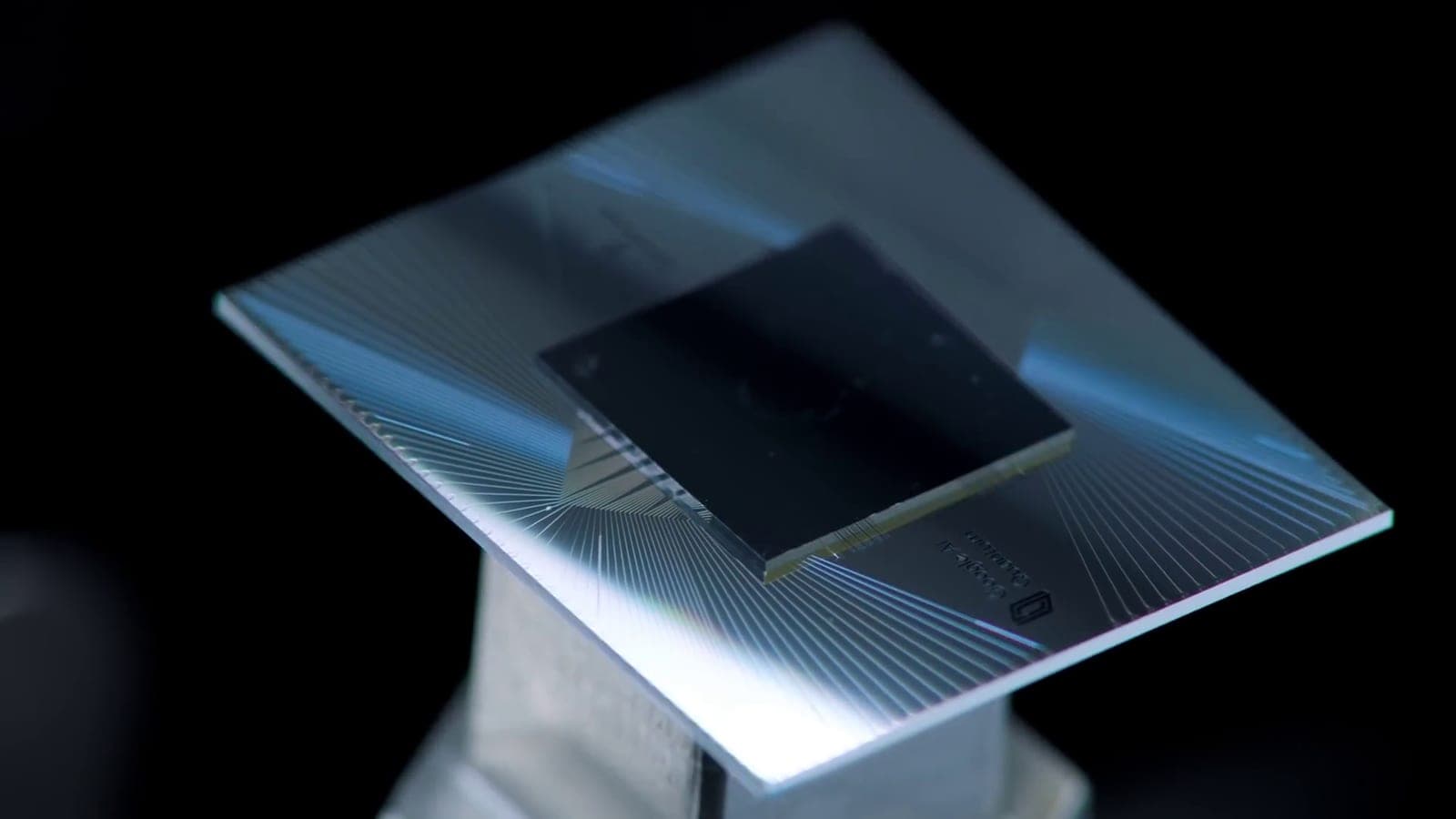
Google shows it can grow quantum computing's rarest ingredient on its Willow chip
Google Quantum AI says a technique called magic state cultivation cut errors about 40 times on its Willow processor, tackling a bottleneck researchers have worried about since 2004.

FAA lifts a nationwide ground stop after a communications outage
A failure in the network linking air traffic controllers and pilots stopped takeoffs across the US for hours on Friday. Officials blame old equipment and a patch.
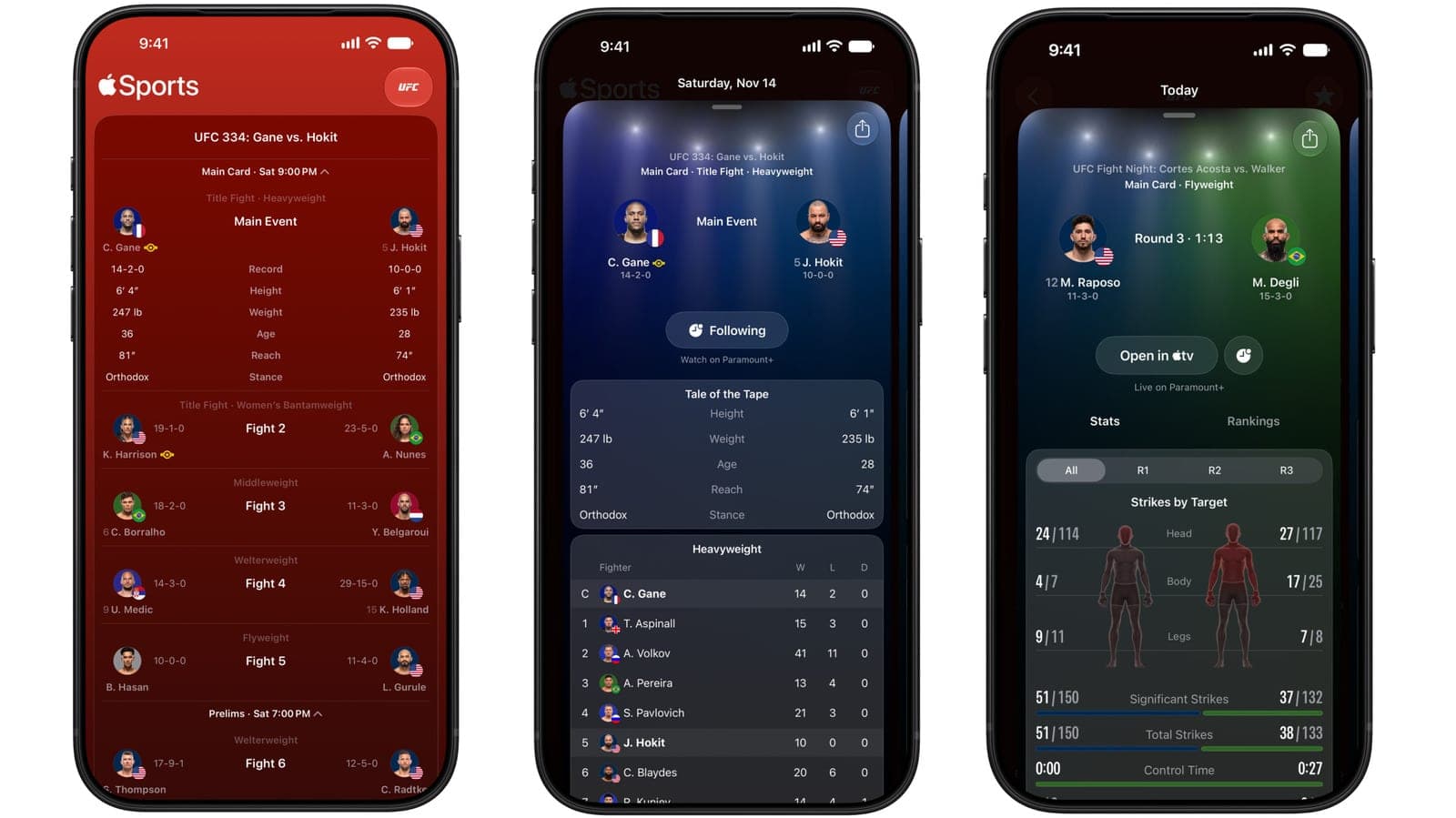
Apple Sports adds UFC with live stats for every fight on the card
Apple's free Sports app now covers UFC, starting with UFC 334 this Saturday. You get fight-by-fight numbers, a strike map and lock screen updates.
More in brief
- Tesla opens Cybercab orders at $29,990, plus $299 a month to drive itNov 14
- LangChain raises $300 million at a $3 billion valuation for AI agentsNov 13
- SignDrop, a new Windows zero-day, gives attackers full System rightsNov 13
- Microsoft's AI Frontiers research group is over, says co-founder John LangfordNov 13
- BYD apologizes after wrong wheels ship on its Great Tang SUVNov 13
- Microsoft 365 outage cuts off Outlook, Teams and Copilot for hoursNov 13