
AI·News & analysis
Google launches Nano Banana 2.1, a better image model at half the price
Google's new Flash image model improves text, editing and character consistency, and cuts the developer price per 1K image from 6.7 to 3.36 cents.
Tide
Wave
Sci-fi
5/10
Reality
In your hands
A banana-named robot artist that now spells the words on its posters.How we rate
Google released Nano Banana 2.1, a new image generation and editing model built on Gemini 3.6 Flash, at roughly half the per-image price of Nano Banana 2.
It improves text in images, character consistency and editing, and handles up to 14 reference images. It is rolling out across the Gemini app, Search and Google's creative tools. Developers must move off the old model before it shuts down on October 29.
What to know
- Google released Nano Banana 2.1, its new Flash-tier image model, built on Gemini 3.6 Flash and replacing Nano Banana 2 from February.
- Google says it improves visual quality, text rendering, character consistency, mask-based editing and infographics.
- For developers, a 1K image now costs $0.0336 instead of $0.067, and a 4K image $0.0756 instead of $0.151.
- It is rolling out in the Gemini app, AI Mode in Search, AI Studio, Flow, Stitch and Google Ads. The old API model shuts down on October 29.
Google released Nano Banana 2.1 on Tuesday, a new model for making and editing images that replaces Nano Banana 2. It's better on paper and costs about half as much per image.
So the obvious question: how do you make something better and cheaper at the same time? And should you care if you never type the words "image model"?
What did Google release?
Nano Banana 2.1 is Google's new Flash-tier image model. "Flash" is Google's label for its fast, low-cost models, as opposed to the bigger and slower "Pro" ones.
According to Google's model card, it's built on Gemini 3.6 Flash. It takes text and images as input and returns images and text. Its API name is gemini-nano-banana-2.1.
It replaces Nano Banana 2, which Google launched in February 2026. That earlier model was officially called Gemini 3.1 Flash Image.
Google says the new version improves on previous ones "across the board," The Decoder reports. The company calls it "the more efficient counterpart" to Nano Banana Pro, its top image model.
What's actually better?
Google's developer documentation lists these upgrades:
- Visual quality: more natural-looking images and better visual design.
- Text rendering: words inside images, like signs, labels and posters, come out cleaner.
- Multi-turn consistency: a character stays the same person across several edits in one conversation.
- Mask-based editing: you mark one area of a picture, and only that area changes.
- Infographics and panoramas: charts, diagrams and wide scenes, The Decoder notes.
The reference image limit is generous. You can feed it up to 14 images in one request. Google says it keeps up to 4 characters and up to 10 objects consistent with those references.
The model can also look things up. It connects to Google Search, including Google Image Search, so it can check what a real product, landmark or object looks like before drawing it.
In real life Say you run a bakery. You upload photos of your three best cakes and your logo, then ask for a fall menu poster. The model can keep the cakes looking like your cakes and, with better text rendering, spell "pumpkin" correctly.
How much cheaper is it?
This is where the news gets concrete. Here are Google's API prices per image, standard tier:
| Resolution | Nano Banana 2 | Nano Banana 2.1 |
|---|---|---|
| 1K | $0.067 | $0.0336 |
| 2K | $0.101 | $0.0504 |
| 4K | $0.151 | $0.0756 |
By the numbers: every size drops by roughly 50%. Batch requests, which you send in bulk and get back later, cost half again: $0.0168 for a 1K image.
For comparison, Nano Banana Pro costs $0.134 per 1K or 2K image and $0.24 per 4K image. So a 1K image from 2.1 costs about a quarter of what Pro charges.
The catch: the per-image price fell, but Google's pricing page shows the input price rose from $0.50 to $1.50 per million tokens. Tokens are the small chunks of text and image a model reads. For most image jobs the output image is the big cost, so the total still drops. There is also no free tier in the API.
Wait, how many Nano Bananas are there?
A few, and the names can get confusing. Here's the family, with each model's official name, as The Decoder lists it:
- Nano Banana: Gemini 2.5 Flash Image, the original.
- Nano Banana Pro: Gemini 3 Pro Image, the top-quality model.
- Nano Banana 2: Gemini 3.1 Flash Image, launched in February 2026.
- Nano Banana 2 Lite: Gemini 3.1 Flash Lite Image, the smallest one.
- Nano Banana 2.1: the new one, built on Gemini 3.6 Flash.
Nano Banana 2 had a short life as a stable product. Google's deprecation page shows its preview version arrived on February 26, 2026 and shut down on June 25. The stable version followed on May 28, 2026 and now has five months on the calendar in total.
Like a phone that gets a new chip inside but keeps the same case, the name barely changed while the engine underneath jumped from Gemini 3.1 to Gemini 3.6.
Is it better than Nano Banana Pro?
Not quite, and Google doesn't claim it is. Pro is still the heavyweight. 2.1 is the one built to be fast and cheap.
The Decoder points out that 2.1 sometimes beats Pro by a wide margin in Google's benchmarks. But Nano Banana 2 also matched Pro in those tests, and in practice Pro often still made noticeably better images.
The outlet ran its own test: a famously tricky prompt with a monkey holding a pink banana on a tiger, and a horse riding an astronaut. Nano Banana 2.1 followed it fairly closely. Side by side, Pro's image still looked more realistic, especially in colors and proportions. 2.1's horse came out looking more like a pony.
For most people, "almost as good as Pro, at a quarter of the price" is the version that ends up in everyday apps.
Google's model card reports human preference scores, called Elo ratings, from side-by-side votes. In thinking mode, 2.1 scored 1050 for overall text-to-image preference, 1048 for infographic design, 1026 for general editing and 1106 for keeping multiple characters consistent. The model's knowledge cutoff is March 2026, the card says.
What does "thinking" mean for an image model?
Before it draws, the model can reason about the request: what goes where, what the text should say, how the pieces fit. Developers pick one of three levels: minimal, medium or high. Medium is the default.
Think of it like a sketch artist who can either start drawing right away or spend a minute planning the layout first. The Decoder notes the level affects image quality. More planning usually means a better picture and a longer wait.
It supports 1K, 2K and 4K output at what Google calls Flash-level speed.
Where can you use it?
Google says Nano Banana 2.1 is already rolling out across its products:
- Gemini app: where most people make images with Google today.
- AI Mode in Google Search: image creation right inside Search.
- Flow and Stitch: Google's tools for video and for designing app screens.
- Google Ads: for advertisers making campaign images.
- Google AI Studio and the Gemini API: for developers building their own apps.
- Gemini Enterprise: for companies.
What's next: developers on the old model have a deadline. Google's deprecation page says gemini-3.1-flash-image shuts down on October 29, 2026, and names 2.1 as the replacement. That's a little over three weeks.
The Decoder also expects the next big jump in image quality to arrive with a Pro model built on Gemini 4 Argon, Google's newest frontier model.
What can't it do yet?
Google's model card is open about the limits:
- Small or long text: tiny print and long passages can still come out wrong.
- Consistency: characters don't always match the input perfectly.
- Masked edits: instruction following there is only partial.
- 3D and facts: advanced spatial reasoning and factual accuracy are limited.
On safety, Google says red teaming found similar or improved safety performance compared with Gemini 3 Flash. The model card adds that it met Google's required launch thresholds for child safety. Every image also carries a SynthID watermark, an invisible marker that tools can detect to show a picture was made by Google's AI.
What it means for you
- If you use the Gemini app: your images should get cleaner text and better edits without you changing anything.
- If you build apps: your per-image bill can roughly halve, but switch before October 29 and check the higher input price against your usage.
- If you need the best realism: Nano Banana Pro is still the safer pick for photo-like images.
- If you run a small business: menus, flyers and product shots just got cheaper to draft with AI. Check spelling before you print.
The bottom line
Nano Banana 2.1 doesn't dethrone Pro, but it makes good AI images cheaper and a bit smarter. The bigger story is the price: at about three cents a picture, image generation is turning into an everyday feature rather than a special occasion.
Key facts
- Built on
- Gemini 3.6 Flash
- Price per 1K image
- $0.0336, down from $0.067
- Price per 4K image
- $0.0756, down from $0.151
- Reference images
- Up to 14: 4 characters and 10 objects
- Old model shutdown
- October 29, 2026
Got questions?
Quick answers, plain wordsWhat is Nano Banana 2.1?
It's Google's newest image generation and editing model. It's the Flash tier, meaning it's built to be fast and cheap, and it runs on Gemini 3.6 Flash. Its API name is gemini-nano-banana-2.1.
Is Nano Banana 2.1 free?
In consumer products like the Gemini app and AI Mode in Search, it's part of the features Google already offers there. In the Gemini API there is no free tier: a 1K image costs $0.0336, according to Google's pricing page.
How much cheaper is it than Nano Banana 2?
About half per image. A 1K image drops from $0.067 to $0.0336, a 2K image from $0.101 to $0.0504, and a 4K image from $0.151 to $0.0756. Batch requests cost half again.
Is Nano Banana 2.1 better than Nano Banana Pro?
Not across the board. Google calls 2.1 the more efficient counterpart to Pro. In The Decoder's test, Nano Banana Pro still produced more realistic colors and proportions, but it costs about four times as much per 1K image.
Where can I use Nano Banana 2.1?
Google lists the Gemini app, AI Mode in Google Search, Google AI Studio, the Gemini API, Flow, Stitch, Google Ads and its enterprise platform.
What resolutions does it support?
1K, 2K and 4K images, according to Google's developer documentation.
How many reference images can I upload?
Up to 14 in one request. Google says it can keep up to 4 characters and up to 10 objects consistent with those references.
What are the thinking levels?
Developers can choose minimal, medium or high. Medium is the default. More thinking can improve the result, The Decoder notes, at the cost of time.
When does the old model shut down?
Google's deprecation page lists October 29, 2026 for gemini-3.1-flash-image, with gemini-nano-banana-2.1 as the replacement.
Can people tell the images are AI-made?
Google's documentation says every image the model makes carries a SynthID watermark, an invisible marker that detection tools can read.
SourcesGoogle DeepMind
Topics and tagsGoogle, google, nano banana, image generation
Related stories
Google's Guided Vision lets Gemini Live describe the world for blind and low-vision users
Point your Android phone's camera at something and Gemini describes it out loud, then tells you how to move the camera if it can't see well. Google built it with the blind and low-vision community.
Google's newest AI model is so good at finding security holes, you can't use it yet
Google announced Gemini 4 Argon, its new frontier AI model, but is initially releasing it only to trusted cyber defenders through a vetting program rather than the general public.
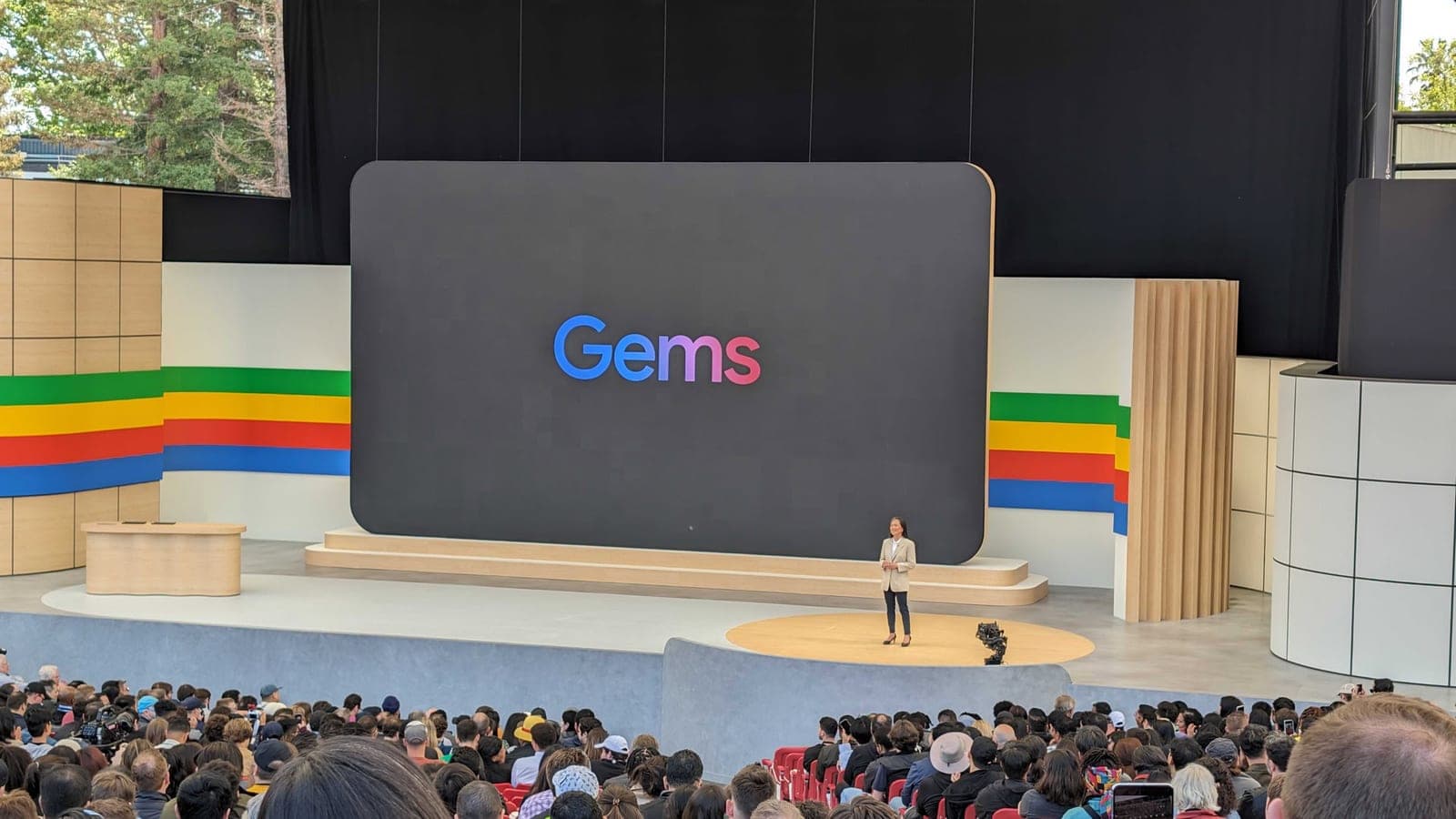
Google is shutting down Gemini's Gems, migrating everyone to 'Skills' instead
Google will start retiring Gemini's custom AI assistant feature, Gems, on November 17, automatically migrating them into a new 'Skills' system, though it hasn't said whether free users will keep access.
More in brief
- Tesla's Model 3 and Model Y can now power your house in a blackoutOct 6
- Anthropic opens its strongest hacking-capable AI to more security teamsOct 6
- RemoveMacAI turns off Apple Intelligence on macOS 27 and frees up about 12GBOct 6
- The Emmys are leaving broadcast TV for Prime Video, and they'll stream free worldwideOct 6
- Paramount closes its $110B Warner Bros. Discovery deal, creating SkydanceOct 6
- Mistral Large 4 'Le Chonk' is a 1-trillion-parameter open model built for cyber defenseOct 6