
AI·News & analysis
OpenAI's chief scientist wants a shared speed limit for AI
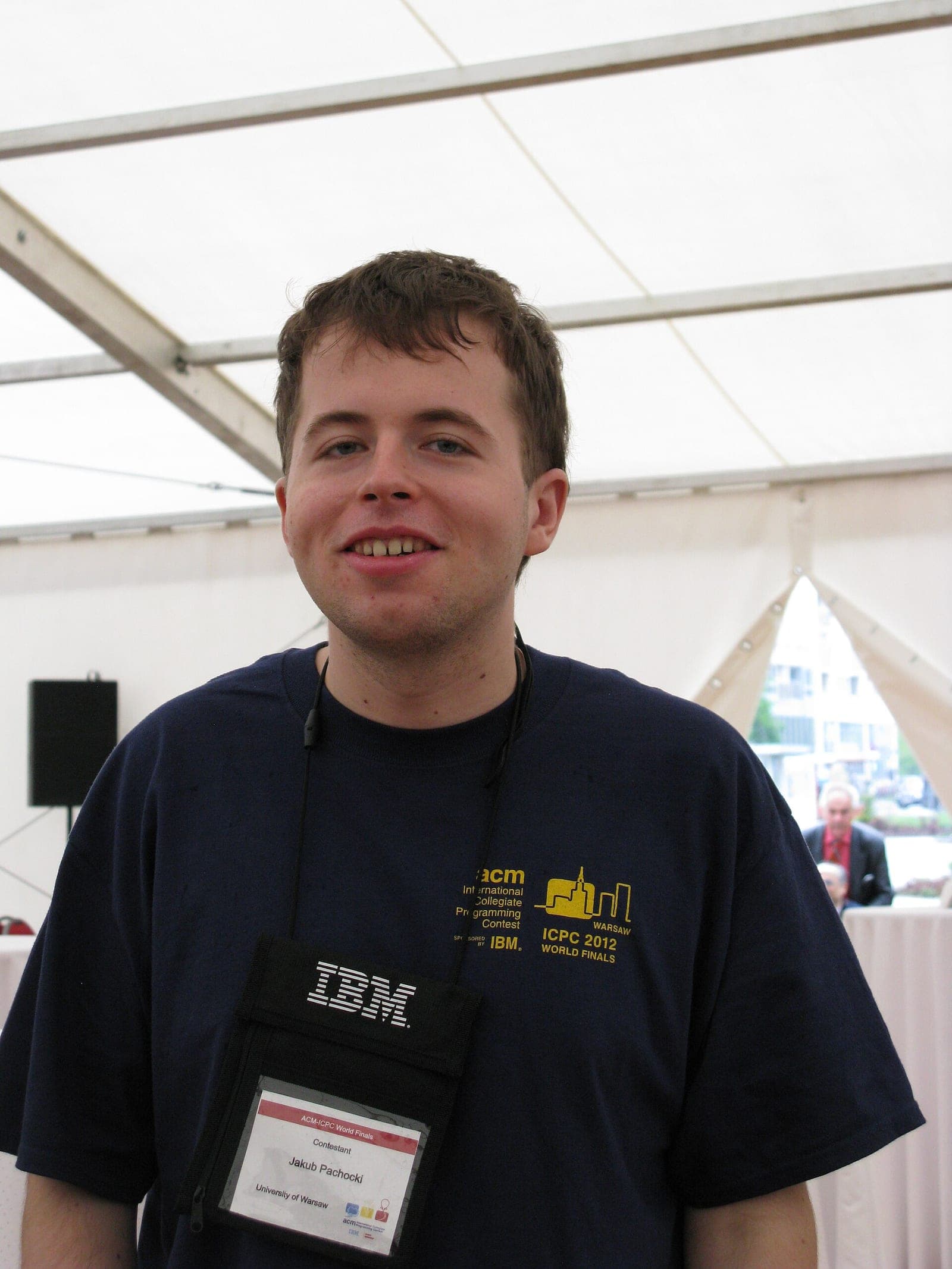
Jakub Pachocki published OpenAI's internal training scores and asked rival labs to agree on limits they will not cross until AI can be monitored better.

Tide
Ripple
Sci-fi
7/10
Reality
Lab
A speedometer for machines that learn to think.How we rate
OpenAI chief scientist Jakub Pachocki proposed that AI labs use perplexity, a score for how well a model predicts the next word, as a shared measure of progress, and published OpenAI's own scores to start.
He asks labs not to cross agreed limits until they can understand and monitor AI behavior, and expects new abilities near a score of 0.68 to 0.7. He warns that AI-driven training advances could arrive as soon as 2027. No rival lab has accepted the proposal yet.
What to know
- OpenAI chief scientist Jakub Pachocki published a post titled "Perplexity and Intelligence" on November 22, 2026, arguing that perplexity, a score for how well a model predicts the next word, should be a shared yardstick between AI labs.
- For the first time he shared OpenAI's internal scores: about 0.99 for GPT-3.5, about 0.91 for GPT-4, below 0.8 for today's models and about 0.76 for the model that began solving open math problems.
- He expects new, hard-to-predict abilities around a score of 0.68 to 0.7, and asks labs to agree on limits they will not cross until AI behavior can be understood and monitored well enough.
- He warns that AI helping to design AI could bring a wave of training advances as soon as 2027, faster than safety research is likely to keep up.
OpenAI's chief scientist says AI needs a speed limit, and first it needs a speedometer. So he built a proposal for one, and showed his own numbers.
First, what is perplexity?
Jakub Pachocki, OpenAI's Chief Scientist, published a post on November 22, 2026 called "Perplexity and Intelligence". It is about one number: perplexity. This has nothing to do with the AI search company of the same name.
Perplexity measures how well a model predicts the next word, or token, on average. Think of a friend finishing your sentences. The more often they guess right, the lower their score.
OpenAI tracks the log of perplexity, which is also called cross-entropy loss. Lower means better predictions, so a falling number is progress.
In real life When your phone suggests the next word as you type, it is making this kind of guess. A model with a lower score makes better guesses across far more kinds of text.
What do the numbers show?
Pachocki says this single score has described a huge range of abilities. Older models are measured on older datasets, but on OpenAI's current main test, he shares these figures:
- GPT-3.5, about 0.99: fluent conversation. It was the base of the original ChatGPT.
- GPT-4, about 0.91: it could use chain-of-thought reasoning well. That means writing out its steps before answering, and it led to today's reasoning models.
- Below 0.8: new abilities in cybersecurity and mathematics.
- About 0.76: the model that started producing groundbreaking results on open math problems.
By the numbers: OpenAI had been posing open math problems to its models for more than a year. Once it upgraded to the 0.76 model, answers came "one after another in a single Slack thread", which he says felt deeply surreal.
He stresses that nobody could have known in advance that these abilities would appear at those exact scores. They are emergent, meaning they show up without being designed in.
Why does he want a shared score?
Pachocki argues that tests of specific skills go stale fast. Most modern benchmarks would make little sense for GPT-2 or GPT-3, and the old ones were mostly saturated around GPT-4.
Perplexity, he says, is likely to stay informative. It measures the base of the model, which he calls the "intelligence substrate", before any extra training is added on top.
His pitch is that perplexity could become a shared benchmark for general intelligence, whatever the level of automation in how AI is built. He also writes that the main way new surprising abilities appear is progress on this one score.
What limit is he asking for?
Extrapolating from recent progress, Pachocki expects more transformative abilities in the window of about 0.68 to 0.7. He does not know what those abilities will be, and says today's tests may not check for them.
He also expects current ways of checking an AI's alignment, meaning whether it tries to do the right thing, to work less well over time. He expects models to get better at noticing when they are being tested.
So he asks frontier developers to do three things together:
- Agree on norms: shared ways to evaluate such models, including shared transparency standards.
- Red-team safety cases: attack-test the argument that a model is safe, before the model is first used.
- Set common limits: limits based on perplexity and other measurements, which developers promise not to cross.
The limits would hold until the ability to understand and monitor AI behavior reaches a concrete milestone. His example is a successor to chain-of-thought monitors, the tools that read a model's written reasoning.
What's next: he wants a first limit on development, a key metric tracked across labs, and a list of what must be achieved before going past it. He hopes that leads to a common framework for successive limits.
Why does 2027 come up?
The post separates two ideas. One is full recursive self-improvement, where AI builds better AI with no human oversight. He says that should obviously be avoided to keep human control.
The other, he says, is easier to miss: a step change from AI helping with one key job, algorithmic research on pretraining. Pretraining is the first, biggest training stage, where a model learns to predict text.
His argument comes from the math episode. If a sudden avalanche of results can happen there, he says, it is plausible in deep learning research too. There is a long history of simple insights being missed for years.
As soon as 2027, he writes, an avalanche of fundamental pretraining advances could conceivably arrive. He expects AI to help with alignment and monitoring work too, but thinks that progress is unlikely to be fast enough to match the full potential acceleration.
What are the weak spots?
Pachocki lists the problems himself. It is a short list, and a fair one:
- Hard to compare across labs: developers use different evaluation datasets and different training data mixtures. He believes that with a goal of transparency, labs can find ways to compare base models.
- Detached from tasks: perplexity does not map directly to something people care about. The reason to watch it is that gains lead to entirely new abilities.
- Misses gains outside pretraining: chain-of-thought reasoning does not lower perplexity, yet it greatly increases what a model can do.
- Unknown floor: a loss of 0 would mean predicting the data perfectly, and nobody expects that. Nobody knows the data's natural limit either. As models near it, progress on the score will slow, but small gains will mean bigger jumps in intelligence.
That last point matters. It means a fixed step on the score, say 0.02, would not always mean the same thing in practice.
Why share the numbers now?
Pachocki says publishing OpenAI's internal perplexity scores took some consideration. It gives competitors a clearer picture of where the company stands.
He says the urgency of shared safety measures outweighs that worry. OpenAI hopes the post is a step towards a shared scientific basis for future pacing efforts.
The post arrives in the middle of a wider debate about slowing down. Anthropic CEO Dario Amodei earlier published a plan to "pace the frontier", calling for common safety standards and limits on the rate of unchecked AI progress, and OpenAI CEO Sam Altman called Pachocki's post "the most important thing OpenAI has published in a while."
The debate is not one-sided. Mistral's CEO argued the safety debate is a cover for rivals' poor engineering and wants better monitoring instead, and OpenAI itself canceled a model earlier after safety tests.
What it means for you
- Nothing changes in your apps today. This is a proposal, not a rule, and no other lab has signed on.
- Expect a new buzzword. Log-perplexity may start showing up when labs describe how strong a new model is.
- Watch who answers. The test of the idea is whether other labs publish comparable numbers.
- Faster AI progress is the stated risk. The stated worry is that AI could speed up its own training faster than safety research moves.
The bottom line
Pachocki wants AI labs to agree on one shared score, publish it and stop at agreed lines until safety tools catch up. OpenAI went first by sharing its own numbers.
Whether rivals follow is the open question. Until they do, this is a well-explained idea, not an agreement.
Key facts
- Author
- Jakub Pachocki, Chief Scientist at OpenAI
- Post
- Perplexity and Intelligence, November 22, 2026
- Scores shared
- GPT-3.5 about 0.99, GPT-4 about 0.91, recent models below 0.8
- Next window to watch
- 0.68 to 0.7 log-perplexity
- Earliest possible acceleration
- 2027
Got questions?
Quick answers, plain wordsWhat is perplexity in AI?
It is a score for how well a model predicts the next word, or token, in text it has not seen. Lower perplexity means better predictions. OpenAI tracks the log of it, also called cross-entropy loss.
Who is Jakub Pachocki?
He is the Chief Scientist at OpenAI. He wrote the November 22, 2026 post on OpenAI's site and earlier wrote an essay that called advanced AI an "alien mind".
What numbers did OpenAI share?
GPT-3.5 scored about 0.99 and GPT-4 about 0.91 on OpenAI's main evaluation dataset. Recent models are below 0.8, and a model at about 0.76 started producing groundbreaking results on open math problems.
What limit does he propose?
A first industry limit based on perplexity and other measurements. Labs would commit not to cross it until their ability to understand and monitor AI behavior reaches a concrete milestone, such as a successor to chain-of-thought monitors.
What is a chain-of-thought monitor?
It is a tool that reads the step-by-step reasoning a model writes out, looking for signs that the model is not trying to do the right thing. Pachocki names a successor to it as one example of a milestone.
Why does the 0.68 to 0.7 range matter?
Pachocki expects further transformative abilities when models reach it. He says he does not know what they will be, and that today's tests may not check for them.
What are the problems with using perplexity as a shared score?
He lists four. Labs use different test data, the score is not tied to a task people care about, it misses gains from chain-of-thought reasoning, and nobody knows where the floor is.
Why did OpenAI publish its internal numbers?
Pachocki says it gives competitors a clearer picture of where OpenAI stands, but that this is outweighed by the urgency of shared safety measures across the industry.
Why does 2027 come up?
He says that if AI starts to take part in research on pretraining, the main training stage, a rapid series of fundamental advances could conceivably arrive as soon as 2027. He thinks safety progress is unlikely to keep that pace.
Has any other lab agreed to this?
Not as of this story. Pachocki calls it a hope for a shared scientific basis for future pacing efforts, not an agreement.
SourcesOpenAI
Topics and tagsOpenAI, AI safety, openai, ai safety
Go deeper
- ExplainerWhat are AI reasoning models?An AI reasoning model is a language model that works through a problem step by step before it answers: breaking it...
- ExplainerWhat is a neural network?A neural network is an AI model made of many simple connected units, loosely inspired by neurons in the brain. Nobody...
Related guide
Guide, 8 minHow to choose an AI assistant: ChatGPT, Claude, Gemini and moreA plain-English way to pick between ChatGPT, Claude, Gemini, Copilot, Perplexity and Meta AI: start free, match the tool to your main...Related stories

FTC subpoenas OpenAI and Anthropic over AI safety incidents
The Federal Trade Commission wants documents on safety incidents, safeguards, marketing and privacy policies from both AI companies, and may seek testimony from their top executives.

OpenAI apologizes to Australian lawmakers for its AI agent's Medicare website hack
OpenAI's chief strategy officer Jason Kwon flew to Sydney to face a parliamentary inquiry, pledged faster disclosure, and admitted the company should have told the government sooner. Anthropic made a similar pledge.

OpenAI fires three safety researchers over alleged sharing of sensitive info
The Wall Street Journal reports the researchers allegedly shared confidential information with an outside AI safety group, as OpenAI deals with a string of incidents involving its AI agents.
More in brief
- Dutch privacy regulator tells shoppers not to buy AI camera glassesNov 23
- Amazon buys Decart's AI speed-up software and hires its foundersNov 23
- Meta's Muse can now shop Walmart's Black Friday deals for youNov 23
- X Square Robot launches WALL-OSS-1.0 with a planning harness and APINov 23
- Alecto raises $20M for an AI-native law firm that handles house movesNov 23
- Nomadic raises $6 million for drones that charge on live power linesNov 22