
AI·News & analysis
Cohere launches North 2, giving business AI agents memory and spending caps
Cohere's biggest upgrade to its enterprise AI platform adds a rebuilt agent harness, memory across sessions, shareable agents and admin controls that cap how many tokens teams can burn.
Tide
Ripple
Sci-fi
3/10
Reality
Shipping
The office AI now remembers yesterday and knows its budget.How we rate
Cohere has launched North 2, a major upgrade to its enterprise AI agent platform.
Agents now remember past sessions, can be shared across a company, and can build decks, dashboards and simple apps from a prompt. Admins get detailed controls to track and cap token spending. It still runs privately, including fully offline, and works with models from other companies.
What to know
- Cohere launched North 2, which it calls its biggest upgrade yet to North, its platform for running AI agents inside large organizations.
- A redesigned orchestration system handles multistep work on its own and brings in a human for steps that need sign-off.
- Agents now keep memory across sessions, can be shared across a company, and can call reusable skills and shared libraries.
- New admin controls track token use down to each user and agent and let companies cap spending, with North still running in the cloud, on-premises or air-gapped.
Cohere wants businesses to stop choosing between AI agents that are smart, safe or affordable. The Toronto company launched North 2 on Monday, calling it its biggest upgrade yet to North, its platform for running AI agents inside large organizations.
The pitch is simple. Every option so far "demanded a sacrifice," Cohere says: the secure platform wasn't smart enough, the smart one wasn't controllable enough, and the one you could govern became too expensive at scale.
What is North?
North is a software layer that sits around AI models and lets companies build and run agents on their own data. It has been generally available since August 2025, SiliconANGLE reports.
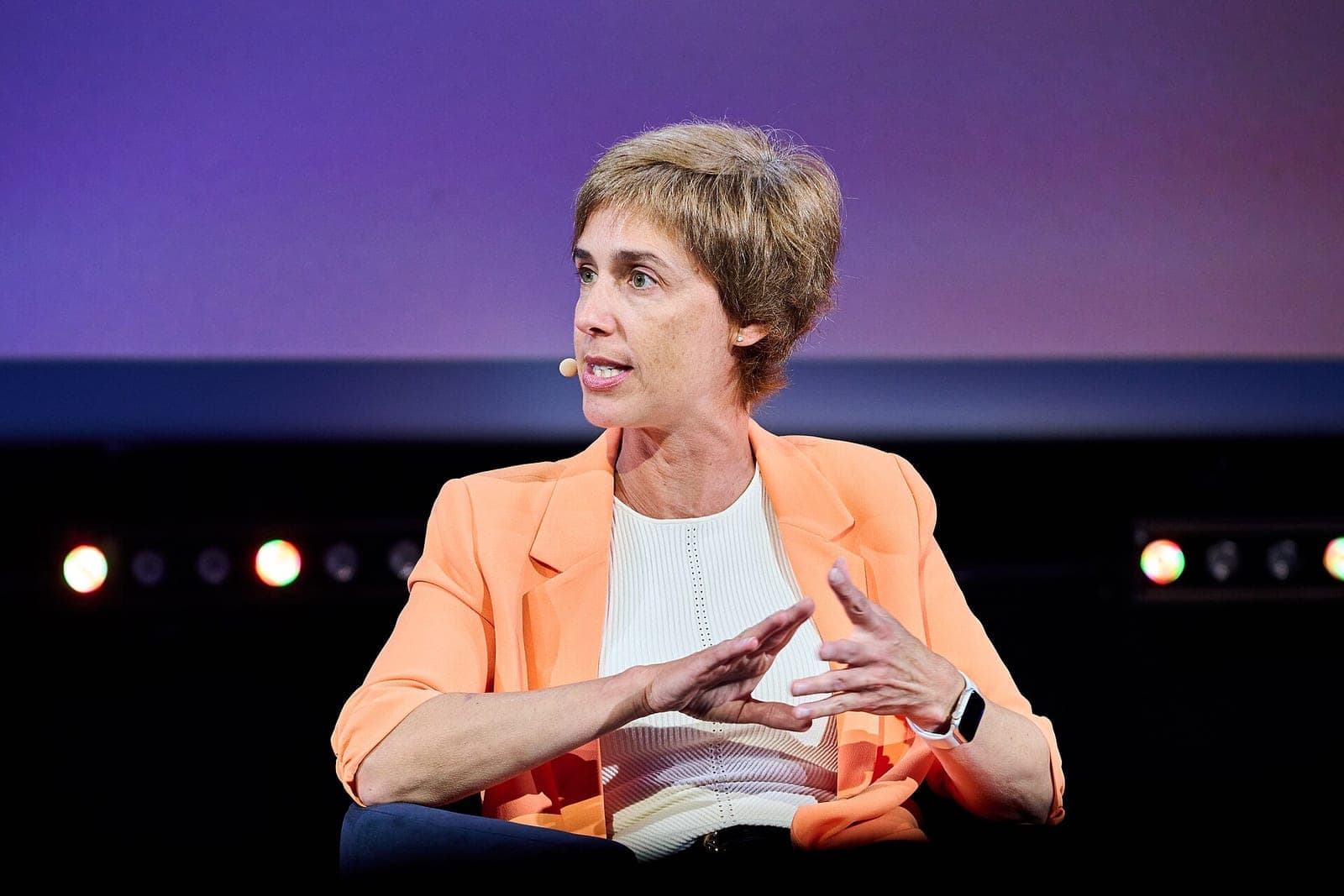
Cohere's chief AI officer, Joëlle Pineau, told The Globe and Mail that the first version worked largely as a chatbot that could pull internal documents and handle some automated workflows.
"It was essentially a generative model," she said. "Today, we've actually put in a lot of the features that allow agentic behaviour."
Cohere says a year of large production deployments in finance, healthcare, telecommunications, manufacturing, energy and the public sector shaped the upgrade.
What's new in North 2?
At the center is a new agent harness, a redesigned orchestration system for multistep work.
Pineau's analogy: "The model is like the engine, and the harness is like the vehicle," she told The Globe and Mail. "If you have a motor, you've got a ton of power. But without a vehicle, you're not going anywhere."
The orchestration system works through multistep tasks on its own and pulls in a human for steps that need sign-off, SiliconANGLE reports. Around it, Cohere has added:
- Memory: agents keep context across sessions instead of starting cold every time.
- Skills: reusable capabilities agents can call on, so teams don't rebuild the same logic.
- Libraries: shared knowledge and assets the whole organization can draw from.
- Shareable agents: agents built from a simple prompt can be shared across a company, so other teams don't build the same workflow twice.
- Applications: users can prototype decks, dashboards, documents and lightweight apps from natural language, right in the chat window.
- Automations: prebuilt templates, a drag-and-drop workflow builder and real-time performance monitoring.
Customers can use North 2 to build agents for more complex jobs, such as resolving customer issues, financial analysis and coding, The Globe and Mail reports. Pineau said some of the features have already shipped to customers.
Which apps does it connect to?
Cohere has expanded North's connectors. The new list includes:
- Slack
- Microsoft SharePoint, OneDrive, Outlook and Exchange
- Jira and Linear
- Notion
- GitHub
Cohere also plans connectors to financial data providers including PitchBook, Crunchbase, Daloopa, FiscalAI, S&P Global and FactSet.
How do the spending caps work?
This is the part aimed squarely at finance teams. AI agents can spend a long time working on a task, not always efficiently, which pushes usage costs up, The Globe and Mail notes.
North Admin, the platform's management console, now tracks token use down to the individual user and agent, SiliconANGLE reports. Administrators can:
- Set consumption tiers for users and groups based on request and token rates.
- Set user quotas and caps across the whole company.
- Get alerts that warn teams before a limit is reached.
- Choose models for each team, including models a customer brings from outside Cohere.
Cohere is also counting on its work with Nvidia to cut running costs. It says its models produce more tokens per second per node on Nvidia's Blackwell and Hopper GPUs. Kari Briski, Nvidia's vice president of generative AI, said that helps North 2 "deliver more tokens for less," according to SiliconANGLE.
What about security?
Cohere is targeting regulated industries and governments, where control over data matters most.
Deployment options: North still runs in the cloud, in a customer's own virtual private cloud, on-premises, in hybrid setups, or fully air-gapped for organizations that allow no outside connection.
Guardrails per agent: administrators can apply guardrails to individual agents. SiliconANGLE reports the screening covers personal information in prompts and responses, as well as attempted prompt injection.
Autonomy policies: agents can be limited to the actions they're authorized to take and required to seek human sign-off for critical decisions.
Certifications: Cohere cites SOC 2 Type 2, ISO 27001 and ISO 42001 certifications.
The timing matters. AI agents have made headlines in recent months for misbehaving and trying to hack into organizations during evaluations, sometimes successfully, The Globe and Mail notes.
Who's using it?
Cohere has named Bell Canada, LG CNS and Dell as North customers. It declined to say how many clients it has in total.
"We have dozens of companies, and some of them are up to tens of thousands of users," Pineau told The Globe and Mail.
- Bell Cyber: Bell Canada's security unit uses North inside its own security operations. Jawed Ahmad, Bell Cyber's chief technology and AI officer, said it brings in "the control, privacy, and sovereignty requirements our customers demand built in from the start."
- LG CNS: the South Korean IT services company runs North internally and offers it to customers across Korea.
How does Cohere compare with rivals?
Cohere is much smaller than its US competitors, The Globe and Mail reports. OpenAI sells ChatGPT Enterprise and is rolling out its new Dots agent, Microsoft sells 365 Copilot, and Mistral is making inroads with Canadian businesses.
Open to other models: because North is model-agnostic, customers can even use it with models from Cohere's rivals. "We actually derive a sizable portion of our revenue from the harness," Pineau said.
Getting bigger: North 2 arrives less than three weeks after Cohere signed a merger agreement with German AI developer Aleph Alpha, SiliconANGLE reports. The combined company will keep the Cohere name and gain more access to the European market.
Why build both models and the harness?
Training AI models is expensive. OpenAI, Anthropic and Google are spending billions racing to build more capable systems, The Globe and Mail notes.
Cohere, founded in 2019, still trains its own models while building North around them. It focuses on businesses, regulated industries and public-sector clients for whom privacy, security and control are crucial, according to the paper.
"The hypothesis is you do a much better version of both when you develop both," Pineau said.
The Nvidia work is part of that bet. Cohere says its models, trained and deployed on Nvidia's Blackwell and Hopper hardware, help North generate more insights while spending fewer tokens. "Organizations need control over where their AI runs and how their data is secured," Nvidia's Briski said in Cohere's announcement.
A real-world example: Radical Ventures' North automation prepares the briefing its team reads before a founder call. Before it existed, partner Parasvil Patel said, the team spent hours gathering basic context, SiliconANGLE reports.
What it means for you
- For IT leaders: shared agents, skills and libraries could cut down on teams rebuilding the same workflows.
- For finance teams: per-user and per-agent token tracking and hard caps make agent spending easier to predict.
- For regulated industries: air-gapped and on-premises options keep data inside your walls.
The bottom line
Cohere's North 2 turns its enterprise AI platform from a document chatbot into a full agent platform, with memory, shareable agents and app building. Its biggest selling point may be control: detailed spending caps and private deployment for companies that can't let costs or data run loose.
Key facts
- Product
- North 2, Cohere's enterprise agent platform
- New features
- Agent harness, memory, skills, libraries, shareable agents, app creation
- Cost controls
- Token tracking per user and agent, quotas and org-wide caps
- Deployment
- Cloud, VPC, on-premises or fully air-gapped
- Customers named
- Bell Canada, LG CNS, Dell
Got questions?
Quick answers, plain wordsWhat is Cohere North 2?
It's the second version of North, Cohere's platform for building and running AI agents inside companies. Cohere calls it its biggest upgrade yet.
What's new in North 2?
A redesigned agent orchestration system, memory that carries across sessions, reusable skills, shared libraries, agents that can be shared across a company, and the ability to create decks, dashboards, documents and lightweight apps from natural language.
How does North 2 control costs?
North Admin tracks token use down to individual users and agents. Admins can set consumption tiers by request and token rates, set user quotas and org-wide caps, and get alerts before limits are reached.
Does North 2 only work with Cohere's models?
No. North is model-agnostic, so customers can use Cohere's models or bring their own, including models from competitors.
Where can North 2 run?
In the cloud, in a customer's own virtual private cloud, on-premises, in hybrid setups, or fully air-gapped with no outside connection.
What is an agent harness?
It's the software layer that manages AI agents and connects them to other applications to complete tasks. Cohere chief AI officer Joëlle Pineau compared the model to an engine and the harness to the vehicle, The Globe and Mail reports.
Which apps does North 2 connect to?
New connectors include Slack, SharePoint, OneDrive, Microsoft Outlook, Microsoft Exchange, Jira, Linear, Notion and GitHub. Cohere plans connectors to financial data providers such as PitchBook, Crunchbase, S&P Global and FactSet.
Who uses North?
Cohere has named Bell Canada, LG CNS and Dell as customers. Pineau told The Globe and Mail that Cohere has dozens of customers, some with tens of thousands of users.
When did North first launch?
North has been generally available since August 2025, SiliconANGLE reports.
SourcesCohere
Topics and tagsAI agents, cohere, ai agents, enterprise ai
Related stories

Valon raises $150 million to put AI agents to work on 1 in 6 US mortgages
The mortgage software startup doubled its valuation to $2.3 billion. Its ValonOS platform and AI agents are now under contract to run one in six outstanding US mortgages.

Anthropic commits $100 million to train 10,000 engineers to deploy Claude
The new Claude Frontier Academy runs a residency modeled on medical training, with first cohorts from Accenture, McKinsey, Deloitte, Morgan Stanley and others.
Cloudflare releases Clef, open-weight AI models that make yes-or-no decisions fast
Clef and Clef-flash answer bounded questions for AI agents in milliseconds instead of writing text. Cloudflare hosts them and also gives away the weights, a direct challenge to TypeSafe's Jev.
More in brief
- Trump launches a 'Super Intelligence Force' led by spy chief Jay ClaytonOct 5
- Denmark's national ID register breached, exposing 8.8 million people's CPR numbersOct 5
- China has stockpiled 343 ASML chipmaking machines, and a new report wants exports cut offOct 5
- A record 27 startups raised billion-dollar rounds in Q3 as AI soaks up 64% of venture moneyOct 5
- ChatGPT will start showing picture ads while you generate imagesOct 5
- Google pauses its open-source bug bounty after a flood of AI-generated reportsOct 5