
AI·News & analysis
Apple turns idle Macs into a GPU cloud it calls Minions
An Apple research paper describes Minions, an internal system that sends AI jobs to employees' idle Macs and cut some GPU waits from more than 10 hours to minutes.
Tide
Ripple
Sci-fi
5/10
Reality
Demo
Office Macs quietly doing AI homework while everyone is at lunch.How we rate
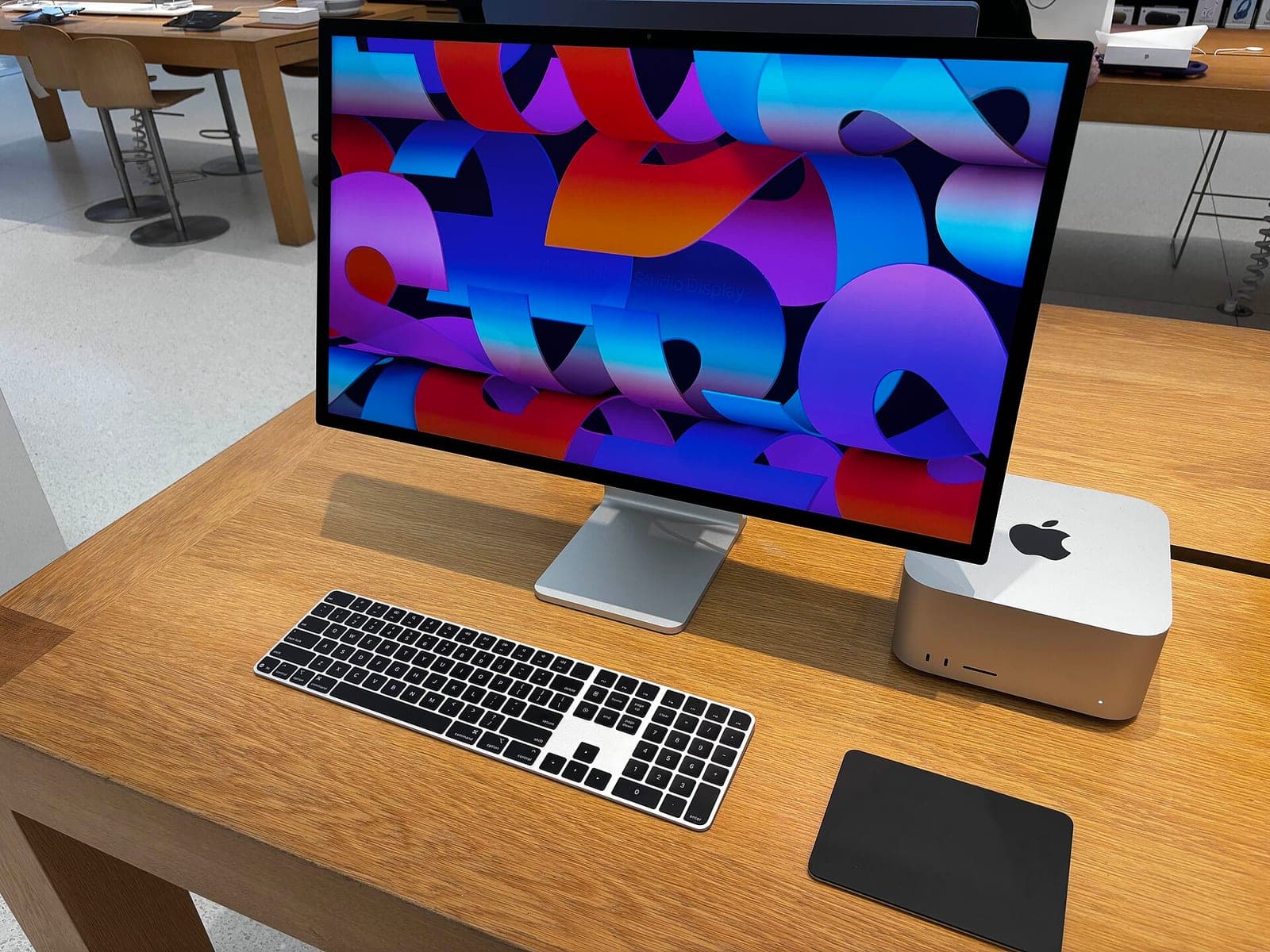
Apple researchers described Minions, an internal system that pools the idle GPUs of employees' Apple Silicon Macs into a virtual cloud for AI inference.
Before it, some jobs waited more than 10 hours for central GPUs; now they often start within minutes, with no new hardware. Several Apple teams already use it for embeddings and language model tasks. Next, the authors plan to add AI training and imagine idle Macs across organizations sharing one pool.
What to know
- Apple researchers published a paper on Minions, a system that pools the idle graphics chips of Apple Silicon Macs into a shared "virtual GPU cloud" for AI work.
- Before Minions, some AI jobs at Apple waited more than 10 hours for a central GPU; with it, they can often start within minutes.
- Each Mac pulls small pieces of work on its own, and a watchdog hands the work to another Mac if one goes to sleep, loses Wi-Fi or gets switched off.
- The authors want to extend it to AI training and say idle Macs across organizations could one day form a huge shared GPU pool.
Apple researchers have published a paper on Minions, a system that turns idle Macs into a shared GPU cloud for AI work. So here's the fun question: what does a Mac do while its owner is in a meeting?
At Apple, the answer is now "somebody else's AI job." And according to the paper, that trick cut some waits from more than 10 hours to minutes.
What exactly did Apple build?
Minions is a way to borrow the graphics chip (GPU) inside a Mac when nobody is using it. The researchers describe it as "a dynamic and distributed virtual GPU cloud that aggregates idle Apple Silicon GPUs across macOS devices."
In plain words, a lot of Macs sitting on desks become one big pool of AI computers. A team that needs to run a model sends the job to that pool instead of waiting in line for the company's central GPU servers.
The paper is by six Apple researchers: Jianhua Li, Yun Xing, Girisha De Silva, Ryan Flint, Kai Yuan and Sean Suchter. It appeared on arXiv on October 9, 2026, and on Apple's Machine Learning Research site.
Why it matters: the authors say Minions lets teams "leverage existing hardware without requiring additional GPU procurement." That means no new machines to order.
Why would Apple need this?
Running AI models takes GPUs, and big central GPU clusters are expensive to grow and often overbooked. The paper says that when they fill up, teams face long queues, slower experiments and higher costs.
Meanwhile, Apple Silicon Macs have capable GPUs that sit mostly idle during normal use. Email and slide decks barely wake them up.
Tom's Hardware adds some context from Apple's own filings. In its quarterly report in July, Apple said it "depends on access to sufficient computing resources" in a market with "constrained supply, extended lead times, and increasing costs."
The outlet also notes that Apple's Private Cloud Compute, the server side of Apple Intelligence, now also runs on Nvidia GPUs in Google Cloud, which Apple announced at WWDC in June. The big picture: compute is tight everywhere, even at a company that designs its own chips.
How does a Mac become a Minion?
The system has four parts, each with a job:
- Minion Server: the front desk. It takes requests through a web page and APIs, checks them, and splits each task into smaller subtasks.
- PostgreSQL metadata store: the notebook. A database with seven tables keeps track of every task, subtask and machine.
- Minion Executor: the worker. It runs on each Mac, grabs the next subtask, downloads the inputs from Amazon S3 storage, runs the model on the Mac's GPU and uploads the result.
- Minion Watchdog: the safety net. It watches busy Macs and rescues work from any that disappear.
Here's the clever bit. There is no central boss handing out work. Each Mac asks for the next piece on its own, which the paper calls a "pull-based execution model."
When two Macs try to grab the same piece, the database lets exactly one win. The loser simply picks another subtask. It works like a deli counter where only one person can hold ticket number 42.
What happens when someone closes the lid?
This is the part a normal cloud never has to worry about. Personal computers come and go all day.
The paper lists the usual ways a Mac drops out: it loses the network, goes to sleep, gets powered off, or its owner stops the executor because they need the full machine back. The catch: any of these can happen in the middle of a job.
So every busy Mac sends a heartbeat every 5 minutes. If the heartbeats stop, the Watchdog puts the unfinished subtask back in the queue, and another healthy Mac picks it up. Nobody has to step in by hand.
In real life Picture your work laptop running a chunk of a colleague's AI job while you grab coffee. You come back, open a heavy app, and stop the helper. The job doesn't fail. Another idle Mac down the hall quietly finishes that piece.
What can it actually run?
For now, Minions only does inference, which means running models that are already trained. It handles two kinds of jobs:
- Embeddings: turning text into lists of numbers that capture meaning, using open-source transformer models from Hugging Face. Search systems use these to find similar documents.
- Text generation: answers from large language models through Ollama, an open-source tool for running models locally. Ollama is installed on each participating Mac.
If a Mac doesn't have the needed model yet, it downloads and keeps a copy. Tom's Hardware reads the paper as each Mac running a whole model on its own slice of work, not one model split across many machines.
That is different from another Mac trick. The Register notes that recent Mac mini and Mac Studio models can be clustered with RDMA over Thunderbolt 5 to load a single model too big for one machine. Minions is not about running bigger models; it is about putting idle machines to work.
Did it actually help?
According to the paper, yes. Minions supports AI workloads across multiple Apple teams. The authors summarize the change in a simple before-and-after table:
| Metric | Before Minions | With Minions |
|---|---|---|
| GPU queue time | Hours (up to 10+) | Minutes |
| New GPU requests | Required | None |
| Infrastructure cost | High | Zero |
| Scaling effort | Manual | Organic |
By the numbers: "Prior to its adoption, some inference jobs experienced queue times exceeding ten hours," the paper says. "With Minions, tasks can often begin execution within minutes."
Tom's Hardware adds a fair footnote: "zero" cost leaves out electricity and wear on the hardware.
Teams also get Grafana dashboards showing how many Macs are registered, online, busy or idle, and how many tasks are running, finished or failed.
Who decides which job goes first?
By default, it's first come, first served. But each Mac's owner can tell their machine to favor a certain team or project, a feature the paper calls dynamic task binding. When no such job is waiting, the Mac helps with everyone else's queue.
In practice, the coordination is pleasantly low-tech. The authors write that team members may "send Slack messages requesting others to temporarily run the Minion Executor and target a specific project or task."
There is one real worry. People hesitate to let their team's data run on machines outside their group, even inside the same company. To ease that, Minions can run as separate team or organization deployments, each with its own database and its own pool of Macs.
Tom's Hardware compares the idea to SETI@home and Folding@home, the volunteer projects that sent small chunks of science work to idle home computers.
What comes next?
The authors say future work will extend Minions to distributed model training, not just inference.
They also think bigger. If idle Macs "across organizations, or potentially across the global community" can be "securely federated," they write, they could form a massive shared GPU pool. For now, though, Minions is an internal Apple tool, with no product or public release announced. You can follow more Apple news on our Apple topic page, or see how rivals pitch local AI on a mini PC.
What it means for you
- No download yet: Minions is an internal system described in a research paper. There is nothing to install on your Mac today.
- Your Mac is more than a typewriter: the paper is a reminder that the GPU in an Apple Silicon Mac can run real AI models, the same kind of local work tools like Ollama already offer.
- Watch the "global pool" idea: if Apple ever lets Macs share spare power beyond one company, privacy and security will be the first questions to ask.
The bottom line
Apple found spare AI power in a place it already owned: the Macs on its employees' desks. Minions turns them into a self-healing pool that cut some waits from hours to minutes. It's internal for now, but the idea of idle computers teaming up for AI is one to watch.
Key facts
- System
- Minions, a virtual GPU cloud built on idle Apple Silicon Macs
- Queue time
- Up to 10+ hours before, often minutes with Minions
- Workloads
- Embeddings (Hugging Face models) and LLM completions (Ollama)
- Heartbeat
- Every 5 minutes from each busy Mac
- Authors
- Six Apple researchers, paper dated October 9, 2026
Got questions?
Quick answers, plain wordsWhat is Apple Minions?
Minions is an internal Apple system that collects the unused graphics chips (GPUs) of Apple Silicon Macs and treats them as one shared pool for AI jobs. Apple researchers call it "a dynamic and distributed virtual GPU cloud."
Is Minions related to the yellow cartoon characters?
Only by name. The system has parts called the Minion Server, Minion Executor and Minion Watchdog, but it has nothing to do with the movies.
Can I use Minions on my Mac?
No. The paper describes a system Apple uses inside the company. Apple has not announced a product or a public download.
What kind of AI work does Minions run?
Only inference, meaning running finished models, not training them. It handles two kinds of jobs today, turning text into embeddings with open-source Hugging Face models and generating text with large language models through Ollama.
How much faster is it?
The paper says some jobs used to wait more than 10 hours for a central GPU. With Minions, tasks can often begin within minutes because they run on Macs that are sitting idle.
What happens if a Mac goes to sleep in the middle of a job?
Busy Macs send a heartbeat every 5 minutes. If one goes quiet because it slept, lost its network, was powered off or its owner stopped the program, the Minion Watchdog puts the unfinished piece back in the queue for another Mac.
Does a Mac owner get a say?
Yes. Each Mac's owner can set which teams or projects their machine works for first, a feature Apple calls dynamic task binding. When none of those jobs are waiting, the Mac helps with the general queue.
Does Minions split one big model across many Macs?
The paper does not describe that. Tom's Hardware reads it as each Mac running a whole model on its own slice of the work. Splitting one model across machines is a different feature, RDMA over Thunderbolt 5, which The Register notes newer Mac mini and Mac Studio models support.
Is it really free to run?
The paper lists infrastructure cost as zero because the Macs already exist. Tom's Hardware points out that this does not count electricity or wear on the hardware.
Will Minions train AI models?
Not yet. The authors say future work will extend Minions to distributed model training, in addition to the inference it runs now.
SourcesApple
Topics and tagsApple, AI chips, apple, apple silicon
Go deeper
- ExplainerWhat is a GPU, and why does AI need them?A GPU (graphics processing unit) is a chip that does huge numbers of simple calculations at the same time. Built to...
- ExplainerWhat is a large language model (LLM)?A large language model is an AI system trained on huge amounts of text to predict the next word. That simple skill,...
Related stories
OpenAI says an ex-employee took its device files to Apple
In a new court filing, OpenAI claims a hardware worker sent over 100 confidential files about an unreleased device to his personal accounts, then presented OpenAI's plans to Apple. Apple says it found no evidence of that.
Anthropic tells investors its Q3 revenue hit $16.8 billion ahead of its IPO
At a full day of pre-IPO meetings in San Francisco, the Claude maker reportedly showed investors a 45% jump in quarterly revenue and an adjusted profit, plus a detail nobody expected: copycat distillers were a real slice of sales.

OpenAI engineer charged over hidden recording device in executive room
Federal prosecutors say an OpenAI engineer wrapped a tiny recorder in toilet paper and plugged it into a TV in an executive conference room in San Francisco.
More in brief
- Mexico gives Meta, TikTok and X one month to shield kids from harmful contentOct 15
- Eight US states sue OpenAI over ChatGPT's safety for kidsOct 14
- Xbox Nano is a $50 controller small enough for your pocketOct 14
- Linux kernel developers move to drop the rule that made coders disclose AI helpOct 14
- Deezer will let you hide fully AI-generated music with one switchOct 14
- YouTube Music starts labeling songs made mostly with AIOct 14