
AI·News & analysis
World launches a World ID suite for banks to fight deepfake fraud
Unveiled at Money20/20, World's first industry-specific product bundles its ID app, a Zoom human check and AgentKit so banks can confirm a real person is behind a transfer, a call or an AI agent.
Tide
Ripple
Sci-fi
6/10
Reality
Shipping
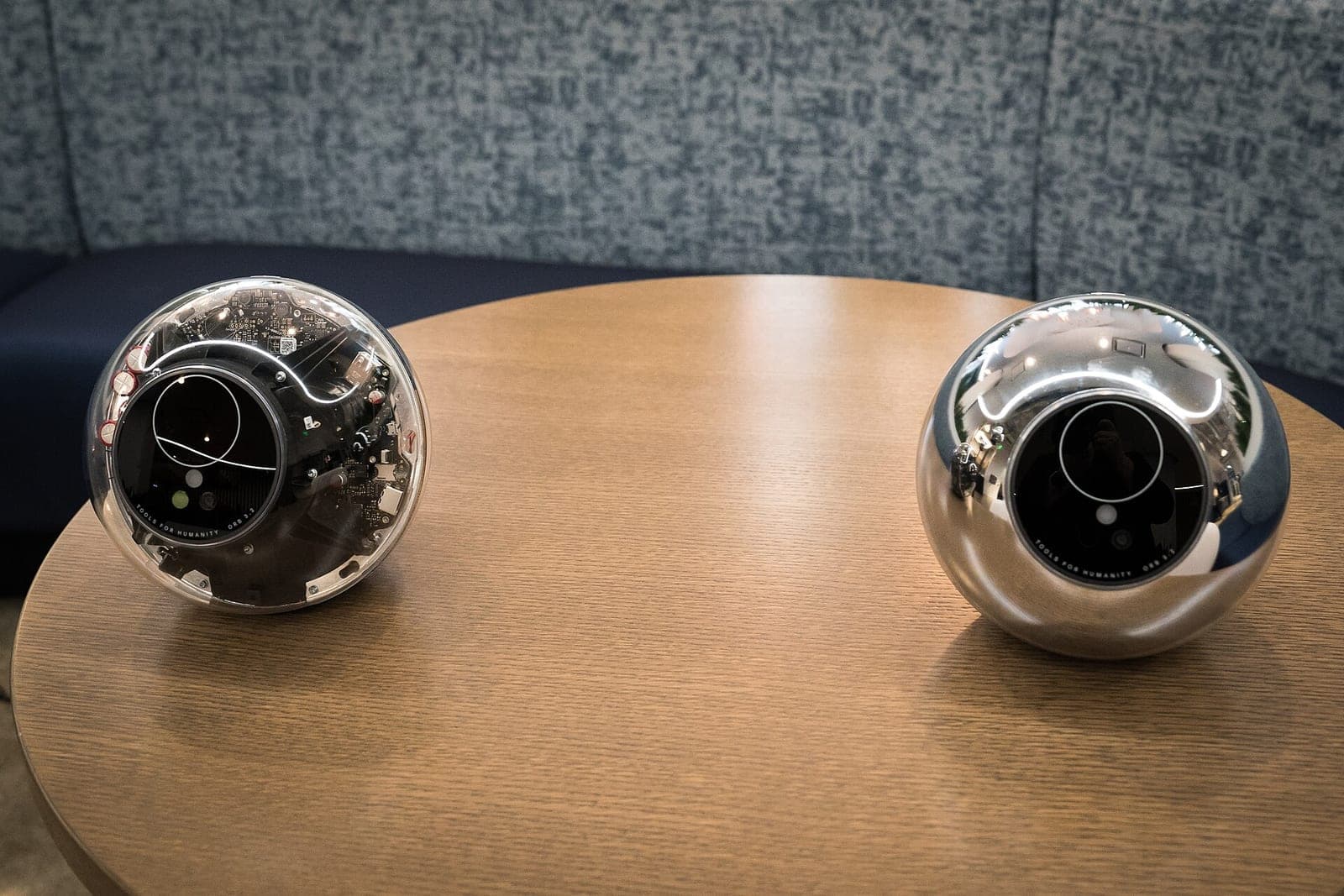
A chrome orb vouches that you are a person, not a very good fake.How we rate
World, the identity project co-founded by Sam Altman, launched World ID for banking and finance at Money20/20, its first industry-specific offering.
The suite combines the World ID app, a Zoom check that confirms a caller is a verified human, and AgentKit, which lets people hand proof of being human to AI agents. More than 18 million people hold World's Proof of Human. World named investment firms as design partners but has not named any bank or announced pricing.
What to know
- World unveiled World ID for banking and finance at Money20/20 in Las Vegas, its first product built for one specific industry.
- The suite bundles three existing products: the World ID app, World ID for Zoom and World ID for Agents, also called AgentKit.
- World ID for Zoom left its limited beta and is now available to Zoom's enterprise customers through the Zoom Marketplace.
- World named investment firms such as Bain Capital, VanEck Funds and Pantera Capital as design partners, but no bank and no pricing.
World, the identity project co-founded by Sam Altman, announced World ID for banking and finance, a set of tools that helps banks check that a real human is behind a transfer, a video call or even an AI agent. Now the fun part: why would a bank need proof that its customer is a person at all?
What did World actually launch?
Co-founder Alex Blania unveiled the suite on stage at Money20/20 in Las Vegas on Sunday, October 18. The Block reports it is World's first product aimed at one specific industry.
It isn't a brand new gadget. It's a bundle of three things World already makes, packaged for banks, asset managers and other financial firms:
- World ID app: an identity wallet on your phone that stores and shows what World calls "Proofs" about you.
- World ID for Zoom: a check that confirms the person on a video call is a verified human, not a deepfake.
- World ID for Agents (AgentKit): developer tools that let a person hand some of those Proofs to an AI agent acting for them.
World says the goal is to make transactions, trades, customer requests and important video calls "AI-safe," both inside a bank and with its customers.
Why do banks need this now?
Because fake people got very good (we covered one way to spot AI images in our story on Google's SynthID detector). World's announcement points to cases where AI-made video and voices fooled real employees and real systems.
The best known one: in early 2024, an employee at engineering firm Arup wired about $25.6 million after a video call where every other participant was a deepfake. Later that year, the US Treasury's Financial Crimes Enforcement Network warned that criminals were using deepfake photos and videos to get past checks on new account applications.
By the numbers: World cites a Deloitte forecast that AI-enabled fraud losses in the US could reach $40 billion by 2027, up from an estimated $12.3 billion in 2023.
In its Zoom announcement, World also cites a 2025 Gartner survey in which 62% of cybersecurity leaders said their organization had faced a deepfake attack in the previous year.
There's a second, newer worry. AI agents from big AI labs can now shop, send messages and handle money tasks for people. A bank that sees an agent asking to move funds needs to know a real customer is behind it.
First, what's a "Proof"?
A Proof is a small piece of cryptographic evidence about you. Think of it like a bouncer's wristband: it shows you're allowed in without showing the bouncer your whole wallet.
The World ID app offers three kinds:
- Proof of Human: you are a real and unique person. You get it with a one-time visit to an Orb, World's eye-scanning device. World says Orbs are also set up at the New York Stock Exchange.
- Proof of Presence: a quick liveness check on your phone, showing you're there right now.
- Proof of Attributes: one fact from an official government ID, such as your nationality or that you're over a certain age. It reveals only the fact that was asked for.
World says more than 18 million people hold a Proof of Human. The app is available in the App Store and Google Play in more than 150 countries, according to the company.
The pitch to banks is that they can confirm who is behind a sensitive action while collecting and storing less personal data, not more.
How would a bank use it?
World gives a few concrete examples. A bank could ask for a Proof when a client walks into a branch, opens a new account, or moves a large sum of money.
It also describes "human-binding" approvals for ACH and wire transfers. That means a real, verified person has to sign off on the payment. The same idea applies to account recovery, the moment when attackers often try to take over someone's account.
In real life Imagine your bank app asks you to approve a big wire transfer. Instead of typing a code someone could have phished, you'd do a quick selfie check in the World ID app that ties back to the person who visited an Orb. A scammer with your password would still be stuck.
World also says the system is designed to be quantum-secure, meaning it aims to resist future quantum computers that could break some of today's encryption.
What changes for Zoom calls?
This is the piece that went from test to real product. World ID for Zoom started as a limited beta in April. World says it is now available to Zoom's enterprise customers worldwide through the Zoom Marketplace, and it runs on AWS.
Here's how it works, step by step:
- Verify once: you visit an Orb and connect the World ID app to your Zoom account.
- Confirm in the meeting: when you join a call, a live selfie is matched to that Orb-verified person. If it matches, a Human Badge appears on your video tile for everyone to see.
- Set the rules: World says hosts will soon be able to require this check in the waiting room. Any participant can also ask for a check during a call.
World says Zoom receives no personal information in the process. For a finance team approving a deal or a board vote over video, that badge is the whole point.
What about AI agents?
AgentKit is the most futuristic part, and it's still in beta. The Block reports World first released it in March.
With AgentKit, a person can delegate certain Proofs to an AI agent. The agent can then do tasks on their behalf and prove it's acting for a real human, without revealing private details about that person.
World argues this could become a best practice in finance, where consumer protection and compliance rules apply. In earlier announcements, World also described a "human in the loop" feature with Vercel, where an agent asks a verified person to approve a specific action before it happens.
It's a bit like a signed note from a parent. The school doesn't need to meet your mom; it just needs to trust the signature.
Who has signed up so far?
World lists five design partners for the banking suite: Bain Capital, OpenExchange, Outtake, Pantera Capital and VanEck Funds. Most of them are investment firms, not retail banks.
The catch: The Block notes that World did not identify any bank using the product, and the company has not announced pricing. Institutions that want it are asked to contact World directly.
World president Sandro Herbig told The Block that, as AI spreads into everyday life, enterprises are increasingly asking people to provide Proofs about themselves. The banking suite is World's bet that finance will be the first industry to make that a habit.
The launch also fits a busy year for World. The Block points to World Money, which launched in September, and the Zoom beta in April. Earlier in 2026, World also announced partnerships with Tinder, Docusign and Okta.
What it means for you
- Nothing changes today: no bank has said it will use World ID yet, so your banking app works the same as before.
- Video calls at work may change first: if your company uses Zoom for big decisions, a Human Badge could start showing up on some tiles.
- Expect more "prove you're human" moments: as AI agents handle money tasks, banks will look for ways to confirm a real person approved them. World's tools are one option.
- You stay in control of the Orb visit: getting a Proof of Human needs an in-person Orb scan, so it's a choice you make, not something that happens to you.
The bottom line
World is pitching banks a simple idea: check that a real person is behind a payment, a call or an agent, while storing less personal data. The Zoom piece is live now, but the banking suite still needs its first named bank. Until one signs up, this is a strong demo of where identity checks are heading, more than a change to your account.
Key facts
- Product
- World ID for banking and finance
- Unveiled
- Sunday, October 18, 2026, at Money20/20 in Las Vegas
- What's inside
- World ID app, World ID for Zoom, World ID for Agents (AgentKit)
- Proof of Human holders
- More than 18 million people
- Banks named / pricing
- None disclosed
Got questions?
Quick answers, plain wordsWhat is World ID for banking and finance?
A bundle of World's identity tools aimed at banks and financial firms. It helps them confirm that a real, unique person is behind a transaction, a customer request, a video call or an AI agent, without collecting extra personal data.
Who makes World ID?
World, the identity project co-founded by Sam Altman and Alex Blania. Tools for Humanity is its main developer, and Blania unveiled the banking suite on stage at Money20/20.
Which banks use World ID?
None have been named. World listed Bain Capital, OpenExchange, Outtake, Pantera Capital and VanEck Funds as design partners, and The Block notes that no bank was identified as a user.
How much does World ID for banks cost?
World has not announced pricing. Institutions are asked to contact the company directly to integrate it.
What is Proof of Human?
A cryptographic credential that says you are a real and unique person. You get it with a one-time visit to an Orb, World's eye-scanning device. More than 18 million people hold one, according to World.
What is the difference between Proof of Human, Proof of Presence and Proof of Attributes?
Proof of Human says you are a unique real person. Proof of Presence is a quick liveness check on your phone that shows you are there right now. Proof of Attributes confirms one fact from a government ID, such as your age or nationality, and reveals only that fact.
How does World ID for Zoom work?
You verify once at an Orb and connect the World ID app to your Zoom account. When you join a call, a live selfie is matched to that verified person, and a Human Badge appears on your video tile. World says Zoom receives no personal information.
Is World ID for Zoom available now?
Yes. After a limited beta that started in April, it is now available to Zoom's enterprise customers worldwide through the Zoom Marketplace.
What is AgentKit?
A set of developer tools, still in beta, that lets a person delegate certain World ID Proofs to an AI agent. The agent can then act for that person and prove a real human sent it, without revealing who they are.
Where can I get the World ID app?
World says the app is available in the App Store and Google Play in more than 150 countries.
SourcesWorld
Topics and tagsAI agents, world id, deepfakes, banking
Go deeper
Related stories

South Korea's president says AI was likely used in a wave of bank hacks
Shinhan, KB Kookmin, Hana and four other lenders reported breaches in a week. President Lee Jae Myung says there are signs AI was involved, and investigators found traces of an AI hacking tool.

Six AI agents chased an impossible train refund. Grok sent 187 emails
In a Vals AI experiment, six assistant agents tried to win back a £350 rail ticket after the deadline. Some invented excuses, shared private health details and flooded an MP's office.

DeepSeek's V4.1-Flash-1017 update scores higher and cuts the cost per task
DeepSeek pushed a new snapshot of its smallest model to its app, website and API, with open weights under the MIT license. It also opened its in-house search engine to developers.
More in brief
- China proposes export controls on its biggest AI models and chip designsOct 18
- Anthropic puts 5% of its shares into a new public benefit fundOct 18
- Samsung will build Nvidia's custom memory base dies at TSMC, report saysOct 18
- LEAPTING launches a self-driving forklift robot for solar farm constructionOct 18
- Nvidia makes DLSS 5 twice as fast with a smaller AI modelOct 18
- MapQuest's new Surveillance Layer shows where license plate readers areOct 18