
Technology·News & analysis
Hackers turned old D-Link and Ubiquiti devices into paid internet proxies
GreyNoise found an attacker who broke into at least 143 storage boxes, video recorders and servers in 34 countries and quietly signed them up to a pay-for-bandwidth app.
Tide
Ripple
Sci-fi
3/10
Reality
In your hands
Your old storage box got a side job you never signed up for.How we rate
GreyNoise found an attacker who hacked at least 143 internet-facing devices in 34 countries and installed Pawns.app, a legitimate bandwidth-sharing app, to get paid for the owners' internet connections.
The break-ins used old, public flaws in D-Link ShareCenter storage boxes, Ubiquiti UniFi Video recorders and SAP NetWeaver servers. Residential connections help criminals look like ordinary users. GreyNoise is sharing details with law enforcement and offers a free IP check.
What to know
- GreyNoise found an attacker who compromised at least 143 internet-facing devices in 34 countries and installed Pawns.app, a legitimate bandwidth-sharing app, without the owners' consent.
- The break-ins used old, known flaws: CVE-2024-3272 and CVE-2024-3273 in D-Link ShareCenter NAS, Log4Shell (CVE-2021-44228) in Ubiquiti UniFi Video NVR, and CVE-2025-31324 in SAP NetWeaver Visual Composer.
- In some cases the attacker also added their own SSH key to the devices as a backup way back in.
- The campaign surfaced after a GreyNoise product demo, when an organization spotted several users signing in from the same residential IP address and found a serious intrusion.
Security company GreyNoise says an attacker broke into at least 143 internet-facing devices in 34 countries and quietly signed them up to a pay-for-bandwidth app. The question is simple: who was getting paid for your internet?
What did GreyNoise find?
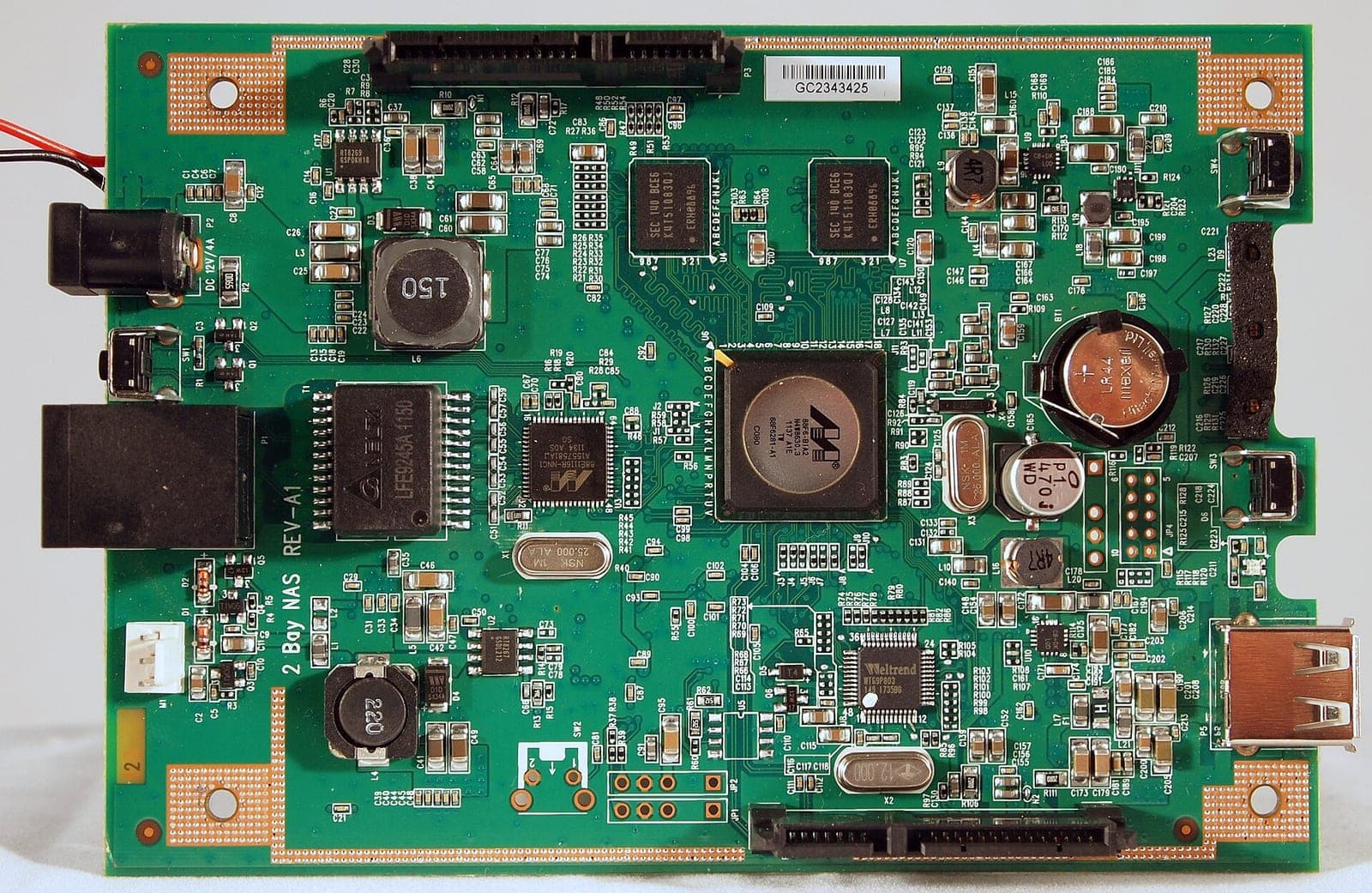
The attacker went after edge devices: the boxes that sit at the edge of a network and talk to the internet directly. Think network storage, video recorders and servers.
Once inside, the attacker installed Pawns.app. That is a real, legitimate app that pays people for letting others route traffic through their internet connection. Here, nobody asked the owners.
- Devices compromised: at least 143.
- Countries: 34.
- Software installed: Pawns.app, under the attacker's account.
- Backup access: in some cases, the attacker set up SSH key login so they could get back in later.
BleepingComputer, which reported the campaign, notes that installing the app on many systems likely meant larger payouts for the attacker.
First, what is proxyjacking?
A proxy is a middleman for internet traffic. A website sees the proxy's address, not yours.
Residential proxies use home internet connections as that middleman. Some people join these networks on purpose. GreyNoise quotes Intel 471, which sums up the pitch as "earn on your internet." You install a small program called proxyware, and strangers can browse through your connection while you collect passive income.
Proxyjacking is the same thing without permission. GreyNoise defines it as forcing victim devices into proxy networks to make money from their bandwidth. While sharing your own connection is a voluntary deal, GreyNoise is clear that doing it with someone else's device is a crime.
In real life It's like someone copying your house key, then renting your driveway out as a parking spot. You still own the house. Someone else is cashing the checks, and the cars parked there carry your address.
How did the attacker get in?
Through doors that were already known to be open. GreyNoise lists the flaws the attacker used:
| Device or software | Vulnerability |
|---|---|
| D-Link ShareCenter NAS | CVE-2024-3272 and CVE-2024-3273 |
| Ubiquiti UniFi Video NVR | CVE-2021-44228 |
| SAP NetWeaver Visual Composer | CVE-2025-31324 |
GreyNoise also saw the attacker going after video recorders from Hikvision and Dahua. It did not say which flaws were used against those.
The big picture: none of these are brand new. CVE-2021-44228 is Log4Shell, the famous bug in a widely used logging library from 2021. The D-Link flaws were made public in April 2024.
Why are old D-Link boxes such easy targets?
Because many of them can never be fixed. When the D-Link NAS flaw became public in 2024, Help Net Security reported that it affected four old models: the DNS-320L, DNS-325, DNS-327L and DNS-340L.
- The flaw: a hidden account with the username "messagebus" and no password, plus a way to run commands on the device.
- Exposure in 2024: the researcher who found it counted more than 92,000 of these devices reachable on the internet.
- Patches: none. D-Link said the models had reached end of life and would get no more updates, and recommended retiring and replacing them.
The catch: a storage box that still works feels like it's fine. But "still works" and "still safe" stopped being the same thing years ago.
Is Pawns.app malware?
No, and GreyNoise is careful about that. It says the binaries it found "are not necessarily malware unless installed without consent."
According to GreyNoise, Pawns.app is a "direct partner" of the proxy company IPRoyal and supplies it with proxy nodes. IPRoyal then sells access for many legitimate uses. GreyNoise says Pawns.app appears to be a rebrand of "IPRoyal Pawns" and is owned by the same people.
There is a second way devices end up in these networks. GreyNoise says some commercial proxy companies offer software development kits (SDKs) that app makers can build into their apps. In that model, the app maker earns money by selling the bandwidth of the people who installed the app.
Here's the detail that made this campaign easy. Pawns.app offers ready-made versions of its software, and the command-line versions accept a username, password and device details at install time. GreyNoise says those features make it easy to install the app on a device the installer doesn't own, "which is exactly what GreyNoise recently observed."
How was it discovered?
It started with a sales demo. GreyNoise was showing its product to an organization, which found GreyNoise-flagged IP addresses in its Entra ID sign-in logs (Microsoft's login system for businesses).
The addresses looked residential and sat in the right part of the world for that company's users. At first, that seemed harmless.
GreyNoise points out a tricky detail: a perfectly legitimate login can come from an IP address that is, at the same moment, relaying an unrelated attacker's traffic somewhere else. So a flagged address alone proved nothing. Then the organization noticed something stranger: several different users were signing in from the same home IP address.
GreyNoise says that is very unlikely to happen legitimately. The organization dug deeper and confirmed a serious intrusion. GreyNoise won't publish details of that case, but it led to the research that uncovered this proxyjacking campaign.
Why do criminals want home connections?
Because home traffic looks innocent. Many security tools flag logins from data centers or VPN services. A home IP address in the right city sails past checks like "login from an impossible travel location." GreyNoise says hostile foreign intelligence services keep using residential proxies for exactly that reason.
Why it matters: the FBI has warned about exactly this. In a notice reported by Infosecurity Magazine, the bureau said criminals "have relied extensively on the use of residential proxies" for credential stuffing: trying leaked username and password pairs across many sites at once. The FBI added that security tools don't block residential proxies as often as data center ones.
BleepingComputer adds another risk for the people whose devices are used. Suspicious traffic flowing through your connection can get your IP address blocked, or make it look like you were involved in something you never did.
What is GreyNoise doing about it?
GreyNoise says it will keep giving government and law enforcement agencies the details they need to "disrupt, investigate, and bring perpetrators to justice."
It also offers a free check for anyone. With a free GreyNoise account, you can see whether your IP address has interacted with its global sensor network, which can be a sign of proxyjacking.
For companies, GreyNoise recommends:
- Teach users: explain the risks of free apps and the importance of patching personal devices.
- Watch sign-in logs: flag residential proxy IP addresses, especially when several employees log in from the same one.
- Look past location: check for mismatched device identifiers, session identifiers or User-Agent strings.
For more on how attackers are getting in these days, browse our cybersecurity coverage.
What it means for you
- Unplug what you don't use: an old NAS, camera recorder or router that faces the internet is a door. If it no longer gets updates, retire it.
- Keep the rest updated: BleepingComputer notes that patching NAS boxes, video recorders and other internet-facing devices greatly reduces the risk.
- Close remote access: don't expose device admin pages to the internet, and use strong, unique passwords.
- Be picky about free software: BleepingComputer warns that some "free" apps quietly enroll devices into residential proxy networks.
The bottom line
At least 143 devices in 34 countries were earning money for someone else, through flaws that had been public for months or years. The app doing the earning was legitimate; the installation was not. The cheapest protection is still the boring one: update what you use and unplug what you don't.
Key facts
- Devices compromised
- At least 143
- Countries
- 34
- App installed
- Pawns.app (bandwidth sharing)
- Flaws used
- D-Link NAS, Log4Shell, SAP NetWeaver
- Found by
- GreyNoise
Got questions?
Quick answers, plain wordsWhat is proxyjacking?
Proxyjacking is when an attacker breaks into someone else's device and enrolls it in a proxy network without permission, so the attacker gets paid for the victim's internet bandwidth. GreyNoise calls it a crime, as opposed to people who choose to share their own connection.
What is Pawns.app?
Pawns.app is a legitimate app that pays people for sharing their internet connection. GreyNoise says it is a direct partner of the proxy company IPRoyal, appears to be a rebrand of IPRoyal Pawns, and is owned by the same people. The app itself is not malware; the problem is that it was installed without the owners' consent.
Which devices were hacked?
GreyNoise lists D-Link ShareCenter NAS storage boxes, Ubiquiti UniFi Video NVR video recorders and SAP NetWeaver Visual Composer servers. It also saw the attacker going after Hikvision and Dahua video recorders, but did not say which flaws were used against those.
How many devices were affected?
At least 143 devices in 34 countries, according to GreyNoise. That is the number researchers confirmed, not necessarily the full size of the campaign.
Are these new vulnerabilities?
No. All of them were public before this campaign. Log4Shell (CVE-2021-44228) dates to 2021, the D-Link NAS flaws were disclosed in April 2024, and the SAP NetWeaver flaw is CVE-2025-31324.
Can I patch my old D-Link NAS?
For the affected end-of-life models, no. D-Link said in its 2024 advisory that these products no longer receive software updates and recommended retiring and replacing them. If you keep one, do not expose it to the internet.
Why do attackers want home internet connections?
Traffic from a home IP address looks like a normal user, so it is less likely to be blocked than traffic from a data center. The FBI has warned that criminals rely heavily on residential proxies for credential stuffing, where stolen passwords are tried across many sites.
How can I tell if my device is part of a proxy network?
GreyNoise offers a free check (a free account is required) that shows whether your IP address has interacted with its sensor network, which can be a sign of proxyjacking. Unexpected traffic, a slower connection or unknown software on a device are also worth a look.
Is it illegal to use bandwidth-sharing apps?
Choosing to install such an app on your own device is a voluntary arrangement. Installing it on someone else's device without permission is what GreyNoise describes as proxyjacking, and it calls that a crime.
What should companies watch for?
GreyNoise suggests flagging residential proxy IP addresses in sign-in logs, looking closely when several employees log in from the same residential IP, and watching for mismatched device identifiers, session identifiers or User-Agent strings.
SourcesGreyNoise
Topics and tagsCybersecurity, cybersecurity, proxyjacking, d link
Related stories
Microsoft takes down a phishing marketplace behind 1 billion scam messages
Microsoft and Health-ISAC seized domains behind YAM Store, CoGUI and Iron Man, three services that sold scammers accounts, fake websites and ready-made lures used in more than 1 billion messages this year.

UK Legal Aid Agency hackers took records going back to 1978
Eighteen months after the attack, the Ministry of Justice says about 250,000 stolen Legal Aid Agency records predate 2007, and some probation data was taken too.

Citizen Lab says spyware rode in on online ads, no click needed
Researchers say an Israeli ad company let spyware makers infect devices the moment an ad loaded, including 45 computers at Al Jazeera.
More in brief
- Steam's new achievement sets stop DLC from breaking your 100 percentOct 16
- ChatGPT can now read your Chrome tabs and do tasks in themOct 16
- Windows 11's October update can lock Smart App Control and trip work Wi-FiOct 16
- The world's timekeepers vote to end the leap second in 2027Oct 16
- Tesla reveals the new Roadster, and the top version can lift off the groundOct 16
- Microsoft finishes training MAI-Base-2, a 2.8-trillion-parameter AI modelOct 16