
Technology·News & analysis
These $499 headphones read your brainwaves and tell you when you've stopped paying attention
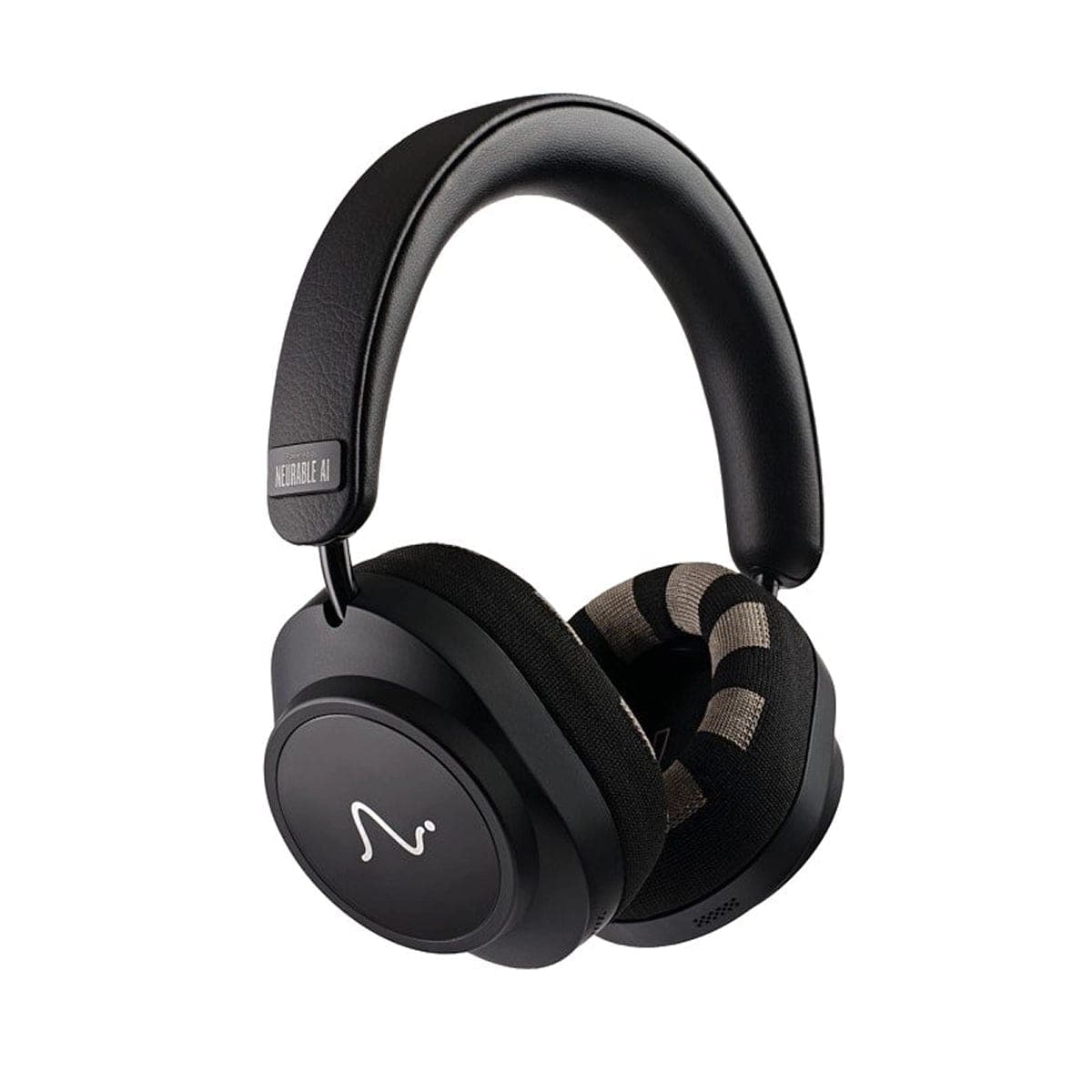
Neurable started shipping its first standalone headphones, Neurable One, which use 12 EEG sensors woven into the ear pads to track your focus in real time and nudge you to take a break before you burn out.
Tide
Ripple
Sci-fi
6/10
Reality
In your hands
Headphones that know you've zoned out before you do.How we rate
Neurable One is the company's first standalone headphones that read brain activity through sensors built into the ear pads, rather than through a lab setup or a partner brand's hardware.
It matters because consumer brain-computer interface technology is moving from novelty demos and gaming prototypes into an actual $499 product people can order and wear at a desk starting this month. Whether real-time EEG feedback genuinely helps focus, or just adds another metric to track, is something buyers will now test for themselves.
What to know
- Neurable One is the company's first standalone headphones, priced at $499 and shipping in October 2026 to US customers who pre-order.
- The headphones use 12 EEG sensors woven into the ear pads, six per side, to read brain electrical activity in real time without a lab setting.
- The device tracks eight metrics, Brain Age, Brain Battery, Speed, Focus, Load, Stress, Sleepiness, and Alpha Peak Frequency, each calibrated against the wearer's own personal baseline.
- Neurable says two out of three users in its testing reported an immediate focus boost, with an average 33% increase in focus time.
- The company explicitly states the headphones don't read thoughts or emotions, aren't FDA-regulated medical devices, and don't retain or monetize user brain data.
Neurable just started selling headphones that can tell, in real time, when your brain has quietly checked out of whatever you're supposed to be focusing on.
What exactly is Neurable One?
Neurable One is the company's first standalone pair of headphones, priced at $499 and shipping to US customers in October 2026 for those who pre-order. Unlike Neurable's earlier products, which were built in partnership with audio brands like Master & Dynamic and HyperX, this is Neurable's own hardware from the ground up.
Why it matters: going from a technology partner embedded in someone else's product to a standalone device under its own name is a meaningful step for a hardware startup. It means Neurable is betting it can sell the full experience itself, not just license the brain-sensing layer to bigger audio companies.
How does it actually read brain activity through headphones?
The device has 12 EEG sensors woven directly into the ear pads, six on each side, positioned around the ears. Those sensors detect the brain's electrical activity in real time, processed through what Neurable calls its own compact brain-signal processing technology.
In real life it's less like a lab EEG cap covered in wires and more like your headphones quietly taking your mental temperature the whole time you're wearing them.
Why it matters: traditional EEG monitoring has required gel-covered electrodes and a controlled lab environment. Squeezing that sensing capability into ordinary-looking ear pads, worn anywhere, is the specific engineering claim that makes a consumer version of this technology possible at all.
What exactly does it measure?
Neurable One tracks eight metrics: Brain Age, Brain Battery, Speed, Focus, Load, Stress, Sleepiness, and Alpha Peak Frequency. Each one is calibrated against the wearer's own personal baseline, established through a one-minute, eyes-closed daily check-in, rather than compared against a generic population average.
Why it matters: calibrating to an individual's own baseline, instead of a one-size-fits-all average, is meant to make the feedback more personally meaningful. A "low focus" reading means something different for each wearer's typical brain activity pattern.
What does actually using it look like day to day?
After the daily check-in, the headphones give live audio feedback during work sessions when focus appears to drift, and suggest breaks when they detect rising mental fatigue. Every session also feeds into weekly and monthly trend reports in the companion app.
Why it matters: that's a fundamentally different interaction model than most wellness wearables, which mostly summarize your day after the fact. Neurable One is designed to intervene in the moment, while attention is actually slipping, not just report on it afterward.
Does Neurable back up its focus claims with any numbers?
By the numbers: Neurable says two out of three users in its own testing reported an immediate focus boost, with an average 33% increase in focus time.
Why it matters: those are the company's own figures, not independent, peer-reviewed results, so they're worth treating as a marketing claim rather than settled science. Real-world results from actual buyers, once the product ships widely, will be the more meaningful test.
Is this reading my thoughts, or something closer to that?
No. Neurable explicitly states the device does not read thoughts, emotions, or specific mental content, and it is not an FDA-regulated medical device that can diagnose or treat any condition.
Why it matters: that's an important boundary for a product pitched around brain monitoring. It's measuring general activity patterns tied to attention and fatigue, not decoding specific thoughts, and buyers shouldn't expect mind-reading capability from a consumer headphone.
What happens to all that brain data?
Neurable says it does not retain or monetize user brain data. Session data feeds the companion iOS and Android app for the wearer's own tracking and historical reports, according to the company, rather than being stored or sold for other purposes.
Why it matters: brain data is about as personal as data gets, so how a company handles it matters more than with most wearables. A stated no-monetization policy is reassuring, though it's a company claim worth watching as the product actually reaches real users.
What are the hardware specs beyond the brain-sensing part?
The headphones use 40mm beryllium drivers with active noise cancelling and ambient listening modes, Bluetooth 5.2 supporting two simultaneous device connections, and six built-in microphones. Battery life runs 22 hours for audio alone, or 12 hours with EEG tracking active, with USB-C charging that adds two hours of use from just 15 minutes.
Why it matters: stripping out the brain-sensing layer, these specs still need to hold up as genuinely good noise-cancelling headphones on their own. A $499 product has to earn its price as an everyday listening device, not just as a novelty focus tracker.
Who's actually behind Neurable?
Background: Neurable was co-founded in 2015 by Ramses Alcaide and Adam Eizenberg Molnar, spinning out of the University of Michigan's Direct-Brain Interface Laboratory after roughly a decade of academic research into brain-computer interfaces. The Boston-based company has raised about $69 million across five funding rounds, including a $35 million round in December 2025.
Its advisory board includes neuroscience figures from Massachusetts General Hospital, Brown University's Brain Gate program, MIT's neural signal processing research, and Stanford, giving the company real academic grounding behind its consumer product push.
Why it matters: a decade of lab research and a credible scientific advisory board doesn't guarantee a good consumer product, but it does distinguish Neurable One from brain-wearable gadgets that skip straight to crowdfunding without that underlying research base.
Is consumer brain-monitoring tech actually catching on?
Background: Neurable's path from licensing its sensors to Master & Dynamic's MW75 Neuro headphones in 2024, to a HyperX gaming headset prototype shown at CES 2026, to now a standalone $499 product under its own name traces a fairly rapid escalation in ambition over about two years.
Why it matters: that progression suggests real traction, not just one-off demo partnerships. Moving from "our sensors inside someone else's headphones" to "our own headphones, sold directly" is the kind of step a company only takes when it believes the underlying technology and market demand can support it standing on its own.
What it means for you
- If you're curious about brain-computer interface tech, this is a real, purchasable entry point, not a lab demo or a trade-show prototype you can only watch someone else try.
- Treat the focus-improvement claims as a marketing starting point, not a guarantee. Independent, long-term results from real buyers will tell a more complete story than the company's own pre-launch numbers.
- The no-data-monetization policy is a meaningful detail to verify over time, especially as brain-sensing wearables become more common and data practices get more scrutiny.
- At $499 with limited initial pre-order availability, this is an early-adopter purchase, not yet a mainstream consumer product most people will casually pick up.
The bottom line
Neurable is betting that people want more than just noise-cancelling in their headphones, they want a device that notices when their own attention is slipping and says something about it in the moment.
Whether that kind of real-time brain feedback becomes a genuinely useful productivity tool or just another number to obsess over will depend less on the sensor technology, which already works, and more on whether people actually want their headphones grading their focus all day long.
Key facts
- Price
- $499
- EEG sensors
- 12 (6 per ear pad)
- Metrics tracked
- 8
- Battery (EEG active)
- 12 hours
- Ships
- October 2026, US only
Got questions?
Quick answers, plain wordsWhat exactly is Neurable One?
Neurable One is a pair of EEG-enabled, noise-cancelling headphones from neurotech company Neurable. They track brain activity through sensors in the ear pads and give real-time feedback on focus, fatigue, and stress, priced at $499 with shipping starting October 2026.
How does it actually read brain activity through headphones?
The device has 12 EEG sensors woven into the ear pads, six on each side, positioned around the ears. These sensors detect electrical brain signals in real time, processed through Neurable's own compact brain-signal processing technology.
What specific things does it measure?
Neurable One tracks eight metrics: Brain Age, Brain Battery, Speed, Focus, Load, Stress, Sleepiness, and Alpha Peak Frequency. Each metric is calibrated against the wearer's own personal baseline rather than compared to population averages.
Does it read my thoughts or specific emotions?
No. Neurable explicitly states the device does not read thoughts, emotions, or specific mental content. It measures general brain activity patterns related to attention and fatigue, not the content of what someone is thinking.
Is this a medical device?
No. Neurable states the headphones are not FDA-regulated medical equipment and cannot diagnose or treat any condition. They're positioned as a consumer productivity and wellness product, not a clinical tool.
How does the daily experience of using it work?
Users do a one-minute eyes-closed check-in to establish a baseline, then wear the headphones during work. The system gives live audio feedback when focus drifts and suggests breaks when it detects mental fatigue, while also compiling weekly and monthly trend reports.
What are the audio and battery specs?
The headphones use 40mm beryllium drivers with active noise cancelling, Bluetooth 5.2 supporting two simultaneous device connections, and get 22 hours of battery life for audio alone or 12 hours with EEG tracking active, with USB-C fast charging.
What happens to the brain data it collects?
Neurable says it does not retain or monetize user brain data. Session data feeds into the companion iOS and Android app for the wearer's own focus tracking and historical trend reports, rather than being sold or stored for other purposes according to the company.
SourcesNeurable
Topics and tagsneurable, eeg, wearables, brain computer interface
Related stories

Google's screenless Fitbit finally reaches India, at a $47 markup
Google launched the screenless Fitbit Air in India for ₹13,999, about $47 more than its US price, entering a market where cheap local competitors already dominate.
Smart ring maker Oura shelves its $2.2 billion IPO, citing market 'uncertainty'
Oura delayed its Nasdaq IPO just a week after launching the process, despite what the company called strong demand and improving business performance.
Apple's smart home hub reportedly launches October 13, with a camera that never records video
Bloomberg's Mark Gurman says Apple will announce its long-rumored smart home display on October 13. He also describes a companion home camera that sends text descriptions instead of video.
More in brief
- arXiv limits researchers to two papers a month as AI drives submissions to a recordOct 2
- California will fine robotaxi companies that block first responders for over 30 minutesOct 2
- Microsoft launches real-time transcription and new voice models for AI voice agentsOct 1
- Cloudflare releases Clef, open-weight AI models that make yes-or-no decisions fastOct 1
- GrayKey maker reportedly found a way around the iPhone's Inactivity RebootOct 1
- Fervo's Cape Station becomes the first enhanced geothermal plant to sell power commerciallyOct 1