
Technology·News & analysis
Met Police pauses Oxygen Forensics phone tool after US Russia charges
Scotland Yard has stopped using a phone data extraction tool while it reviews US charges that the company behind it hid Russian owners and Russian-built software.
Tide
Ripple
Sci-fi
3/10
Reality
Shipping
A spy-novel plot, except it's all in procurement paperwork.How we rate
London's Metropolitan Police has paused its use of Oxygen Forensics phone data software and launched a full review.
US prosecutors allege the Virginia company hid that five Russians owned it and that its code was written in Moscow. The Met says the tool ran offline and was used in under 0.2% of forensic actions. Other UK forces are now checking their own use, and the US is seeking a co-owner's extradition.
What to know
- London's Metropolitan Police has paused its use of Oxygen Forensics software and started a full review, The Times reports.
- US prosecutors allege Oxygen hid that five Russian nationals owned it and that its software was developed in Russia.
- The Met says the tool ran on a closed system, was used in under 0.2% of its forensic actions, and no data was shared with Oxygen.
- Other UK forces have been asked to assess their own use, and Romania and Latvia have also stepped back from the software.
London's Metropolitan Police has stopped using software from Oxygen Forensics, a company that makes tools for pulling data off seized phones. The pause follows US charges that the supposedly American firm hid Russian owners and Russian-built code, The Register reports, citing The Times.
What did the Met Police do?
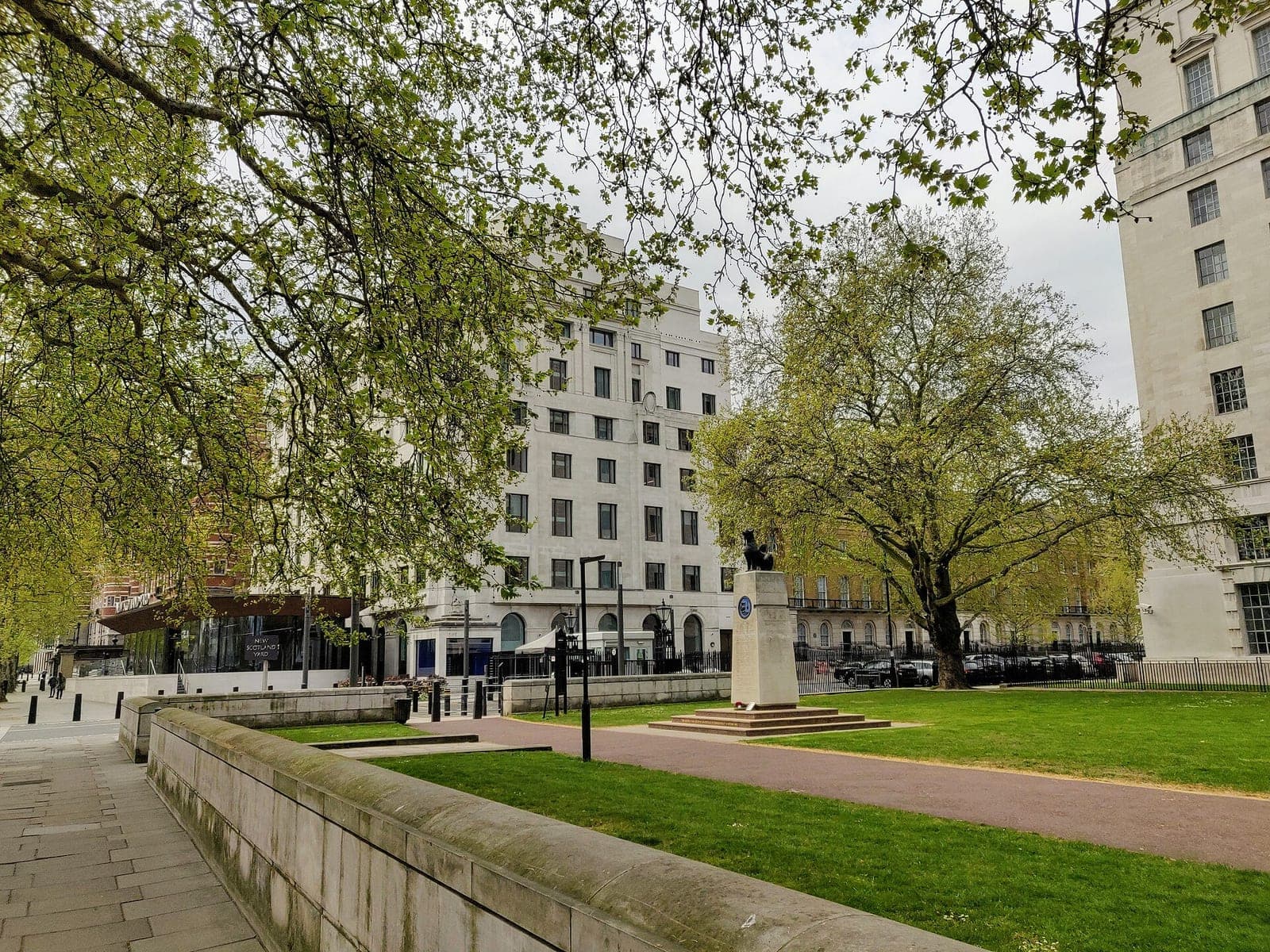
Scotland Yard confirmed it has paused its use of Oxygen's tools and launched what it calls a "full review."
"We have paused our use of the tool while we carry out a full review. At this time, we believe any impact to ongoing investigations will be extremely limited. The Met does not share any data obtained from investigations with Oxygen Forensics Inc."
That's a Met spokesperson, speaking to The Times. The force signed a three-year deal with Oxygen in December 2023. Its digital forensics teams used the software to extract and analyze data from phones and other devices seized during investigations.
By the numbers: the Met says the software was used in less than 0.2% of the more than 23,000 actions its digital forensics team carried out over the past year. It also says the tool runs on a closed IT system that isn't connected to the internet.
What is Oxygen Forensics accused of?
The story starts in the US. The Justice Department announced on Wednesday, September 23 that it had arrested two men tied to the company:
- Lee Reiber, 55, of Boise, Idaho, Oxygen's CEO. He was arrested in Idaho and released on bond.
- Oleg Sergeyevich Davydov, 52, of Moscow. He was arrested at London Heathrow Airport before boarding a flight to Istanbul.
Both are charged with conspiracy to commit wire fraud, which carries up to 20 years in prison, The Record reports.
The core allegation: Oxygen, based in Alexandria, Virginia, presented itself to the US government as an independent American company. Prosecutors say that in fact, five Russian nationals, including Davydov, owned and controlled it through a holding company in Cyprus, and its software was developed in Russia.
Prosecutors say the same five Russians also owned MKO Systems, a Moscow company previously known as Oxygen Software, where the code was actually written. MKO sold the same technology in Russia under different product names, The Register reports, to customers including the Federal Security Service (FSB), the Russian Investigative Committee and the Ministry of Internal Affairs.
How did the alleged cover-up work?
According to the Justice Department, the scheme began after the US expanded sanctions on Russia following its invasion of Ukraine in early 2022.
- March 2022: Reiber became the company's CEO, president and chairman of the board. Russian names were then removed from Oxygen's corporate filings, prosecutors say.
- Behind the scenes: the press release says the Russian owners kept making significant decisions, set Reiber's pay, overruled him on payments and held signing authority over the company's bank accounts.
- December 2022 and October 2023: Reiber falsely certified to the US government that Oxygen had no immediate or highest-level owner, according to the affidavit.
In November 2023, a reporter asked Reiber about the company's Russian ties. Prosecutors say he then wrote to Davydov and two other Russian owners that public reporting "could destroy this entire opportunity," meaning a pending contract with the National Computer Forensics Institute.
That institute, run by the Secret Service, signed a five-year deal with Oxygen in September 2024, The Record reports. On September 20 this year, US authorities seized about 57 domains, along with cyber infrastructure and corporate bank accounts belonging to the firm.
Who else used the software?
Oxygen's US customer list was serious. According to the Justice Department, buyers included the Defense Department and several parts of Homeland Security:
- The Secret Service's National Computer Forensics Institute
- Homeland Security Investigations
- The DHS Office of Inspector General
The Record reports the firm has nearly 10,000 contracts in more than 150 countries, and describes it as a direct competitor of Cellebrite, the better-known phone forensics company.
In Europe, Politico reported that police in Germany, Spain, Italy and Poland accredited or bought Oxygen's products, according to EU tender records, as summarized by Security Affairs. Hungary's police signed a contract worth about €27,000 in December 2024. Politico also found Oxygen was consulted on two EU-funded digital evidence projects, though the European Commission says the company was not a formal member and got no direct EU funding.
Is the software itself dangerous?
The catch: nobody has alleged that the tool was booby-trapped.
The Justice Department says it is not alleging that Oxygen's software contained malicious code or was used to get unauthorized access to customer systems or data. The case is about who owned the company and what it told government buyers, not about hidden spyware.
The UK's National Police Chiefs' Council made the same point. "These remain allegations at this stage," a spokesperson said, adding that US authorities have stated they are not alleging the software contained malicious code or that customer data was accessed without authorization.
Digital rights groups see a wider risk. Natalia Krapiva, senior tech legal counsel at Access Now, told The Record that "no surveillance tool should come anywhere near a US investigation until we know who owns it, who builds it, and who else they are selling to." She also said the same software sold to US law enforcement was used by the FSB to pull data off the phones of anti-war Russians.
What happens next?
The fallout is spreading beyond Scotland Yard.
- Other UK forces: the National Police Chiefs' Council says forces that use Oxygen products have been encouraged to carry out "proportionate local assessments" to understand and contain any issues.
- Romania: authorities have begun ending their use of Oxygen products, The Register reports.
- Latvia: the State Police has suspended the software pending an assessment.
- Davydov: he appeared at Westminster Magistrates' Court on Tuesday as the US seeks his extradition. District Judge Anthony Calloway refused bail, citing his Russian citizenship and residence and the risk that he could flee, The Times reports.
The Register says it contacted the Met, the National Police Chiefs' Council and Oxygen Forensics for comment. Oxygen's own website has been seized and is down, The Record reports.
For another recent look at the phone forensics business, see our story on GrayKey and the iPhone's Inactivity Reboot.
In real life If police seize a phone in a UK investigation, specialist teams copy and examine its data with tools like these. The Met says Oxygen played a very small part in that work and never received any case data.
What it means for you
- If you're in the UK: the Met says the impact on ongoing cases should be extremely limited, and that no investigation data went to Oxygen.
- No malware claim: prosecutors are not alleging the tool spied on anyone or contained malicious code.
- Watch for more pauses: other UK forces and European agencies are reviewing their own use, so more suspensions are possible.
- Nothing is proven yet: the US case is a criminal complaint, and the charges are allegations until a court rules.
The bottom line
The Met has paused a phone data tool it barely used, after US prosecutors alleged the company behind it hid Russian owners and Russian-built code. Nobody is claiming the software itself was malicious. The bigger question for police forces is simpler: who really makes the tools they rely on, and who else buys them.
Key facts
- Police force
- Metropolitan Police (Scotland Yard), London
- Software
- Oxygen Forensics, digital forensics and phone data extraction
- US charge
- Conspiracy to commit wire fraud, up to 20 years in prison
- Met contract
- Three-year deal signed in December 2023
- Met usage
- Under 0.2% of 23,000+ forensic actions in the past year
Got questions?
Quick answers, plain wordsWhat is Oxygen Forensics?
It's a digital forensics company based in Alexandria, Virginia. Its software lets investigators extract and analyze data from phones and other devices seized in investigations.
Why did the Met Police stop using it?
US prosecutors charged Oxygen's CEO and a Russian co-owner with hiding the company's Russian ownership and where its software was built. The Met paused the tool while it carries out a full review.
Who was charged in the US?
Oxygen CEO Lee Reiber, 55, of Boise, Idaho, and Russian national Oleg Sergeyevich Davydov, 52, of Moscow. Both are charged with conspiracy to commit wire fraud, according to the Justice Department.
Did the software contain malware or spy on users?
The Justice Department says it is not alleging that the software contained malicious code or was used to gain unauthorized access to customer systems or data.
Was data from Met investigations sent to Russia?
The Met says it does not share any data obtained from investigations with Oxygen Forensics, and that the software runs on a closed IT system that isn't connected to the internet.
Will this affect ongoing UK cases?
The Met says it believes any impact on ongoing investigations will be extremely limited, since the tool was used in less than 0.2% of its digital forensics actions over the past year.
Do other UK police forces use Oxygen?
Yes. The National Police Chiefs' Council says other forces use Oxygen products and have been encouraged to carry out their own assessments.
Which other countries are reacting?
The Register reports that Romanian authorities have begun ending their use of Oxygen products and Latvia's State Police has suspended the software pending an assessment.
Which US agencies bought Oxygen software?
According to the Justice Department, buyers included the Defense Department and Homeland Security branches such as the Secret Service's National Computer Forensics Institute, Homeland Security Investigations and the DHS Office of Inspector General.
What happens to Davydov now?
He was arrested at London Heathrow Airport and refused bail at Westminster Magistrates' Court, The Times reports. The US is seeking his extradition.
SourcesUS Department of Justice, The Register
Related stories
GrayKey maker reportedly found a way around the iPhone's Inactivity Reboot
A leaked training video seen by 404 Media says Magnet Forensics' new tools keep a seized iPhone in an easier-to-search state, even after the reboot Apple added in iOS 18.1.

WhatsApp will now tell parents when their teen joins a group, but not what's said in it
WhatsApp launched optional parental controls for teen accounts, alerting parents when their teen joins or leaves groups while keeping actual messages end-to-end encrypted.

Amazon pledges $1B+ to the towns that host its data centers
AWS's new Built Together program promises free community college, home energy upgrades and local grants over five years, as more than 100 data center moratoriums are being weighed across the US.
More in brief
- California man charged with smuggling $300M in Nvidia AI servers to ChinaOct 2
- arXiv limits researchers to two papers a month as AI drives submissions to a recordOct 2
- California will fine robotaxi companies that block first responders for over 30 minutesOct 2
- Microsoft launches real-time transcription and new voice models for AI voice agentsOct 1
- Apple's smart home hub reportedly launches October 13, with a camera that never records videoOct 1
- Cloudflare releases Clef, open-weight AI models that make yes-or-no decisions fastOct 1