
Technology·News & analysis
KDE turns 30, and its next release finally drops X11 for good
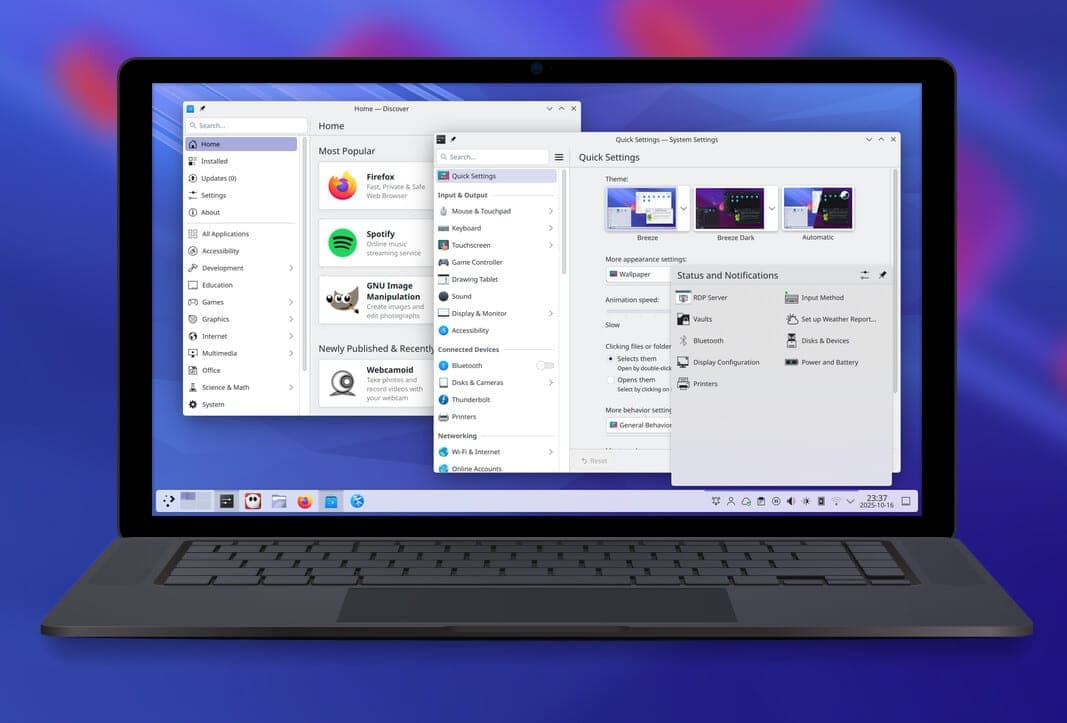
KDE Plasma 6.8 arrives October 14, on KDE's 30th anniversary, as the first version to run exclusively on Wayland, ending nearly three decades of X11 support.
Tide
Ripple
Sci-fi
2/10
Reality
Shipping
A 30-year-old desktop finally retires its oldest engine part.How we rate
KDE Plasma 6.8 launches October 14, 2026, exactly on KDE's 30th anniversary, and will be the first Plasma release with no X11 session support at all.
Internal KDE data shows over 95% of Plasma 6.6 users are already on Wayland, the modern protocol replacing X11. X11 applications will keep working through a compatibility layer called XWayland, even as the underlying desktop session itself requires Wayland. Plasma 6.8 also revives the classic Oxygen theme and expands styling to more traditional desktop apps.
What to know
- KDE Plasma 6.8 launches October 14, 2026, exactly on KDE's 30th anniversary, and will be the first Plasma release with no X11 session support at all.
- Internal KDE data shows over 95% of Plasma 6.6 users are already on Wayland, the modern display protocol replacing X11.
- X11 applications will keep working through XWayland, a compatibility layer, even though the underlying Plasma desktop session itself will require Wayland.
- Plasma 6.8 also revives the classic Oxygen theme and expands styling support to more traditional desktop applications.
KDE is turning 30 the same week it finally lets go of the technology it was built on. That's not a coincidence, it's the plan.
KDE Plasma 6.8 officially launches October 14, 2026, exactly on KDE's 30th anniversary. It will be the very first Plasma release with no X11 session support at all, anywhere.
What's actually changing here?
Why it matters: X11 has been the foundation of Linux desktop environments, including KDE, for decades. Plasma 6.8 completes a shift that's been building for years, moving fully to Wayland, a newer display protocol designed to replace X11's aging architecture.
The previous version, Plasma 6.7, still let users choose an X11 session if they wanted it. Plasma 6.8 removes that option entirely, requiring Wayland for the core desktop session going forward.
- Plasma 6.7: X11 session available as an optional choice.
- Plasma 6.8: X11 session support removed entirely.
- X11 apps: continue working through XWayland, a compatibility layer, even without a native X11 session.
- Full X11 series support: continues in the separate Plasma 6.7 branch into early 2027.
Are people actually ready for this?
By the numbers: internal KDE data shows more than 95% of Plasma 6.6 users had already switched to Wayland before this change even happened. That's a genuinely strikingly high adoption rate for a purely voluntary migration, suggesting most of the KDE community made this switch well ahead of the software forcing it.
In real life think of it like a city finally shutting down an old subway line that almost everyone had already stopped riding. The change feels dramatic on paper, but most commuters made the switch to the new line a while ago.
What exactly was wrong with X11?
Background: X11 dates back even further than KDE itself, first appearing in 1984 and standardized as X11 in 1987. It became the foundation nearly every Unix and Linux desktop was built on for decades. But security simply wasn't a major design consideration back then, and that's caused real problems as computing needs changed.
Specific, well-documented flaws include the ability for any X11 application to keylog the entire system, capturing keystrokes from completely unrelated programs, and to take screenshots of other running windows without permission. X11 also doesn't encrypt communication between the client application and the display server by default, meaning that traffic could be intercepted on a network. One font server vulnerability dating back to 1991 wasn't even discovered until 2014.
Why it matters: Wayland was built specifically to close these gaps. It isolates each application so one program genuinely cannot spy on or interfere with another, with the operating system's kernel enforcing that separation directly rather than relying on the display server to police it. That's a fundamentally more secure design than anything X11's original architecture was built to support.
Why does this matter if I've never heard of X11?
Who's affected: if you don't run Linux, this doesn't touch you directly. But if you do use a KDE-based Linux distribution, like Kubuntu or openSUSE with Plasma, this is a meaningful under-the-hood change even if your day-to-day desktop looks almost identical.
Your applications should keep working the same way, since XWayland handles compatibility for anything still built specifically for X11. The bigger shift is architectural: Wayland handles graphics rendering, input, and security differently than X11 did, generally with better security isolation between applications and smoother handling of modern displays.
Where did KDE even come from?
Background: KDE was founded in 1996 by Matthias Ettrich, then a university student frustrated that Unix desktop applications didn't look, feel, or behave consistently with one another. His original pitch wasn't just for a set of apps, it was for a coherent desktop environment where things worked the same way across the board.
That original vision, spurred by little more than a Usenet newsgroup post, quickly drew around 40 volunteer developers and became one of the two dominant desktop environments across Linux distributions, a position it's held for most of the three decades since.
How big a deal is KDE, actually?
By the numbers: KDE Plasma holds roughly 40% market share among Linux desktop environments, making it the single most-used option, ahead of its longtime rival GNOME at around 25%. That's a genuinely dominant position within its category, even if most computer users outside the Linux world have never heard of either.
The two projects take deliberately different approaches. GNOME favors a simplified, minimalist interface that hides most configuration options to keep things calm and focused. KDE Plasma does close to the opposite, exposing nearly every setting and panel option so users can customize their desktop as heavily as they want. Distributions like Kubuntu and openSUSE default to KDE, while Ubuntu and Fedora default to GNOME instead.
Why it matters: that customization philosophy is directly relevant to this X11 transition. A community built around wanting maximum control over their desktop is exactly the kind of user base likely to have strong, vocal opinions about losing an option, which helps explain why community X11-preservation forks emerged so quickly once the removal was announced.
What about people who still want X11?
The catch: not everyone is ready to let go, and the open-source community's response has been exactly what you'd expect: forking the old approach rather than accepting it disappears entirely.
Projects like Trinity Desktop Environment maintain their own fork of the older Qt3 toolkit specifically to keep an X11-based KDE-style desktop alive. A newer project called Sonic Desktop maintains its own fork of KDE's window manager specifically to retain X11 support. There's even a nostalgia project called Klassik, recreating the KDE 3 desktop experience, discontinued back in 2008, using entirely modern Plasma 6 and Qt 6 technology underneath.
What's next: that pattern, official support moving forward while community forks preserve the old way for holdouts, is common across long-running open-source projects. It means Plasma 6.8 dropping X11 doesn't mean X11-based KDE desktops vanish completely, just that they move outside the officially maintained project.
What it means for you
- If you don't use Linux, this doesn't affect you at all. It's purely a change to the technical foundation of one desktop environment.
- If you use a KDE-based Linux distro, expect your desktop to keep working normally, with better underlying security and display handling thanks to Wayland.
- If you specifically rely on X11-only software or workflows, community forks like Trinity Desktop Environment remain available, just outside the main KDE Plasma project.
- This is a useful example of how mature open-source software modernizes, letting the vast majority move forward while ensuring holdouts aren't simply abandoned.
The bottom line
KDE choosing its 30th anniversary to finally retire X11 support is a fitting bookend.
A project that started thirty years ago with one student's simple frustration about inconsistent desktop software is closing out three full decades by consolidating around a single, more modern foundation. With over 95% of its users already there voluntarily, this isn't KDE forcing an unwanted change on anyone. It's simply KDE catching up to where its own community had already gone, well ahead of any official deadline.
The community forks preserving X11 for the small remaining holdouts are, in their own way, just as fitting a tribute to KDE's 30-year history as the anniversary celebration itself.
Key facts
- Plasma 6.8 release date
- October 14, 2026
- KDE founded
- 1996, by Matthias Ettrich
- Users already on Wayland
- Over 95% of Plasma 6.6 users
- X11 apps still work via
- XWayland compatibility layer
Got questions?
Quick answers, plain wordsWhen does KDE Plasma 6.8 come out?
October 14, 2026, timed to coincide with KDE's 30th anniversary.
What's changing with X11 in Plasma 6.8?
Plasma 6.8 drops X11 session support entirely, becoming Wayland-exclusive. The previous version, Plasma 6.7, still offered X11 as an optional session.
Will my old X11 apps still work?
Yes, through a compatibility layer called XWayland, which lets X11-based applications keep running inside a Wayland session.
What is Wayland, and why is KDE switching to it?
Wayland is a modern display server protocol built to replace the aging X11 system. KDE's own data shows more than 95% of its Plasma 6.6 users have already switched to it voluntarily.
How long will X11 support last for people who need it?
Plasma's X11 session support continues in the Plasma 6.7 series into early 2027, giving holdouts a window to migrate before it disappears from the main release entirely.
When was KDE founded, and by whom?
KDE was founded in 1996 by Matthias Ettrich, a university student who wanted Unix desktop applications to look, feel, and work consistently with each other.
What other changes are coming in Plasma 6.8?
A revival of the classic Oxygen theme, and an expanded Union theme engine that now styles more traditional Qt-based applications like Dolphin and Kate.
Are there ways to keep using X11-based KDE desktops after this?
Yes. Community projects and forks, including Trinity Desktop Environment, Sonic Desktop, and a new nostalgia project called Klassik, continue to maintain older KDE-style desktops with X11 support outside the main Plasma project.
SourcesThe Register
Topics and tagskde, linux, wayland, open source
Related stories

A24 skipped asking the internet before its SCP Foundation movie, so a rival studio did it right
After A24's V/H/S: SCP Foundation film drew backlash for ignoring the community's licensing rules, rival studio Neon announced its own SCP Foundation anthology that will release under the same open Creative Commons license fans require.
Microsoft makes WSL Containers generally available on Windows 11
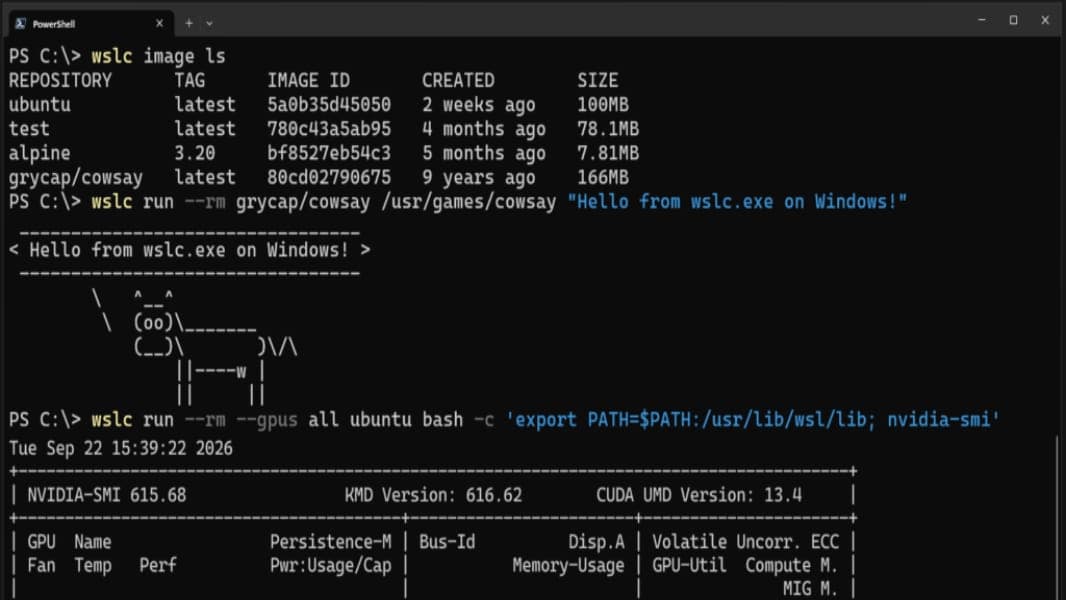
Microsoft's built-in way to run Linux containers on Windows 11, without installing Docker Desktop, has left preview with a new CLI, an API, and enterprise controls.

Apple's smart home hub reportedly launches October 13, with a camera that never records video
Bloomberg's Mark Gurman says Apple will announce its long-rumored smart home display on October 13. He also describes a companion home camera that sends text descriptions instead of video.
More in brief
- arXiv limits researchers to two papers a month as AI drives submissions to a recordOct 2
- California will fine robotaxi companies that block first responders for over 30 minutesOct 2
- Microsoft launches real-time transcription and new voice models for AI voice agentsOct 1
- Cloudflare releases Clef, open-weight AI models that make yes-or-no decisions fastOct 1
- GrayKey maker reportedly found a way around the iPhone's Inactivity RebootOct 1
- Fervo's Cape Station becomes the first enhanced geothermal plant to sell power commerciallyOct 1