
Technology·News & analysis
Google's Fitbit Edge brings back the screen and a replaceable battery
Google announced the Fitbit Edge, a $179.99 tracker with a bright display, GPS and a battery you can swap. It reaches stores on October 27.
Tide
Wave
Sci-fi
4/10
Reality
Demo
A tiny wrist coach that spots workouts you forgot to log.How we rate
Google announced the Fitbit Edge, a $179.99 fitness tracker with a display, up to seven days of battery and a user-replaceable battery, a first for a Fitbit.
It adds built-in GPS, an ECG app and blood pressure and insulin resistance trends for Google Health Premium subscribers. Pre-orders are open now. The Edge reaches shelves on October 27, with three months of Premium included.
What to know
- Google announced the Fitbit Edge on October 12: a $179.99 tracker with a display, built-in GPS and up to seven days of battery.
- It is Google's first repairable fitness tracker, with a modular inside and a user-replaceable battery.
- Blood pressure and insulin resistance trends, part of Health Guardian, arrive later this month for Google Health Premium subscribers.
- Pre-orders are open now, stores get it October 27, and every purchase includes three months of Google Health Premium.
Google announced the Fitbit Edge on October 12. It is a slim fitness tracker with a screen, and it costs $179.99.
That's the news. Now the fun part: a tracker you can open up and fix is not something we usually say about wearables.
What exactly is the Fitbit Edge?
Google puts the Edge between two products it already sells. On one side is the Pixel Watch, a full smartwatch. On the other is the Fitbit Air, a screenless band that is meant to disappear on your wrist.
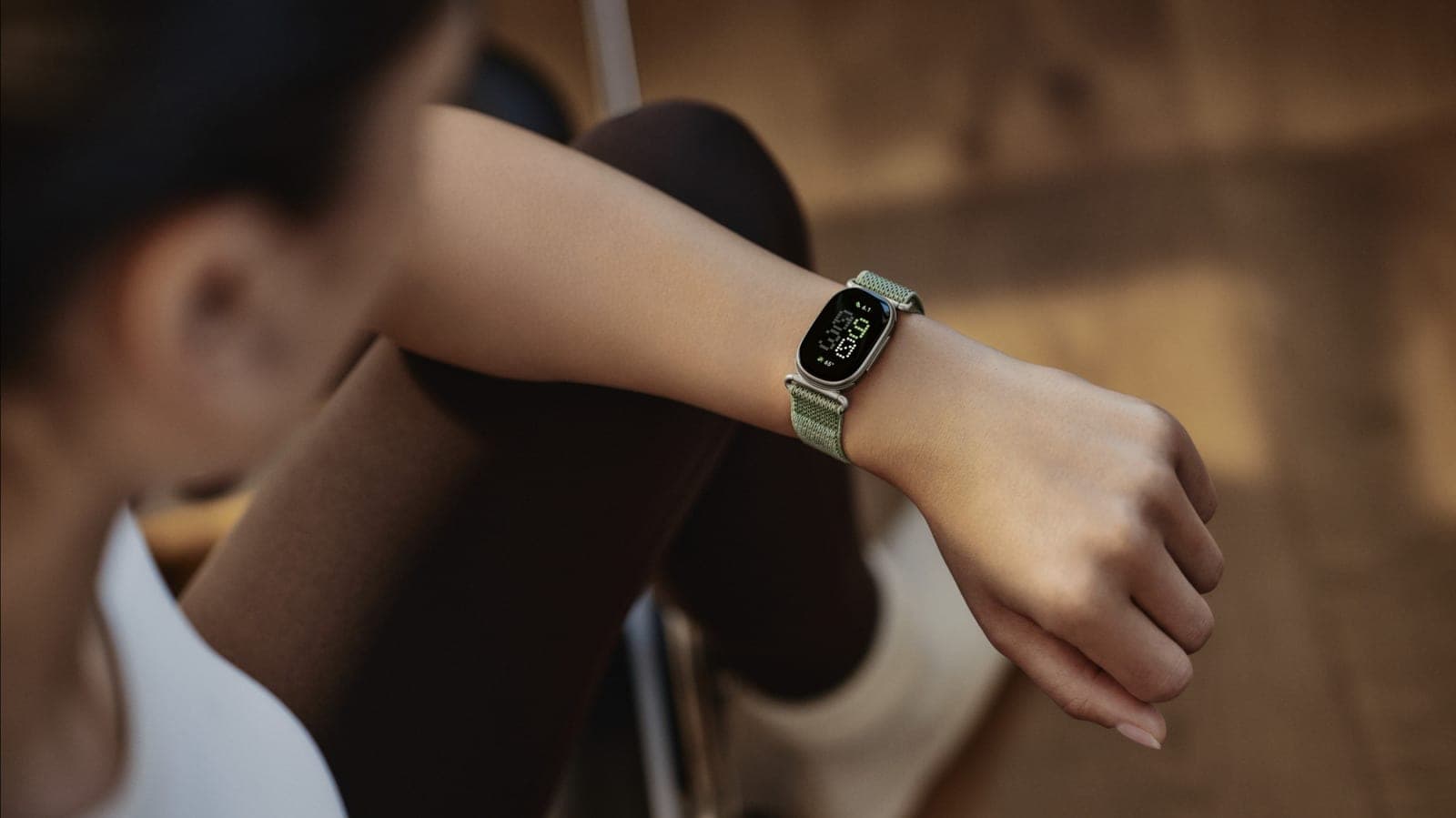
The Edge has a screen, but it is not trying to be a watch. Engadget describes it as more advanced than the Air while keeping a slim profile and a minimalistic OLED display.
Here is what Google lists for the hardware:
- Size: 11.5 mm thin, in a recycled aluminum case.
- Weight: a case that Google says is 45% lighter than the Apple Watch Series 12.
- Display: a Hybrid OLED screen with 46% more viewing area than Google's previous trackers.
- Control: a redesigned physical side button, so you can pause a workout without poking at glass.
- Water: water resistant up to 50 meters.
In real life Picture a mid-run moment with sweaty fingers. You press the side button, the workout pauses, and you never have to hit a wet touchscreen.
Why does the replaceable battery matter?
Google calls the Edge its first repairable fitness tracker. It has an internal modular design and a battery you can replace, which is meant to extend the life of the device.
Why it matters: Batteries are usually what kills a tracker first. After a couple of years of daily charging, the battery fades, and the usual answer is to buy a new device.
Wired calls the replaceable battery a Fitbit first and says it lines up with Google's effort to make the Pixel Watch more repairable. Wired also suggests new battery rules in the European Union, due next year, are a likely reason. Google did not say that itself.
Wired adds that repair options will vary by region and availability. So check what your country offers before you count on a screwdriver.
How long does the battery last?
Google says the Edge runs up to seven days on one charge. It calls this "weekend-to-weekend" battery life.
Charging is quick too. Google says five minutes on the magnetic charger gives you a full day of battery.
Engadget adds some detail from Google: a full charge takes about 90 minutes, and the battery is 65 mAh. Wired says the seven-day figure is unchanged from the older Charge 6 and is one of the Edge's biggest advantages over the Pixel Watch.
What can it track?
The Edge is built for workouts first. Google lists these features:
- Exercise modes: more than 50, started right on the wrist, with real-time guidance such as pace targets and heart rate zones.
- GPS: built-in GPS that Google says improves tracking accuracy by up to 40% over previous generations, even without your phone.
- Elevation: an altimeter for hill sprints, outdoor runs and stair workouts.
- Sleep and recovery: a skin temperature sensor, sleep stage analysis and heart rate variability, combined into a recovery score each morning.
- Heart: an ECG app for heart rhythm checks, plus continuous optical heart rate monitoring.
Engadget reports that Google claims 15% more accurate sleep stage detection than earlier Fitbit generations.
Wired notes the Edge brings back things the screenless Air lacks, such as built-in GPS and the electrical sensors that work with the ECG app. Google Maps turn-by-turn directions will arrive later this year, according to Wired.
What changes for automatic workout tracking?
Google also announced a bigger upgrade to automatic activity detection. It is rolling out later this month to the Fitbit Air, the Fitbit Edge and the Pixel Watch 3, 4 and 5.
By the numbers: Google says the number of activities the tracker can detect grows from 10 to more than 100. It also says detections are nearly twice as accurate and missed workouts are cut by more than half.
The feature uses context, such as your usual routines, your past data, your manual edits and, with permission, your location. Wired says Google credits Gemini Intelligence for this.
Here is how it behaves, according to Google:
- Minimum length: workouts of 15 minutes by default, with a sustained elevated heart rate.
- Summary: sent to your phone, typically within 30 minutes.
- Learning: when you confirm or edit an activity, the feature learns your patterns.
What is Health Guardian?
Health Guardian is Google's new set of health and safety tools. It watches for subtle changes in your health over time. It reaches the Fitbit Air and Fitbit Edge later this month, for people with a Google Health Premium subscription.
Two features lead the list:
- Blood pressure trends: tracked in the background, without manual calibration, according to Wired.
- Insulin resistance trends: tracked without a blood draw, according to Wired.
If you meet the monthly wear requirements, you get a report at the start of each month. Google says the point is to help you adjust your habits early.
The catch: These are trends, not medical diagnoses. Google frames them as context to share with your doctor, and the Premium coach turns the patterns into lifestyle guidance. Engadget says that coach is powered by Gemini.
What is missing?
Wired flags one odd omission. The Edge has no NFC chip, so it cannot do contactless payments through Google Wallet. That is a step back from the Charge 6, which Wired says has not been updated in three years.
The Edge works with both Android phones and iPhones through the Google Health app, Wired reports. That is an advantage over the Pixel Watch.
If you want a larger screen than the Charge 6, Wired says the Edge goes from a 1.04-inch display to 1.34 inches.
What else did Google announce?
Alongside the Edge, Google shared a few more updates for its Google Health app and the Fitbit Air:
- Metal Mesh bands: a stainless steel weave for the Fitbit Air in Champagne Gold or Polished Silver, $69.99. A Champagne Gold band with an Obsidian Fitbit Air costs $149.99 at Target and the Google Store.
- Flo Health: syncing cycle data with Google Health, beginning early next year.
- Abbott: connecting the Lingo over-the-counter glucose monitor in the US, soon.
- MyFitnessPal: more detailed food logs for MyFitnessPal Premium users.
- Function Health: importing clinical lab results in the US, starting later this fall.
What does it cost, and what are the options?
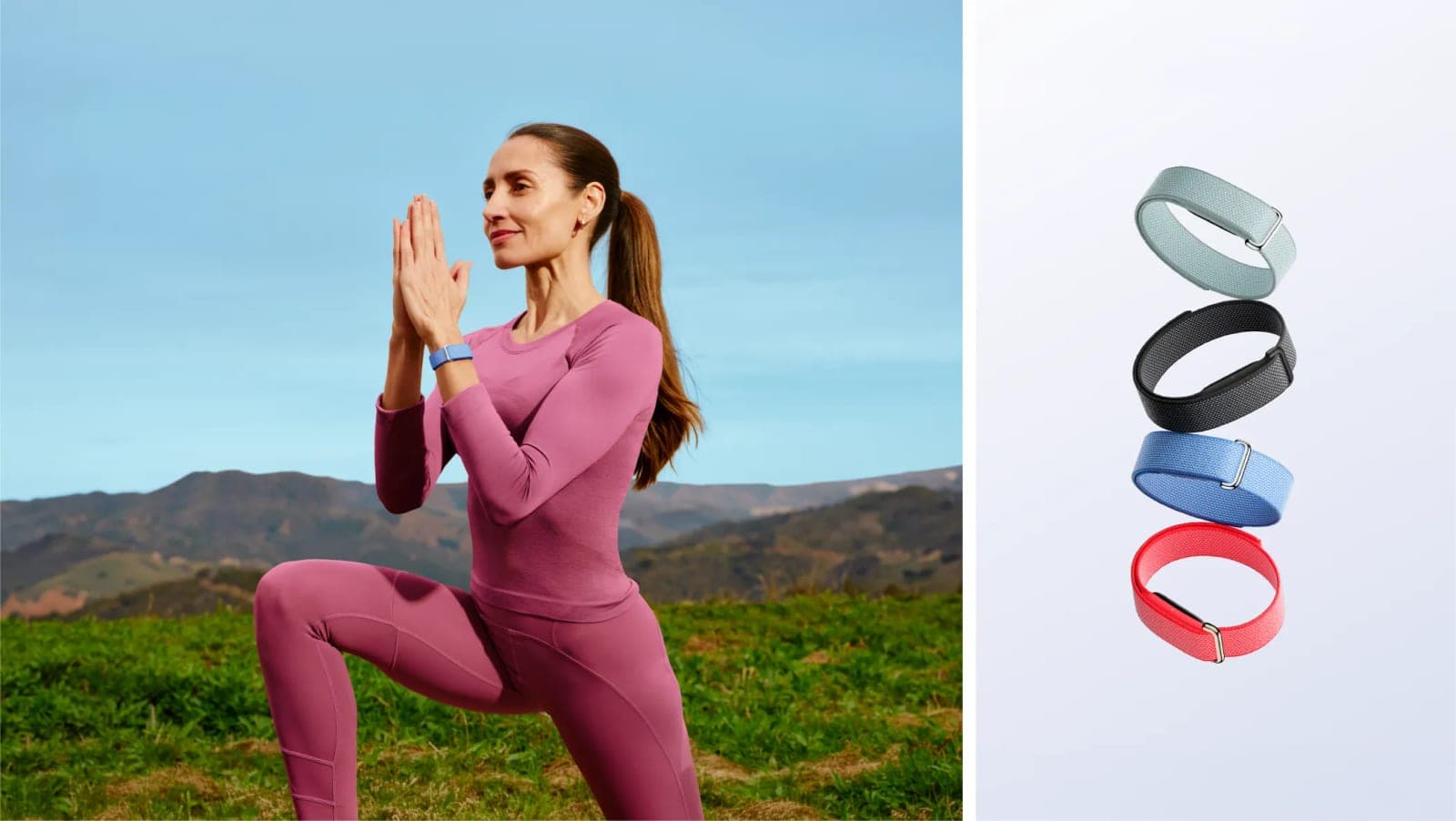
The Fitbit Edge costs $179.99. It comes in four finishes: Obsidian, Fog, Olive and Canyon, paired with soft Active Bands.
You can swap in other bands: a breathable Active Sport band, a Performance Loop band, a Magnet band or a Metal Links band.
A Stephen Curry Special Edition costs $219.99. Google made it with the four-time NBA champion and Google Performance Advisor. It has his signature rye tones and game day orange.
Pre-orders are open on the Google Store and through retail partners. The Edge reaches shelves on October 27, and Google includes three months of Google Health Premium with each purchase.
What it means for you
- Shopping: if you wanted a screen on your tracker without paying for a full smartwatch, this is the new price to compare at $179.99.
- Phone choice: it works with Android and iPhone, so you do not need to switch ecosystems.
- Subscription: the deepest features, like coaching and the new trends, need Google Health Premium. The first three months are free.
- Repairs: a replaceable battery could keep it useful for longer, depending on where you live. Our earlier story on the Fitbit Air launch in India shows how Google prices its trackers by region.
The bottom line
Google is filling the gap between a screenless band and a smartwatch with a slim, $179.99 tracker. The replaceable battery is the headline for people who hate throwing gadgets away.
The health trends and the smarter workout detection are the other big pieces, and both arrive later this month. The missing NFC chip is the one thing to check before you buy.
Key facts
- Price
- $179.99 (Stephen Curry edition $219.99)
- In stores
- October 27, pre-orders open now
- Battery
- Up to 7 days, replaceable
- Thickness
- 11.5 mm
- Included
- 3 months of Google Health Premium
Got questions?
Quick answers, plain wordsWhat is the Google Fitbit Edge?
It is a slim fitness tracker from Google with a bright display, built-in GPS, heart and sleep sensors and up to seven days of battery. Google describes it as sitting between a Pixel Watch and the screenless Fitbit Air.
How much does the Fitbit Edge cost?
It costs $179.99. The Stephen Curry Special Edition costs $219.99. Google includes three months of Google Health Premium with every purchase.
When can I buy the Fitbit Edge?
Pre-orders are open now on the Google Store and through retail partners. It will be on shelves on October 27.
Can I replace the battery myself?
Google calls the Edge its first repairable fitness tracker, with an internal modular design and a replaceable battery. Wired notes that repair options will vary by region and availability.
How long does the battery last?
Google says up to seven days on a single charge. Five minutes on the magnetic charger gives a full day, according to Google, and Engadget reports a full charge takes about 90 minutes.
Does the Fitbit Edge work with iPhone?
Yes. Wired reports it works with both Android phones and iPhones through the Google Health app, unlike the Pixel Watch, which needs Android.
Does the Edge support contactless payments?
No. Wired points out that it has no NFC chip, so Google Wallet payments are not supported. That is a step back from the older Charge 6.
Do I need a subscription to use it?
The tracker works for workouts, GPS, heart rate and sleep without one. Coaching, blood pressure trends and insulin resistance trends need Google Health Premium, and the first three months are included.
What is Health Guardian?
It is Google's suite of health and safety tools that track subtle changes over time. It reaches the Fitbit Air and Fitbit Edge for Google Health Premium users later in October.
SourcesGoogle
Topics and tagsGoogle, google, fitbit, wearables
Related stories
Google's screenless Fitbit finally reaches India, at a $47 markup
Google launched the screenless Fitbit Air in India for ₹13,999, about $47 more than its US price, entering a market where cheap local competitors already dominate.
Hackers hijacked three country domains to get fake Google certificates
Attackers took over the .gh, .sl and .as registries, rewrote DNS records and got real certificate authorities to issue HTTPS certificates for Google and other big brands. Chrome has blocked the ones Google found.

Google signs a deal to squeeze 890 MW more out of Constellation's nuclear plants
Google will be the anchor customer for upgrades at six existing nuclear plants in Illinois, Pennsylvania and New Jersey, adding power to the grid by 2032. Constellation will also use Google's Gemini Enterprise to run the work.
More in brief
- Anthropic tells investors its Q3 revenue hit $16.8 billion ahead of its IPOOct 15
- Mexico gives Meta, TikTok and X one month to shield kids from harmful contentOct 15
- OpenAI engineer charged over hidden recording device in executive roomOct 15
- Eight US states sue OpenAI over ChatGPT's safety for kidsOct 14
- Xbox Nano is a $50 controller small enough for your pocketOct 14
- Linux kernel developers move to drop the rule that made coders disclose AI helpOct 14