
Robots·News & analysis
Flourish One is a $3,555 home robot you teach chores with your phone
Startup Flourish is selling its first 50 Flourish One robots for $3,555 each, a Raspberry Pi-powered home helper you train by moving your phone to demonstrate a task.
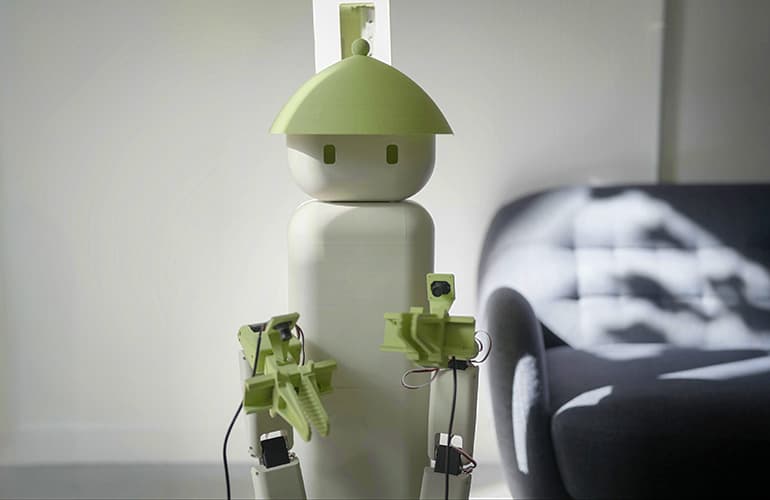
Startup Flourish opened pre-orders for Flourish One, a $3,555 home robot owners teach chores using just their phone, undercutting rivals like the $20,000 1X Neo.
Home robotics has mostly meant expensive, bipedal humanoids aimed at wealthy early adopters or research labs. Flourish is betting a cheaper, wheeled, phone-trainable robot focused narrowly on repetitive chores can reach real households faster. Only 50 units ship before Christmas 2026, making this an early proving ground rather than a mass-market launch.
What to know
- Startup Flourish is selling its first 50 Flourish One robots for $3,555 each, with deliveries beginning before Christmas 2026.
- Owners teach the robot a household task in under 30 minutes by moving their phone to demonstrate the motion, which the robot's arms then mirror.
- The robot runs on a Raspberry Pi, stands about 1.1 meters tall, weighs 20kg, and uses a six-wheeled base instead of legs for stability and lower cost.
- Each arm has a 1.5kg payload, two-fingered grippers with wrist cameras, and about 12 hours of battery life, with AI training and inference handled in the cloud.
- At $3,555, Flourish One is dramatically cheaper than rivals like 1X's bipedal Neo, priced around $20,000 for home delivery.
While rival startups chase $20,000 humanoid robots with legs, Flourish is betting busy parents just want something that waters the plants for under $4,000.
What Flourish One is
Flourish, a startup operating across San Francisco and Paris, opened pre-orders for its first 50 Flourish One robots on September 29, priced at $3,555 each.
- The pitch: a home robot for repetitive chores, trained by demonstration rather than programming.
- The hardware: a six-wheeled mobile base with two arms, rather than a bipedal walking design.
- The compute: runs on a Raspberry Pi, a deliberate cost-saving choice over custom robotics hardware.
The catch: it's not a general-purpose robot yet. It's built for simple, specific, repeatable tasks, not open-ended household work.
How you actually teach it something
Flourish's core pitch centers on how quickly an owner can teach the robot a new task, without any coding.
Founder Antoine Marcel described the process directly: "When you are training your robot to water your plants, you just take your phone, move your phone, and it will move the arms." The robot mirrors the phone's movement to learn the motion, typically within about 30 minutes per task.
That teaching method is central to Flourish's whole approach: rather than shipping a robot pre-programmed for a fixed list of chores, each owner trains their own robot for their own home's specific layout and habits.
Why that personalization matters
Marcel has been direct about why a single, universal skill set doesn't work well for home robotics: "The way I tidy my apartment is not the same as you do in your house." That's the reasoning behind per-home, cloud-based AI training rather than a one-size-fits-all skill library baked in at the factory.
By the numbers: each arm carries a 1.5kg payload capacity, uses two-fingered grippers with wrist-mounted cameras, and the robot runs on roughly 12 hours of battery life for arm operation, with a small lidar sensor handling obstacle detection around the home.
The build, and its limits
Flourish One stands about 1.1 meters tall and weighs roughly 20kg, built on a telescopic body structure that gives it a reach of about 89 centimeters. The six-wheeled base was a deliberate choice over legs.
Marcel explained the reasoning: a wheeled, balanced mobile platform costs less to build and is inherently safer in home environments than a bipedal design attempting to walk around furniture, pets, and children. That tradeoff sacrifices some of the visual "humanoid" appeal rival robots lean on, in exchange for lower cost and fewer ways to tip over or injure someone.
What it can't do: the robot isn't waterproof and isn't suited for tasks like washing dishes or other complex, multi-step chores. Flourish is positioning it narrowly, for well-defined, repeatable tasks rather than as a do-everything home assistant.
How it stacks up on price
Flourish One's most striking feature might just be the price tag. At $3,555, it undercuts prominent rivals by a wide margin.
The comparison: 1X's bipedal Neo robot is priced around $20,000 for US home delivery, positioning it as a premium, aspirational home humanoid. Flourish is explicitly chasing the opposite end of the market, prioritizing an actually attainable price point over matching Neo's more humanlike walking design or broader task ambitions.
That price gap reflects a real strategic bet: rather than competing directly on capability with well-funded bipedal humanoid projects, Flourish is trying to prove a narrower, cheaper robot can still deliver enough real value to build a customer base and iterate from there.
The home safety problem nobody's fully solved
Flourish One's grippers and wrist cameras exist in a category where safety standards are still genuinely unsettled. Consumer environments are widely considered harder to design for safely than factory floors, since homes contain children, pets, cluttered surfaces, stairs, and unpredictable situations a warehouse robot never has to navigate.
Why that context matters here: the International Organization for Standardization is currently updating its safety requirements for personal care robots, a framework that's over a decade old, but the proposed update doesn't set hard limits, testing methods, or enforcement mechanisms specific to home robots working around people.
Consumer safety standards for robotic manipulators are close to nonexistent, and legal liability for a home robot causing injury remains largely untested in court.
Some companies in the space, including 1X Technologies, have responded by deliberately limiting what their robots are physically capable of, restricting their ability to handle heavy, sharp, or hot objects regardless of what the hardware could technically do. Flourish's own limitations, no dishwashing, not waterproof, narrow task scope, read as a similar kind of self-imposed caution rather than a simple technical shortfall.
The camera-in-your-home tradeoff
Flourish One's wrist-mounted cameras and cloud-based training model raise a separate question apart from physical safety: privacy. Robots with always-on or frequently active cameras aren't necessarily built with the same security hardening as dedicated home security cameras, and a mobile camera that moves through multiple rooms creates a different kind of exposure than a fixed one.
The tradeoff is baked into the product itself: Flourish's phone-based, per-home teaching method is precisely what makes the robot flexible and personalized, but it also means task demonstrations and ongoing camera footage likely get processed through Flourish's cloud infrastructure rather than staying entirely on-device.
That's a common pattern across the teleoperation-trained robotics industry broadly, where cloud processing is what makes rapid, flexible learning possible in the first place. It's also exactly the kind of data flow that makes some potential buyers hesitate before letting a camera-equipped robot loose in their living room.
Who's backing it
Flourish's pre-seed funding round was led by Families Fund, a firm founded by Kartik Sathappan, a detail that lines up neatly with the company's stated focus on busy parents and household chores as its initial target use case, rather than a broader enterprise or industrial robotics play.
The Raspberry Pi choice, explained
Building a robot around a Raspberry Pi rather than custom silicon or a more powerful industrial computer is itself a notable engineering decision. Raspberry Pi boards are inexpensive, widely documented, and easy to source at scale, all useful traits for a startup trying to keep hardware costs low enough to hit a sub-$4,000 price point.
The tradeoff: a Raspberry Pi is nowhere near as powerful as the custom compute stacks found in higher-end humanoid robots, meaning heavier processing, like real-time complex vision or advanced autonomous reasoning, likely happens in Flourish's cloud rather than on the robot itself. That architecture choice reinforces why cloud connectivity isn't optional for Flourish One; it's core to how the robot actually functions day to day, not just how it learns new tasks.
What happens next
With only 50 units shipping before Christmas 2026, Flourish is treating this initial batch as a proving ground rather than a mass-market launch. How well those first robots actually perform in real homes, on real chores taught by real, non-technical parents, will shape whether Flourish scales production or has to rethink its approach.
The bottom line
Flourish One won't fold laundry or wash dishes, and it's not trying to. It's a narrow bet that a cheap, wheeled, phone-trainable robot solving a handful of specific repetitive tasks well beats an expensive, general-purpose humanoid that can theoretically do more but costs six times as much. Whether busy parents agree enough to justify scaling past 50 units is the real test starting this holiday season.
Key facts
- Price
- $3,555
- First batch
- 50 units, delivering by December 2026
- Height / weight
- ~1.1 meters / 20kg
- Training time
- Under 30 minutes per task
- Compute
- Raspberry Pi
Got questions?
Quick answers, plain wordsWhat is Flourish One?
A wheeled, humanoid-style home robot made by startup Flourish, designed to learn and perform household chores. It's priced at $3,555 for the first batch of 50 units.
How do you teach it a new task?
By moving your phone to demonstrate the motion, for example moving it the way you'd water a plant. The robot's arms mirror that movement, and Flourish says most tasks can be taught in under 30 minutes with no coding required.
What computer does it run on?
A Raspberry Pi, chosen specifically to keep the robot's cost down compared to more expensive custom compute used in rival humanoid robots.
Why wheels instead of legs?
Founder Antoine Marcel said a six-wheeled, balanced mobile base was chosen over a bipedal design specifically to reduce cost and improve safety in home environments, rather than chasing a more humanlike walking gait.
What can it actually do?
Simple, repetitive household tasks like watering plants, demonstrated one at a time through phone-based teaching. It's not waterproof and isn't designed for tasks like washing dishes or other complex, varied chores.
How does the price compare to other home robots?
It's dramatically cheaper than competitors like 1X's bipedal Neo, which is priced around $20,000 for US home delivery, positioning Flourish One as a budget entry point into home robotics.
Who made it and where is the company based?
Flourish, a startup founded by Antoine Marcel that operates across San Francisco and Paris. The company's pre-seed round was led by Families Fund, founded by Kartik Sathappan.
When can I get one?
Pre-orders for the first 50 units opened September 29, 2026, with deliveries expected to begin before Christmas 2026.
SourcesThe Robot Report
Topics and tagsHumanoid robots, flourish, home robots, raspberry pi
Related stories
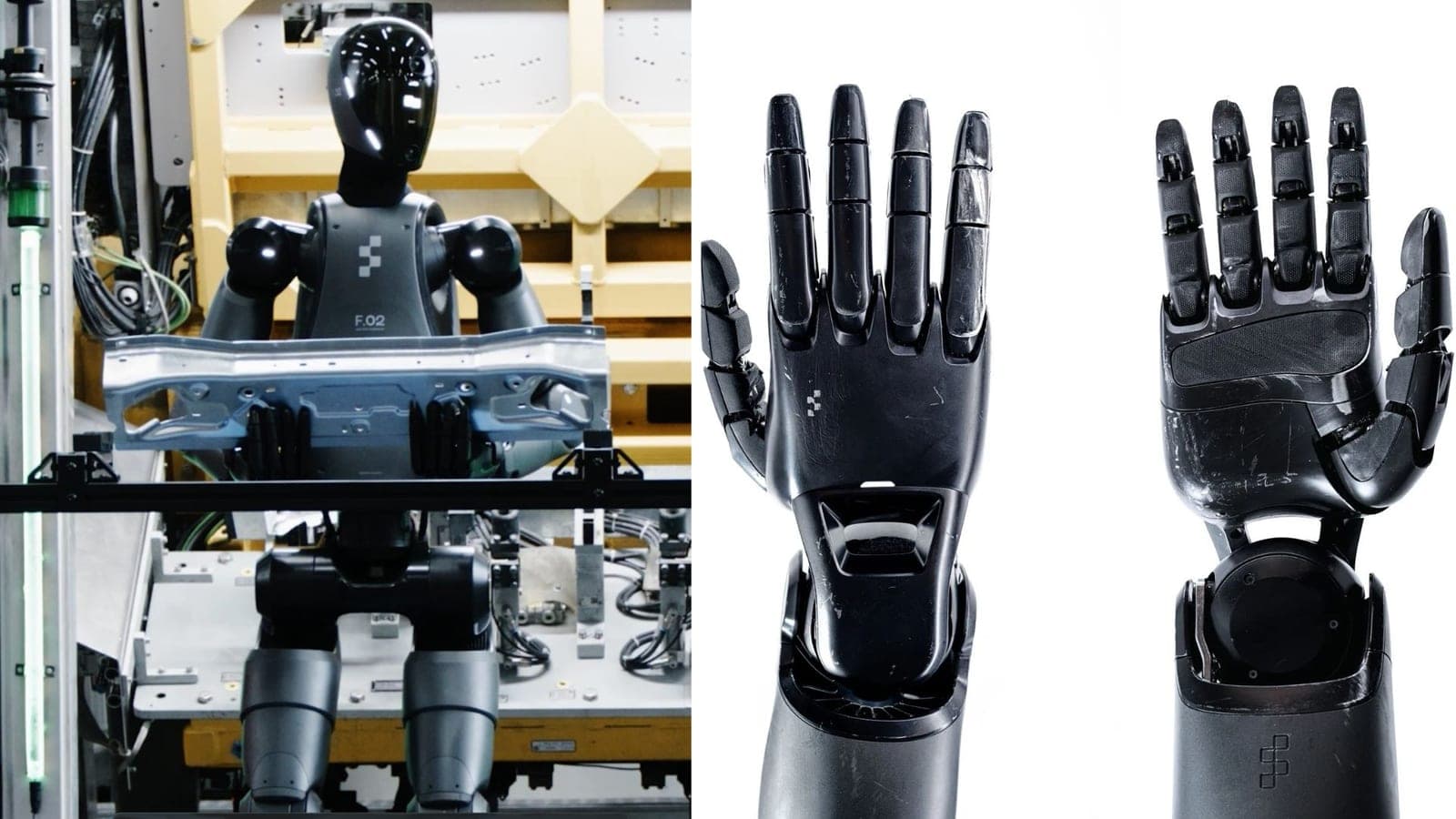
Figure retired its BMW factory robots by having them jump into molten steel
Figure decommissioned its F.02 humanoid robots after 11 months building BMW X3s, sending them off with a Terminator 2-style melt into a foundry furnace, an idea Arnold Schwarzenegger suggested.
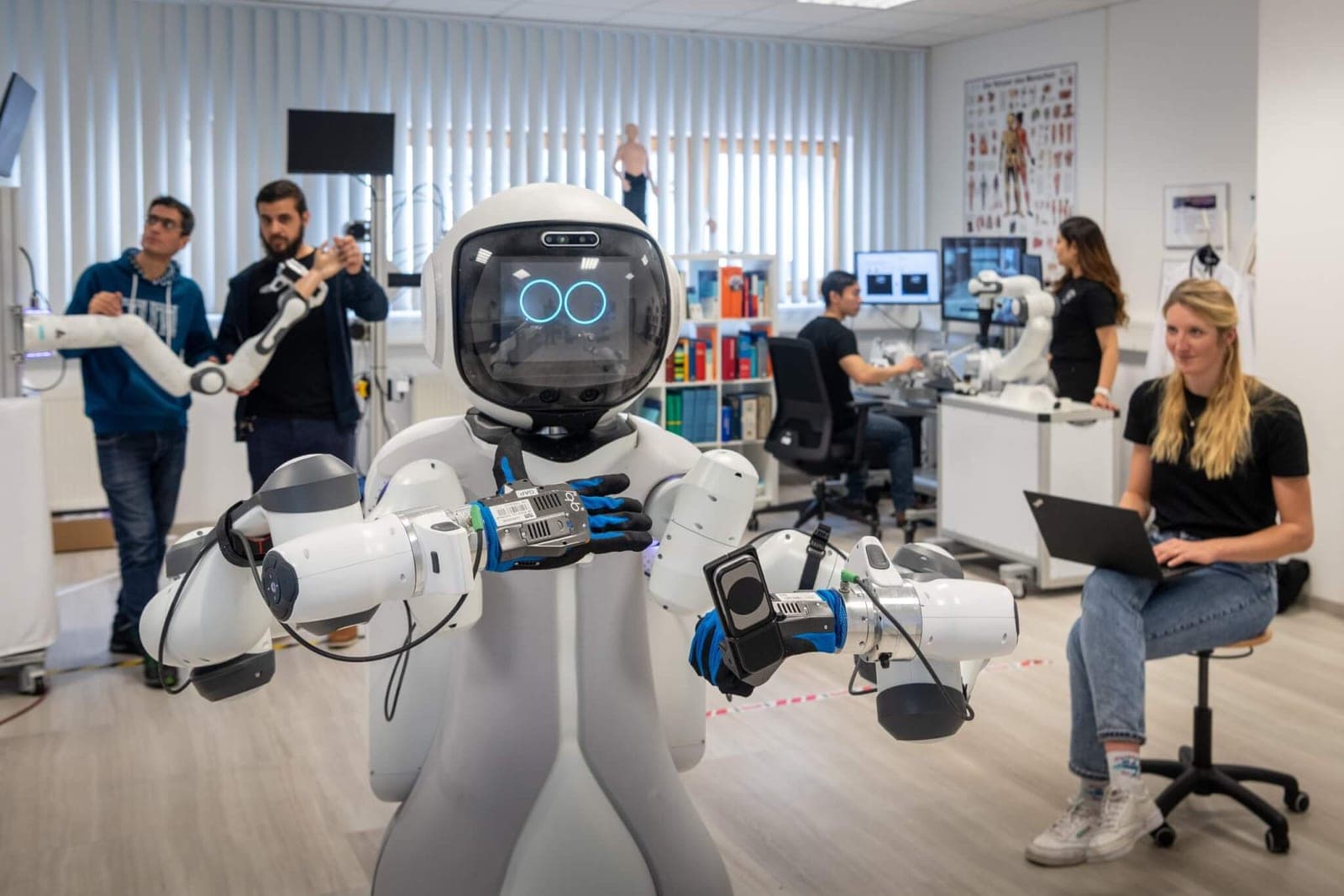
A data company just built a lab whose only job is teaching robots to move like us
Innodata opened a motion-capture lab in New Jersey, built with Vicon, that captures sub-millimeter 3D movement data to train humanoid and industrial robots how to move more naturally.
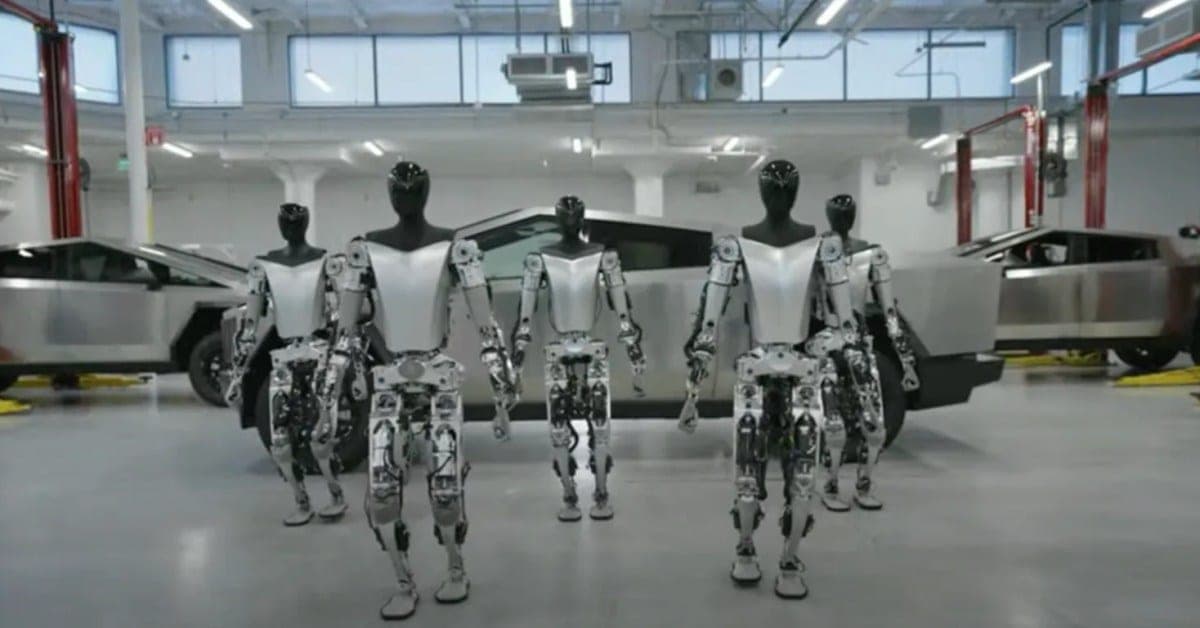
Tesla ramps Optimus to hundreds a week, but its hands are the bottleneck
Tesla has scaled Optimus production roughly tenfold since Q2, but the robot's hands still need hand assembly and its touch sensors aren't holding up, The Information reports.
More in brief
- arXiv limits researchers to two papers a month as AI drives submissions to a recordOct 2
- California will fine robotaxi companies that block first responders for over 30 minutesOct 2
- Microsoft launches real-time transcription and new voice models for AI voice agentsOct 1
- Apple's smart home hub reportedly launches October 13, with a camera that never records videoOct 1
- Cloudflare releases Clef, open-weight AI models that make yes-or-no decisions fastOct 1
- GrayKey maker reportedly found a way around the iPhone's Inactivity RebootOct 1