
Technology·News & analysis
Why Black Twitter found a new home on Meta's Threads
Years after Elon Musk bought Twitter, a wave of Black creators and communities have found their footing on Threads, helped by features Meta built specifically for community building.

Tide
Ripple
Sci-fi
2/10
Reality
In your hands
An old online neighborhood rebuilds itself on a new app.How we rate
Black Twitter, a longtime influential online community, has increasingly moved to Meta's Threads following years of turbulence at X after Elon Musk's 2022 takeover.
Threads reached 400 million monthly active users by the end of 2025, helped by features like a Communities Hub and expanded trending topics that support this kind of migration. Prominent figures including Gabrielle Union and Don Lemon have been part of the broader wave leaving X. Despite the growth, Threads' average engagement still lags well behind X's at around 4 minutes a day per user.
What to know
- Black Twitter, a longtime influential online community, has increasingly moved to Meta's Threads following years of turbulence at X after Elon Musk's 2022 takeover.
- Threads reached 400 million monthly active users by the end of 2025, with Meta building features like Communities and trending topics that support this kind of migration.
- Prominent figures including Gabrielle Union and Don Lemon have been part of the broader wave of users leaving X for alternatives like Threads and Bluesky.
- Despite the user growth, Threads' average engagement time still lags well behind X's, at around 4 minutes a day per user.
An online community that helped shape internet culture for over a decade found itself without a stable home in 2022. Years later, it's rebuilt itself somewhere new.
Black Twitter, the long-running, culturally influential community of Black social media users, has increasingly settled on Threads, Meta's text-based app, after years of turbulence at X following Elon Musk's 2022 acquisition.
Why did this community need a new home at all?
Why it matters: X changed substantially after Musk's October 2022 takeover. Reduced content moderation, the removal of legacy verification checkmarks, and instability tied to a much smaller engineering team all contributed to a platform many longtime users felt had become less functional and less welcoming over time.
That mattered specifically for Black Twitter because so much of the community's value was built on consistent, reliable connection, breaking news, humor, mutual support, and cultural commentary that depended on the platform actually working the way it always had.
- October 2022: Musk completes his acquisition of Twitter.
- Following years: growing instability, moderation changes, and user frustration.
- Ongoing migration: users spread across Threads, Bluesky, and other alternatives.
- 2025: Threads reaches 400 million monthly active users.
How influential was this community, really?
Background: Black Twitter's roots trace back to the early 2000s, gaining real cultural momentum around Barack Obama's 2008 presidential campaign and the rise of hashtag culture in the early 2010s. Tags like #twitterafterdark turned the platform into a recurring gathering space rather than just a place to post.
Its influence extended well beyond its own community. Much of the internet's broader slang, humor, and meme culture, language and mannerisms that eventually became mainstream, trace directly back to what originated within Black Twitter. The community also played a documented role in spreading real-time information during major moments, including the response to Trayvon Martin's death and the Ferguson uprisings, often reaching people faster than traditional news outlets did.
Why it matters: that history is exactly why Black Twitter's uncertain future after 2022 mattered to internet culture broadly, not just to the community itself. A 2024 Hulu documentary, "Black Twitter: A People's History," chronicled that cultural significance, reinforcing just how much online culture at large had been shaped by this specific, influential community over more than a decade.
Why Threads specifically, and not somewhere else?
Background: Meta didn't just passively catch overflow traffic from X. It built specific features aimed at supporting exactly this kind of community formation. A Communities Hub now organizes topic-based groups spanning everything from sports to books to parenting, giving users a structured way to find their specific corner of the platform.
Live Chats expanded to support real-time conversation during major cultural events, and indented replies made following actual conversations easier to track, both practical features for a community whose culture has always run heavily through fast-moving, layered conversation threads.
In real life think of it like a neighborhood that had to relocate after their old building changed hands and got worse to live in. The new place isn't identical, but if it has the right amenities and enough of your old neighbors show up too, it can start to feel like home again.
How did Threads even get this big?
By the numbers: Threads launched on July 5, 2023, as an Instagram-linked app explicitly built to catch users frustrated with X. Its early growth was extraordinary by any standard: 10 million users within the first seven hours, 30 million by the next morning, and 100 million signups within five days, making it one of the fastest-growing apps ever released.
Why it matters: Mark Zuckerberg said at the time that growth had come almost entirely from organic demand, without Threads spending money on marketing. That launch speed mattered specifically for a community like Black Twitter. A brand-new app with almost no existing users would have been a much harder sell than one that had already demonstrated real, immediate scale within days of going live.
Threads' built-in connection to Instagram accounts also lowered the barrier to entry significantly. Anyone with an existing Instagram account could join Threads almost instantly, without building a new profile and follower base completely from scratch, a practical advantage that likely accelerated how quickly recognizable community voices could re-establish themselves.
Who's actually made this move?
Who's affected: the migration hasn't been anonymous or quiet. Reported examples of notable figures moving away from X include Gabrielle Union and Don Lemon, part of a broader, more public wave of users signaling their departure from the platform.
That visibility matters for how migrations like this actually work. Community platforms rely heavily on critical mass, enough recognizable voices moving together that new arrivals feel confident the community itself, not just individual users, has actually relocated.
Is Threads really replacing X for these users?
The catch: not entirely, at least not yet. Despite reaching 400 million monthly active users, Threads' average engagement per user sits at around 4 minutes a day, a fraction of the time users historically spent on X. That gap suggests people are genuinely using Threads in a different way day to day, not simply swapping one app out for what amounts to an identical replacement.
What's next: that lower engagement number isn't necessarily bad news for Threads. It could reflect a community still in the process of settling in, or a genuinely different, more intentional way of using the app compared to the compulsive scrolling patterns X was often criticized for. Which explanation holds up will become clearer as usage patterns continue to mature and settle in over the coming months and years.
Is Threads the only alternative gaining ground?
No. Bluesky has also drawn significant numbers of users away from X during the same period, and Spill, a Black-owned platform built specifically with this community in mind, has positioned itself as another direct alternative.
Who's affected: that fragmentation across multiple platforms is itself notable. Rather than one single clear successor emerging, the community has deliberately spread itself across several different destinations at once, each offering something slightly different, which may ultimately prove far more resilient than concentrating entirely on any single new platform ever could.
What it means for you
- If you were part of Black Twitter's community on X, Threads has specific features, Communities and Live Chats especially, built to support that kind of migration.
- Don't expect Threads to feel identical to old Twitter. Lower daily engagement suggests a genuinely different usage pattern, not a one-to-one replacement.
- This is a useful case study in how online communities actually survive platform disruption, by rebuilding deliberately rather than simply scattering.
- Watch whether engagement time grows over the next year. That's the clearest signal of whether this migration becomes permanent or stays partial.
The bottom line
Black Twitter's move to Threads shows that an online community's real value was never tied to one specific app. It was always the people and culture that made the platform matter in the first place.
Meta built real features to support that kind of migration, and a critical mass of recognizable voices made the move together. Whether Threads becomes a genuinely lasting home or just one stop among several will ultimately depend on whether that deeper daily engagement eventually follows the users who've already made the move there.
Key facts
- Threads MAU (end of 2025)
- 400 million
- Threads DAU (Oct 2025)
- 150 million
- X takeover by Musk
- October 2022
- Avg. Threads engagement
- About 4 minutes/day per user
Got questions?
Quick answers, plain wordsWhat is Black Twitter?
A long-running, influential online community of Black social media users known for humor, cultural commentary, breaking news, mutual aid, and shaping broader internet culture and language, originally centered on Twitter.
Why did Black Twitter start leaving Twitter/X?
Following Elon Musk's October 2022 acquisition, the platform saw major changes including reduced content moderation, the removal of legacy verification checkmarks, and instability from a shrunken engineering team, which many users felt degraded the platform's usability and safety.
Why did Threads specifically become a landing spot?
Meta added features supporting community building, including a Communities Hub for topic-based groups, more visible trending topics, and Live Chats for real-time discussion during major cultural events.
How big is Threads now?
Threads reached 400 million monthly active users by the end of 2025, with about 150 million daily active users reported in October 2025.
Are other platforms also gaining former Twitter users?
Yes. Bluesky has also seen significant growth, and the Black-owned platform Spill has positioned itself as another specific alternative for this community.
Is Threads actually replacing X in terms of usage?
Not entirely. Despite strong user growth, Threads' average engagement per user is around 4 minutes a day, a fraction of X's engagement depth, suggesting people use it differently rather than as a full one-to-one replacement.
What specific Threads features support community building?
A Communities Hub covering topics from sports to books to parenting, expanding Live Chats for real-time events, indented replies for clearer conversation threads, and more prominent, niche-specific trending topics.
Have any notable people publicly moved to alternatives to X?
Yes, reported examples include Gabrielle Union and Don Lemon, among many other users who left X as part of the broader post-2022 platform migration.
SourcesWired
Related stories

WhatsApp will now tell parents when their teen joins a group, but not what's said in it
WhatsApp launched optional parental controls for teen accounts, alerting parents when their teen joins or leaves groups while keeping actual messages end-to-end encrypted.
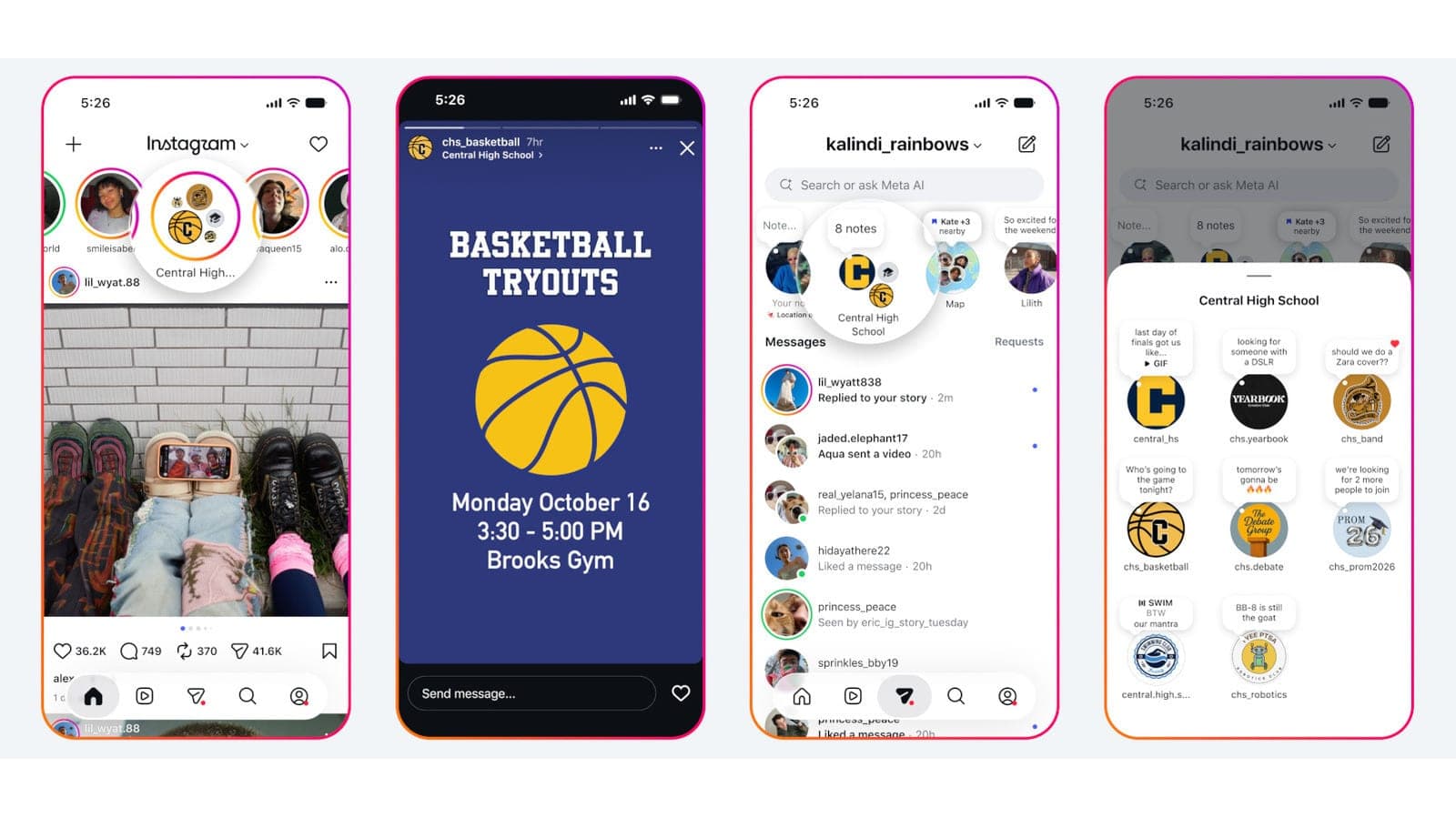
Instagram lets partner schools post content only their own students can see
Meta is adding private Stories, Notes, Channels, and student directories to Instagram's School Partnership Program, which now covers nearly 17,000 schools.

Apple's smart home hub reportedly launches October 13, with a camera that never records video
Bloomberg's Mark Gurman says Apple will announce its long-rumored smart home display on October 13. He also describes a companion home camera that sends text descriptions instead of video.
More in brief
- arXiv limits researchers to two papers a month as AI drives submissions to a recordOct 2
- California will fine robotaxi companies that block first responders for over 30 minutesOct 2
- Microsoft launches real-time transcription and new voice models for AI voice agentsOct 1
- Cloudflare releases Clef, open-weight AI models that make yes-or-no decisions fastOct 1
- GrayKey maker reportedly found a way around the iPhone's Inactivity RebootOct 1
- Fervo's Cape Station becomes the first enhanced geothermal plant to sell power commerciallyOct 1