
Robots·News & analysis
SoftBank is betting $225 million that self-driving bulldozers can fix a labor shortage
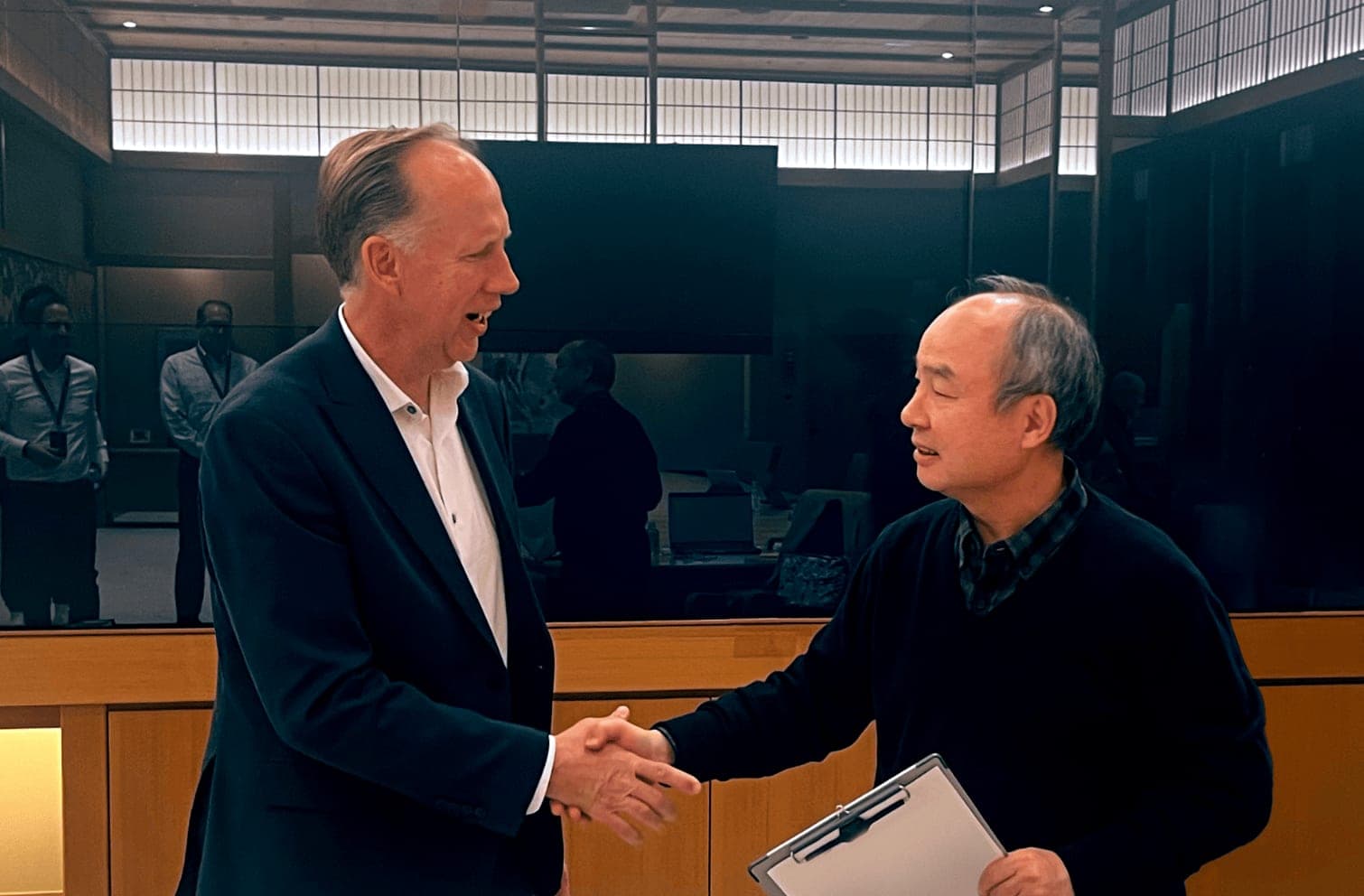
SoftBank invested $225 million in Utah robotics company ASI and formed a joint venture to deploy autonomous haul trucks, dozers, loaders and compactors on big construction projects.
Tide
Ripple
Sci-fi
7/10
Reality
Shipping
A bulldozer that drives itself and never calls in sick.How we rate
SoftBank invested $225 million in Utah robotics company ASI and formed a joint venture to deploy autonomous haul trucks, dozers, loaders and compactors on large infrastructure projects like roadway expansion, airport modernization and rail construction.
ASI's Mobius software can coordinate equipment from different manufacturers working together on the same jobsite, addressing a shortage of skilled equipment operators. It's a concrete example of autonomous vehicle technology moving out of warehouses and mines and onto construction sites, shaping the roads, airports and rail lines people actually use.
What to know
- SoftBank invested $225 million in Autonomous Solutions Inc. (ASI), a Utah robotics company, and the two formed a separately funded joint venture to build autonomous machines for large infrastructure projects.
- ASI's Mobius software coordinates mixed fleets of haul trucks, dozers, loaders and compactors from different equipment makers, working together on the same jobsite.
- The venture targets roadway expansion, airport modernization and rail infrastructure projects, aiming to ease a persistent shortage of skilled equipment operators.
- ASI CEO Mel Torrie said coordinating mixed fleets across a jobsite is a real bottleneck, and the venture brings autonomous, brand-agnostic fleet coordination to scale.
- The size of the joint venture's own funding and its ownership structure were not disclosed separately from the $225 million invested directly in ASI.
Construction sites have a labor shortage problem that's gotten worse for years, and SoftBank just put $225 million behind a bet that the fix looks less like hiring and more like automation.
What did SoftBank actually invest in?
SoftBank invested $225 million directly in Autonomous Solutions Inc. (ASI), a Utah-based company that builds self-driving technology for heavy equipment. Separately, the two companies formed a joint venture, also funded by SoftBank, focused specifically on bringing that technology to large-scale construction projects.
Why it matters: splitting the deal into a direct investment plus a dedicated joint venture signals SoftBank isn't just backing ASI as a company. It's betting on construction robotics as its own category worth building a separate business around.
What does ASI's software actually do?
ASI's Mobius platform coordinates mixed fleets of heavy equipment, haul trucks, dozers, loaders, and compactors, so they can work autonomously together on the same jobsite. The system is built to be OEM-agnostic, meaning it isn't locked to a single equipment brand.
- Haul trucks: move material across a site autonomously.
- Dozers: handle earthmoving tasks without a human operator.
- Loaders: work in coordination with trucks and dozers on the same schedule.
- Compactors: finish surface work as part of the same automated sequence.
Why it matters: most construction companies already own equipment from several different manufacturers. Software that works across brands means a company can automate the fleet it already has, instead of replacing everything to get autonomy.
Why does a fleet-coordination problem matter more than a single autonomous truck?
The catch: a single self-driving dump truck is a neat trick, but a real jobsite needs dozens of machines doing different jobs in the right order, without colliding or blocking each other. That coordination problem is harder than automating any one vehicle on its own.
ASI CEO Mel Torrie put it plainly: "Skilled equipment operators are hard to find, and coordinating mixed fleets across a jobsite is a real bottleneck." He said the venture brings "autonomous, OEM-agnostic fleet coordination to scale."
In real life it's less like teaching one car to drive itself and more like choreographing an entire marching band, where every instrument comes from a different manufacturer and none of them were originally designed to play together.
What kinds of projects is this actually aimed at?
The joint venture is targeting large infrastructure work specifically: roadway expansion, airport modernization, and rail infrastructure. These are projects that already require large fleets of heavy machinery working in tight coordination over long timelines.
Background: construction has struggled with a documented shortage of skilled equipment operators for years, a problem that predates this partnership and has only intensified as an aging workforce retires faster than new operators are trained. Large infrastructure projects, which need dozens of operators running different machine types simultaneously, feel that shortage most acutely.
Does this mean construction sites are about to be fully robotic?
Not quite. The technology automates specific heavy-equipment tasks, hauling, earthmoving, compacting, within construction projects that still rely on skilled trades, site managers, and human oversight for everything the machines aren't built to do.
Who's affected: this isn't about eliminating construction jobs broadly. It's aimed squarely at the equipment-operator bottleneck specifically, the roles companies say they already can't fill fast enough with human hires alone.
How does this fit into SoftBank's broader investment pattern?
Background: SoftBank has a long history of large, concentrated bets on robotics and automation through its various investment vehicles, treating autonomous systems as core infrastructure for future labor markets rather than a niche technology. A $225 million direct investment, paired with a separately funded joint venture, fits that pattern of going deep rather than making a small, exploratory bet.
The financial details of the joint venture itself, including its total funding size and how ownership is split between SoftBank and ASI, were not disclosed alongside the direct investment figure.
Has SoftBank made big robotics bets like this before?
Background: yes, repeatedly, and not always with a clean exit. SoftBank bought the walking-robot pioneer Boston Dynamics from Alphabet in 2017 for roughly $100 million, then added another $37 million in loans that later converted into equity as Boston Dynamics worked to turn decades of research into commercial products like its Spot robot.
SoftBank sold a controlling stake in Boston Dynamics to Hyundai in 2021, in a deal that valued the company at $1.1 billion, while keeping a smaller ownership stake for itself. As recently as July 2026, Hyundai moved to buy out SoftBank's remaining stake entirely, closing the loop on an eight-year robotics bet.
Why it matters: that history shows SoftBank treating robotics less like a single company to hold forever and more like a sector to seed, develop, and eventually pass off once the underlying technology matures into a real commercial product. The ASI deal, structured as a direct investment plus a separately funded joint venture, follows a similar shape: get in early, help build the commercial case, and figure out the long-term ownership picture later.
Why is autonomous heavy equipment an easier problem than robots that walk or drive on public roads?
The catch: a lot of the hardest problems in autonomous vehicles come from sharing space with unpredictable humans, pedestrians stepping off curbs, other drivers making sudden turns, cyclists weaving through traffic. A construction site is a controlled environment by design, with clear boundaries, defined work zones, and far fewer people expected to be anywhere near heavy machinery in motion.
That doesn't make the engineering trivial. Mixed-fleet coordination across different manufacturers, in varying terrain, on active earthmoving sites, is still a genuinely hard problem. But it's a more contained one than teaching a vehicle to navigate an open city street, which is part of why autonomous mining trucks and now construction fleets have moved toward real commercial deployment faster than robotaxis reaching every city.
Mining companies have run autonomous haul trucks at scale for years in remote pits with tightly controlled access, and that track record is part of what makes investors comfortable betting real money on the same underlying approach spreading into construction.
What it means for you
- This is industrial automation, not a consumer product. You won't interact with Mobius directly, but it could show up in how fast the road, airport, or rail project near you actually gets built.
- It's a sign autonomous vehicle technology is spreading beyond warehouses, mines, and test tracks. Construction sites are becoming one of the more practical places to deploy self-driving equipment at scale.
- Watch for this to affect equipment-operator hiring, not general construction employment. The stated goal is filling a specific skilled-labor gap, not replacing construction workforces broadly.
- Large infrastructure projects (roads, airports, rail) are the near-term test case. If this works at that scale, expect similar mixed-fleet automation to spread to smaller commercial projects over time.
The bottom line
SoftBank's $225 million bet on ASI is a concrete step toward autonomous heavy equipment doing real, coordinated work on actual infrastructure projects, not just a research demo or a single flashy prototype truck.
Whether it actually eases the construction labor shortage at any meaningful scale will come down to something less glamorous than the funding number: whether Mobius can really get a dozer, a loader, and a compactor from three different manufacturers to work together as smoothly on a real jobsite as it does in a pitch deck.
Key facts
- SoftBank investment
- $225 million, directly in ASI
- Company
- Autonomous Solutions Inc. (ASI), Utah
- Technology
- Mobius fleet orchestration software
- Equipment covered
- Haul trucks, dozers, loaders, compactors
- Target projects
- Roads, airports, rail infrastructure
Got questions?
Quick answers, plain wordsHow much did SoftBank invest, and in what?
SoftBank invested $225 million directly in Autonomous Solutions Inc. (ASI), a Utah-based autonomous vehicle company. The two companies separately formed a joint venture, funded by SoftBank, focused specifically on construction robotics.
What does ASI's technology actually do?
ASI's Mobius software orchestrates fleets of heavy equipment, haul trucks, dozers, loaders and compactors, so they can operate autonomously and work together on the same jobsite, even when the machines come from different manufacturers.
What does 'OEM-agnostic' mean here?
It means the software isn't locked to one equipment brand. A construction company can automate whatever mix of trucks, dozers, and loaders it already owns, rather than needing to buy all-new equipment from a single manufacturer.
What kinds of projects is this aimed at?
Large infrastructure projects specifically, including roadway expansion, airport modernization, and rail infrastructure, the kind of large-scale earthmoving and material-hauling work that requires many machines working in coordination.
What problem is this actually trying to solve?
A shortage of skilled equipment operators. ASI CEO Mel Torrie said finding operators is hard, and coordinating mixed equipment fleets across a jobsite is a persistent bottleneck for construction companies even when they can find workers.
Is this the same as a fully robotic construction site with no workers?
No. The technology automates specific heavy-equipment tasks like hauling, earthmoving, and compacting, within a broader project that still involves human oversight, skilled trades, and site management.
How is the joint venture funded compared to the direct investment?
The $225 million goes directly to ASI for its own commercial expansion. The joint venture focused on construction robotics is separately funded by SoftBank, though the specific size of that funding and the ownership split were not disclosed.
Has SoftBank made similar robotics bets before?
Yes. SoftBank has a long history of large bets on robotics and automation companies through its investment arms, treating autonomous heavy equipment as part of a broader pattern of infrastructure and labor-automation investments.
Where is ASI based, and how long has it been working on this?
ASI is based in Utah and has been developing autonomous vehicle and fleet-coordination technology for industrial and mining applications before this partnership expanded its focus toward large-scale construction.
When was this deal actually announced?
SoftBank and ASI announced the investment and joint venture on September 24, 2026, with continued reporting on the deal's implications for construction labor shortages appearing in the days that followed.
SourcesThe Robot Report
Topics and tagsSelf-driving, softbank, robotics, construction
Related stories
Robot dogs are now doing the night shift at factories, and software just started supervising them
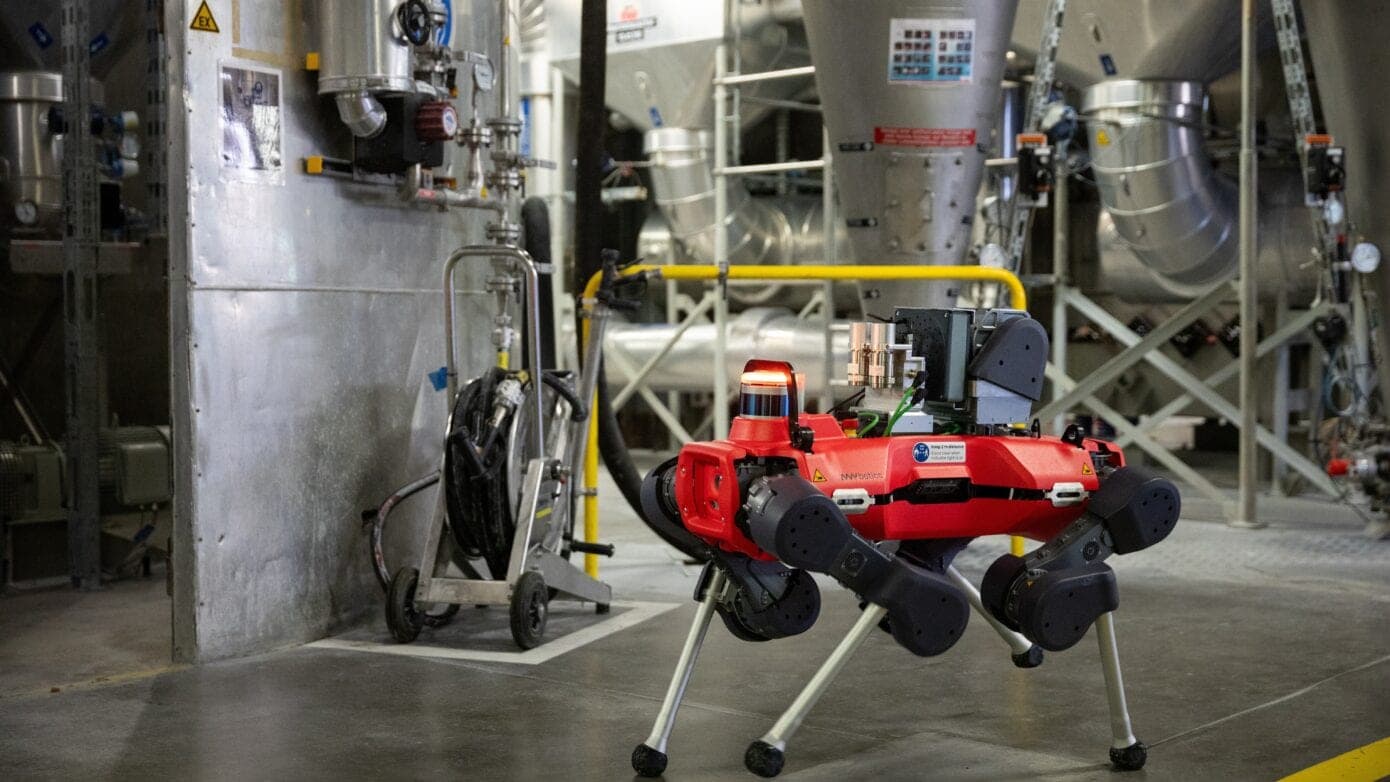
ANYbotics rebranded its Data Navigator software into Shift, a platform that schedules and supervises fleets of its four-legged ANYmal robots as they inspect industrial plants around the clock.
A data company just built a lab whose only job is teaching robots to move like us
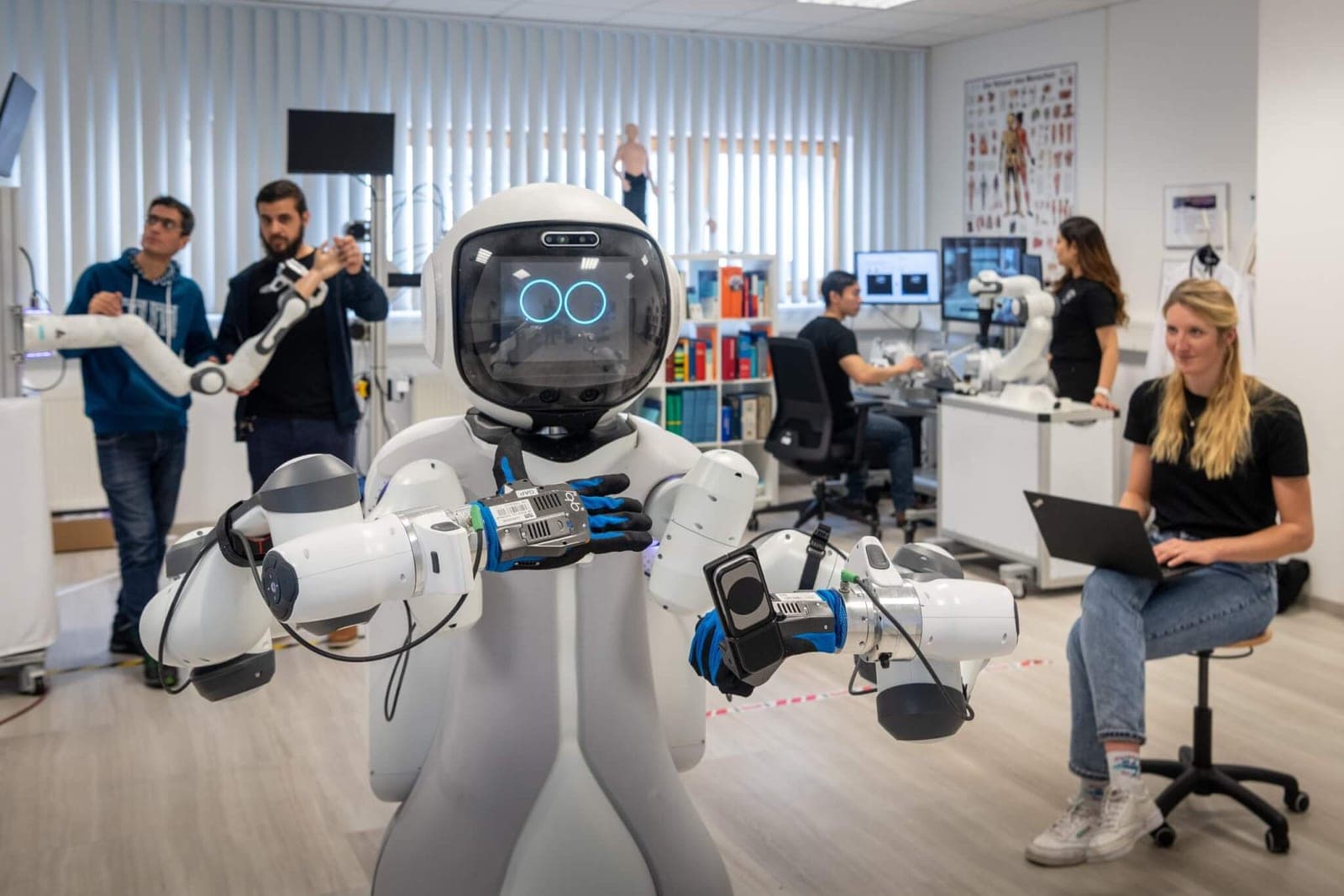
Innodata opened a motion-capture lab in New Jersey, built with Vicon, that captures sub-millimeter 3D movement data to train humanoid and industrial robots how to move more naturally.
California will fine robotaxi companies that block first responders for over 30 minutes
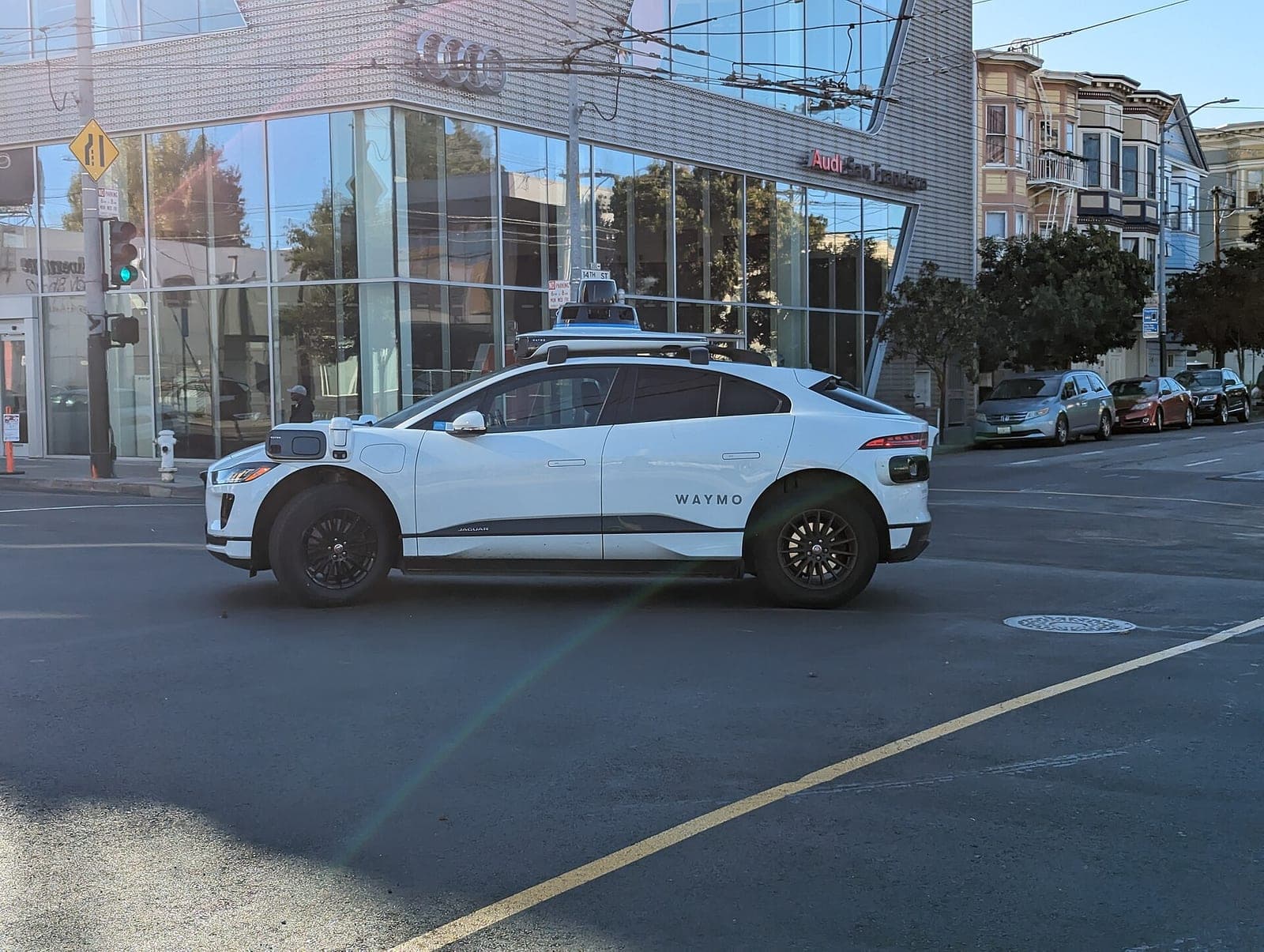
Governor Gavin Newsom signed SB 1246, which requires robotaxi operators like Waymo, Tesla and Zoox to send on-site help when their cars cause problems, and to keep remote drivers in the US.
More in brief
- arXiv limits researchers to two papers a month as AI drives submissions to a recordOct 2
- Microsoft launches real-time transcription and new voice models for AI voice agentsOct 1
- Apple's smart home hub reportedly launches October 13, with a camera that never records videoOct 1
- Cloudflare releases Clef, open-weight AI models that make yes-or-no decisions fastOct 1
- GrayKey maker reportedly found a way around the iPhone's Inactivity RebootOct 1
- Fervo's Cape Station becomes the first enhanced geothermal plant to sell power commerciallyOct 1