
AI·News & analysis
AMD buys Fei-Fei Li's World Labs for $8.2 billion, hires her as chief scientist
AMD is acquiring World Labs, the AI startup founded by computer vision pioneer Fei-Fei Li, in an $8.2 billion all-stock deal that brings Li on as AMD's executive vice president and chief scientist.
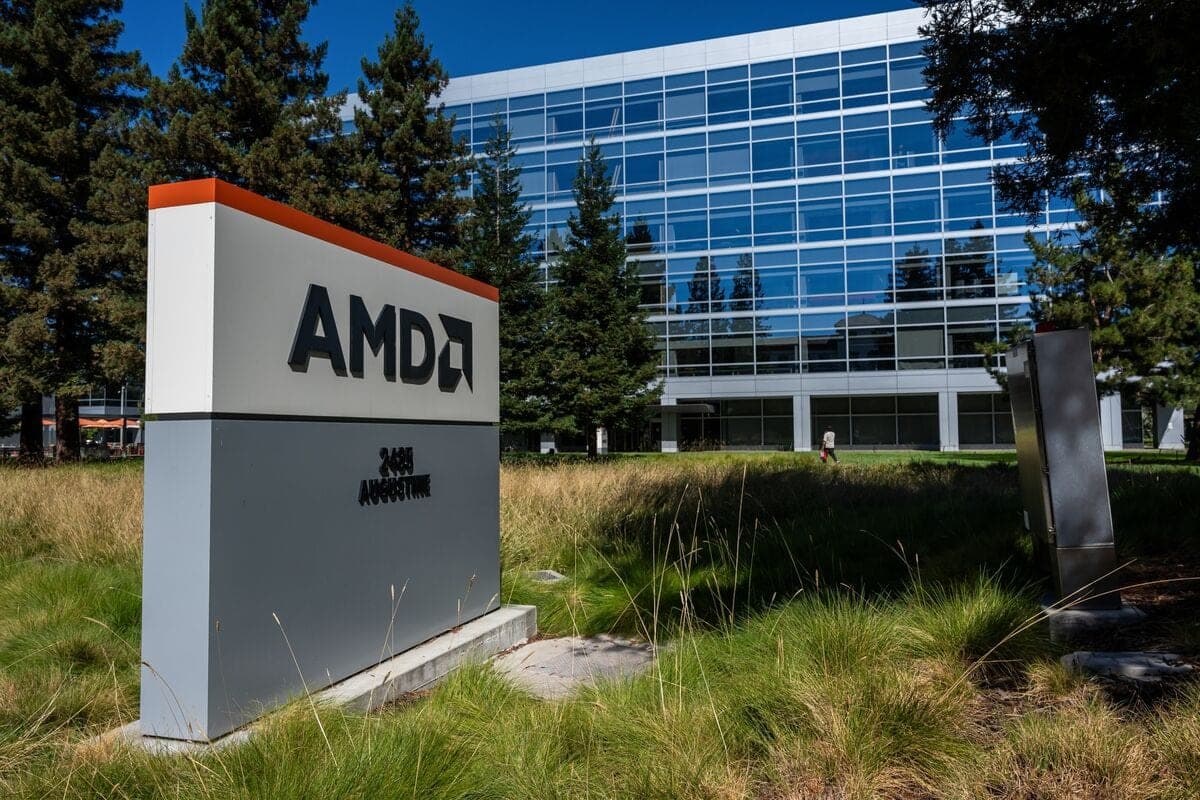
AMD is acquiring World Labs, the AI startup founded by computer vision pioneer Fei-Fei Li, in an all-stock deal worth $8.2 billion.
Li will join AMD as executive vice president and chief scientist, reporting directly to CEO Lisa Su. World Labs builds AI models that understand and simulate physical reality, technology AMD says will shape its chip-making roadmap. The deal helps AMD compete with Nvidia, which already offers its own suite of world models, and is expected to close by the end of 2026.
What to know
- AMD is acquiring World Labs, Fei-Fei Li's AI startup, in an all-stock deal worth $8.2 billion.
- Li, known as a pioneer of computer vision and the creator of the ImageNet database, will join AMD as executive vice president and chief scientist, reporting to CEO Lisa Su.
- World Labs builds 'world models,' AI systems designed to understand and simulate physical reality, with applications in entertainment and robot training.
- The deal is expected to close by the end of 2026 and helps AMD compete with Nvidia, which already has its own suite of world models called Cosmos.
AMD just bought itself a chief scientist, and the AI lab she built comes along with the deal. The company is acquiring World Labs for $8.2 billion, bringing pioneer researcher Fei-Fei Li in-house.
What's happening
AMD and World Labs announced an all-stock acquisition deal Monday. World Labs justified the move by saying AI development requires "close collaboration across model research, systems and compute."
- Deal size: $8.2 billion, all-stock.
- Li's new role: Executive vice president and chief scientist, reporting to CEO Lisa Su.
- Timeline: Expected to close before the end of 2026, pending regulatory approval.
The catch: the World Labs team stays intact and keeps focusing on AI model research under AMD, rather than being absorbed and dissolved into existing teams.
Who Fei-Fei Li is
Li is a Stanford computer science professor widely considered a pioneer in AI, particularly computer vision. She's best known for building the ImageNet database and the AI competitions it inspired, work that helped launch the modern deep learning era.
In real life If you've used any product that recognizes objects in photos or video, from phone camera features to self-driving car systems, it likely traces back to techniques and datasets Li's ImageNet work helped establish over a decade ago.
In 2024, Li founded World Labs to build deep learning models with a more grounded understanding of the physical world, arguing that real general intelligence requires reasoning about physics and data beyond just text.
She co-founded the company alongside fellow researcher Justin Johnson, and it initially operated quietly in stealth mode before its existence and early funding became public knowledge later that same year.
Li will report directly to AMD CEO Lisa Su, a level of access that signals just how central this technology is meant to become to AMD's broader strategy.
What World Labs actually builds
World Labs works on what the industry loosely calls "world models," AI systems built to understand, generate, or sustain a simulation of physical reality, rather than just processing language.
By the numbers: the company's first product, Marble, is pitched both as a tool for building entertainment experiences and as a way to create simulated environments for training robots, two very different markets unified by the same underlying technology.
In a post announcing the deal, Li framed it as a way to scale World Labs' work well beyond a research lab's normal reach. "Now that we have tangible proof of the possibilities, we want to do everything we can to accelerate the future," she wrote. "To do this requires scaling our efforts, widening our reach, and getting closer to the hardware."
Why AMD wants this
AMD says understanding frontier AI workloads, exactly the kind World Labs builds, will directly shape its future chip-making roadmap. That's a strategic bet as much as a research acquisition.
This isn't a cold start either. AMD and World Labs formed an inference optimization and training partnership the prior year, and Li appeared as a guest at AMD's CES presentation earlier this year, suggesting the relationship was already close well before a deal was on the table.
From $200 million to $8.2 billion in under two years
World Labs' rise has been remarkably fast even by AI startup standards. The company's first funding round closed in April 2024 at a valuation of roughly $200 million, with backing from Andreessen Horowitz and Radical Ventures, where Li serves as a scientific partner.
By the numbers: just months later, World Labs raised $230 million at a $1 billion valuation as it emerged from stealth. By early 2026, the company was reportedly in talks to raise at a $5 billion valuation, and it later closed a $1 billion funding round with an unusually notable investor list.
That most recent round included backing from chipmakers AMD and Nvidia, software company Autodesk, Fidelity Management & Research, and Sea, alongside individual investors like Google DeepMind chief scientist Jeff Dean and AI researcher Geoffrey Hinton. Notably, that means Nvidia had already put money into the company AMD just acquired outright, an unusual overlap between two direct chip-making rivals.
The Nvidia angle
The acquisition gives AMD a direct answer to a gap with its biggest rival. Nvidia already offers its own suite of open-weight world models, called Cosmos, while AMD has so far only offered text- and video-based models publicly.
World models are increasingly seen as essential for deploying generative AI on physical robotic platforms, from autonomous vehicles to industrial robots to general-purpose humanoids. Real-world training data for robots is scarce and expensive to collect, which is exactly why synthetic data generated by world models has become so valuable to companies like Tesla and Figure pursuing general-purpose robotics.
By owning that capability outright rather than licensing or partnering for it, AMD is positioning itself to build chips specifically informed by how these physics-grounded models actually behave, rather than reacting to Nvidia's roadmap after the fact.
Nvidia has spent years building an end-to-end ecosystem around its chips, pairing hardware with software and model releases that keep developers inside its platform. AMD's acquisition of World Labs looks like an attempt to build a comparable moat around physics-grounded AI, rather than simply competing on raw chip specifications.
A different kind of AI deal
AMD's approach stands out against a recent wave of AI talent deals that have avoided full acquisitions entirely. Google paid $2.4 billion largely to bring on Windsurf's founders and key researchers rather than formally buying the company, and Microsoft handed Inflection $650 million to secure Mustafa Suleyman and his research team in a similar structure.
What's next: those "reverse acqui-hire" deals, where a company pays a licensing fee and separately hires away leadership, have become common specifically because they sidestep the antitrust review a full acquisition can trigger. AMD's $8.2 billion purchase of World Labs is structured as a straightforward, complete acquisition instead, which means it will face standard regulatory approval before closing.
That distinction matters beyond legal technicalities. A full acquisition keeps World Labs' entire team, technology, and ongoing product like Marble under one roof at AMD, rather than scattering the underlying company while its top researchers depart for a new employer.
It also means World Labs' existing investors, including Nvidia's own venture arm, get bought out entirely rather than left holding equity in a company whose leadership just walked out the door, a cleaner outcome than several recent reverse acqui-hire deals have produced for early backers.
The bottom line
AMD isn't just buying a research lab, it's buying direct insight into where AI workloads are headed next, with the person who helped define the last major shift in AI now steering that insight from inside the company. Whether $8.2 billion in stock turns into a real edge over Nvidia depends on how fast AMD can turn World Labs' research into chips that actually ship.
For Li, it's a bet that the fastest way to scale spatial-intelligence research beyond a lab setting is getting as close to the hardware itself as possible, rather than staying purely on the software and model side of the industry. That's a notably different path than most AI researchers of her stature have chosen to take, and one worth watching closely as it plays out in the months and years ahead.
Key facts
- Deal value
- $8.2 billion, all-stock
- Li's new title
- EVP and chief scientist
- Reports to
- CEO Lisa Su
- World Labs founded
- 2024
- Expected close
- By end of 2026
Got questions?
Quick answers, plain wordsWhat is AMD acquiring?
World Labs, an AI research company founded by Fei-Fei Li in 2024 that builds 'world models,' AI systems designed to understand, generate, and simulate physical reality.
How much is AMD paying for World Labs?
$8.2 billion, in an all-stock transaction, according to the companies' joint announcement.
What happens to Fei-Fei Li after the deal?
She'll join AMD as executive vice president and chief scientist, reporting directly to AMD CEO Lisa Su, while the World Labs team continues its AI model research under AMD.
Who is Fei-Fei Li?
A Stanford computer science professor considered a pioneer in AI and computer vision, best known for building the ImageNet database and the AI competitions it inspired, which helped launch the modern deep learning era.
What does World Labs actually build?
Deep learning models with a grounded understanding of physical reality, sometimes called 'world models.' Its first product, Marble, is pitched for creating entertainment experiences and simulated environments for training robots.
Why does AMD want this technology?
AMD says understanding frontier AI workloads like those built at World Labs will directly shape its future chip-making roadmap, and the deal helps it compete with rival Nvidia, which already has its own suite of world models called Cosmos.
Did AMD and World Labs already work together?
Yes. The two companies formed an inference optimization and training partnership the prior year, and Li was a guest at AMD's CES presentation earlier this year, suggesting ties were already close before the acquisition.
When will the deal close?
AMD and World Labs expect the acquisition to close before the end of 2026, subject to regulatory approval.
Why do world models matter for robotics?
Training general-purpose robots requires huge amounts of real-world data that's expensive and hard to collect. Synthetic data generated by world models is seen as key to training robots and autonomous vehicles at the scale companies like Tesla and Figure are pursuing.
What did Fei-Fei Li say about the deal?
In a post announcing the acquisition, Li said World Labs wanted to scale its technical breakthroughs beyond the lab: "Now that we have tangible proof of the possibilities, we want to do everything we can to accelerate the future... this requires scaling our efforts, widening our reach, and getting closer to the hardware."
SourcesTechCrunch
Topics and tagsFunding & deals, amd, world labs, fei fei li
Related stories
Sony brings AI upscaling to the regular PS5, starting with Wolverine and Ghost of Yōtei
Quick Spectral Super Resolution is a lighter version of the PS5 Pro's AI upscaler, built with AMD. Two games get it today, and every PlayStation developer can add it.

Salesforce just bought a company that builds AI simulations of your customers
Salesforce signed a deal to acquire Listen Labs, an AI customer research platform that can run interviews in 120 languages and build simulated 'digital twins' of real customers.

arXiv limits researchers to two papers a month as AI drives submissions to a record
The preprint server got 40,363 submissions in September, double two years ago, and its volunteer moderators can't keep up. Starting October 1, every submitter gets two submissions a month.
More in brief
- California will fine robotaxi companies that block first responders for over 30 minutesOct 2
- Microsoft launches real-time transcription and new voice models for AI voice agentsOct 1
- Apple's smart home hub reportedly launches October 13, with a camera that never records videoOct 1
- Cloudflare releases Clef, open-weight AI models that make yes-or-no decisions fastOct 1
- GrayKey maker reportedly found a way around the iPhone's Inactivity RebootOct 1
- Fervo's Cape Station becomes the first enhanced geothermal plant to sell power commerciallyOct 1