
Technology·News & analysis
TSMC posts a sixth straight record profit as AI chip demand keeps climbing
The company that makes most of the world's advanced chips earned NT$763 billion in three months, and its CEO says he sees no sign of AI demand slowing down.
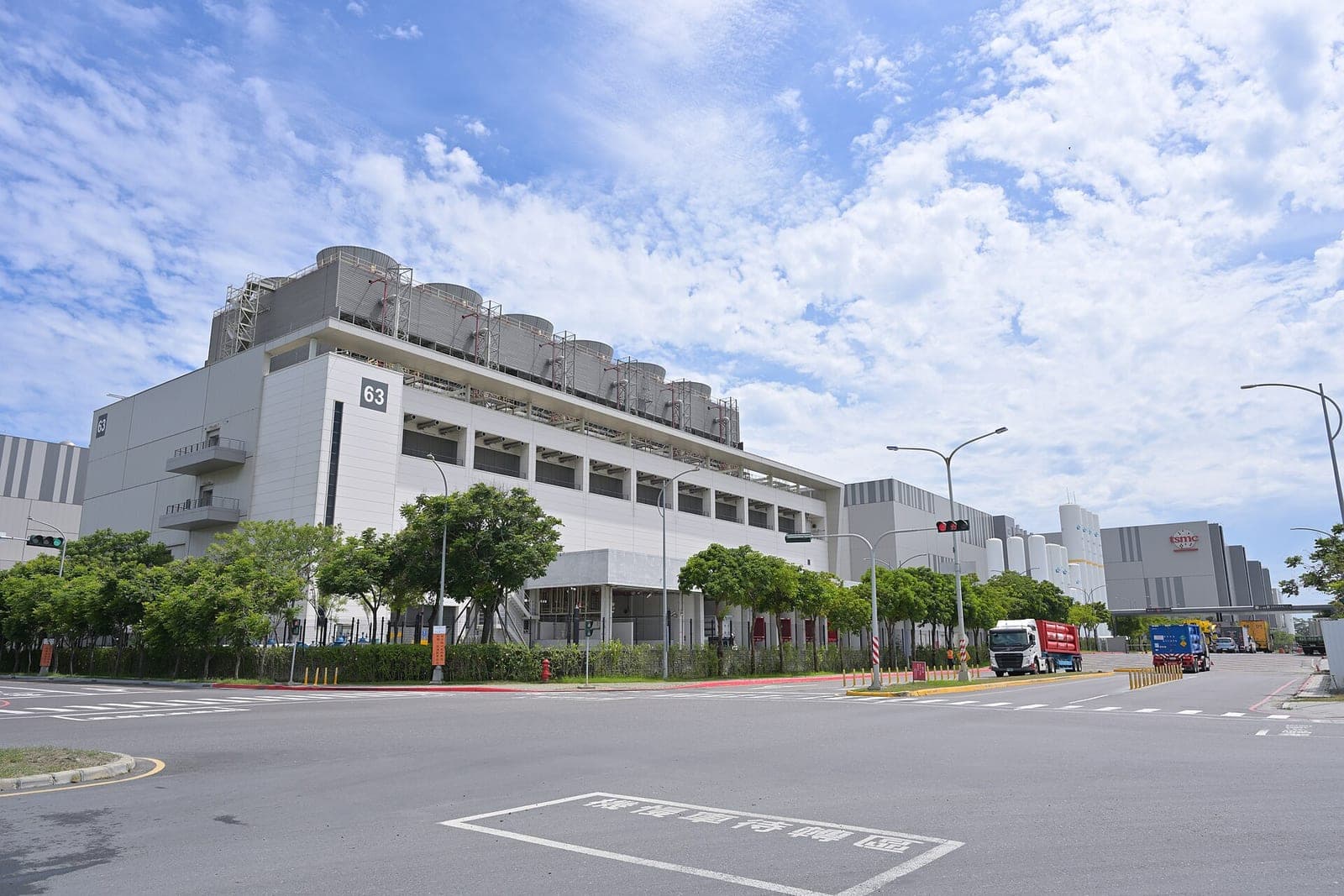
Tide
Ripple
Sci-fi
2/10
Reality
Shipping
A chip factory whose profit margin is bigger than half its sales.How we rate
TSMC reported third-quarter net income of NT$763.06 billion, up 68.7% from a year earlier, on revenue of US$46.72 billion.
Chips for AI and other high-performance computing brought in 68% of revenue. It was the company's sixth straight quarter of record profit, and both revenue and earnings beat analyst estimates. TSMC expects fourth-quarter revenue of up to US$54.3 billion and is still spending up to US$64 billion this year on new capacity.
What to know
- TSMC reported third-quarter revenue of NT$1,494.24 billion (US$46.72 billion) and net income of NT$763.06 billion, up 50.9% and 68.7% from a year earlier.
- Chips made on 7 nanometers or smaller brought in 79% of wafer revenue, and the newest 2-nanometer chips already made up 8%.
- TSMC expects fourth-quarter revenue of US$52.3 billion to US$54.3 billion and kept its 2026 spending plan at US$60 billion to US$64 billion.
- CEO C.C. Wei said AI demand is "extremely robust" and that the company did not see "any sign of slowdown."
TSMC reported on Thursday that it earned NT$763.06 billion in the third quarter, its sixth record profit in a row. That's roughly US$23.9 billion in three months.
The bigger question is the one everyone in tech keeps asking: when does the AI chip rush cool off? TSMC's answer, for now, is "not yet."
First, what does TSMC actually do?
TSMC, or Taiwan Semiconductor Manufacturing Company, is the world's largest contract chipmaker. It doesn't sell chips under its own name. Other companies design them, and TSMC builds them.
Think of it like a print shop for the world's most complicated books. Nvidia, Apple and others write the pages. TSMC prints them, billions of times, with no typos allowed.
- Founded: 1987, as the first company built only to make chips for others.
- Key customers: Nvidia and Apple, investingLive notes.
- Market value: around US$2 trillion, which makes it Asia's most valuable company, according to investingLive.
So when TSMC has a great quarter, it tells you how much the companies behind AI, phones and computers are ordering right now.
What were the numbers?
Here's the quarter next to the same quarter a year earlier. The 2026 figures come from TSMC's release, and the 2025 comparisons come from the company's statement as carried by ANI.
| Q3 2025 | Q3 2026 | |
|---|---|---|
| Revenue | NT$989.92 billion | NT$1,494.24 billion |
| Net income | NT$452.30 billion | NT$763.06 billion |
| Earnings per share | NT$17.44 | NT$29.43 |
| Operating income | NT$500.69 billion | NT$876.45 billion |
By the numbers: Revenue grew 50.9% from a year earlier and 17.6% from the second quarter. Net income grew 68.7% from a year earlier and 8.0% from the second quarter.
The margins are the part that makes accountants sit up straight:
- Gross margin: 66.4%
- Operating margin: 58.7%
- Net profit margin: 51.1%
In plain words, TSMC kept more than half of every dollar it brought in as profit.
Why are there two growth numbers?
TSMC reports in New Taiwan dollars. In that currency, revenue rose 50.9% from a year earlier.
In US dollars, revenue was US$46.72 billion, up 41.2% from a year earlier and 16.2% from the second quarter, Benzinga and Crypto Briefing report. The gap comes from the exchange rate between the two currencies moving over the year. Same chips, different ruler.
Did it beat expectations?
Yes, on both revenue and profit.
- Revenue: Benzinga reports analysts expected US$45.62 billion. TSMC delivered US$46.72 billion.
- Earnings per ADR unit: analysts expected US$4.45, Benzinga says. TSMC reported US$4.60.
- Net income: investingLive, citing Reuters and an LSEG SmartEstimate drawn from 16 analysts, had forecast NT$746.3 billion. TSMC reported NT$763.06 billion.
The beat wasn't a total surprise. TSMC had already reported its monthly sales, which showed a record of roughly NT$1.49 trillion for the quarter, so investors were watching the forecast and spending plans more than the profit itself. Benzinga reported that TSMC's US-listed shares were 1.73% lower in after-hours trading, after rising about 41.5% this year.
Where is the money coming from?
Mostly from powerful chips for AI and data centers. TSMC groups them under high-performance computing, or HPC.
According to the earnings call, as summarized by Investing.com, the platforms split like this:
| Platform | Share of revenue |
|---|---|
| High-performance computing | 68% |
| Smartphones | 21% |
| Automotive | 4% |
| Internet of things | 4% |
| Digital consumer electronics | 1% |
The newest technology is doing the heavy lifting too. Chips made on 7 nanometers or smaller brought in 79% of wafer revenue, TSMC says.
- 3-nanometer: 33%
- 5-nanometer: 28%
- 7-nanometer: 10%
- 2-nanometer: 8%
A nanometer here is a name for a generation of chipmaking, not a ruler measurement you could check with a microscope. Smaller numbers mean newer processes that fit more transistors into the same space, which usually means faster chips that use less power.
In real life When you ask an AI chatbot a question, the answer is computed on a server chip in a data center. Many of the most powerful of those chips are designed by companies like Nvidia and built in TSMC's factories in Taiwan. That's why AI spending shows up so directly in TSMC's results.
Why did margins slip a little?
The gross margin of 66.4% was 1.3 percentage points lower than in the second quarter, Investing.com reports from the call. The main reason is the 2-nanometer ramp.
New production lines are expensive at the start. The machines are new, the yields are still improving, and the costs are spread over fewer chips. As volume grows, that usually gets better.
The catch: TSMC's factories outside Taiwan cost more to run. Investing.com's call summary says they lower the gross margin by about 2 percentage points today, and TSMC expects that effect to widen to 3 to 4 points over the next few years.
What did TSMC's leaders say?
CFO Wendell Huang said in the release that the quarter "was supported by strong demand for our leading-edge process technologies."
On the call, CEO C.C. Wei was blunter, according to Investing.com's summary:
"The demand is extremely robust. We did not see any sign of slowdown."
Wei also said AI-related demand growth "probably will be higher" than the company's earlier assumption, and that the gap between supply and demand remains "quite big." Asked about profits, he said there is "no ceiling" for TSMC's profitability, but a "dramatic increase will not happen overnight."
Huang put the spending question simply: "If we do our job right, increase in revenue will outpace increase in CapEx."
What's next?
TSMC's forecast for the last three months of 2026 is bigger again.
- Q4 revenue: US$52.3 billion to US$54.3 billion, the company says.
- Q4 gross margin: 65% to 67%.
- Q4 operating margin: 56.5% to 58.5%.
- Full year 2026: revenue growth of about 44% in US dollars, Investing.com reports from the call.
- Capital spending: US$60 billion to US$64 billion for 2026, unchanged from July, when TSMC raised it from a previous range topping out at US$52 billion to US$56 billion, investingLive reports.
What's next: Investing.com's call summary says TSMC expects its 2-nanometer capacity to more than double in 2027, and its second Arizona factory to reach volume production in the third quarter of 2027. investingLive reports that TSMC is investing US$265 billion in Arizona and is evaluating an investment in Texas.
Prices may also move. Benzinga cites a report from last month that TSMC plans to raise foundry prices by 3% to 6% from January 2027, with larger increases for advanced processes. TSMC did not announce price changes in its results.
The same story is playing out across the chip supply chain. A day earlier, the Dutch chip machine maker ASML said its supply for 2027 and 2028 won't fully meet demand.
What it means for you
- AI keeps getting built: the companies behind chatbots and AI tools are still ordering chips at record pace, so expect faster models and more AI features in apps.
- New phones and laptops ride the same wave: smartphones still make up 21% of TSMC's revenue, and the newest 2-nanometer process is ramping up for the chips inside future devices.
- Prices are worth watching: a reported foundry price increase from 2027 could, in time, reach some devices, but nothing has been confirmed by TSMC.
- No slowdown yet: if you've been waiting for the AI chip boom to cool, TSMC's own forecast says not this year.
The bottom line
TSMC turned the AI building spree into its sixth record quarter in a row, with profits up 68.7% and a forecast that goes higher still. Its CEO sees no slowdown, and the company is still spending up to US$64 billion this year to build more. For now, the question isn't whether people want these chips, it's how fast TSMC can make them.
Key facts
- Q3 revenue
- NT$1,494.24 billion (US$46.72 billion)
- Q3 net income
- NT$763.06 billion, up 68.7%
- Gross margin
- 66.4%
- Q4 2026 revenue forecast
- US$52.3 billion to US$54.3 billion
- 2026 capital spending
- US$60 billion to US$64 billion
Got questions?
Quick answers, plain wordsWhat is TSMC?
TSMC, or Taiwan Semiconductor Manufacturing Company, is the world's largest contract chipmaker. Founded in 1987, it builds chips that other companies design, including Nvidia and Apple, which are among its key customers.
How much money did TSMC make in the third quarter of 2026?
TSMC reported revenue of NT$1,494.24 billion, or US$46.72 billion, and net income of NT$763.06 billion for the quarter that ended on September 30, 2026. Diluted earnings per share were NT$29.43, or US$4.60 per ADR unit.
Did TSMC beat expectations?
Yes. Benzinga reports that revenue beat the analyst estimate of US$45.62 billion and that earnings of US$4.60 per ADR unit beat the expected US$4.45. An LSEG SmartEstimate reported by Reuters had forecast net income of NT$746.3 billion, below the NT$763.06 billion TSMC reported.
Why does TSMC report two different growth numbers?
TSMC reports in New Taiwan dollars, where revenue rose 50.9% from a year earlier. Measured in US dollars, the rise was 41.2%, because the exchange rate between the two currencies moved over the year.
How much of TSMC's business comes from AI?
TSMC groups AI chips with other powerful processors under high-performance computing. That platform brought in 68% of third-quarter revenue, according to the company's earnings call, as reported by Investing.com.
What are 2-nanometer chips?
They are chips made with TSMC's newest production process, which packs transistors more tightly than older ones. In the third quarter, 2-nanometer chips made up 8% of TSMC's wafer revenue, and the company says that ramp continues in the fourth quarter.
What does TSMC expect for the fourth quarter?
TSMC expects fourth-quarter revenue of US$52.3 billion to US$54.3 billion, a gross margin of 65% to 67% and an operating margin of 56.5% to 58.5%. It assumes an exchange rate of 31.8 New Taiwan dollars to one US dollar.
How much is TSMC spending on new factories?
TSMC kept its 2026 capital budget at US$60 billion to US$64 billion, the range it raised in July. investingLive reports that TSMC is investing US$265 billion in Arizona.
Why did TSMC's gross margin go down from the second quarter?
Investing.com's call summary says the early ramp of 2-nanometer production cut the gross margin by 1.3 percentage points from the second quarter. Overseas factories also lower the margin by about 2 points today, and TSMC expects that to widen to 3 to 4 points over the next few years.
Will this make phones or computers more expensive?
TSMC did not announce price changes in its results. Benzinga cites a report from last month that TSMC plans to raise foundry prices by 3% to 6% from January 2027, with larger increases for advanced processes. Whether any of that reaches store prices depends on chip designers and device makers.
SourcesTSMC
Topics and tagsAI chips, tsmc, semiconductors, earnings
Go deeper
Related stories
ASML posts a record €11.7 billion quarter and says it can't build machines fast enough
The only maker of the machines behind the most advanced chips says its planned supply for 2027 and 2028 won't fully meet demand, and some customers already want to order for 2030.
Qualcomm wins its breach case against Arm, and the jury awards $2
A Delaware jury found Arm broke its architecture license with Qualcomm and interfered with a Meta deal, then awarded $1 per claim. The bigger fight, over five years of royalties, is now up to a judge.
Rapidus signs up 17 design firms to find customers for its 2nm chips
Japan's state-backed chipmaker launched Rapidus CORE, a partner network including Synopsys, Cadence and Infosys, to help customers design chips it can build.
More in brief
- Anthropic tells investors its Q3 revenue hit $16.8 billion ahead of its IPOOct 15
- Mexico gives Meta, TikTok and X one month to shield kids from harmful contentOct 15
- OpenAI engineer charged over hidden recording device in executive roomOct 15
- Eight US states sue OpenAI over ChatGPT's safety for kidsOct 14
- Xbox Nano is a $50 controller small enough for your pocketOct 14
- Linux kernel developers move to drop the rule that made coders disclose AI helpOct 14