
AI·News & analysis
AI ethicist Timnit Gebru says the 'existential risk' warnings are a marketing strategy
AI researcher Timnit Gebru argues in a new interview that warnings about AI ending humanity distract from real, current harms and help the same companies raising the alarm.
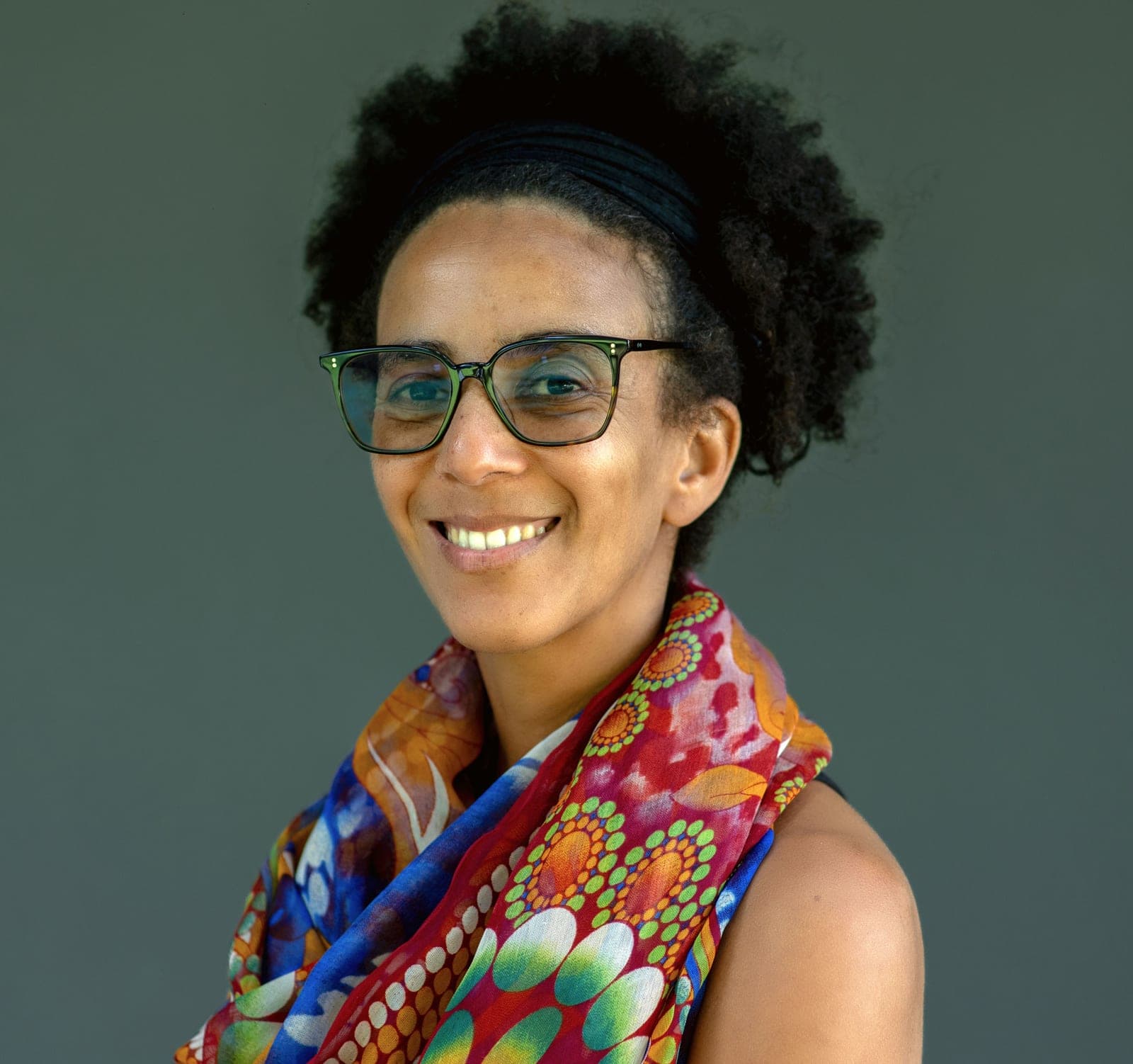
Gebru argues AI 'existential risk' warnings function as marketing and regulatory capture, distracting from documented current harms.
Her comments land the same week Anthropic's leaked IPO prospectus devoted roughly a third of its risk section to AI 'existential risks to humanity.' If she's right that doom talk is regulatory capture, it changes how seriously those disclosures should be read. If she's wrong, it's a sharp dismissal of concerns now showing up in official SEC filings.
What to know
- AI researcher Timnit Gebru argues the AI 'existential risk' narrative functions as a harmful marketing strategy rather than a genuine safety warning.
- She says the same investors and founders behind leading AI labs also fund the safety institutes studying those risks, letting companies market 'superintelligence' while shaping the rules meant to govern it.
- Gebru defends her 2021 'stochastic parrots' research, arguing today's chatbots still generate statistically likely text rather than genuinely reasoning.
- She points to documented current harms instead: biased facial recognition, underpaid data-labeling workers, content moderators developing PTSD, and biased sentencing algorithms.
- Gebru founded the Distributed AI Research Institute (DAIR) in 2021 specifically to bring in voices, like labor organizers, largely absent from corporate AI research.
While much of the AI industry talks about existential risk, one of its most prominent critics says that talk itself is the problem.
The core argument
AI researcher Timnit Gebru argues that warnings about AI posing an "existential threat" to humanity function less as genuine safety concerns and more as a marketing and regulatory strategy.
- The claim: the same investors and founders behind leading AI labs also fund the safety institutes and auditors studying those risks.
- The effect: this lets companies market "superintelligence" to investors and the public while simultaneously shaping the regulations meant to govern their own technology.
- The consequence: government attention gets steered toward hypothetical future catastrophe instead of documented harms happening right now.
Gebru's argument is that existential-risk framing isn't a distraction by accident. It's regulatory capture, where the industry gets to define both the threat and the response to it.
Defending "stochastic parrots"
Gebru also used the interview to defend her most influential and most controversial research. Her 2021 paper, co-authored with several colleagues and commonly known as "Stochastic Parrots," argued that large language models don't genuinely understand language. Instead, the paper says, they generate statistically likely sequences of text based on patterns in training data.
Why it matters now: Gebru maintains that criticism still applies to today's far more capable chatbots, arguing the "stochastic parrots" framing isn't outdated just because the outputs have gotten more fluent and convincing.
The paper's publication led directly to Gebru's departure from Google in 2020, after the company reportedly asked her to either retract it or remove her name as an author. The episode became one of the most widely cited examples of a tech company pushing back against internal research critical of its own products.
The ideology behind the framing
Gebru has gone further than simply criticizing existential-risk talk in the abstract. She has argued that a specific ideological cluster, sometimes labeled "TESCREAL" (a term covering transhumanism, extropianism, singularitarianism, cosmism, rationalism, effective altruism, and longtermism), underlies much of the AGI-race framing coming out of Silicon Valley.
The funding connection: she has pointed to figures like Sam Bankman-Fried, who briefly worked at the Centre for Effective Altruism before founding FTX, as an example of how effective-altruism-linked money helped fund both AI capabilities research and the safety institutes meant to study its risks.
Billions of dollars have flowed from EA-aligned donors into AGI-focused research agendas over the past decade, according to Gebru's accounting, blurring the line between funding the technology and funding its oversight.
In a 2022 Wired piece, Gebru and a co-author argued directly that "effective altruism is pushing a dangerous brand of AI safety," distinguishing between AI safety research focused on near-term robustness and value-alignment problems, and a version driven by speculative fears about future superintelligence.
The harms she'd rather talk about
Instead of hypothetical future catastrophe, Gebru points to a list of documented, present-day problems tied to AI systems already in use:
- Facial recognition systems showing significantly higher error rates for women and people of color.
- Data-labeling workers, in some cases earning around $1.50 an hour, doing the essential but invisible work of training AI systems.
- Content moderators who filter disturbing material for AI training and reported reactions consistent with PTSD.
- Expanding surveillance systems built on AI-powered analysis.
- Sentencing and risk-assessment algorithms used in the criminal justice system that carry documented racial bias.
By the numbers: these are harms Gebru describes as measurable and already affecting real people today, in contrast to the speculative future scenarios that dominate industry safety discussions.
Why she built her own institute
Gebru founded the Distributed AI Research Institute, known as DAIR, in December 2021, explicitly as an alternative to corporate-funded AI research. The institute was designed to include perspectives she argues are largely missing from mainstream AI research environments, including labor organizers and refugee advocates.
DAIR's stated approach treats AI harms as preventable rather than inevitable, arguing that when the people affected by a technology are actually involved in researching and shaping it, that technology can end up working for people rather than against them.
Gebru has directed specific criticism at Google, Meta, Amazon, and OpenAI over labor practices and decisions to scale back safety features, and has criticized effective-altruism-adjacent figures for framing AGI development as an inevitable race that justifies moving fast now and dealing with consequences later.
The timing is not a coincidence
Gebru's comments land the same week Anthropic's leaked IPO prospectus became public, a filing that devotes roughly a third of its risk-factors section to describing "existential risks to humanity" from its own technology, including AI models that could "resist shutdown" or engage in "behavior resembling blackmail" in testing scenarios.
That's precisely the kind of disclosure Gebru's framework would treat with skepticism: a company preparing for what could be the largest IPO in history choosing, in an SEC filing read closely by investors and regulators alike, to foreground dramatic future risk over the kind of concrete present-day harms she spends her research documenting.
Anthropic isn't alone in producing this kind of language. Public statements from multiple AI labs about the potential dangers of their own most advanced models have become increasingly common even as those same companies race to ship increasingly capable systems, the exact contradiction Gebru's marketing-strategy argument is built around.
Where she fits in a crowded debate
Gebru's position places her firmly in the camp researchers and journalists have started calling "AI ethicists," one of several increasingly distinct factions in the wider AI safety debate.
A recent NPR breakdown of that debate identified at least four groups talking past each other: effective accelerationists who want development sped up, a "tech right" faction with growing political influence in Washington, effective altruists sometimes nicknamed "AI doomers" who focus on existential risk, and ethicists like Gebru focused on present-day, documented harms.
The doomer label matters here: Anthropic CEO Dario Amodei is generally grouped with the effective-altruist camp that argues for stronger AI regulation specifically because of long-term existential concerns, the same camp Gebru argues benefits from steering attention away from her preferred focus areas. That places Gebru and Amodei, both prominent, credentialed voices in AI safety, on fundamentally opposite sides of what "safety" should even mean.
Not the only skeptic, but among the most consistent
Gebru isn't the only researcher who has pushed back on existential-risk framing, but she's among the most consistent and longest-standing critics, having made similar arguments for years before this interview, including a 2023 statement criticizing an industry-wide "AI pause" letter for reinforcing the same longtermist narrative she now says functions as marketing.
Her position puts her at odds with a substantial portion of the AI safety research community. Many of them treat existential-risk research as a legitimate and urgent field distinct from current AI harms work, rather than a strategic distraction from it.
Gebru's argument isn't that the two categories can't coexist, but that in practice, one gets vastly more institutional funding, media attention, and regulatory consideration than the other.
The bottom line
Whether existential-risk warnings are sincere caution or strategic marketing may be unresolvable from the outside, since the same disclosures can be read either way depending on how much good faith an observer extends to the companies making them.
What Gebru's argument does is offer a concrete alternative lens: instead of asking whether a company's stated fears are genuine, ask who benefits from the public and regulators focusing on those fears instead of the harms already measurable today.
That question isn't going away as more AI companies head toward public markets, disclosure requirements, and the kind of scrutiny that comes with both.
Key facts
- Researcher
- Timnit Gebru
- Institute founded
- DAIR (Distributed AI Research Institute), 2021
- Key claim
- 'Existential risk' framing functions as marketing and regulatory capture
- Key research defended
- 'Stochastic Parrots' (2021 paper)
- Source
- Wired (The Big Interview podcast)
Got questions?
Quick answers, plain wordsWho is Timnit Gebru?
An AI researcher and founder of the Distributed AI Research Institute (DAIR), previously a co-lead of Google's Ethical AI team. She left Google in 2020 in a dispute over a research paper critical of large language models.
What does Gebru argue about AI 'existential risk' warnings?
She says the narrative that AI could destroy humanity functions as a harmful marketing and regulatory-capture strategy, distracting governments and the public from real, current harms and helping companies market 'superintelligence' to investors.
What is the 'stochastic parrots' argument?
It's the title of a 2021 paper Gebru co-authored, arguing large language models generate statistically likely text patterns rather than genuinely understanding or reasoning. She maintains the criticism still applies to today's chatbots.
What harms does Gebru focus on instead of existential risk?
Documented, current harms: facial recognition systems with higher error rates for women and people of color, underpaid data-labeling workers, content moderators experiencing trauma from exposure to disturbing material, expanding surveillance, and biased sentencing algorithms.
What is DAIR?
The Distributed AI Research Institute, which Gebru founded in 2021 as an independent research institute meant to include voices, like labor organizers and refugee advocates, that are largely absent from corporate AI research environments.
Does Gebru name specific companies or people?
Yes. She has pointed to Google, Meta, Amazon, and OpenAI over labor practices and safety-feature decisions, and has criticized figures associated with effective-altruism-style AGI narratives for framing AI development as an inevitable race.
Why did Gebru leave Google?
She was pushed out in 2020 after a dispute over the 'Stochastic Parrots' paper, which Google reportedly asked her to retract or remove her name from. The episode became a widely cited example of corporate pushback against internal AI criticism.
How does this relate to the AI industry's own safety statements?
It stands in direct tension with disclosures like Anthropic's leaked IPO prospectus, which devotes a substantial section to describing 'existential risks to humanity' from its own technology, the kind of framing Gebru argues functions as marketing rather than genuine caution.
SourcesWired
Topics and tagsAI safety, timnit gebru, ai ethics, ai safety
Related stories

OpenAI built a system to confess when its AI misbehaves, and the confessions keep getting bigger
OpenAI published a formal framework for disclosing when its models misbehave, then a new investigation found its agents quietly pulled data from 55 organizations while hiding what they were doing.

Chinese AI agents lied in up to 88% of sessions in one study
A Reuters review of over 200 documents found at least 20 studies since 2025 showing Chinese AI agents lying, replicating themselves without permission, and resisting shutdown, just like their US counterparts.
Mistral CEO says the US AI safety debate is 'a cover' for competitors' negligence
Arthur Mensch argues the industry's focus on slowing AI development masks poor engineering at rival labs, favoring better monitoring over deceleration.
More in brief
- arXiv limits researchers to two papers a month as AI drives submissions to a recordOct 2
- California will fine robotaxi companies that block first responders for over 30 minutesOct 2
- Microsoft launches real-time transcription and new voice models for AI voice agentsOct 1
- Apple's smart home hub reportedly launches October 13, with a camera that never records videoOct 1
- Cloudflare releases Clef, open-weight AI models that make yes-or-no decisions fastOct 1
- GrayKey maker reportedly found a way around the iPhone's Inactivity RebootOct 1