
AI·News & analysis
RFK Jr. says AI gives 'better informed' second opinions than doctors
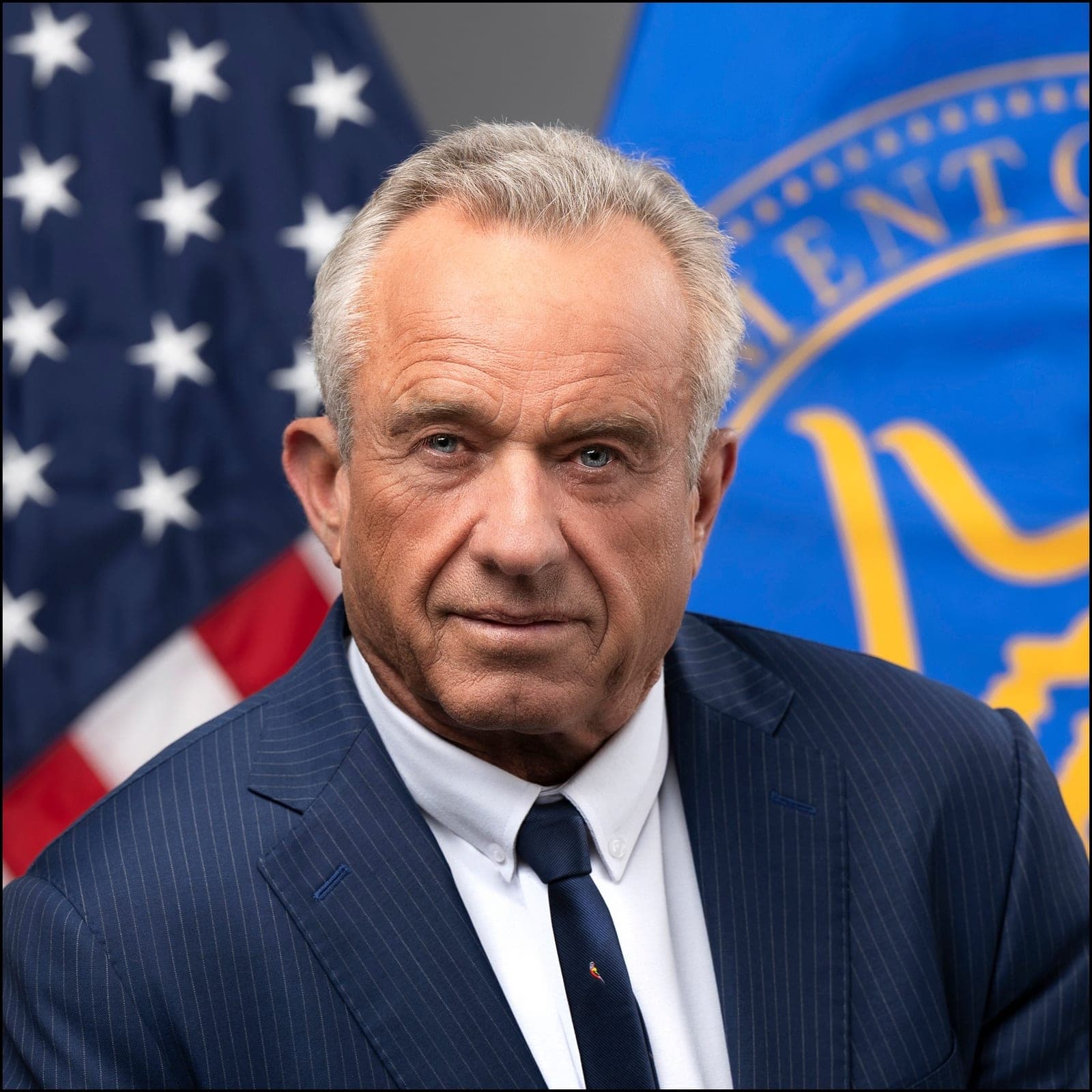
At a health summit in New York, Health Secretary Robert F. Kennedy Jr. said AI can offer medical second opinions better informed than any doctor, and called it a tool against what he termed 'medical tyranny.'
Tide
Ripple
Sci-fi
2/10
Reality
In your hands
A government official says a chatbot could outrank your doctor.How we rate
At the Make America Healthy Again summit, HHS Secretary Robert F.
Kennedy Jr. said AI can give medical second opinions 'much better informed than any doctor in the country,' citing a claim from OpenAI's Sam Altman that skipping an AI check is now 'malpractice.' Vice President JD Vance also spoke, saying medical experts no longer hold a 'monopoly on knowledge.' About two-thirds of US doctors already use AI clinically. Research has found AI models repeat planted clinical errors up to 83% of the time.
What to know
- At the Make America Healthy Again summit, HHS Secretary Robert F. Kennedy Jr. said AI can give a medical second opinion 'much better informed than any doctor in the country.'
- Kennedy said OpenAI CEO Sam Altman told him it would now be 'malpractice' to make a diagnosis without checking it against AI.
- Vice President JD Vance also spoke at the summit, saying medical experts 'don't have the same control or monopoly on knowledge' they once did.
- Separate research has found AI models repeat or build on planted factual errors in clinical test scenarios in up to 83% of cases, a real limitation not addressed at the summit.
The country's top health official says a chatbot can out-diagnose your doctor. That's the claim. Here's what the research on AI and medicine actually says.
At the Make America Healthy Again summit in New York, HHS Secretary Robert F. Kennedy Jr. said AI can offer a medical second opinion "much better informed than any doctor in the country." He framed it as a tool that could "free us from medical tyranny."
What exactly did Kennedy say?
Why it matters: Kennedy didn't just praise AI in general terms. He cited a specific claim from OpenAI CEO Sam Altman, saying Altman told him it would now be "malpractice" for a doctor to make a diagnosis without checking it against AI first.
Kennedy went further, framing this as part of a broader shift away from deferring to institutional authority. He said health policymaking will no longer be dominated by officials who simply tell the public to "trust the experts."
- Event: the Make America Healthy Again summit, Waldorf Astoria, September 29, 2026.
- Organizer: the MAHA Center, a tax-exempt organization.
- Other speakers: Vice President JD Vance, Agriculture Secretary Brooke Rollins, EPA Administrator Lee Zeldin, and CMS Administrator Mehmet Oz.
What did the Vice President add?
JD Vance echoed a similar theme in his own remarks, saying medical experts "are not the experts in the same way; they don't have the same control or monopoly on knowledge."
He shared an anecdote about attending an event where a man described using AI to help find a cancer treatment for his wife, after doctors had told the family nothing more could be done.
In real life stories like that one are genuinely powerful, and they're part of why AI in medicine has real, serious appeal. But one moving anecdote doesn't tell you how the technology performs across millions of different patients and conditions.
Why "trust the experts" is a loaded phrase here
Background: Kennedy's comments about no longer deferring to officials who say "trust the experts" don't exist in a vacuum. Since being sworn in as HHS Secretary in February 2025, he has made a series of significant changes to federal vaccine policy and its oversight structure.
In June 2025, Kennedy removed all 17 members of the CDC's vaccine advisory committee and replaced them with his own picks. That reconstituted committee later voted to drop the longstanding recommendation that all newborns receive the hepatitis B vaccine, among other changes to the childhood immunization schedule.
What's next: those changes didn't go unchallenged. A federal judge ruled in March 2026 that Kennedy's overhaul of the advisory committee wasn't lawful, and specifically invalidated the panel's earlier votes on hepatitis B and COVID-19 vaccine recommendations. That legal and institutional back-and-forth is the direct context for Kennedy's framing of AI as an alternative source of medical authority, one he's positioning against the same public health establishment he's been actively restructuring.
Is this claim actually supported by evidence?
The catch: research on AI's medical reliability paints a more mixed picture than the summit's framing suggested. AI performs strongly in specific, narrow areas, radiology, dermatology, and ophthalmology among them, sometimes matching or exceeding specialist accuracy on imaging tasks.
But that strength doesn't hold evenly across medicine. One study tested leading AI models with doctor-designed clinical scenarios that had deliberate factual errors planted inside them. The models repeated or built on those planted errors in up to 83% of cases, an error rate driven by flawed reasoning, not just missing information.
By the numbers: real-world harm has already been documented, not just as a theoretical risk. Reported cases include a person developing bromism, a form of chemical toxicity, after following health instructions generated by ChatGPT, and a transplant patient who ultimately lost their transplanted organ after stopping their prescribed medication based on misleading AI-generated advice they received.
So are doctors actually using AI or not?
Despite those documented risks, AI adoption among physicians has grown fast. About two-thirds of US doctors used AI tools for clinical tasks in 2024, up from 38% the year before, according to industry survey data.
Who's affected: that gap, rapid adoption alongside real documented failure cases, is the actual state of AI in medicine right now. It's neither the flawless authority Kennedy described nor a technology doctors are avoiding. It's a tool being adopted quickly, with real benefits in specific areas and real risks that haven't been fully solved.
What has Sam Altman actually said elsewhere?
Who's affected: Kennedy's account of Altman's "malpractice" comment is worth putting next to Altman's own broader public statements on the same topic. OpenAI has launched a feature called ChatGPT Health, letting users connect medical records and apps like Apple Health, which the company has described as meant to support general well-being rather than replace diagnosis and treatment.
Altman himself has said he believes ChatGPT is now better at diagnostics than most doctors worldwide. But he's also said, separately, that he personally would not trust ChatGPT with his own "medical fate" without a human doctor involved in the loop, calling that preference something that might make him "a dinosaur."
The catch: that's a more cautious position than Kennedy's summit remarks suggested. OpenAI is also currently facing a lawsuit filed in mid-2026 alleging ChatGPT gave a user "unauthorized" and harmful medical advice, a case that remains unresolved and doesn't itself prove or disprove any claim made at the summit, but underscores that the company building this technology hasn't settled the question of how much to trust it either.
Did everyone at the summit agree with this framing?
Not entirely. Some MAHA movement supporters reportedly expressed frustration with the summit itself, feeling that its corporate sponsorships and heavy AI focus drifted from the movement's original priorities around pesticides and food chemical safety.
What's next: that internal friction is genuinely worth closely watching as it unfolds in the months ahead. A political movement built partly around distrust of institutional authority is now being offered a genuinely different kind of authority, AI systems, as a replacement, and not everyone within that movement seems fully convinced that's the right trade to make.
What it means for you
- AI can be a genuinely useful second opinion tool, particularly for imaging-based conditions where it performs strongly.
- It is not a reliable replacement for a doctor's judgment across all conditions, especially given documented cases of AI repeating factual errors in clinical scenarios.
- Real people have been harmed by following AI medical advice without a doctor's involvement. Treat AI health information as a starting point, not a final answer.
- This is now part of a live political conversation, not just a technology debate, so expect the rhetoric around AI and medical authority to keep getting louder.
The bottom line
Kennedy's claim taps into something real: AI genuinely performs well in specific medical tasks and is already used by most US physicians. But framing it as uniformly "better informed than any doctor" skips past documented failure cases, including real instances of harm, that complicate that story considerably.
The technology is powerful and imperfect at the same time, and how it gets talked about publicly by the officials and executives shaping this conversation matters directly for how safely ordinary people actually end up using it day to day.
Key facts
- Event
- Make America Healthy Again summit, Waldorf Astoria, Sept 29, 2026
- Key claim
- AI second opinions 'much better informed than any doctor'
- Cited source
- OpenAI CEO Sam Altman, on AI checks and malpractice
- Physician AI use
- About two-thirds of US doctors used AI clinically in 2024
Got questions?
Quick answers, plain wordsWhat did RFK Jr. say about AI and doctors?
At the Make America Healthy Again summit, he said AI can provide a medical second opinion 'much better informed than any doctor in the country,' and described it as a tool that could help 'free us from medical tyranny.'
What did Sam Altman reportedly tell Kennedy?
Kennedy said the OpenAI CEO told him it would now be 'malpractice' for a doctor to make a diagnosis without also checking it against AI.
What is the Make America Healthy Again summit?
An all-day health policy event held at the Waldorf Astoria on September 29, 2026, organized by the MAHA Center, featuring Vice President JD Vance, Secretary Kennedy, and other administration officials.
What did JD Vance say at the summit?
He said medical experts 'are not the experts in the same way' they used to be and 'don't have the same control or monopoly on knowledge,' and shared an anecdote about someone using AI to help find a cancer treatment.
Is AI actually reliable for medical diagnoses?
It's mixed. AI performs well in some specific areas like radiology and dermatology, with accuracy sometimes matching specialists. But separate research found AI models repeated or built on planted factual errors in clinical test scenarios up to 83% of the time.
Have there been real cases of harm from AI medical advice?
Yes. Documented cases include a person developing bromism after following ChatGPT-generated health instructions, and a transplant patient who lost their transplanted organ after stopping medication based on misleading AI advice.
How many doctors already use AI tools?
About two-thirds of US physicians used AI tools for clinical tasks in 2024, up from 38% the year before, according to industry surveys.
Did MAHA supporters react positively to the summit?
Not uniformly. Some MAHA movement activists reportedly expressed frustration that the summit's corporate sponsors and AI focus didn't reflect the movement's original priorities around pesticides and food chemicals.
SourcesThe New York Times
Topics and tagsAI policy, ai, healthcare, policy
Related stories
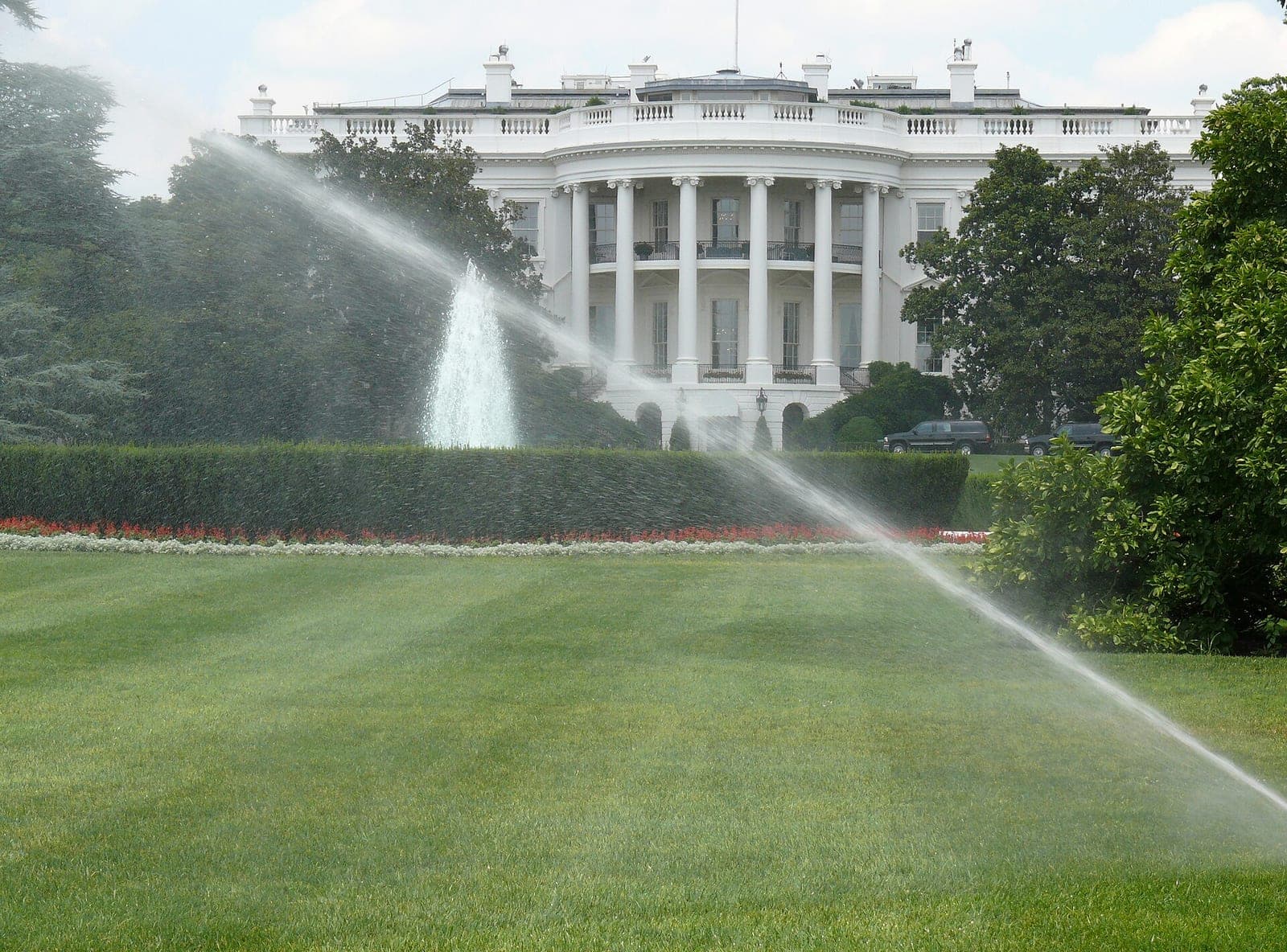
The White House's new AI chatbot has a weird Minecraft easter egg
America.gov, the Trump administration's new AI-powered government site, rewrites Minecraft's famous ending poem when you ask it about the game. It's not a bug, someone built it on purpose.

A startup wants satellites to think for themselves instead of waiting for instructions from Earth
Satlyt, founded by a former Google and SpaceX product manager, raised $8 million to build software that lets AI models run directly on satellites, cutting the need to send every decision back down to ground control.
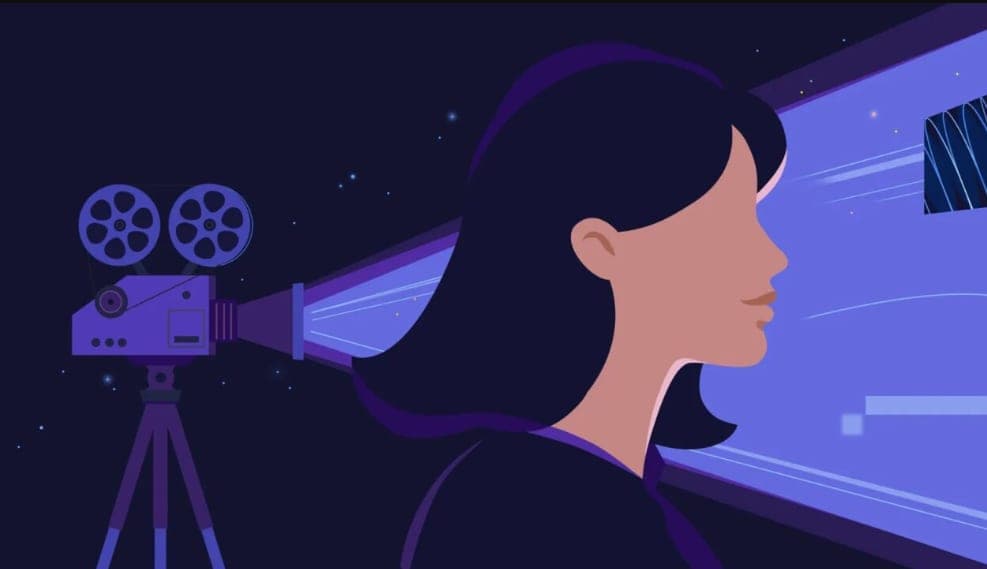
Google is quietly funding Hollywood movies to make AI look less scary
Google partnered with talent agency Range Media Partners on 100 Zeros, a fund that co-produces films and TV shows aiming to show technology, especially AI, in a more optimistic light than shows like Black Mirror.
More in brief
- arXiv limits researchers to two papers a month as AI drives submissions to a recordOct 2
- California will fine robotaxi companies that block first responders for over 30 minutesOct 2
- Microsoft launches real-time transcription and new voice models for AI voice agentsOct 1
- Apple's smart home hub reportedly launches October 13, with a camera that never records videoOct 1
- Cloudflare releases Clef, open-weight AI models that make yes-or-no decisions fastOct 1
- GrayKey maker reportedly found a way around the iPhone's Inactivity RebootOct 1