
AI·News & analysis
Meta's tax bill dropped 71% while it spent $72 billion on AI
Meta is telling the IRS its AI data centers are experimental, a classification that let its federal tax expense drop from $9.6 billion to $2.8 billion in a single year.

Tide
Ripple
Sci-fi
1/10
Reality
Shipping
A tax form decides whether a data center counts as an experiment.How we rate
Meta's federal tax expense fell from $9.6 billion in 2024 to $2.8 billion in 2025, a 71% drop, even as it spent about $72 billion building AI data centers.
The company is telling the IRS these facilities are experimental and might not work, a classification that allows immediate tax expensing under a 2025 law. Senator Elizabeth Warren and colleagues sent letters to Meta, Amazon, Alphabet and Microsoft on September 28, 2026, citing similar tax drops at all four companies and demanding details on their AI-related deductions by October 12.
What to know
- Meta's federal tax expense fell from $9.6 billion in 2024 to $2.8 billion in 2025, a 71% drop, even as it spent about $72 billion on capital expenditures.
- Meta is telling the IRS its AI data centers are experimental facilities that might not work, allowing immediate expensing rather than spreading costs over years.
- The tax strategy relies on the 2025 One Big Beautiful Bill Act, which reinstated immediate expensing for domestic research and experimental costs.
- Senator Elizabeth Warren and colleagues sent letters to Meta, Amazon, Alphabet and Microsoft on September 28, 2026, demanding details on their AI-related tax deductions by October 12.
Meta spent $72 billion building AI infrastructure last year. Its federal tax bill fell by billions at the same time. Here's the tax classification making both of those things true at once.
Meta is telling the IRS that its AI data centers are experimental facilities, a designation that let the company's federal tax expense drop from $9.6 billion in 2024 to $2.8 billion in 2025, a 71% decline in a single year.
How does calling a data center "experimental" cut a tax bill?
Why it matters: normally, a company builds an expensive facility and depreciates its cost gradually, spreading the tax deduction out over the years that facility is expected to be useful. Research and experimental expenditures work differently. They can often be deducted immediately, in full, in the year the money is spent.
By classifying its AI data centers as experimental, essentially telling the IRS these are facilities that might not actually work as intended, Meta can front-load billions in deductions rather than spreading them across many future tax years.
- 2024 federal tax expense: $9.6 billion.
- 2025 federal tax expense: $2.8 billion.
- 2025 capital spending: approximately $72 billion, mostly data centers and AI infrastructure.
- Change: a $6.8 billion drop in taxes owed, even as spending surged.
What law made this possible?
Background: the specific mechanism is the One Big Beautiful Bill Act, signed into law in 2025. It reinstated immediate expensing for domestic research and experimental costs, alongside permanent 100% bonus depreciation, which lets companies deduct the full cost of qualifying equipment in the year it's put into service rather than over time.
In real life it's a bit like being allowed to deduct the entire cost of a new car the year you buy it, instead of spreading that deduction out over the years you actually drive it. The total deduction might end up similar either way, but getting it all at once is worth a lot more right now.
There's also a state-level tax break stacked on top
Background: the federal "experimental" classification isn't Meta's only tax advantage tied to AI infrastructure. In Louisiana, the company's Hyperion data center project, a planned 5-gigawatt supercluster that has grown from an initial $10 billion estimate to more than $50 billion, received its own major state incentive.
Louisiana's governor signed a 20-year sales tax exemption covering state and local sales taxes on data center equipment, including the GPUs used to train and run AI models, for qualifying facilities built before 2029. Meta still pays a 1% local sales tax on its purchases there, but the broader exemption represents a significant additional layer of tax relief stacked directly on top of the federal experimental-expensing strategy.
Why it matters: that combination, aggressive federal deductions plus generous state exemptions, means the effective tax burden on this kind of AI infrastructure spending can end up dramatically lower than the sticker-price investment numbers alone suggest. Local business contracts and infrastructure spending tied to the project offer some direct community benefit in exchange, but they don't offset the scale of the tax relief involved.
Is Meta the only company doing this?
The catch: no, and that's central to why this has become a bigger story than one company's tax filing. Senator Elizabeth Warren, along with Senators Tina Smith and Jeff Merkley, sent formal letters on September 28, 2026, to the CEOs of Meta, Amazon, Alphabet, and Microsoft, all citing similar patterns.
By the numbers: the letters note Microsoft's federal income tax expense shrank by more than $11 billion between fiscal 2025 and fiscal 2026. Amazon's federal tax bill was nearly $8 billion lower in fiscal 2025 than the prior year. Alphabet's combined federal and state tax expense dropped more than $7 billion over the same stretch.
This provision has flip-flopped before
Background: immediate expensing for research costs isn't a brand-new idea. Section 174 of the tax code, originally enacted in 1954, has allowed companies to deduct research expenditures in the year they occurred for most of the past 70 years.
That changed under the 2017 Tax Cuts and Jobs Act, which required research and experimental expenses paid after 2021 to instead be capitalized and amortized, spread out over five years for domestic research and 15 years for research conducted abroad. That shift quietly raised effective tax bills for research-heavy companies for several years without most of the public noticing.
Why it matters: the One Big Beautiful Bill Act, signed in July 2025, reversed that requirement entirely, creating a new provision, Section 174A, that permanently restored immediate deduction for domestic research costs. It even let companies retroactively accelerate unamortized research costs from 2022 through 2024 into their first tax year after 2024.
That retroactive piece is part of why some companies' 2025 tax bills dropped so sharply all at once. It wasn't just current-year AI spending, but years of previously deferred deductions landing at the same time.
What exactly are the senators asking for?
Who's affected: the letters request that each company explain precisely which deductions it claimed connected to AI and data center investments, and disclose any lobbying it conducted before the tax law passed. All four companies were given until October 12, 2026, to respond.
The senators specifically flagged permanent 100% bonus depreciation and retroactive research-and-development expensing as the two provisions doing the heavy lifting here. Their letters also noted that overall corporate tax receipts have fallen 25% even as corporate profits have kept climbing, framing this as a broader pattern rather than an isolated concern about any single company.
Has anyone responded yet?
What's next: no company has publicly responded to Warren's letter as of this reporting, and Meta hasn't issued a public statement addressing its specific tax classification either. That silence leaves the underlying legal question genuinely open: this appears to follow the letter of a law Congress itself passed in 2025, but whether that outcome matches what lawmakers actually intended is now exactly what's being scrutinized.
Who's affected: every one of these companies has publicly justified massive AI spending partly by pointing to future productivity gains and competitive necessity. Simultaneously reducing near-term tax obligations through provisions tied to that same spending adds a financial dimension to the AI buildout story that goes well beyond just the technology itself.
What it means for you
- This doesn't change any AI product you use directly. It's a corporate tax and policy story playing out behind the scenes of the AI boom.
- It's a useful window into how new tax law gets used in practice, sometimes in ways that weren't obviously anticipated when the legislation passed.
- Watch for the October 12 deadline. How, or whether, these companies respond to Warren's letters will be a real signal of how this story develops next.
- This is playing out across the whole industry, not just at one company. Four of the largest AI spenders all show similar tax reductions during the same buildout period.
The bottom line
Meta's data centers being classified as "experimental" for tax purposes, while the company simultaneously describes AI as central to its business strategy, is the kind of contradiction that draws scrutiny almost by design. Whether that classification reflects genuine technical uncertainty or a deliberate use of a new tax provision is exactly the question Congress is now asking, and the answer likely depends on documents and details that aren't public yet.
Key facts
- Meta's 2024 tax expense
- $9.6 billion
- Meta's 2025 tax expense
- $2.8 billion (down 71%)
- 2025 capital spending
- About $72 billion
- Senate response deadline
- October 12, 2026
Got questions?
Quick answers, plain wordsWhy did Meta's tax bill drop so much?
Meta classified its AI data center buildout as experimental research and development, which under a 2025 tax law lets companies deduct those costs immediately rather than spreading them out over many years.
How much did Meta save?
Its federal tax expense fell from $9.6 billion in 2024 to $2.8 billion in 2025, a drop of about $6.8 billion, even as capital spending rose to roughly $72 billion.
What law allows this?
The One Big Beautiful Bill Act, signed in 2025, reinstated immediate expensing for domestic research and experimental expenditures under a provision known as Section 174A, along with permanent 100% bonus depreciation.
Is Meta the only company doing this?
No. Senator Warren's letters also cite similar tax reductions at Microsoft, Amazon and Alphabet, each showing federal tax expense drops of $7 billion to $11 billion between fiscal 2025 and fiscal 2026.
What is Congress doing about it?
Senator Elizabeth Warren, along with Senators Tina Smith and Jeff Merkley, sent letters to the CEOs of Meta, Amazon, Alphabet and Microsoft on September 28, 2026, requesting details on their AI tax deductions and lobbying activity, with responses due by October 12.
Why does calling a data center 'experimental' matter for taxes?
Under the relevant tax provisions, costs the IRS treats as experimental or research-related can be deducted in full in the year they're spent, rather than depreciated gradually over the useful life of the equipment, which usually spans many years.
Has Meta responded to the criticism?
No official Meta response to Warren's letter or the broader tax reporting has been documented in current coverage.
What happens next?
The senators have asked all four companies to respond by October 12, 2026, with details on their specific deductions and any lobbying connected to the tax law that made them possible.
SourcesThe New York Times
Topics and tagsMeta, Data centers, meta, ai
Related stories

Japan's biggest power company is building its own gas plant just to feed one AI data center
JERA, Dell Technologies, and RHAELM signed a deal to build a $15 billion, 400-megawatt AI data center powered by its own dedicated energy supply near Tokyo, aiming to start operations around 2028.
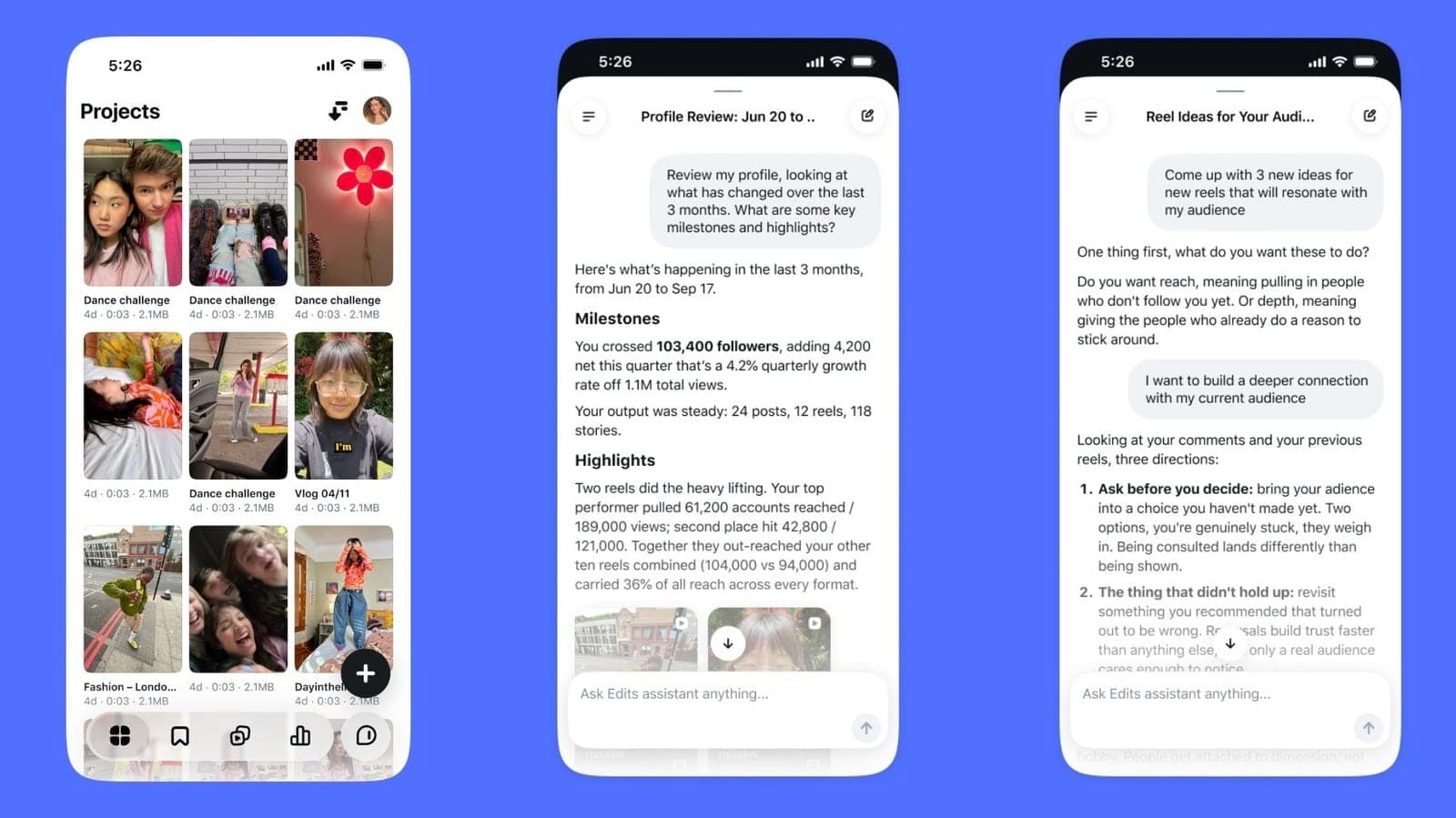
Instagram's new AI tool won't edit your videos, it'll just tell you why they flopped
Instagram rolled out a conversational AI assistant inside Edits, its CapCut competitor, that analyzes your account's performance instead of doing the actual editing for you.
AI data center supplier Accelevation raises $540 million in IPO priced below range
Accelevation priced its Nasdaq debut at $18 a share, below its $20 to $24 target range, a signal that investors want a bigger discount before betting on the AI infrastructure boom.
More in brief
- arXiv limits researchers to two papers a month as AI drives submissions to a recordOct 2
- California will fine robotaxi companies that block first responders for over 30 minutesOct 2
- Microsoft launches real-time transcription and new voice models for AI voice agentsOct 1
- Apple's smart home hub reportedly launches October 13, with a camera that never records videoOct 1
- Cloudflare releases Clef, open-weight AI models that make yes-or-no decisions fastOct 1
- GrayKey maker reportedly found a way around the iPhone's Inactivity RebootOct 1