
AI·News & analysis
Google Play will now install the apps you vibe-code yourself
Anyone with a Google account can send an app built with AI in Google AI Studio to a private Play Store library. AI game picks and app comparisons came along too.
Tide
Wave
Sci-fi
4/10
Reality
Shipping
Describe an app in a sentence, then find it waiting in your app store.How we rate
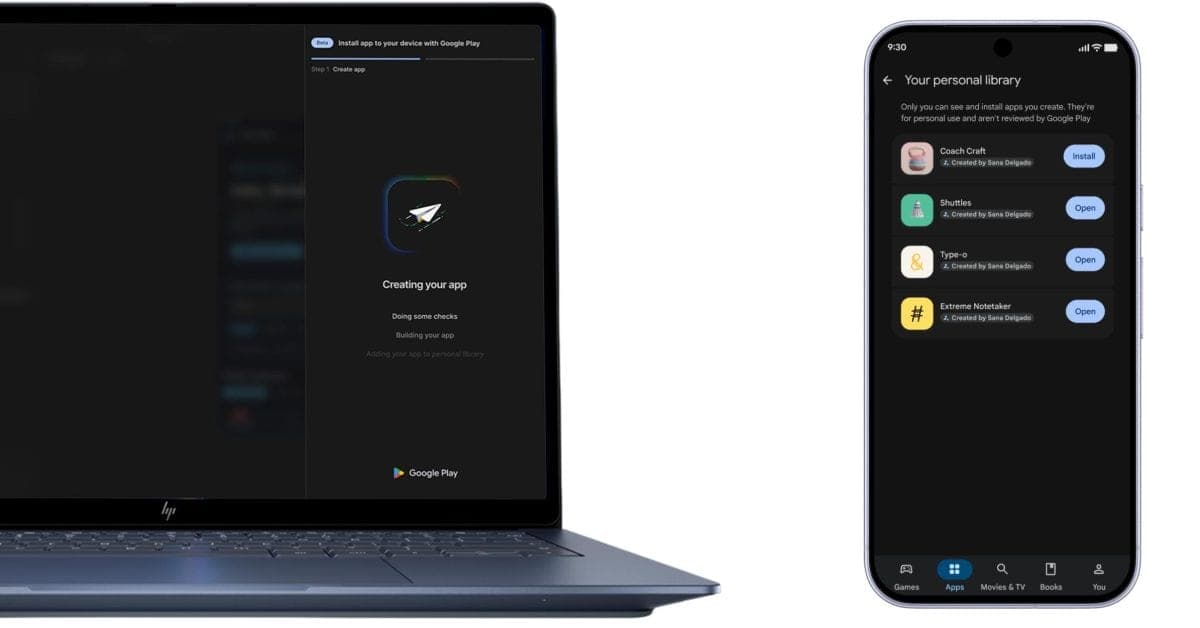
Google is letting people send Android apps they build with AI in Google AI Studio to a private "personal library" in the Play Store, using only a regular Google account.
No developer account, APK file or developer console is needed. It starts rolling out today in the US and select markets for users 18 and over. Sharing with friends and family comes in the coming months, along with a path to publish publicly.
What to know
- Apps you vibe-code in Google AI Studio can now go straight to a private "personal library" in the Play Store, with only a regular Google account.
- The feature starts rolling out today in the US and select other markets, for users 18 and over; sharing with friends and family comes in the coming months.
- A new Game Finder builds a "Gamer DNA" taste profile and recommends games, in English for US users first.
- Cars with Google built-in get a redesigned Play Store that fits each car's screen, plus new apps like Firefox and STARZ for when you're parked.
Google announced on Tuesday that apps you build with AI in Google AI Studio can now go straight to your phone through the Play Store, with nothing more than a regular Google account. Google's own phrase for the shift: from "there's an app for that" to "there's an app for me."
So what's a personal app, who gets it, and what else did the Play Store change today?
First, what's vibe coding?
Vibe coding means building software by describing it instead of writing it. You tell an AI what you want, and it writes the code.
Google AI Studio is Google's tool for doing that with Gemini. As Engadget explains, you write a prompt, Gemini generates the app, and you can refine it with more prompts or edit the code yourself.
9to5Google reports that since May, AI Studio has been able to generate Android apps. But getting one onto your phone meant using ADB, a developer tool that talks to your phone over a cable or network. That's not exactly a Saturday-afternoon hobby for most people.
So what changed today?
The last step got easy. You can now send an app from AI Studio to your own phone through Google Play, with only a standard Google account and no developer account.
Here's how Google and the outlets describe it:
- Where it lands: a new "personal library" section in the Play Store app on your device.
- Who sees it: only you. Google says the apps stay private and separate from the public store catalog.
- What you skip: Ars Technica reports there's no downloading of APK files (Android's app installer files) and no developer console.
- Across devices: 9to5Google says the personal library lets you restore and install your apps on multiple devices. Engadget adds that this includes tablets and computers with Play Store access.
The rollout starts today in select markets, including the US, for users 18 and over.
The catch: Ars Technica reports that private apps aren't reviewed by Google. The personal library screen in Google's own images says the same thing: only you can see and install these apps, and they're for personal use.
In real life Say you coach a kids' badminton team. You ask AI Studio for an app that tracks who brought the shuttlecocks this week. When it works, you send it to Google Play, open your personal library on your phone, and tap install. No one else in the world will ever see it, and that's the point.
Can I share my app with friends?
Not yet, but it's coming. Google says that in the coming months you'll be able to share personal apps with a close circle of friends and family.
Ars Technica reports that Google hasn't decided yet how many people count as a "small group." That kind of sharing won't need a developer account either.
And if my app is actually good?
Then it can grow up. Google says Play will help you "graduate" to a professional developer account if you want to share the app with the world.
At that point, the app goes through the same Trust and Safety reviews and quality standards as every other developer's app. Ars Technica reports this private-to-public path arrives in the coming months.
The big picture: Engadget calls this possibly one of the biggest changes to the Play Store in years. It notes that Google has made sideloading (installing apps from outside the store) more complex over the last year, while the store has also faced legal pressure to open up to competitors. This new path gives casual app builders an official route instead.
What else is new in the Play Store?
Quite a lot, and much of it leans on AI. Google packed the announcement with discovery tools:
- Ask Play comparisons: Ask Play, the store's question-and-answer helper, can now generate a comparison between apps, highlighting key differences and what users say about them.
- Play in Gemini: Google Play's apps, games and developer content are coming into Gemini conversations. Google says this starts rolling out to all Gemini users soon.
- Sports Topic Pages: pages with live scores and links to streaming apps now cover the Premier League, Champions League, La Liga, Liga MX and Major League Soccer.
- Every screen: on Android XR headsets, the Play Store becomes an immersive 3D space around you. On Googlebook laptops, apps built for large screens get shown first.
How does Game Finder pick games?
This is the gaming headline. Google says the new Game Finder combines Play's gaming knowledge with its community of over 2 billion players.
At the center is Gamer DNA, which Google describes as "an analysis of how you play and preferences you've shared." You can fine-tune it by naming games, genres and mechanics you like.
Think of it like a record store clerk who has watched you shop for years. They don't just hand you the top 10. They say, "You liked that one, so try this."
Game Finder also shows:
- Similar players: how people with similar Gamer DNA engage with a game.
- Your circle: how many people you follow are playing it.
- Reviews: summaries of user reviews.
- Trends: which games are trending, and why.
In a press roundtable, Engadget reports, Google said it hopes to make the filters increasingly detailed, down to things like games with controller support. Game Finder rolls out in English to US users today, with more markets coming soon.
There are also Game Playlists, collections of games you curate. Google says you'll soon be able to share them and browse other players' lists.
What about playing with other people?
Google added three social features:
- Sprints: 48-hour challenges that match you with groups of 2 to 5 players for quick contests. They roll out to all markets today, and Engadget reports they match players of a similar skill level.
- Playbacks: Sidekick, Play's in-game overlay, can now record 30-second clips on select devices.
- Community Posts: a question-and-answer section on every game's store page, in all languages with automatic translation. Developer posts arrive over the coming weeks.
Google is also bringing PC favorites like Dave the Diver and Warhammer 40,000: Boltgun to Play, with cloud saves across Android phones and PCs. Game Trials, which let you try full premium games for a limited time, are expanding from mobile to PC.
What's new for cars?
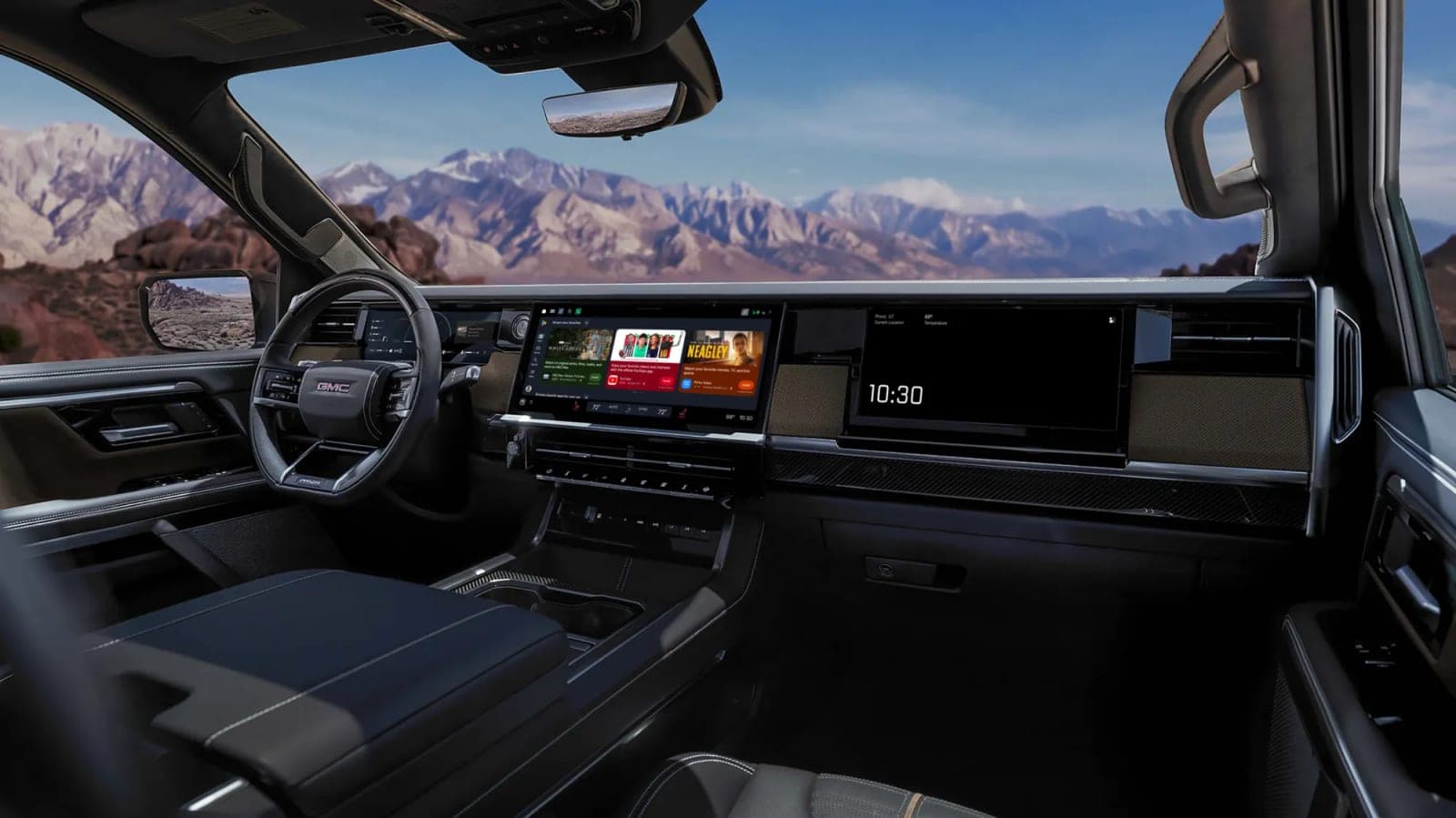
In a separate post, Google said cars with Google built-in are getting a redesigned Play Store. Google built-in is available across 16 car brands and more than 100 models, and its Play Store offers more than 700 apps.
- Fits your screen: the layout adapts to the shape, orientation and size of your car's display. The Verge reports the menu sits on the left, or on top on vertical screens.
- One tap: featured apps on the homepage download with a single tap.
- New apps for parked time: STARZ, Firefox, Ludo King and JioHotstar.
- Parked to driving: you can watch YouTube while parked, and the audio keeps going when you shift into drive. The Verge reports this needs YouTube Premium.
Google mentions GM vehicles like the 2027 Chevrolet Silverado 1500 and GMC Sierra 1500. The update rolls out over the coming weeks and installs itself on the car's display. Your school pickup line just got a little more interesting, at least while you're in park.
What it means for you
- If you've tried AI Studio: you can now get your app onto your phone through Google Play without ADB or a developer account, if you're 18+ and in a supported market.
- If you want to share: wait a few months. Friends-and-family sharing and the path to a public listing are still coming.
- If you play games: look for Game Finder in the US, and tune your Gamer DNA by rating games and adding genres you like.
- If your car has Google built-in: the new Play Store and YouTube audio while driving arrive automatically over the coming weeks.
The bottom line
Google is turning the Play Store from a shop into a place that also holds the apps you make for yourself. For now, those apps stay private and unreviewed, with sharing and public publishing coming later. The rest of the update uses AI to help you find apps and games, from your phone to your car.
Key facts
- Who can use personal apps
- Users 18+ in the US and select markets
- Account needed
- A standard Google account, no developer account
- Sharing with friends and family
- In the coming months
- Game Finder launch
- English, US users, starting October 13
- Apps in cars with Google built-in
- More than 700
Got questions?
Quick answers, plain wordsWhat is vibe coding?
It's building software by describing what you want in plain words and letting an AI write the code. In Google AI Studio, you write a prompt to Gemini, and it generates the app. You can then adjust it with more prompts or edit the code yourself, Engadget explains.
Do I need a Google Play developer account to install my own app?
No. Google says a standard Google account is enough to launch a personal app on your own device. You only need a developer account if you later want to publish the app to everyone.
Is it free?
Google's announcement doesn't mention a fee for personal apps, and Engadget reports you don't need a paid developer account to use it.
Who can use it right now?
Users 18 and over in select markets, including the US. The rollout starts on October 13, 2026, so it may take a while to reach your account.
Can other people see my personal apps?
Not for now. Google says personal apps stay private and separate from the public store catalog. Ars Technica reports they're available only to you by default.
Can I share my app with friends?
Soon. Google says sharing with a close circle of friends and family is coming in the coming months. Ars Technica reports Google hasn't decided yet how many people count as a small group.
Does Google review personal apps?
Ars Technica reports that private apps aren't reviewed by Google, and the personal library screen in Google's images says the same. Apps you later publish publicly go through the same Trust and Safety reviews as any developer's.
Which devices can install them?
Your own devices with the Play Store. Engadget reports that includes tablets and computers with Play Store access, and 9to5Google says the personal library lets you restore and install your apps across devices.
What is Gamer DNA?
It's a taste profile Google Play builds from how you play and the preferences you share. You can fine-tune it by naming games, genres and mechanics, and the new Game Finder uses it to recommend games.
What's new in the Play Store for cars?
Cars with Google built-in get a redesigned Play Store that adapts to the car's screen, new apps like STARZ, Firefox, Ludo King and JioHotstar for when you're parked, and YouTube audio that keeps playing when you shift into drive.
SourcesGoogle
Topics and tagsGoogle, Smartphones, google play, vibe coding
Go deeper
Related stories
Google's Guided Vision lets Gemini Live describe the world for blind and low-vision users
Point your Android phone's camera at something and Gemini describes it out loud, then tells you how to move the camera if it can't see well. Google built it with the blind and low-vision community.
Google's Gemini 4 Argon reaches the Gemini app, Search and developers
Two weeks after a defenders-only debut, Google is rolling out Gemini 4 Argon to AI Pro and Ultra subscribers and to developers, with a robotics showcase on the side.
Google opens its SynthID Detector so anyone can check if media is AI-made
Anyone can now upload an image, video or audio clip to Google's SynthID Detector to see whether it carries a watermark from Google or its partners, including OpenAI, NVIDIA and Kakao.
More in brief
- Anthropic tells investors its Q3 revenue hit $16.8 billion ahead of its IPOOct 15
- Mexico gives Meta, TikTok and X one month to shield kids from harmful contentOct 15
- OpenAI engineer charged over hidden recording device in executive roomOct 15
- Eight US states sue OpenAI over ChatGPT's safety for kidsOct 14
- Xbox Nano is a $50 controller small enough for your pocketOct 14
- Linux kernel developers move to drop the rule that made coders disclose AI helpOct 14