
Technology·News & analysis
ULA Vulcan rocket fails and destroys 40 Amazon Leo satellites
A United Launch Alliance Vulcan rocket suffered an anomaly 10 minutes into flight on Sunday and lost all 40 Amazon Leo internet satellites on board.

Tide
Ripple
Sci-fi
6/10
Reality
Shipping
Forty satellites, one very long wait for the next ride.How we rate
A United Launch Alliance Vulcan rocket failed 10 minutes after liftoff on Sunday and destroyed all 40 Amazon Leo internet satellites it carried.
It was the first launch failure in ULA's history and the first Amazon Leo mission on Vulcan. Amazon has about 390 satellites in orbit and was already behind a regulator's deadline. ULA says it will find the cause and return to flight, but gave no date.
What to know
- ULA's Vulcan rocket failed to reach orbit on Sunday, 10 minutes after liftoff from Cape Canaveral, and 40 Amazon Leo satellites were lost.
- It was the first launch failure in ULA's history, and the first Amazon Leo flight on Vulcan, which has 38 more Amazon missions booked.
- Amazon has roughly 390 Leo satellites in orbit, far short of the 1,600 that US regulators asked for by July 31, 2026.
- ULA has not named a cause. It says it will find it and return to flight as quickly as possible.
A United Launch Alliance (ULA) Vulcan rocket failed on Sunday and destroyed all 40 satellites it was carrying for Amazon Leo. The rocket flew for about 10 minutes, then something went wrong. That is the news. Now the harder question: what does it do to Amazon's plan to take on Starlink?
What happened on Sunday?
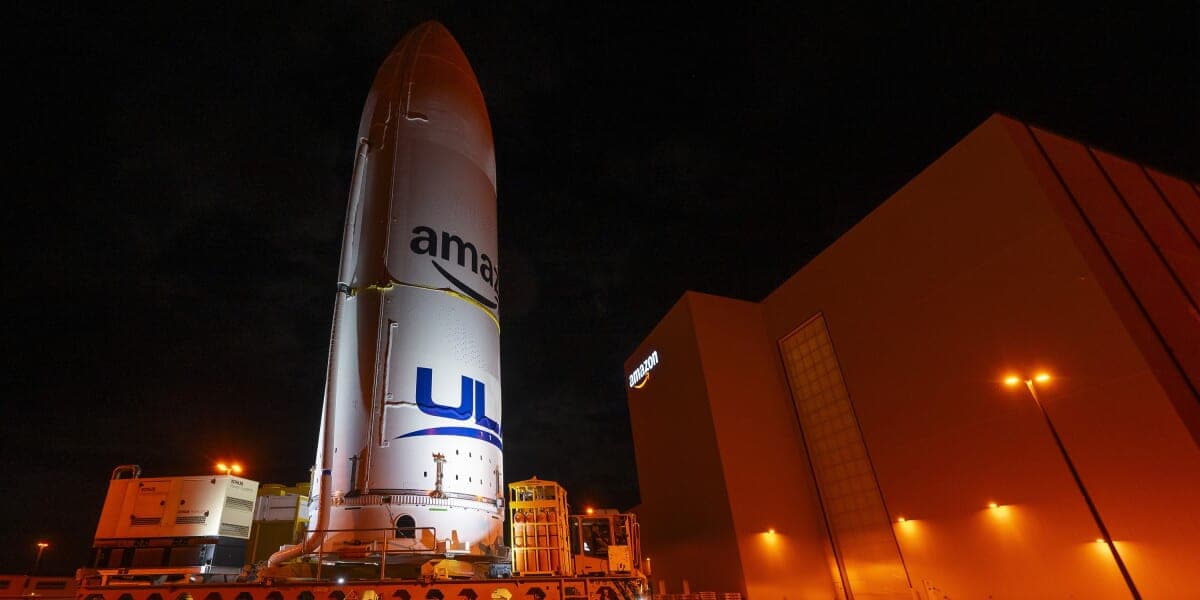
The rocket lifted off from Space Launch Complex 41 at Cape Canaveral, Florida, on Sunday, November 15, at 12:40 PM Eastern time. This mission was called LV-01, short for Leo Vulcan 1.
Getting off the ground took a few tries. A refuelling problem pushed back a Friday attempt. On Sunday, controllers paused the countdown at 20 seconds before liftoff because of a technical issue. They solved it before the launch window closed.
The first part of the flight looked normal. The rocket climbed to about 95 miles (150 km). About six minutes in, the main booster and the nose cone, called the payload fairing, separated as planned.
Then the upper stage took over. This is the top part of the rocket, the part that carries the satellites the final distance to orbit. Its engines were meant to burn for about 12 and a half minutes. Somewhere in that burn, something failed.
ULA posted a short statement on X:
"Based on data received by our Launch Director, we confirm that the Vulcan vehicle launched from Space Launch Complex 41 suffered an anomaly 10 minutes into the flight and failed to deliver the Amazon mission to orbit."
An anomaly is the industry's polite word for "something went wrong that we did not plan for." All 40 satellites were lost.
Why is this a first for ULA?
ULA was formed in 2006 as a partnership between Boeing and Lockheed Martin. In that time it has built a name for reliability, mostly thanks to its older Atlas V rocket.
Until Sunday, it had never lost a mission. ULA said as much in its statement: "Today, we did not meet that standard."
Vulcan is newer and more powerful than Atlas V. It has also had a bumpy road. Its solid rocket boosters, the strap-on rockets that give extra push at liftoff, lost part of a nozzle on two earlier flights. The most recent one came in February 2026, on a US Space Force mission. That flight still reached its target orbit, but Vulcan then stayed on the ground for about nine months.
In real life Think of a delivery van with an excellent record that finally gets a new, bigger truck. The old van never missed a drop. The new truck has had a few warning lights before its first big job for a customer.
Why it matters: the boosters seemed to work normally this time. The trouble came later in the flight, so this may be a different problem from the earlier ones. ULA has not said what it was.
What went wrong, and what don't we know?
Not much is confirmed. ULA says it has no specific data yet. Its statement promises to "find the cause, determine the appropriate corrective action, and return to flight as quickly as possible."
People watching the live data noticed that the first stage engines, which burn methane fuel, fired longer than the timeline ULA had published. That is an observation, not a finding. ULA has not said it is related.
Vulcan's first stage uses two BE-4 engines made by Blue Origin, the rocket company founded by Jeff Bezos. Bezos also founded Amazon. Blue Origin has had its own bad year. Its New Glenn rocket exploded during a test in May, which we covered in our story on its Florida expansion. Neither company has linked Sunday's failure to those engines.
Here is what we do know about the rocket:
- Version: the six-booster form of Vulcan, built to carry heavy loads to low Earth orbit.
- Upper stage: a shorter, optimized Centaur V, flying for the first time.
- Payload: 40 Amazon Leo satellites, the largest batch Amazon has flown.
- First of its kind: the first Amazon mission on Vulcan, and the first flight of this booster setup.
Low Earth orbit is the zone a few hundred miles up, close enough for fast internet signals. Amazon's satellites need to go there.
How is Amazon taking this?
Amazon calls ULA a "trusted partner" and says "there is risk with any launch." It says it believes ULA will "learn from this mission and deliver on their long-term plans for Vulcan." Nothing suggests Amazon plans to drop the rocket.
That makes sense, because Amazon needs it. The company has 38 Vulcan launches booked. Together they are meant to carry more than 1,500 first-generation Leo satellites. LV-02 was expected within weeks of LV-01, after Amazon spent money on new facilities at Cape Canaveral to speed up launches.
Amazon has also said it built its satellites faster than it can launch them. It finished its 1,000th satellite in early September and has hundreds ready to fly. Those are now waiting on rides.
The big picture: the satellites are not the bottleneck. The rockets are.
Where does Amazon Leo stand now?
Amazon Leo is Amazon's answer to Starlink, SpaceX's satellite internet. A constellation is a large group of satellites that work together, so the more satellites, the better the coverage.
Right now Amazon has roughly 390 satellites in orbit. US regulators at the Federal Communications Commission (FCC) had told Amazon to have 1,600 up by July 31, 2026. That date has passed. The full network is planned at 3,232 satellites by July 2029.
Amazon warned about this in July. It said no operator could have predicted that all three heavy-lift programs it relies on would slip at once, and severely enough to use up its spare time.
Those three are:
- ULA's Vulcan: now hit by the Sunday failure.
- Blue Origin's New Glenn: grounded after the May explosion.
- Europe's Ariane 6: flying, but not as often as Amazon needs.
Amazon had also hoped to open Leo to customers properly by the end of 2026. It is in a commercial beta today. The loss makes that target harder to hit.
There is one launch still on the calendar. A European Ariane 64 rocket is due to carry 36 more Leo satellites in about a week.
What does SpaceX have to do with it?
A lot, as a point of comparison. Just a day before, on Saturday, November 14, SpaceX caught the upper stage of a Starship for the first time, a step toward reusing it.
Elon Musk wrote "sorry to hear this" and "hope you are back to flight soon" after the failure was reported. He has also argued that SpaceX's lead comes from execution, not just spending. He said SpaceX delivers 85% of all payload to orbit on its Falcon rocket.
For Amazon, the point is simple. Starlink already has a large head start in orbit. Every delay gives it more time alone in the market.
What it means for you
- Amazon Leo will probably arrive later. If you were waiting to sign up, expect the full launch to slip.
- Nothing changes for current satellite internet. Starlink and other services are not affected by this failure.
- More launches are coming. Amazon has other rockets and plans 20 or more launches in 2027, though this failure may change that.
- Watch the cause. If ULA finds a quick fix, Vulcan could fly again fairly soon. A deeper problem would take longer.
The bottom line
Forty satellites are gone, and ULA lost its perfect record on a day Amazon needed a win. The cause is unknown, and so is the date of the next Vulcan flight.
Amazon still has satellites ready and 38 Vulcan flights booked. What it needs now is a rocket that reaches orbit, again and again.
Key facts
- Satellites lost
- 40 Amazon Leo satellites
- When it failed
- 10 minutes into flight, Nov 15, 2026
- Rocket
- ULA Vulcan, six-booster version
- Vulcan flights booked by Amazon
- 38 missions
- Amazon Leo in orbit
- About 390 satellites
Got questions?
Quick answers, plain wordsWhat happened to the Vulcan rocket?
The rocket launched from Cape Canaveral on Sunday, November 15, 2026, and had an anomaly 10 minutes into the flight. It did not deliver its payload to orbit, and all 40 Amazon Leo satellites were destroyed.
What is Amazon Leo?
Amazon's satellite internet network, built to compete with SpaceX's Starlink. Thousands of small satellites in low Earth orbit beam internet to homes and businesses.
What does "anomaly" mean here?
It is the space industry's word for something going wrong that was not planned. In this case it means the rocket did not finish the flight it was meant to fly.
Was anyone hurt?
No injuries have been reported. The rocket carried satellites and no crew.
Has ULA ever had a launch failure before?
Not in its 20 years. ULA was formed in 2006 by Boeing and Lockheed Martin, and its older Atlas V rocket is famous for its reliability. This is the first time a ULA launch has failed.
What caused the failure?
Nobody has said yet. ULA says it does not have enough data and will work with Amazon and other organizations to find the cause.
Will this delay Amazon Leo?
Probably. Amazon has 38 Vulcan missions booked, and the next one, LV-02, had been expected within weeks. A new flight date depends on what the investigation finds.
How many Amazon Leo satellites are in orbit?
Roughly 390. US regulators required 1,600 in orbit by July 31, 2026, and the full network is planned at 3,232 satellites by July 2029.
What is the next Amazon Leo launch?
A European Ariane 64 rocket is set to carry 36 more Amazon Leo satellites in about a week, according to current plans.
Can I use Amazon Leo today?
It is in a commercial beta phase, and Amazon had hoped to open the service properly by the end of 2026. The failure makes that date less certain.
SourcesAmazon
Topics and tagsAmazon, Space tech, amazon leo, ula
Related stories
Blue Origin plans more pads and ships for weekly New Glenn launches
Blue Origin is adding two more New Glenn launch pads, two landing ships and a $330 million upper stage factory in Florida, aiming for several launches a week by 2030.
Space Force retires the last of its Cold War missile-warning satellites
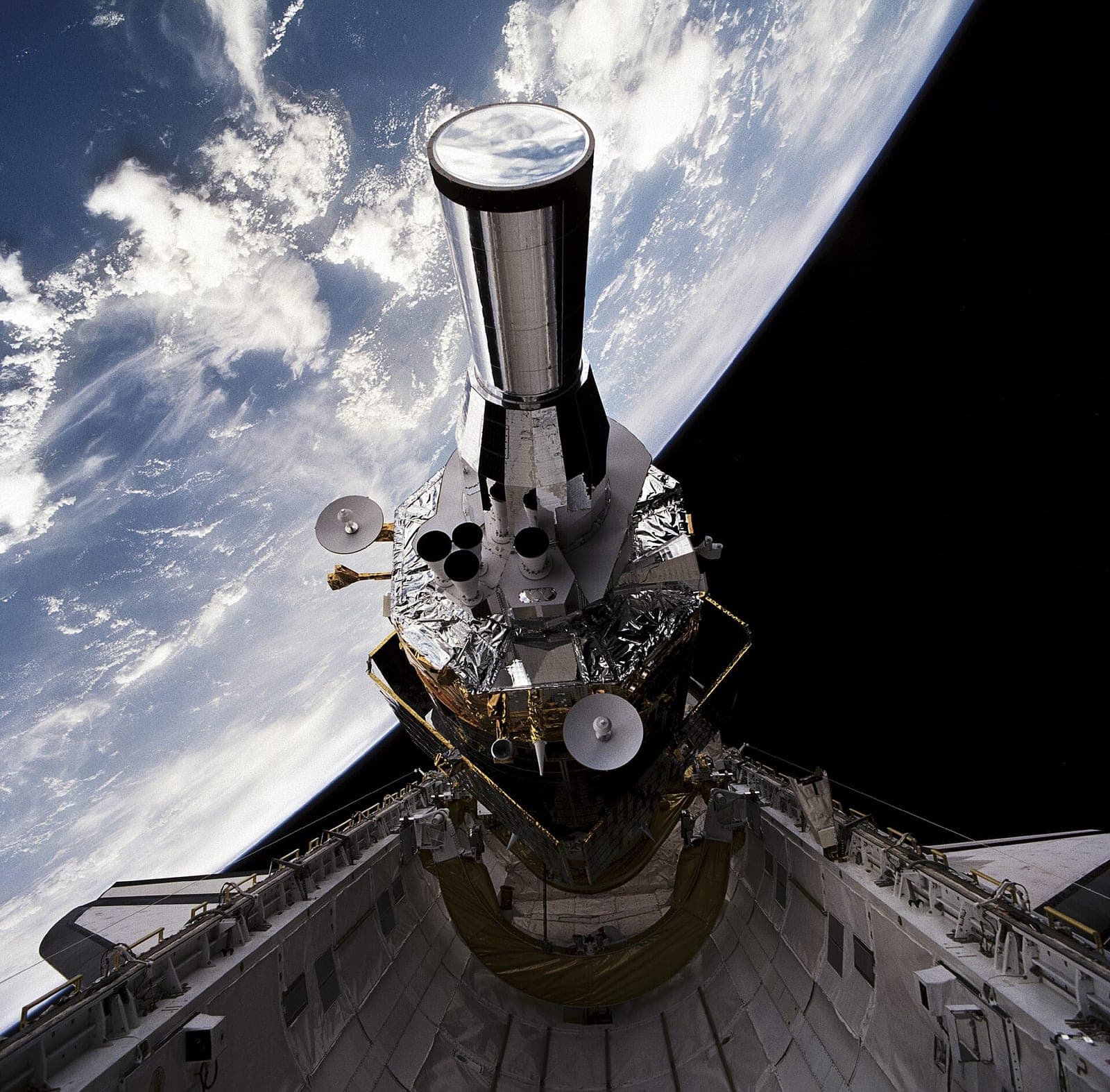
The final two Defense Support Program satellites, part of a missile early-warning system that began in 1970, have been moved to a graveyard orbit after more than 55 years of service.
Apple adds a video podcasts section to the Apple TV app
Apple is testing a free video podcasts section in the Apple TV app with developers today. It plans to open it to everyone soon, on more than a billion devices.
More in brief
- Mercedes starts rolling out hands-free city driving in the US and GermanyNov 16
- Google Maps can now plan whole trips and book appointmentsNov 16
- Blue J raises $176 million to put AI agents to work on tax returns and IRS lettersNov 16
- FBI warns hackers are using the ARTEX AI tool to attack organizations worldwideNov 16
- Apple opens a 200,000-person study on how people use AI for healthNov 16
- Anthropic's IPO is reportedly oversubscribed as it aims to raise up to $90.4 billionNov 16