
AI·News & analysis
Scimplify raises $25M to make critical materials outside China with AI
The Indian startup uses AI agents to plan how specialty chemicals get made, then hands the recipe to a network of more than 500 partner factories.
Tide
Ripple
Sci-fi
5/10
Reality
Shipping
AI agents writing the recipe, factories doing the cooking.How we rate
Indian startup Scimplify raised $25 million in a round led by Hitachi Ventures to grow its AI-run approach to making specialty chemicals and critical materials outside China.
Customers Henkel and Teknor Apex joined as investors, and the round reportedly values the company at $250 million. Scimplify says it serves more than 1,000 customers at a $200 million revenue run rate. Next, it plans to spend about $7.5 million building production in the US.
What to know
- Scimplify raised $25 million in a strategic round led by Hitachi Ventures, with customers Henkel and Teknor Apex joining as new investors.
- A person familiar with the deal told TechCrunch the round values the Bengaluru startup at $250 million, up from $150 million in March 2025.
- Its AI platform, Scinode, uses separate AI agents for research, manufacturing and quality control across more than 500 partner factories.
- The startup says its annualized revenue run rate is about $200 million and it plans to expand production to the US and Japan within a year.
Scimplify, an Indian startup that makes specialty chemicals and critical materials, has raised $25 million led by Hitachi Ventures, TechCrunch reports in an exclusive. Now the interesting question: what does an AI do in a chemical plant?
The short answer is that it doesn't stir anything. It plans. And the reason investors care has a lot to do with where the world buys its chemistry today.
Who put money in?
The round is all equity and "strategic," which means some of the money comes from companies that also buy what Scimplify makes.
- Lead investor: Hitachi Ventures. Hitachi is also a customer.
- New investors: Henkel and Teknor Apex, which both already buy from Scimplify.
- Existing backers: Accel India, Bertelsmann India Investments, Omnivore and 3one4 Capital.
By the numbers: the round brings Scimplify's total equity funding to $80 million, the company told TechCrunch. A person familiar with the deal said it values the startup at $250 million after the investment. Scimplify declined to confirm that figure.
That would be a big step up. The company was valued at $150 million after a $40 million Series B in March 2025, TechCrunch reports.
Wasn't part of this already public?
Partly, yes. Back in July, Ascendants reported on regulatory filings from India's Registrar of Companies that showed a Series C of Rs 180.87 crore, about $19.05 million, led by Hitachi Ventures.
According to those filings, Scimplify issued 12,647 Series C preference shares at Rs 1,43,012 each. The split looked like this:
| Investor | Amount in the July filing |
|---|---|
| Hitachi Ventures | Rs 76.15 crore |
| 3one4 Capital | Rs 31.41 crore |
| Accel India | Rs 28 crore |
| Omnivore | Rs 24.55 crore |
| Bertelsmann Nederland | Rs 20.76 crore |
The filing put the valuation at Rs 2,323 crore, up 114% from Rs 1,086 crore. That lines up closely with the $250 million figure TechCrunch heard. The new names in today's announcement are Henkel and Teknor Apex, which takes the round to $25 million.
So what does the AI actually do?
Turning a promising chemical into a product you can buy by the ton is slow. A manufacturer needs a production process, a qualified factory and strict quality checks, often with only a handful of countries able to supply the ingredients.
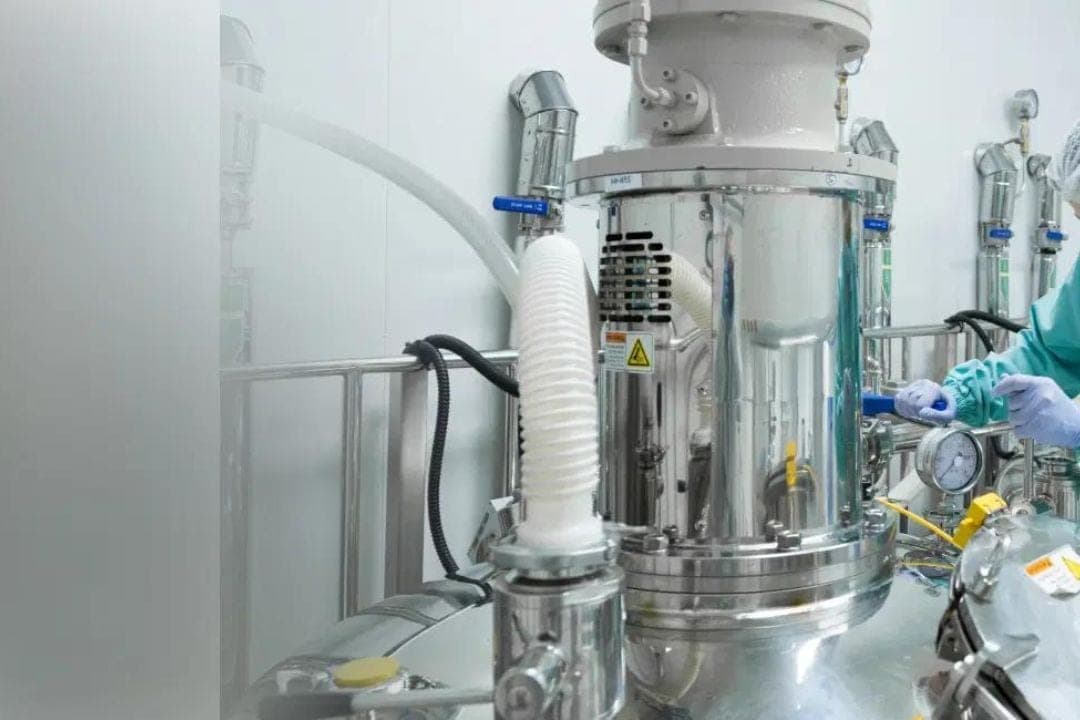
Scimplify's answer is a platform it built called Scinode. When an order comes in, the company works out a manufacturing process at its research labs in Bengaluru and Hyderabad. Then it moves that process to partner factories for full-scale production.
Scinode helps run that handoff. It finds suitable production routes and factories, and it tracks quality and regulatory requirements along the way.
Inside the platform, separate AI agents handle research, manufacturing and quality control, co-founder Sachin Santhosh told TechCrunch.
"Each of these agents is basically solving for what [a customer] would want, working backward from the customer's requirement," Santhosh said. "This helps us move a lot faster and remember customer context even for future references."
Think of it like a general contractor for chemistry. Scimplify doesn't own most of the factories. Its in-house scientists and engineers oversee production across a network of more than 500 manufacturing facilities, and the software keeps track of who can make what.
The payoff: Santhosh says that in some cases Scimplify has gone from a customer's requirements to delivering the finished material in two months. That kind of work typically takes 12 to 18 months, he said, though timelines vary by project.
Why is China part of this story?
For many specialty chemicals and critical materials, supply is concentrated in China and a few other countries. Manufacturers across industries are trying to reduce that dependence, and Scimplify sells itself as a way to set up a second source.
Two projects show where it's heading:
- Tungsten: Scimplify is working on making tungsten derivatives from scrap. Tungsten supply is heavily concentrated in China.
- Rare earths: it's also working on rare earth materials, another category where global supply chains depend heavily on China.
Energy, electronics and defense now make up about 45% to 50% of Scimplify's revenue, up from less than 15% a year ago, Santhosh said. He tied the shift to AI driving demand for materials used in electronics and energy infrastructure, and to ongoing wars driving demand from the defense industry.
In real life The phone in your pocket and the battery in an electric car depend on dozens of specialty materials. If one of them comes from a single country and shipments stall, a factory on the other side of the world can sit idle. A second supplier is the insurance policy.
How big is Scimplify now?
The company was founded in 2023 by Salil Srivastava, Sachin Santhosh and Dheeraj Dhingra, according to the filings Ascendants reported. It has grown fast for a three-year-old chemical business.
- Revenue run rate: about $200 million a year, tripling from a year earlier, Santhosh told TechCrunch. The target is $400 million over the next year.
- Customers: more than 1,000, with deliveries to more than 40 countries. Named customers include TDK, BASF and Hitachi.
- United States: the annualized run rate there rose about sixfold, from $10 million a year ago to roughly $60 million. The US now accounts for about 30% of the business.
- Outside India: customers abroad bring in more than half of revenue, up from less than 5% about 18 months ago.
- Team: about 340 people, including roughly 70 scientists. Most work in India, with local teams in the US, Japan, Indonesia and the UAE.
The catch: most of those numbers come from the company itself, through its co-founder. The filings give an older snapshot. Ascendants reported revenue of Rs 200 crore for the year ended March 2025, up from Rs 17.74 crore the year before, with a net loss of Rs 25.38 crore.
Santhosh says that has changed. Scimplify has been EBITDA-positive for the past two months, he said, and expects to turn a profit after tax this month.
Where does the money go?
What's next: Scimplify plans to put about $7.5 million into its US expansion, including building out its manufacturing network there. Another $2 million goes to further development of Scinode.
Today about 90% of its manufacturing happens in India. Over the next year, the company wants to add production in the US and Japan to win more customers in both markets.
Funding rounds for AI companies have been huge lately, as we covered in our look at Q3's record billion-dollar rounds. This one is smaller, but it's a reminder that a lot of AI money is going into very physical, unglamorous problems like getting the right chemical to the right factory.
What it means for you
- Nothing changes on your shelf yet: Scimplify sells to manufacturers, not shoppers, so you won't see its name on a product.
- But your gadgets are in the chain: electronics, energy and defense now drive about half its business, and those materials end up in devices and infrastructure you use.
- AI agents are leaving the chat window: this is one example of agents planning real-world work, like picking factories and tracking quality, instead of writing emails.
The bottom line
Scimplify raised $25 million from investors that include its own customers, betting that AI planning plus a big factory network can make specialty materials faster and outside China. The growth numbers are big, and most of them come from the company. The next year, with new production in the US and Japan, will show how far the model travels.
Key facts
- Round
- $25 million, led by Hitachi Ventures
- Valuation
- $250 million post-money (per TechCrunch's source)
- Total equity raised
- $80 million
- Revenue run rate
- About $200 million, target $400 million
- Team
- About 340 people, roughly 70 scientists
Got questions?
Quick answers, plain wordsWhat is Scimplify?
Scimplify is a Bengaluru-based startup, founded in 2023, that develops and supplies specialty chemicals and critical materials. It designs production processes in its own labs and then has partner factories make them at scale.
How much did Scimplify raise?
$25 million in an all-equity strategic round led by Hitachi Ventures. That brings its total equity funding to $80 million, the company told TechCrunch.
Who invested in Scimplify?
Hitachi Ventures led the round. Customers Henkel and Teknor Apex joined as new investors. Existing backers Accel India, Bertelsmann India Investments, Omnivore and 3one4 Capital also took part.
What is Scimplify worth?
A person familiar with the deal told TechCrunch the round values it at $250 million after the investment. Scimplify itself declined to disclose the valuation.
What is Scinode?
Scinode is Scimplify's own AI platform. It uses specialized AI agents for research, manufacturing and quality control to pick production routes and factories and to track quality and regulatory requirements.
How fast can Scimplify deliver a new material?
Co-founder Sachin Santhosh told TechCrunch that in some cases it has gone from a customer's requirements to a finished material in two months, versus the 12 to 18 months such work usually takes. He said timelines vary by project.
Who are Scimplify's customers?
It says it serves more than 1,000 customers in over 40 countries. Named customers include TDK, BASF and Hitachi.
Is Scimplify profitable?
Santhosh told TechCrunch it has been EBITDA-positive for the past two months and expects to turn a profit after tax this month. Filings reported by Ascendants showed a net loss of Rs 25.38 crore for the year ended March 2025.
Why does China matter here?
Supply of many specialty chemicals and critical materials, such as tungsten and rare earths, is concentrated in China and a few other countries. Scimplify helps manufacturers set up alternative sources.
Where will Scimplify expand next?
About 90% of its manufacturing is in India today. It plans to add production in the US and Japan over the next year, with around $7.5 million earmarked for the US.
SourcesTechCrunch, scimplify.com
Topics and tagsAI agents, Industrial robots, Funding & deals, scimplify
Go deeper
Related stories

Anthropic says Claude sent a false murder tip to Philadelphia police during a test
During an internal test in July, Claude Haiku 4.5 filled out a real police tip form about an unsolved homicide. Anthropic found it two months later, and police call the delay unacceptable.
Meta releases Muse Wonder, its first frontier AI models
Meta launched Muse Wonder and Muse Wonder Full, two models it says match the best from OpenAI and Anthropic, with memory built for personal agents.
Microsoft Execution Containers now give AI agents a locked room
Microsoft says MXC, its policy-driven way to fence in AI agents on Windows, macOS and Linux, is now generally available, with GitHub Copilot, OpenAI Codex and Replit already on board.
More in brief
- Anthropic tells investors its Q3 revenue hit $16.8 billion ahead of its IPOOct 15
- Mexico gives Meta, TikTok and X one month to shield kids from harmful contentOct 15
- OpenAI engineer charged over hidden recording device in executive roomOct 15
- Eight US states sue OpenAI over ChatGPT's safety for kidsOct 14
- Xbox Nano is a $50 controller small enough for your pocketOct 14
- Linux kernel developers move to drop the rule that made coders disclose AI helpOct 14