
AI·News & analysis
A US startup is borrowing $600 million to buy chips for a Chinese app
PaleBlueDot AI is seeking $600 million in private credit to buy chips for a South Korea site meant to serve Xiaohongshu, the Chinese social media app also known as RedNote.
Tide
Ripple
Sci-fi
5/10
Reality
Shipping
A loan finds a legal side door around a chip export ban.How we rate
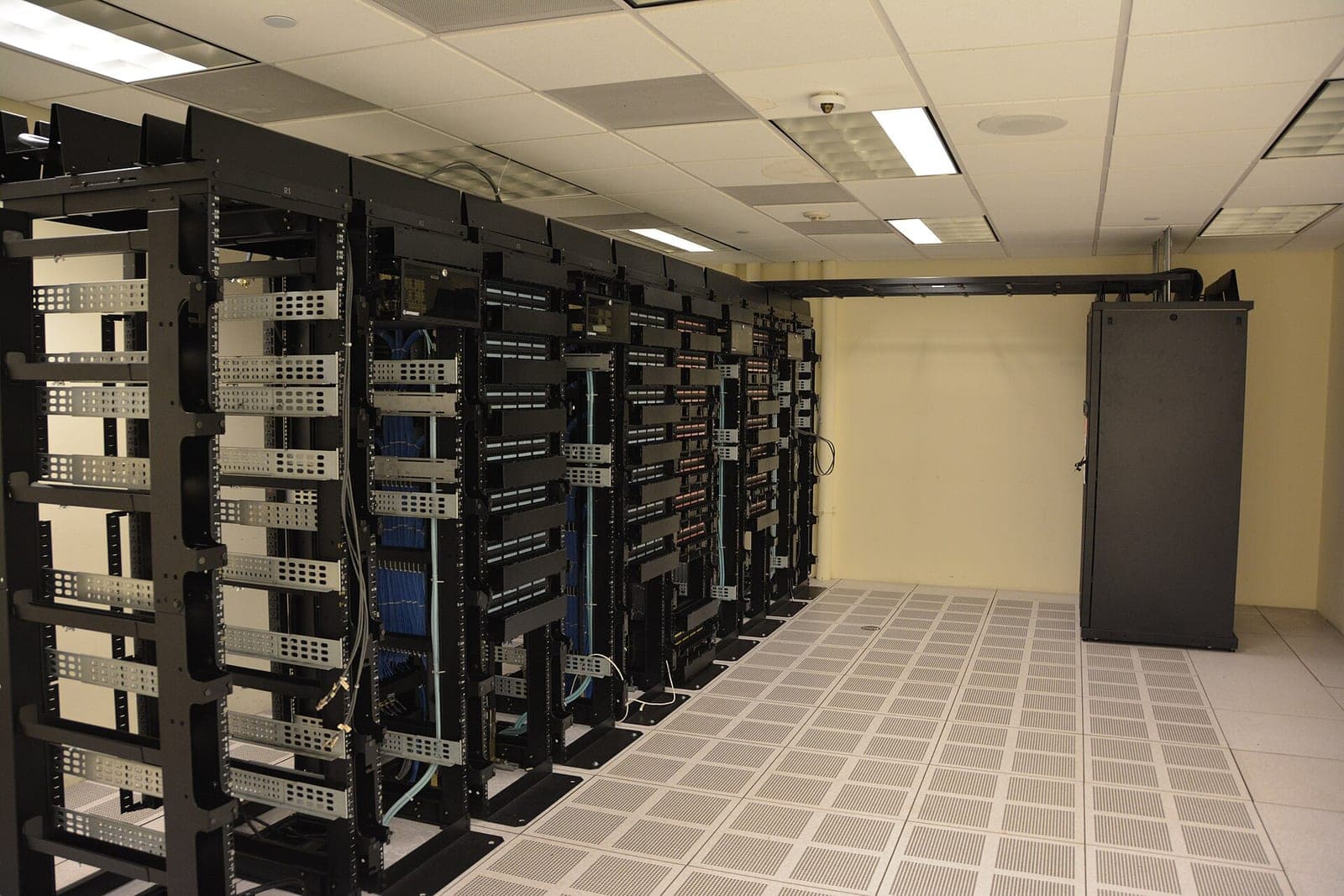
PaleBlueDot AI, a US-based company, is seeking $600 million in private credit to buy chips for a data center in South Korea, meant to serve Xiaohongshu, the Chinese app also known as RedNote.
This follows a similar $300 million deal reported in late 2025, routed through a Tokyo data center. South Korea is unrestricted under US chip export rules, which is what makes the arrangement possible. It shows how advanced AI compute can reach Chinese companies without chips being shipped into China directly.
What to know
- PaleBlueDot AI, a US-based company, is seeking $600 million in private credit to buy chips for a data center site in South Korea.
- The compute is meant to serve Xiaohongshu, the Chinese social media app also known as RedNote, according to Bloomberg.
- This follows an earlier, similar deal: PaleBlueDot reportedly sought a $300 million loan in late 2025 to help Xiaohongshu access Nvidia chips through a Tokyo data center.
- South Korea is classified as a Tier 1, unrestricted country under US chip export rules, which is what makes this kind of arrangement possible.
A US company wants to borrow $600 million to buy chips in South Korea. The chips aren't for the US company. They're for a Chinese social media app.
PaleBlueDot AI is seeking $600 million in private credit to buy AI chips for a data center site in South Korea, compute meant to serve Xiaohongshu, the Chinese app also known internationally as RedNote, according to Bloomberg.
Wait, why does this route through South Korea?
Why it matters: the US government restricts exporting its very most advanced AI chips directly into mainland China. It doesn't, however, ban Chinese companies from remotely using compute that's physically located somewhere else, as long as that somewhere else isn't itself restricted.
South Korea is classified as a Tier 1 country under the US government's AI Diffusion Rule framework, meaning it faces no special limits on receiving advanced chips. That single classification is what makes this whole arrangement possible.
- What's restricted: shipping advanced Nvidia chips directly into China.
- What isn't restricted: a company in an approved country like South Korea buying those chips and letting a Chinese company use the resulting compute remotely.
- The result: Xiaohongshu can effectively access chips it couldn't import directly, without anyone physically moving hardware across a restricted border.
Hasn't this happened before?
Yes, and recently. In late 2025, PaleBlueDot reportedly sought a $300 million loan for a strikingly similar deal, routing Nvidia chip access to Xiaohongshu through a data center in Tokyo instead.
In real life it's a bit like renting a storage unit in a neighboring town because your own town won't let you keep certain things at home, except here the "things" are some of the most sought-after computer chips on Earth, and the storage unit comes with a $300 million financing agreement.
By the numbers: doubling the deal size from $300 million to $600 million, and shifting from Japan to South Korea, suggests this isn't a one-off workaround. It looks more like PaleBlueDot building a repeatable playbook for getting compute to Chinese clients through allied countries.
Who's actually behind the money?
Bloomberg's reporting names Brookfield Asset Management as one of the potential lenders being discussed for part of the $600 million. Brookfield is a massive global asset manager, and its potential involvement signals that mainstream institutional capital sees this as a legitimate, bankable structure, not some shadowy back-channel arrangement.
Who's affected: for Xiaohongshu, more reliable compute access means better AI features in an app used by hundreds of millions of people for shopping recommendations, lifestyle content, and social search, functions increasingly powered by AI behind the scenes.
Why South Korea is becoming an AI infrastructure hotspot
The big picture: PaleBlueDot's deal isn't happening in a vacuum. South Korea has become a genuine hub for AI data center investment this year. In July 2026, Naver, Nvidia, and Brookfield separately announced plans to expand a South Korean AI data center from 55 megawatts to 200 megawatts, a project valued at roughly $10 billion.
That expansion is equivalent to around 100,000 Nvidia GPUs. Nvidia committed $1 billion directly to it, with Brookfield offering up to $9 billion as the project's capital partner.
That's a different, larger deal than PaleBlueDot's, but it shows the same underlying dynamic: South Korea's favorable export classification, existing power infrastructure, and willingness to host large-scale AI compute have made it an attractive base for exactly this kind of arrangement, whether the end customer is a domestic Korean company or, as in PaleBlueDot's case, a Chinese one routing compute through it.
Why does Xiaohongshu need this much compute?
Xiaohongshu, known as RedNote outside mainland China, is a major Chinese social platform that briefly became globally famous in early 2025 when a large wave of US TikTok users migrated there during a US ban scare. It's grown into a genuinely serious AI-powered product now, using machine learning heavily for content recommendations and search.
What's next: running those AI systems at scale for a platform with hundreds of millions of active users requires exactly the kind of high-end Nvidia hardware that's hardest for a Chinese company to source directly today. That specific gap is precisely what deals like this one are built to close.
This isn't the only workaround of its kind
Background: offshore compute access has become a recognized pattern well beyond this one company. Reporting has separately described Chinese AI firms accessing advanced Nvidia computing power through data centers located in Southeast Asia, exploiting the same underlying gap: export control regimes are built around where physical chips get shipped, not around who ultimately gets to use the computing power those chips produce remotely.
That gap didn't go entirely unnoticed by regulators. US officials previously moved to close a related loophole that had let Chinese-owned subsidiaries based outside China buy advanced AI chips directly, after reports suggested hundreds of thousands of chips had been acquired that way.
PaleBlueDot's structure is different, since it doesn't rely on Chinese ownership of the buying entity, but it lands in the same broader category: creative use of geography to reach a market the rules were designed to keep restricted.
Who's affected: every company racing to build AI products in China now has a visible, apparently workable template to follow if they need compute they can't source domestically or import directly into the country. That's a meaningful, public signal to the entire Chinese tech industry, not just to Xiaohongshu specifically.
Is this actually skirting the rules?
The catch: based on current reporting, nothing here has been described as illegal. The arrangement appears to work within the specific wording of export controls, which regulate where physical chips can be shipped, not who can remotely access compute hosted in an approved country.
That's exactly what makes this story worth watching closely going forward. It's a live, ongoing example of how sophisticated financing and clever geography can route around a policy's clear intent while still staying technically inside its literal written rules. Whether regulators eventually close this kind of gap, the way earlier loopholes involving offshore subsidiaries were closed, will say a lot about how seriously the current framework treats structures like this one.
What it means for you
- This deal itself won't change anything you use directly. It's about back-end AI infrastructure for a Chinese app, not a product launching in your market.
- It's a useful real-world example of how export controls actually work in practice, and where their limits are, if you've ever wondered how "banned" technology still ends up reaching restricted markets.
- Watch for regulatory response. If US officials view this as undermining the intent of chip export rules, expect scrutiny of similar Korea- or Japan-routed deals going forward.
- This pattern is likely to repeat. A workaround this clean, with mainstream financial backing, rarely stays a one-off.
The bottom line
PaleBlueDot AI's $600 million financing request is a case study in how far companies will go to route advanced AI compute to markets where it can't be shipped directly. Nothing here appears to break current rules, but the pattern, twice now, in two different allied countries, shows how much daylight still exists between what export controls were written to prevent and what they actually manage to stop once real money and real engineering get involved.
Key facts
- Amount sought
- $600 million in private credit
- Location
- A data center site in South Korea
- End user
- Xiaohongshu (RedNote)
- Prior similar deal
- $300 million, via Tokyo, reported late 2025
Got questions?
Quick answers, plain wordsWhat is PaleBlueDot AI?
A US-based AI compute company that builds and finances data center infrastructure. It has previously raised venture funding and credit financing to expand AI infrastructure internationally.
Why is a US company buying chips for a Chinese app?
Xiaohongshu, a Chinese social media platform, needs advanced Nvidia chips it can't easily access directly in China due to US export restrictions. Routing the compute through a data center in an unrestricted country like South Korea is one way around that.
Is this legal?
Based on current reporting, the arrangement appears to follow the letter of US export rules, which restrict where chips can be physically shipped, not who can remotely use compute hosted in an approved country. It hasn't been described as illegal in any coverage so far.
What is Xiaohongshu?
A Chinese social media and lifestyle app, also known as RedNote internationally, that gained wider global attention when some US TikTok users briefly migrated to it during a 2025 US ban scare.
Has PaleBlueDot done this kind of deal before?
Yes. In late 2025, it reportedly sought a $300 million loan for a similar arrangement using a data center in Tokyo, also to help Xiaohongshu access Nvidia's high-end chips.
Who is providing the financing?
Brookfield Asset Management is reportedly among the potential lenders being discussed for part of the $600 million, according to Bloomberg.
Why is South Korea specifically allowed for this?
Under the US AI Diffusion Rule framework, South Korea is classified as a Tier 1 country, meaning it faces no special restrictions on receiving advanced AI chips, unlike China.
Does this undermine US chip export controls on China?
It's a genuinely open question. The arrangement doesn't violate the specific rules as written, but it shows how companies can structure deals to get advanced compute to Chinese end users without directly shipping restricted chips into China.
SourcesBloomberg
Topics and tagsAI chips, ai, chips, china
Related stories

A startup wants satellites to think for themselves instead of waiting for instructions from Earth
Satlyt, founded by a former Google and SpaceX product manager, raised $8 million to build software that lets AI models run directly on satellites, cutting the need to send every decision back down to ground control.

Google is quietly funding Hollywood movies to make AI look less scary
Google partnered with talent agency Range Media Partners on 100 Zeros, a fund that co-produces films and TV shows aiming to show technology, especially AI, in a more optimistic light than shows like Black Mirror.
Japan's biggest power company is building its own gas plant just to feed one AI data center
JERA, Dell Technologies, and RHAELM signed a deal to build a $15 billion, 400-megawatt AI data center powered by its own dedicated energy supply near Tokyo, aiming to start operations around 2028.
More in brief
- arXiv limits researchers to two papers a month as AI drives submissions to a recordOct 2
- California will fine robotaxi companies that block first responders for over 30 minutesOct 2
- Microsoft launches real-time transcription and new voice models for AI voice agentsOct 1
- Apple's smart home hub reportedly launches October 13, with a camera that never records videoOct 1
- Cloudflare releases Clef, open-weight AI models that make yes-or-no decisions fastOct 1
- GrayKey maker reportedly found a way around the iPhone's Inactivity RebootOct 1