
Technology·News & analysis
Nvidia boosts its stock buyback by $150 billion, the largest single authorization ever
Nvidia's board approved a record $150 billion increase to its share repurchase program, pushing its remaining authorization to $235 billion and sending the stock higher.
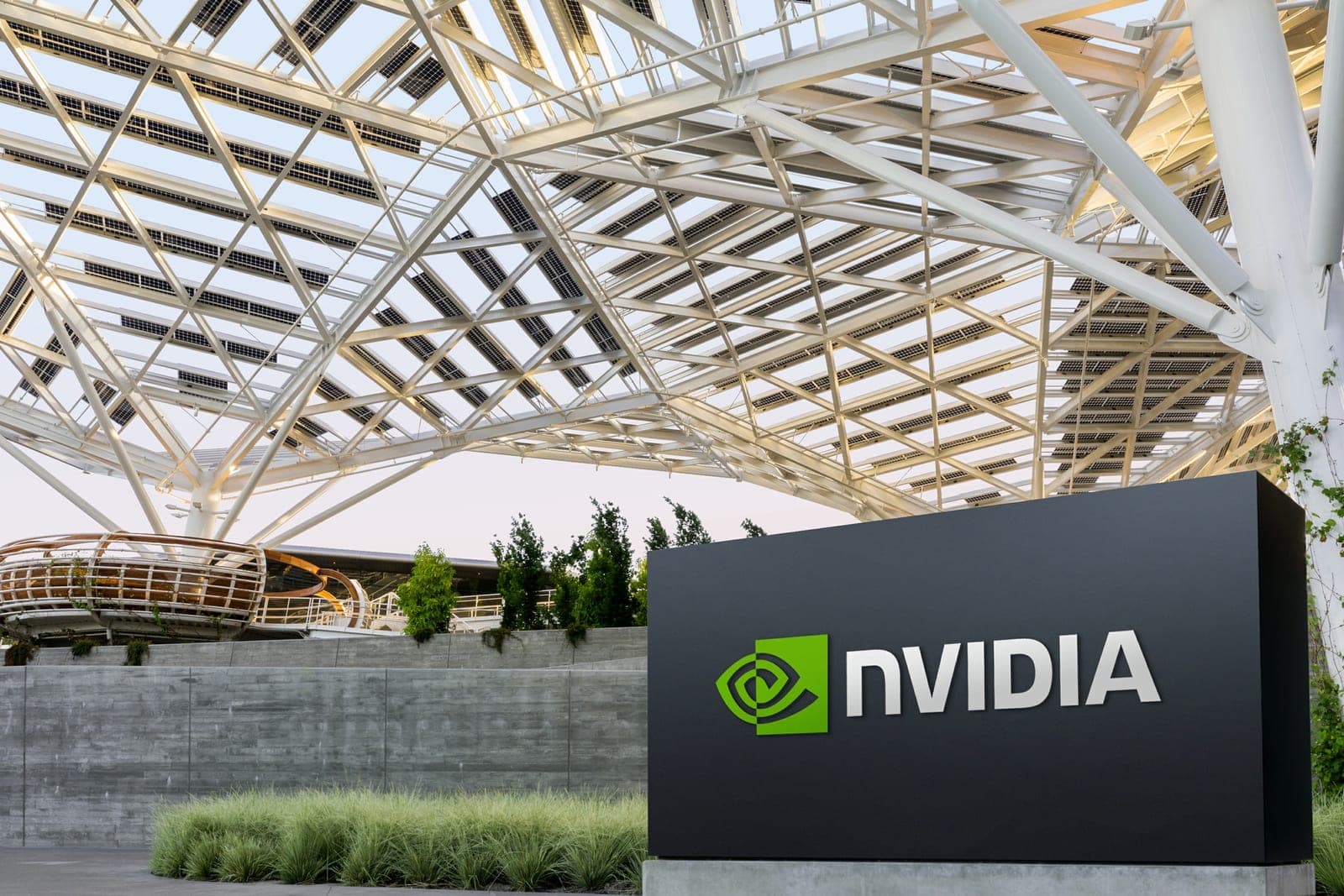
Nvidia's board approved the largest single stock buyback authorization in corporate history, adding $150 billion for a total remaining authorization of $235 billion.
CEO Jensen Huang framed it as proof Nvidia can fund AI investment and reward shareholders at once, a contrast to Alphabet, which halted its own buybacks this year for AI spending. The stock jumped, but critics see the size as a signal Nvidia is managing AI-bubble anxiety as much as rewarding shareholders.
What to know
- Nvidia's board authorized an additional $150 billion in stock buybacks, the largest single repurchase authorization in corporate history.
- The increase brings Nvidia's total remaining buyback authorization to $235 billion, which the company expects to use through fiscal 2028.
- CEO Jensen Huang tied the move to Nvidia's cash generation from the AI computing boom and confidence in long-term demand.
- Nvidia shares rose roughly 3% on the announcement, with CNBC's Jim Cramer saying an active buyback could 'change the trajectory' of the stock.
- AI critic Ed Zitron and others argue the buyback is more about calming nervous AI-bubble investors than benefiting everyday shareholders.
Nvidia's board just approved the single largest stock buyback authorization in corporate history, and the market noticed immediately.
The numbers
Nvidia authorized an additional $150 billion in share repurchases, pushing its total remaining buyback capacity to $235 billion. The company expects to use that authorization through fiscal 2028.
- The scale: $150 billion is more than the entire market capitalization of most S&P 500 companies, authorized in a single board decision.
- The timeline: Nvidia isn't required to spend it all at once. The company has flexibility on pacing through fiscal 2028.
- The reaction: Shares rose roughly 3% on the announcement, extending a year-to-date gain of about 24%.
What Huang said
CEO Jensen Huang tied the buyback directly to Nvidia's cash position rather than framing it as a defensive move.
"NVIDIA's growth is being driven by a once-in-a-generation platform shift to AI and accelerated computing," Huang said. "Our cash generation gives us the capacity to invest in the technologies that advance this transformation and return capital to shareholders. This authorization reflects our confidence in the long-term opportunity ahead."
Nvidia is positioning the buyback as proof it can fund massive AI infrastructure spending and reward shareholders simultaneously, rather than choosing between the two.
How fast the buybacks have grown
The size of this authorization only makes sense against how quickly Nvidia's buyback program has scaled alongside its AI business. In fiscal 2023, before the generative-AI boom fully took hold, Nvidia repurchased about $10 billion in stock. By fiscal 2025, that figure had jumped to roughly $34 billion for the year, covering 310 million shares.
The board has been topping up the authorization repeatedly to keep pace: a $25 billion increase in August 2023, a $50 billion increase in August 2024, and a $60 billion increase in August 2025. The new $150 billion authorization dwarfs all three combined, reflecting just how much more cash Nvidia now generates each quarter compared to even a year ago.
The cash generation behind the buyback
Huang's comments about "cash generation" aren't abstract. Nvidia's most recent quarterly results, for the second quarter of fiscal 2027, showed revenue of $96.2 billion, with data center revenue alone reaching $89 billion, up 117% year-over-year. That figure broke down into $48.7 billion from hyperscale cloud customers and $40.3 billion from AI cloud, industrial, and enterprise customers.
The scale of returns: in that same quarter, Nvidia already returned about $26 billion to shareholders through a combination of buybacks and dividends, before this new $150 billion authorization was even on the table. The company has guided third-quarter revenue to roughly $108 billion, meaning the cash available to fund both AI investment and buybacks is still climbing.
A different path than Alphabet
Nvidia's dual-track approach stands out against how at least one major AI rival is handling its own cash. Alphabet repurchased $45 billion in stock during 2025, then halted buybacks entirely this year, choosing instead to issue new shares to help fund its AI infrastructure buildout.
Why it matters: the contrast highlights how differently AI giants are managing the tension between funding compute-heavy growth and returning cash to shareholders. Nvidia's position, sitting at the center of AI chip supply with enormous margins, gives it room that companies building out their own data centers from scratch don't necessarily have.
Wall Street's reaction
CNBC's Jim Cramer, who has previously pushed for an even larger buyback, called the move significant but not quite as aggressive as he'd hoped.
"If they're active and in there every day, it will change the trajectory of the stock," Cramer said, noting the $150 billion figure fell short of the $500 billion he had called for. Even so, he described it as a major step in the right direction.
By the numbers: other analysts framed the buyback as a sign of confidence that could help stabilize the stock through periods of AI-sector volatility, with some describing the size of the authorization as unprecedented for any company, not just chipmakers.
Not everyone is convinced
Not every read on the buyback has been positive. AI critic Ed Zitron, host of the podcast "Better Offline," argued the timing says more about investor anxiety than confidence.
Zitron characterized the move as "an attempt to calm very nervous investors around AI," pointing to the broader backdrop of AI-bubble concerns circulating among analysts and financial media. The argument: a board authorizing a record buyback while AI-bubble talk intensifies could be read as management trying to manage sentiment as much as capital.
There's also a distributional argument critics have raised around large buybacks generally: gains from share repurchases tend to flow disproportionately to large shareholders and corporate insiders, rather than delivering the kind of broad-based benefit that new product revenue or dividends might spread more evenly across everyday investors holding shares through retirement accounts or index funds.
How buybacks actually move the numbers
Buybacks work mechanically, not just symbolically. Every share Nvidia repurchases and retires shrinks the total share count, which means the same net income gets divided among fewer shares outstanding, mechanically lifting earnings per share even if profit itself doesn't grow.
The math: if Nvidia spends its entire $235 billion remaining authorization, some estimates suggest the share count could shrink by roughly 4%, a meaningful boost to per-share earnings on its own, independent of any revenue growth. Nvidia already bought back $39 billion in stock during just the first half of fiscal 2027, so the pace of execution has been substantial well before this latest authorization was even announced.
Retail interest is already high: retail investors bought roughly $562 million worth of Nvidia shares during a recent selloff, reportedly the largest such purchase since 2014, showing individual investors are already leaning into the stock even before the buyback's full effects on share count play out.
Nvidia's role in AI financing
The buyback comes as Nvidia has become increasingly central to how the AI industry itself gets funded. The company has been involved in financing arrangements for chip purchases and has guaranteed data center leases tied to AI labs that aren't yet profitable, effectively acting as both a supplier and a financier within the AI ecosystem it depends on for growth.
That dual role adds context to the buyback decision. A company choosing to return cash to shareholders rather than plow every available dollar back into that financing ecosystem could be read as a sign of financial discipline, or, per critics like Zitron, as a quieter signal about how much further Nvidia wants to extend its own exposure to unprofitable AI customers.
The bottom line
Nvidia's $150 billion buyback authorization is a record by size alone, and the stock's immediate jump shows the market largely welcomed it. Whether it ends up read primarily as a confidence signal or as a hedge against AI-bubble jitters will likely depend on how the broader AI trade holds up over the next few quarters, and on whether Nvidia actually executes the buyback at the pace Cramer and others are hoping for.
For now, the headline number speaks for itself: no company has ever authorized this much stock repurchase in a single decision. The next real test will come at Nvidia's following earnings report, when investors get a clearer read on how aggressively the company is actually executing the buyback against that $235 billion ceiling, and whether the pace matches the confidence Huang projected when he announced it.
Key facts
- New authorization
- $150 billion
- Total remaining authorization
- $235 billion
- Expected completion
- Through fiscal 2028
- Stock move
- Up roughly 3% on announcement
- CEO
- Jensen Huang
Got questions?
Quick answers, plain wordsHow big is Nvidia's new stock buyback?
Nvidia's board authorized an additional $150 billion in share repurchases, which the company describes as the largest single buyback authorization in corporate history.
How much can Nvidia buy back in total now?
The new authorization brings Nvidia's total remaining buyback capacity to $235 billion, which the company expects to use through fiscal 2028.
Why did Nvidia do this now?
CEO Jensen Huang said Nvidia's cash generation from the AI and accelerated computing boom gives it the capacity to both invest in future technology and return capital to shareholders through buybacks.
How did the stock react?
Nvidia shares rose about 3% following the announcement, adding to a roughly 24% year-to-date gain.
What did Jim Cramer say about it?
CNBC's Jim Cramer said that if Nvidia is actively buying back stock every day, it could 'change the trajectory' of the stock, though he noted the $150 billion figure was smaller than the $500 billion he had called for.
How does this compare to what other tech companies are doing?
Alphabet halted its own stock buybacks in 2026 to redirect cash toward AI infrastructure spending, after repurchasing $45 billion in 2025. Nvidia is instead pursuing both AI investment and buybacks at the same time.
What's the criticism of the buyback?
AI critic Ed Zitron has described the move as an attempt to calm nervous investors amid growing AI-bubble concerns, arguing that buyback gains tend to favor large shareholders and corporate insiders over everyday retail investors.
Does the buyback mean Nvidia is cutting back on AI investment?
Not according to the company. Nvidia has said it can fund continued AI infrastructure investment, including chip financing and data center lease guarantees for AI labs, alongside the buyback program.
SourcesCNBC
Topics and tagsNVIDIA, nvidia, jensen huang, stock buyback
Related stories

Apple's smart home hub reportedly launches October 13, with a camera that never records video
Bloomberg's Mark Gurman says Apple will announce its long-rumored smart home display on October 13. He also describes a companion home camera that sends text descriptions instead of video.
GrayKey maker reportedly found a way around the iPhone's Inactivity Reboot
A leaked training video seen by 404 Media says Magnet Forensics' new tools keep a seized iPhone in an easier-to-search state, even after the reboot Apple added in iOS 18.1.

Fervo's Cape Station becomes the first enhanced geothermal plant to sell power commercially
Fervo Energy's first 33-megawatt block at Cape Station in Utah reached commercial operation a day ahead of schedule, after 23 months of construction. Two more blocks follow by January 2027.
More in brief
- arXiv limits researchers to two papers a month as AI drives submissions to a recordOct 2
- California will fine robotaxi companies that block first responders for over 30 minutesOct 2
- Microsoft launches real-time transcription and new voice models for AI voice agentsOct 1
- Cloudflare releases Clef, open-weight AI models that make yes-or-no decisions fastOct 1
- Cloudflare renames its data platform Basin and makes it generally availableOct 1
- ChatGPT can now show you wearing clothes before you buy themOct 1