
AI·News & analysis
Nvidia just helped a 5-year-old startup raise $668 million
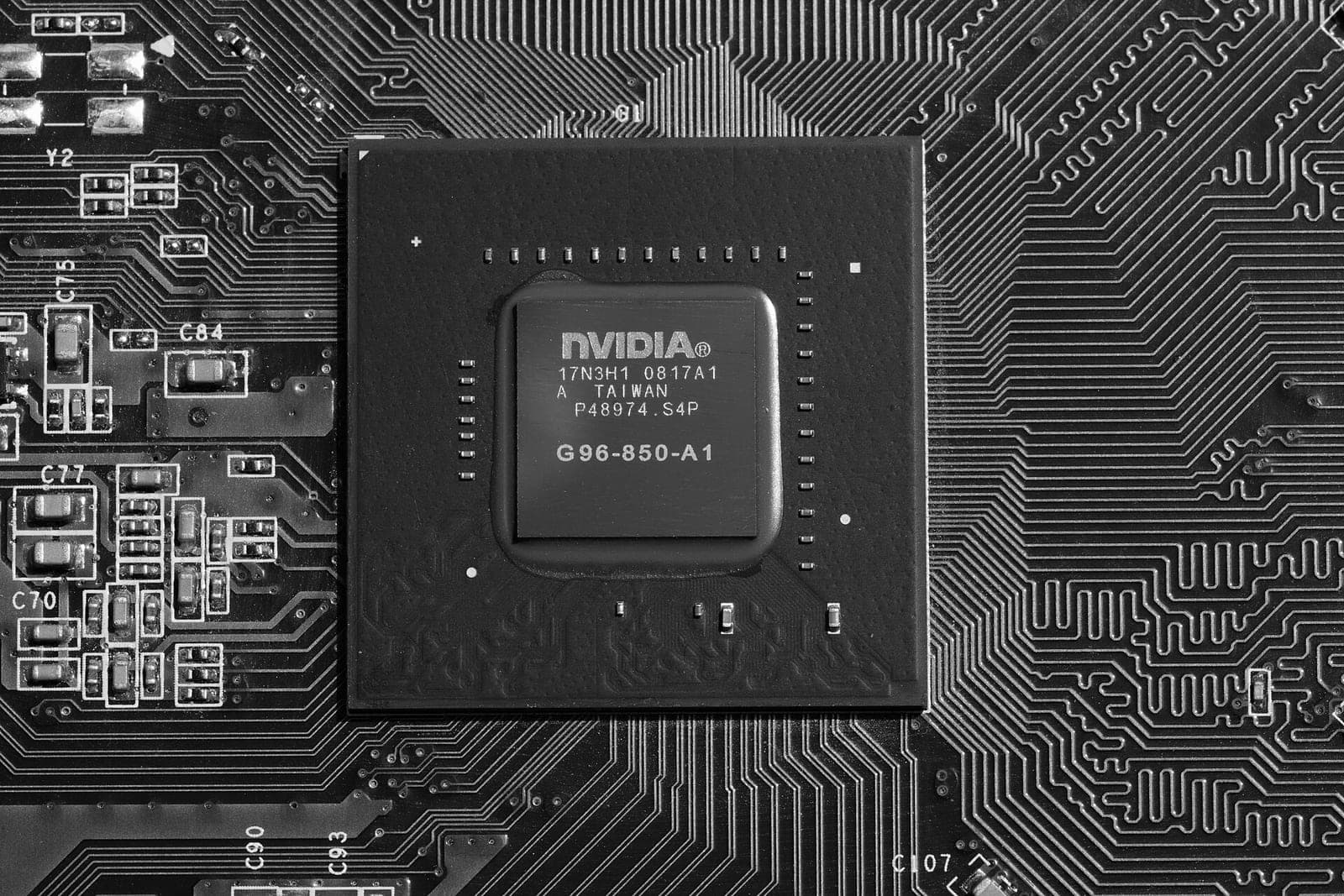
GPU cloud provider GMI Cloud raised $668 million, with Nvidia joining the equity round, to fund a $500 million AI data center in Taiwan set to open by March 2026.
Tide
Ripple
Sci-fi
4/10
Reality
Shipping
A chipmaker helps fund the company that will rent out its chips.How we rate
GMI Cloud, a five-year-old Nvidia GPU cloud provider, raised $668 million, combining $223 million in equity led by ARCHIV with Nvidia participating and $445 million in credit led by Taiwan's CTBC Bank.
The money funds a $500 million AI data center in Taiwan, expected to open by March 2026 with about 7,000 Nvidia GB300 GPUs. Nvidia has taken similar equity stakes in other smaller cloud providers that rent out its own chips, including a $2 billion investment in CoreWeave.
What to know
- GMI Cloud, a five-year-old Nvidia GPU cloud provider, raised $668 million: $223 million in equity led by ARCHIV with Nvidia participating, plus $445 million in credit led by Taiwan's CTBC Bank.
- The money is funding a $500 million AI data center in Taoyuan, Taiwan, expected to open by March 2026 with around 7,000 Nvidia GB300 GPUs across 96 racks.
- This is part of a broader pattern of Nvidia taking equity stakes in the smaller 'neocloud' companies that buy its chips and rent them out to AI developers.
- The credit portion of the deal is backed by GPU computing-capacity leasing contracts GMI Cloud already has with qualified customers.
A five-year-old company just raised $668 million, and its own chip supplier chipped in as an investor. That's not a typo, it's becoming a real pattern in AI infrastructure.
GMI Cloud, a GPU cloud provider that supplies Nvidia-powered servers to enterprises, raised $668 million, combining $223 million in equity led by ARCHIV, with Nvidia participating directly, and $445 million in credit led by Taiwan's CTBC Bank.
How fast has this company actually grown?
By the numbers: GMI Cloud raised an $82 million Series A round in October 2024, a substantial sum on its own for a company that had spent its early years focused on Bitcoin mining infrastructure rather than AI. Going from that round to a $668 million raise roughly two years later represents more than an eightfold jump in a very short window.
Why it matters: that trajectory reflects just how fast capital has been flowing into GPU cloud infrastructure as AI demand has scaled. A company doesn't typically multiply its fundraising by that much in two years unless investors, and in this case its own chip supplier, see clear evidence of real, sustained customer demand behind it.
What is GMI Cloud actually building with this money?
Why it matters: the funding is earmarked for a $500 million AI data center in Taoyuan, Taiwan, expected to be operational by March 2026. Once complete, the facility will house roughly 7,000 Nvidia GB300 GPUs spread across 96 server racks.
- Equity raised: $223 million, led by ARCHIV, with Nvidia participating.
- Credit raised: $445 million, led by Taiwan's CTBC Bank.
- Data center cost: $500 million.
- Expected GPU capacity: about 7,000 Nvidia GB300 chips across 96 racks.
- Target completion: March 2026.
Why would Nvidia invest in a company that just buys its chips?
The catch: this arrangement sounds circular because, in a real sense, it is. Nvidia sells GPUs to companies like GMI Cloud, those companies rent that computing power out to AI developers, and a portion of that rental revenue flows back toward Nvidia, sometimes directly through investment returns on stakes like this one.
Background: this isn't a one-off. Nvidia has made similar moves across what the industry calls "neoclouds," smaller companies built specifically around renting out GPU computing power, rather than offering the full range of services a traditional cloud giant like AWS or Azure provides. Nvidia's $2 billion investment in CoreWeave, another prominent neocloud, follows the same basic pattern.
In real life imagine a car manufacturer investing directly in a rental car company that exclusively rents out that manufacturer's own cars. The manufacturer sells more cars either way, but now it also profits from every rental, and it gets a say in how fast that rental company grows.
What's actually motivating this strategy?
Who's affected: part of Nvidia's reasoning appears to be about balance of power. Relying too heavily on a small number of giant hyperscaler customers, Microsoft, Amazon, Google, gives those companies significant leverage, including the ability to design their own competing chips over time.
Funding smaller, independent GPU cloud providers gives Nvidia more customers with a direct stake in Nvidia's own chips succeeding, spreading out that dependency while also creating competition for the hyperscalers themselves in the broader cloud computing market.
How does the loan portion of this deal actually work?
What's next: the $445 million credit piece isn't a standard unsecured loan. It's backed specifically by GMI Cloud's existing GPU computing-capacity leasing contracts with its own customers, essentially using already-signed future rental revenue as collateral.
That structure matters because it reflects real, contracted demand rather than pure speculation about future growth. Banks extending this kind of financing are betting on revenue GMI Cloud has already locked in through customer agreements, not just projected market growth.
This kind of GPU-backed lending has become increasingly common across the neocloud sector generally, as banks and other lenders look for ways to finance expensive hardware purchases without taking on the full risk of unproven, speculative future demand.
GMI Cloud started out mining Bitcoin, not AI
Background: the company's origin story is a genuine pivot, not a straight line into AI. Founder Alex Yeh, previously a partner at a Taiwan-based crypto investment fund, was running a large-scale Bitcoin mining operation in Inner Mongolia when China abruptly banned Bitcoin mining entirely in 2021.
Yeh responded quickly by relocating, building new data center infrastructure in Arkansas and Texas originally meant purely to service Bitcoin mining computing nodes at scale. GMI Cloud officially launched in 2022 still oriented around that crypto-mining infrastructure, before pivoting toward AI as demand for GPU computing exploded.
Why it matters: that history explains something important about GMI Cloud's underlying capability. Bitcoin mining and AI computing share a surprising amount of technical overlap, both require large-scale, power-hungry hardware operating continuously, and companies with existing data center infrastructure built for one were often well positioned to pivot toward the other once demand shifted.
The company's current customers reflect how far that pivot has gone. Reported clients include AI-native companies like Higgsfield, HeyGen, and Eigen AI, businesses whose products depend directly on fast, reliable GPU access for real-time AI inference.
Why Taiwan specifically?
Taiwan brings some genuine practical advantages for this kind of facility beyond just mere corporate strategy alone. The island has deep, decades-long semiconductor industry infrastructure and technical expertise, much of it tied to chip manufacturing giant TSMC, making it a natural location for large-scale AI computing buildouts that require both technical talent and reliable power infrastructure.
Who's affected: GMI Cloud's stated push to expand across Asia positions this Taiwan facility as a regional hub, giving AI companies operating in Asian markets a local alternative to routing all their GPU computing needs through US-based data centers.
What it means for you
- This is infrastructure funding, not a product you'll use directly. It shapes where and how AI computing capacity gets built, not what shows up in your apps this week.
- It's a useful example of how concentrated the AI hardware supply chain has become, with the same company, Nvidia, appearing as supplier, customer relationship, and now investor across multiple parts of the industry.
- Watch for more of these deals. Nvidia's pattern of backing neocloud providers, not just hyperscalers, suggests this kind of financing arrangement will keep showing up as AI infrastructure demand keeps growing.
- Regional GPU capacity, like this Taiwan facility, matters for AI companies operating outside the US, potentially reducing latency and dependency on American data centers.
The bottom line
GMI Cloud's $668 million raise, with Nvidia as both supplier and investor, is a clear example of how tightly interconnected the AI infrastructure business has become.
It's a strategy that helps smaller GPU cloud providers compete against giant hyperscalers, while giving Nvidia a direct stake in exactly the kind of company that keeps demand for its own chips growing. Whether that interconnection is healthy competition or something closer to circular financing risk is a question the entire AI infrastructure sector is going to keep facing as more of these deals get made in the years ahead.
For a company that started out mining Bitcoin in Inner Mongolia just a few short years ago, landing its own chip supplier as a direct investor is a genuinely remarkable full-circle turn of events.
Key facts
- Total raised
- $668 million
- Equity portion
- $223 million, led by ARCHIV
- Credit portion
- $445 million, led by CTBC Bank
- Taiwan data center
- $500 million, ~7,000 Nvidia GB300 GPUs
Got questions?
Quick answers, plain wordsHow much did GMI Cloud raise, and from whom?
$668 million total: $223 million in equity led by ARCHIV with Nvidia participating, and $445 million in credit led by Taiwan's CTBC Bank.
What is GMI Cloud going to do with the money?
Fund a $500 million AI data center in Taoyuan, Taiwan, expected to be operational by March 2026, housing about 7,000 Nvidia GB300 GPUs across 96 server racks.
How old is GMI Cloud?
About five years old, making it a relatively young company to have secured this scale of funding and Nvidia's direct backing.
Why is Nvidia investing directly in a company that buys its own chips?
Nvidia has been taking equity stakes in smaller GPU cloud providers, sometimes called 'neoclouds,' as both their chip supplier and an investor, partly to give large hyperscaler cloud companies more competition and reduce Nvidia's dependence on just a few giant customers.
What is a 'neocloud'?
A newer type of cloud computing company built specifically around renting out GPU computing power for AI workloads, rather than offering the full range of services traditional cloud providers like AWS or Azure do.
How is the $445 million credit portion secured?
It's backed by GMI Cloud's existing GPU computing-capacity leasing contracts with qualified customers, essentially using signed future revenue as collateral for the loan.
Who else is investing alongside Nvidia in GPU cloud companies?
Nvidia has made similar moves with other neocloud providers, including a $2 billion investment in CoreWeave, as part of a broader pattern across the GPU cloud sector.
Why is this data center being built in Taiwan specifically?
Taiwan has deep semiconductor industry infrastructure and expertise, making it an attractive location for AI computing facilities, alongside GMI Cloud's stated push to expand its presence across Asia.
SourcesThe Information
Topics and tagsNVIDIA, AI chips, Data centers, Funding & deals
Related stories
A startup wants satellites to think for themselves instead of waiting for instructions from Earth
Satlyt, founded by a former Google and SpaceX product manager, raised $8 million to build software that lets AI models run directly on satellites, cutting the need to send every decision back down to ground control.

Google is quietly funding Hollywood movies to make AI look less scary
Google partnered with talent agency Range Media Partners on 100 Zeros, a fund that co-produces films and TV shows aiming to show technology, especially AI, in a more optimistic light than shows like Black Mirror.
Japan's biggest power company is building its own gas plant just to feed one AI data center
JERA, Dell Technologies, and RHAELM signed a deal to build a $15 billion, 400-megawatt AI data center powered by its own dedicated energy supply near Tokyo, aiming to start operations around 2028.
More in brief
- arXiv limits researchers to two papers a month as AI drives submissions to a recordOct 2
- California will fine robotaxi companies that block first responders for over 30 minutesOct 2
- Microsoft launches real-time transcription and new voice models for AI voice agentsOct 1
- Apple's smart home hub reportedly launches October 13, with a camera that never records videoOct 1
- Cloudflare releases Clef, open-weight AI models that make yes-or-no decisions fastOct 1
- GrayKey maker reportedly found a way around the iPhone's Inactivity RebootOct 1